When the battery stops behaving: a diagnosis order
Most heated clothing failures are one of five things, and four of them are cheaper to fix than people assume.
By Scooter M. · Published August 31, 2026
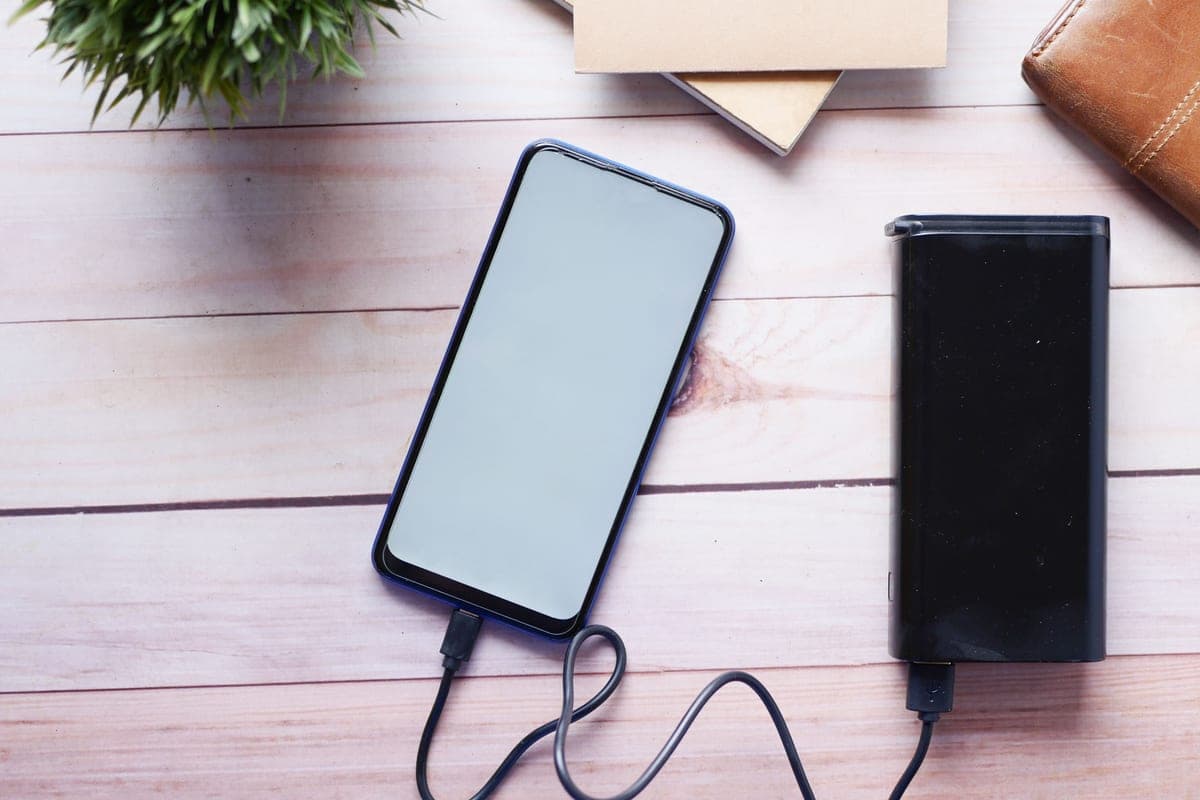
Heated clothing failures cluster into five causes: a dirty or damaged connector, a charger fault rather than a pack fault, cold suppressing capacity, an aged pack that has genuinely lost capacity, and a broken element run. Work them in that order — the cheap causes are far more common than the expensive one.
Work it in this order
The instinct when a heated jacket stops working is to conclude the battery is dead. Usually it is not. Below is the order that finds the problem fastest, cheapest first.
1. The connector
This is the most common fault and the least likely to be suspected. The barrel connector between pack and garment lives in a pocket, collects lint, gets pushed sideways when you sit down, and is flexed every time you take the jacket off.
- Look inside the barrel with a light. Lint compacted in the base stops the contact seating.
- Check whether the pin is centered and straight. A bent center pin is a permanent intermittent.
- Wiggle the connection with the garment on a low setting. If the heat cuts in and out, you have found it.
- Check the garment-side cable where it enters the pocket seam — that is where the flex concentrates and where conductors break.
2. The charger, not the pack
A pack that will not charge is at least as often a charger problem. Proprietary bricks are the weak link in this category — they are cheap, they live in a drawer, and their cables fail at the strain relief.
If the pack has a USB-C input, try a phone charger and a known-good cable. If it lights up, the original brick is the fault and it is the cheaper part. If nothing happens with a second known-good supply, the problem is the pack. This is the strongest practical argument for buying USB-C packs in the first place: a proprietary charger that dies can retire an otherwise healthy battery.
3. Cold, which is not a fault
A lithium pack delivers less usable capacity when it is cold — which is an unfortunate property for a product that only gets used in the cold. If a pack seems to have lost half its runtime and it has been sitting in an unheated garage or an outside pocket, warm it to room temperature and try again before concluding anything.
Some packs also refuse to charge below a certain temperature, which is a protection feature rather than a failure. A pack that will not take charge in a cold garage will often take it happily indoors an hour later.
4. Blinking lights
Blink patterns are manufacturer-specific and there is no universal code, so we are not going to invent one. What we can tell you is the general grammar: a slow repeating blink during charging usually indicates charge state; a fast blink or an alternating pattern usually indicates a protection fault, most often temperature or a short.
The right move is to find the manual for your specific pack and read the actual table. If the pack blinks a fault pattern with nothing connected, that is the pack's own protection circuit reporting, and it is not something to work around.
5. Genuine capacity loss
Lithium packs lose capacity with every charge cycle. This is expected and not a defect. A pack two or three winters in, charged after every use, will hold noticeably less than it did — the loss is gradual, so most people notice it as a season where the jacket suddenly seems worse than they remember.
The check is straightforward: charge fully at room temperature, run on a known setting, and compare against what you got in the first season. If it is down substantially and the connector and charger are ruled out, the pack has aged out. Replacement packs are ordinary consumables and cost far less than the garment.
Quick picks
Tap any row to jump to the full write-up below. The energy column is the pack’s capacity times its voltage — the number this category does not print.
| # | Product | Best for | Energy | Price |
|---|---|---|---|---|
| 1 |  ororo PD 7K Rechargeable Battery for Heated Apparel7,000 mAh of LG cells with a published 13.5-hour claim and a six-mark certification list — the biggest step up availab… | The largest ororo pack you can actually buy | 51.8 Wh | $89.99View on Amazon |
| 2 |  Third-Party 7.4V 16,000mAh Heated Apparel BatteryThe largest capacity on this page by a wide margin, and the one we are most careful about: a third-party pack with a b… | Runtime at any cost | 118.4 Wh | $27.99View on Amazon |
| 3 |  ororo Men's Soft Shell Heated JacketThe clearest power story in the category: ororo publishes capacity and voltage for every pack it sells, so you can wor… | A first heated jacket | 38.5 Wh | $159.99View on Amazon |
#ad — buy links are tagged and earn us a commission at no extra cost to you. Prices come from a live feed; where none is available the button reads “Check price” rather than showing a number we cannot stand behind. How we are funded.
ororo PD 7K Rechargeable Battery for Heated Apparel
7,000 mAh of LG cells with a published 13.5-hour claim and a six-mark certification list — the biggest step up available to an ororo owner, because the larger PD 10K is not sold through this retailer.
#ad Price as of October 17, 2026. How we are funded.
The numbers
- Energy
- 51.8 Wh
- Capacity
- 7,000 mAh at 7.27 V — about 50.9 Wh
- Published output
- 30 W out, up to 24 W in
- Recharge
- Fully recharged within 3 hours
- Certification
- UL2056, CE, FCC, CB, WEEE, CA65 per ororo
- Heat zones
- Not applicable — this is a battery
- Settings
- Garment-dependent
- Care
- Not washable — remove before laundering the garment
On wattage: No garment wattage is published, but this pack states its own delivery figures: "up to 24W input" and "30W output". The 30 W output is a ceiling for charging devices rather than a figure any ororo garment draws — inverting the 13.5-hour claim against about 50.9 Wh gives roughly 3.8 W, which is the draw that claim actually assumes.
On the pack: Worth reading the voltage twice. This pack's own product page gives "7.27V", while ororo's battery guide lists the PD 7K at 7.4 V. At 7.27 V the 7,000 mAh works out to about 50.9 Wh; at 7.4 V it is 51.8 Wh. We use the figure printed on the product page itself and note the 2% disagreement rather than quietly picking the flattering one.
What we like
- The largest ororo pack actually purchasable here — roughly 43% more energy than the Mini 5K that ships with several ororo garments
- ororo publishes a real certification list, with UL2056 printed on the casing
- USB-C in and out at 30 W means it doubles as a fast phone bank
- Three-hour full recharge is quick for this capacity
What we do not
- ororo's own two pages disagree on the voltage — 7.27 V on the product page, 7.4 V in the battery guide
- No watt-hour figure printed for this pack, unlike ororo's Mini 5K and PD 5K pages
- The larger PD 10K exists in ororo's lineup but is not sold through this retailer
- Costs a meaningful fraction of a whole garment, which is the usual complaint about spare packs
Who this suits
An ororo owner whose garment shipped with a Mini 5K and who has discovered that the battery, not the jacket, is what ends their day.
Who should skip it
Your garment already ships a PD 5K or larger and your days are short. The jump from 37.5 Wh to 50.9 Wh is real but it is not transformative.
Spec sources: ororo — 7000 mAh PD 7K Rechargeable Battery ("7,000mAh" with "premium LG cells"; voltage given as "7.27V" on this page against 7.4 V in ororo's battery guide; "up to 24W input"; "30W output"; "fully recharged within 3 hours"; "up to 13.5 hours of heat"; "UL2056, CE, FCC, CB, WEEE, CA65 certified"; "1 USB-C Port, 1 USB-C Cable, 1 DC Port"; NTC sensor) · ororo — Heated Apparel Battery Guide (capacity, voltage and output for every pack)
Third-Party 7.4V 16,000mAh Heated Apparel Battery
The largest capacity on this page by a wide margin, and the one we are most careful about: a third-party pack with a big number on it deserves more skepticism than a brand pack with a small one.
#ad Price as of October 17, 2026. How we are funded.
The numbers
- Energy
- 118.4 Wh
- Claimed capacity
- 16,000 mAh at 7.4 V
- Output current
- Not published
- Adapters
- Two cables for common garment connectors
- Heat zones
- Not applicable — this is a pack, not a garment
- Settings
- Not applicable
- Care
- Not washable
On wattage: No published wattage and no published output current, which means we cannot even state the pack's own delivery ceiling.
On the pack: Third-party capacity claims are not independently verified by anyone, including us. The watt-hour figure below is arithmetic on the seller's own numbers — it is not a measurement of the pack.
What we like
- If the claim holds, roughly three times the energy of the pack most jackets ship with
- An LED display means you know where you stand before you go out
- Adapter cables cover the common garment connectors
What we do not
- Third-party capacity claims are unverified by definition
- No published output current, so the delivery ceiling is unknown
- A pack this large deserves a certification you can look up, and this one's is not clearly stated
Who this suits
Someone whose jacket genuinely dies mid-shift and who has already weighed the trade-off.
Who should skip it
You are not comfortable buying an unverified capacity claim from a third party. That is the right instinct and we share it.
Spec sources: Amazon — third-party 7.4V 16000mAh heated apparel pack · ororo — Heated Apparel Battery Guide (capacity, voltage and output for every pack)
ororo Men's Soft Shell Heated Jacket
The clearest power story in the category: ororo publishes capacity and voltage for every pack it sells, so you can work out what you are getting instead of taking a marketing number on faith.
The numbers
- Energy
- 38.5 Wh
- Pack
- 7.4 V, 5,200 mAh (ororo B19G)
- Published output
- 2.5 A
- Heat zones
- 3
- Maker's runtime claim
- 8-10 h low / 5-6 h medium / 2-3 h high
- Heat zones
- Left and right chest, mid-back
- Settings
- Three, cycled from a single chest button
- Care
- Machine washable with the battery removed
On wattage: ororo publishes no wattage for the garment. It does publish hours for each of the three settings, which states the draw whether it meant to or not.
What we like
- ororo publishes capacity AND voltage for every pack, which almost nobody else in this category does
- Per-setting runtime claims rather than one 'up to' number, so the low-to-high spread is visible before you buy
- Soft-shell cut layers under a work coat without bulk
What we do not
- No published wattage for the garment itself
- Three zones only — nothing at the arms or the kidneys
- The headline runtime figure is the low setting, as it is everywhere
Who this suits
Someone standing still outdoors for two to four hours at a stretch who wants the power figures on the table before buying.
Who should skip it
You need heat for a full eight-hour shift on high. No 38 Wh pack does that, and this one does not claim to.
Spec sources: ororo — Heated Apparel Battery Guide (capacity, voltage and output for every pack) · Amazon — ororo 7.4V 5200mAh battery listing (per-setting runtime claim)
One zone cold and the others working
If the back panel heats and the chest does not, the pack is fine — you have a break in one element run. The wires are thin and they concentrate stress at the same places every time: where the run crosses a seam, where it turns a corner near a pocket, and at the shoulder where the garment flexes most.
This is a warranty matter rather than a repair, in almost every case. The element is sewn into the garment's construction and there is no serviceable access. What you can do is prevent it: never wash with the pack connected, never wring or twist the garment, and dry flat rather than tumbling. Washing heated clothing covers the whole care routine.
Making a pack last
- Store around half charge for the off-season. A pack stored full or stored flat for six months ages faster than one stored midway.
- Do not store it in a freezing garage. Store it indoors, at room temperature.
- Charge indoors. Cold charging is hard on lithium and some packs refuse it outright.
- Keep it in an inside pocket while in use. A warm pack delivers closer to its rating than a cold one.
- Buy spares while your model is current. Replacement packs disappear from the market before garments wear out, and a garment with no available pack is finished.
Watt-hours, and what they buy
Energy is capacity times nominal voltage. The ceiling draw is the pack’s own published output current times its voltage. The implied draw runs the maker’s advertised hours backwards. Nothing here is measured — check our working.
| Product | Capacity | Volts | Energy | Ceiling draw | Shortest runtime | Implied draw at the claim |
|---|---|---|---|---|---|---|
| ororo PD 7K Rechargeable Battery for Heated Apparel | 7,000 mAh | 7.4 V | 51.8 Wh | 22.2 W | 2h 20m | 3.8 Wat 13.5 h maker's headline claim, with ororo apparel |
| Third-Party 7.4V 16,000mAh Heated Apparel Battery | 16,000 mAh | 7.4 V | 118.4 Wh | Not published | Not derivable | No claim published |
| ororo Men's Soft Shell Heated Jacket | 5,200 mAh | 7.4 V | 38.5 Wh | 18.5 W | 2h 05m | 15.4 Wat 2.5 h high |
“Not derivable” means the manufacturer does not publish the figure the sum needs. We leave it blank rather than estimating it, borrowing a number from a similar model, or rounding one into existence. These are ceilings, not promises: cold, wind, movement and pack age all push real runtime below them. Run your own numbers.
Frequently asked
- Why is my heated jacket battery not charging?
- Most often the charger rather than the pack. Try a known-good supply and cable — if the pack has USB-C input, a phone charger is a good test. Cold is the other common cause: many packs refuse to charge below a threshold, and will accept it indoors an hour later.
- What do the blinking lights on my heated jacket battery mean?
- Blink codes are manufacturer-specific and there is no universal standard, so check your pack's manual for the actual table. Broadly, a slow repeating blink while charging indicates charge state and a fast or alternating pattern indicates a protection fault, usually temperature or a short.
- Why does my heated jacket suddenly last half as long?
- Check the connector for lint or a bent pin, warm the pack to room temperature before judging it, then consider age. Lithium loses capacity with every cycle, and after two or three winters the drop is noticeable. Replacement packs cost far less than the garment.
- One heating zone stopped working. Can it be fixed?
- Almost certainly not by you — the element is sewn into the garment with no serviceable access, so a dead zone with a working pack is a warranty matter. Prevention is the practical response: never wash with the pack connected, and dry flat rather than tumbling.
- How long do heated clothing batteries last?
- Makers commonly quote several hundred charge cycles. In practice, expect a noticeable capacity drop after two or three seasons of regular use. That is normal lithium behavior rather than a defect, and replacing the pack is the intended outcome.
Sources
Related
Battery & Power
The conversion nobody publishes: capacity and voltage into watt-hours, watt-hours into hours. Plus the calculator that does it for you.
Washing heated clothing without wrecking it
Battery out, cold and gentle, dry flat. Four rules, a garment-by-garment table, and the part that cannot be repaired.

Watts, volts and the number on the label that is not quite true
Volts, amps, watt-hours and the labeling convention that overstates every tool-battery jacket by 11%.
How heated clothing actually works
Element, controller, battery — and why insulation is the half of the system nobody sells you.