Skip to content
Volt Wool
Hub

The heated vest is the better buy, and here is the arithmetic

Same pack. Same core zones. Less fabric fighting the cold, and a coat you already own doing the insulating.

If you are choosing between formats, heated jacket versus heated vest is the page to read first.

How this is funded: buy links here are tagged and earn us a commission at no extra cost to you. It does not affect what we recommend, and we take no free product and no sponsorship. Read the disclosure.

Pale winter light over a frosted field and a wooden fence line, the still, ordinary cold a heated vest is bought for.
Our top pick in heated vests

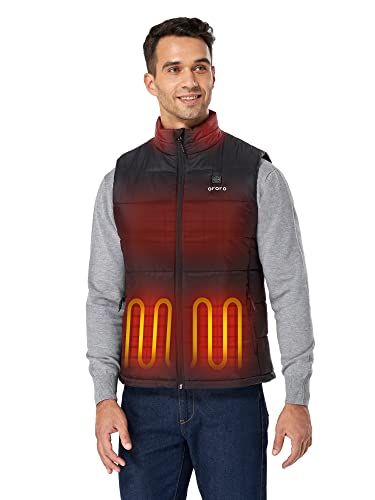
ororo Men's Lightweight Heated Vest

A vest puts the same pack energy into the same core zones as a jacket while heating far less fabric, which is why it is the smarter buy for most people who think they want a jacket.

Check price on Amazon

#ad No live price available, so we show none. How we are funded.

A heated vest runs the same chest and back elements as a heated jacket, off the same 7.4 V pack, in a garment that layers under a coat you already own. Fewer square inches of fabric to warm means the same watt-hours go further, and the insulation problem is solved by your existing outer layer.

Why the vest usually wins

Heated apparel is an energy budget problem. You are carrying a fixed number of watt-hours — around 38 for the standard 7.4 V, 5,200 mAh pack — and everything you do with the garment either spends that budget usefully or wastes it.

A vest is the most efficient way to spend it. The elements sit where a heated garment does the most good: the chest and the mid-back, over the torso, where warming the blood supply has a systemic effect rather than a local one. Sleeves add fabric that has to be warmed and surface area that sheds heat, and they add nothing your existing coat was not already doing.

The second advantage is insulation. A heated element does not create warmth so much as it replaces the warmth you are losing, and insulation is what stops the loss in the first place. A vest under a decent winter coat has your coat's insulation working for it. A heated soft-shell jacket, worn as the outer layer, is often less insulated than the coat it replaced — which means the battery is buying back warmth that better layering would have given you for nothing.

Verdict first

Quick picks

Tap any row to jump to the full write-up below. The energy column is the pack’s capacity times its voltage — the number this category does not print.

#ProductBest forEnergyPrice
1
ororo Men's Lightweight Heated VestA vest puts the same pack energy into the same core zones as a jacket while heating far less fabric, which is why it i…
The best value in heated apparel38.5 WhCheck price on Amazon
2
ororo Men's 4-Zone USB-C Heated Puffer VestUSB-C matters more than it sounds: the pack recharges from the same brick as your phone and your laptop, which removes…
Charging off one cable37.6 WhCheck price on Amazon
3
Venustas Men's Heated Down Vest with Detachable HoodDown does the work the battery cannot: insulation holds the heat you already paid for, which is why an insulated vest …
Hunting and other stationary cold37.0 WhCheck price on Amazon
4
ororo Men's Heated Fleece Vest, 4-ZoneFour zones instead of three and a fleece face instead of a shell, trading wind resistance for something you can wear a…
A heated mid-layer for indoors35.5 WhCheck price on Amazon
5
Venustas Men's Heated Vest, Lightweight QuiltedVenustas puts larger carbon-fiber panels over more of the torso than most rivals, and publishes less about the power b…
Broad element coverage on a budget37.0 WhCheck price on Amazon
6
ororo PD 10K Battery for Heated ApparelThe only route to genuinely long runtime is a bigger pack, and this is the largest one in the category with a publishe…
Longest honest runtime on the list75.1 WhCheck price on Amazon
7
SNOW DEER Heated Socks, 7.4VThe reference point for the category, and the rare heated product whose pack capacity is actually published — on the r…
The default heated sock16.3 WhCheck price on Amazon

#ad — buy links are tagged and earn us a commission at no extra cost to you. Prices come from a live feed; where none is available the button reads “Check price” rather than showing a number we cannot stand behind. How we are funded.

#1 · The best value in heated apparel

ororo Men's Lightweight Heated Vest

A vest puts the same pack energy into the same core zones as a jacket while heating far less fabric, which is why it is the smarter buy for most people who think they want a jacket.

Check price on Amazon

#ad No live price available, so we show none. How we are funded.

The numbers

Energy
38.5 Wh
Pack
7.4 V, 5,200 mAh
Published output
2.5 A
Heat zones
3
Maker's runtime claim
8-10 h low / 2-3 h high
Heat zones
Left and right chest, mid-back
Settings
Three
Care
Machine washable with the battery removed

On wattage: No published wattage, but ororo's per-setting hours plus the published pack capacity give you the implied draw at each setting.

What we like

  • Layers under any coat you already own, which is what most people actually need
  • Identical core zones to the jacket at a lower price
  • Arms stay free, which matters for anyone working with their hands

What we do not

  • No arm or neck heat at all
  • Needs an outer layer in wind
  • The same unpublished wattage as everything else here

Who this suits

Almost everyone comparing a first heated purchase. Start here, and add gloves before you add sleeves.

Who should skip it

Your cold problem is your arms or your hands. A vest will not touch either, and one bought to fix cold hands is a wasted purchase.

Spec sources: ororo — Heated Apparel Battery Guide (capacity, voltage and output for every pack) · Amazon — ororo 7.4V 5200mAh battery listing (per-setting runtime claim)

#2 · Charging off one cable

ororo Men's 4-Zone USB-C Heated Puffer Vest

USB-C matters more than it sounds: the pack recharges from the same brick as your phone and your laptop, which removes the proprietary-charger failure mode entirely.

Check price on Amazon

#ad No live price available, so we show none. How we are funded.

The numbers

Energy
37.6 Wh
Pack
ororo PD 5K, 5,075 mAh at 7.4 V
Published output
2.5 A
Recharge
USB-C
Heat zones
4
Heat zones
Left and right chest, mid-back, collar
Settings
Three
Care
Machine washable with the battery removed

On wattage: No published wattage. ororo does publish the pack's capacity, voltage and output current, which is three more useful numbers than most of this category prints.

What we like

  • USB-C recharge kills the proprietary-brick problem, which is the most common way these packs get abandoned in a drawer
  • Puffer insulation means the vest is warm before you switch anything on
  • Published capacity, voltage and output amps — unusually complete for this category

What we do not

  • Puffer bulk is real under a fitted coat
  • Four zones on a 37.6 Wh pack is a thinner spread than three zones on the same energy
  • Still no wattage figure

Who this suits

Someone who travels with the vest and does not want a second charger in the bag.

Who should skip it

You need it to disappear under a slim shell. It will not.

Spec sources: ororo — Heated Apparel Battery Guide (capacity, voltage and output for every pack)

#3 · Hunting and other stationary cold

Venustas Men's Heated Down Vest with Detachable Hood

Down does the work the battery cannot: insulation holds the heat you already paid for, which is why an insulated vest gets more out of the same watt-hours than a shell does.

Check price on Amazon

#ad No live price available, so we show none. How we are funded.

The numbers

Energy
37.0 Wh
Pack
7.4 V (capacity varies)
Insulation
Down fill
Hood
Detachable
Heat zones
Collar, chest panels, mid-back
Settings
Three
Care
Down care — check the label before washing

On wattage: No published wattage.

On the pack: Capacity not published consistently across SKUs.

What we like

  • Insulation multiplies whatever the battery delivers, which is the single most efficient thing you can do about runtime
  • The detachable hood earns its keep in a stand
  • Quiet fabric, which matters if you are hunting

What we do not

  • Down and moisture are a bad pairing in wet cold
  • Washing down is a chore
  • The same missing power figures as the rest of the Venustas line

Who this suits

Anyone sitting still outdoors for hours: hunters, anglers, spectators.

Who should skip it

You are working hard in it. You will sweat the down flat and lose the insulation.

Spec sources: Venustas — heated jacket collection

#4 · A heated mid-layer for indoors

ororo Men's Heated Fleece Vest, 4-Zone

Four zones instead of three and a fleece face instead of a shell, trading wind resistance for something you can wear at a desk without rustling.

Check price on Amazon

#ad No live price available, so we show none. How we are funded.

The numbers

Energy
35.5 Wh
Pack
ororo Mini 5K, 4,800 mAh at 7.4 V
Heat zones
4, including the collar
Face fabric
Fleece
Heat zones
Left and right chest, mid-back, collar
Settings
Three
Care
Machine washable with the battery removed

On wattage: No published wattage. The pack pairing is the interesting number here: fewer watt-hours than the B19G, spread across one more zone.

What we like

  • Collar heat is the zone people miss most and almost nobody includes
  • Fleece is quieter and softer than a shell against a shirt
  • The Mini 5K pack is genuinely pocketable

What we do not

  • Smaller pack than the shell vest — fewer watt-hours, one more zone to feed
  • No wind resistance
  • Fleece picks up sawdust and pet hair like a magnet

Who this suits

Someone cold in a cool building or a cold cab, not on a ridge.

Who should skip it

You are buying for outdoor wind. Wrong fabric, and the smaller of the two packs.

Spec sources: ororo — Heated Apparel Battery Guide (capacity, voltage and output for every pack) · ororo — Mini 5K rechargeable battery, 4,800 mAh

#5 · Broad element coverage on a budget

Venustas Men's Heated Vest, Lightweight Quilted

Venustas puts larger carbon-fiber panels over more of the torso than most rivals, and publishes less about the power behind them than most rivals — you are buying coverage on trust.

Check price on Amazon

#ad No live price available, so we show none. How we are funded.

The numbers

Energy
37.0 Wh
Pack
7.4 V (capacity varies)
Heat zones
4
Charge time
About 2.5 h per the maker
Heat zones
Collar, both shoulders, mid-back, and pockets depending on SKU
Settings
Three
Care
Machine washable with the battery removed

On wattage: No published wattage, and one unqualified 10-hour figure.

On the pack: Capacity varies by SKU and is not published consistently. Check your listing.

What we like

  • Larger heating panels than the three-zone norm
  • Water-resistant face fabric
  • Usually the cheapest way to get collar heat

What we do not

  • The least complete power disclosure of any brand on this list
  • Pack capacity is inconsistent between SKUs sold under similar names
  • One runtime number with no setting attached tells you nothing you can act on

Who this suits

A price-led buyer who wants coverage and is not going to do the arithmetic.

Who should skip it

You are the kind of buyer who reads a spec sheet. Venustas does not publish enough of one to satisfy you.

Spec sources: Venustas — heated jacket collection

#6 · Longest honest runtime on the list

ororo PD 10K Battery for Heated Apparel

The only route to genuinely long runtime is a bigger pack, and this is the largest one in the category with a published capacity — roughly double the energy of the pack most jackets ship with.

Check price on Amazon

#ad No live price available, so we show none. How we are funded.

The numbers

Energy
75.1 Wh
Capacity
10,150 mAh at 7.4 V
Published output
2.5 A
Recharge
45 W in, full in about 2.5 h per the maker
Certification
UL2056, CE, FCC, CB per the maker
Heat zones
Depends on the garment the pack is powering
Settings
Garment-dependent
Care
Not washable — remove before laundering the garment

On wattage: The 17-hour claim is a pack-level figure. Divide the pack's energy by 17 and you get the draw that claim assumes, which is far below what the pack can deliver at full output.

What we like

  • By far the largest published capacity in heated apparel, and the capacity IS published
  • USB-C in means one cable for the pack and the phone
  • Still comfortably inside the FAA's 100 Wh carry-on threshold once you convert it

What we do not

  • Heavy and bulky in a chest pocket next to a 2,200 mAh accessory pack
  • Only worth buying if your garment's connector matches
  • The 17-hour claim, like all of them, describes the lowest setting

Who this suits

Someone whose actual complaint is that the jacket dies before the shift does, and who would rather fix it with energy than with a warmer setting.

Who should skip it

Your problem is peak warmth rather than duration. A bigger pack runs the same elements for longer; it does not make them hotter.

Spec sources: ororo — PD 10K rechargeable battery, 10,150 mAh · ororo — Heated Apparel Battery Guide (capacity, voltage and output for every pack)

#7 · The default heated sock

SNOW DEER Heated Socks, 7.4V

The reference point for the category, and the rare heated product whose pack capacity is actually published — on the replacement-battery listing, if not on the sock's own page.

Check price on Amazon

#ad No live price available, so we show none. How we are funded.

The numbers

Energy
16.3 Wh
Pack
7.4 V, 2,200 mAh per sock
Element
Toe box
Wash
Machine, battery out
Heat zones
Toe box only
Settings
Three
Care
Machine washable with the battery removed

On wattage: No published wattage. The pack capacity is published on SNOW DEER's own replacement-battery listing, which gives you the energy figure even though the sock page does not.

What we like

  • The element sits over the toes, which is the only place foot heat actually matters
  • Replacement packs are cheap and easy to find, which extends the useful life a long way
  • Machine washable, unlike most heated gloves

What we do not

  • Cuff packs are visible above a low boot
  • About 16 Wh a foot is not much energy
  • No wattage published

Who this suits

Hunters, ice anglers, spectators — anyone standing still on frozen ground.

Who should skip it

Your boots are already tight. A sock with an element and a cuff pack needs room you may not have.

Spec sources: Amazon — SNOW DEER 7.4V 2200mAh replacement pack

The vest's real weakness

It does nothing for your hands or your feet, and that is where most people are actually cold. Extremities are where circulation reaches last and where the surface-area-to-volume ratio is worst. If you are buying heated clothing because your fingers go numb, the vest is the wrong purchase and heated gloves or heated socks are the right one — usually for less money.

There is a real physiological argument that core warming helps peripheral circulation, and it is not nonsense. But it is a second-order effect, and buying a vest to fix numb fingers means paying for the indirect route when the direct one is cheaper. We would rather say so than sell you the more expensive garment.

The arithmetic

Watt-hours, and what they buy

Energy is capacity times nominal voltage. The ceiling draw is the pack’s own published output current times its voltage. The implied draw runs the maker’s advertised hours backwards. Nothing here is measured — check our working.

ProductCapacityVoltsEnergyCeiling drawShortest runtimeImplied draw at the claim
ororo Men's Lightweight Heated Vest5,200 mAh7.4 V38.5 Wh18.5 W2h 05m15.4 Wat 2.5 h high
ororo Men's 4-Zone USB-C Heated Puffer Vest5,075 mAh7.4 V37.6 Wh18.5 W2h 02m3.8 Wat 10 h maker's headline claim
Venustas Men's Heated Down Vest with Detachable Hood5,000 mAh7.4 V37.0 WhNot publishedNot derivable3.7 Wat 10 h maker's headline claim
ororo Men's Heated Fleece Vest, 4-Zone4,800 mAh7.4 V35.5 Wh18.5 W1h 55m3.6 Wat 10 h maker's headline claim
Venustas Men's Heated Vest, Lightweight Quilted5,000 mAh7.4 V37.0 WhNot publishedNot derivable3.7 Wat 10 h maker's headline claim
ororo PD 10K Battery for Heated Apparel10,150 mAh7.4 V75.1 Wh18.5 W4h 04m4.4 Wat 17 h maker's headline claim
SNOW DEER Heated Socks, 7.4V2,200 mAh7.4 V16.3 WhNot publishedNot derivableNo claim published

“Not derivable” means the manufacturer does not publish the figure the sum needs. We leave it blank rather than estimating it, borrowing a number from a similar model, or rounding one into existence. These are ceilings, not promises: cold, wind, movement and pack age all push real runtime below them. Run your own numbers.

What separates a good vest from a cheap one

  • Published pack specs. Some makers publish capacity, voltage and output current for every pack. Others publish a voltage and an 'up to' number. The first group is telling you what you are buying; the second is not.
  • Collar heat. The neck is the most under-served zone in this category and the one most people notice. A four-zone vest with a collar element is a meaningfully different product from a three-zone vest without one.
  • Insulation, not just elements. A quilted or down vest holds the heat the battery makes. A bare shell vest spends the battery to replace heat it is letting straight out.
  • Connector and recharge standard. USB-C recharge removes the single most common reason these packs end up in a drawer: the proprietary charger goes missing and the pack becomes scrap.

Where to go next

Go deeper

In heated vests

Questions

Frequently asked

Is a heated vest warm enough on its own?
In still air above freezing, often yes. In wind, no — a bare shell vest has very little insulation, and the element is spending battery to replace heat that better layering would have kept for free. Wear it under your coat and both problems go away.
How long does a heated vest last on high?
On the common 7.4 V, 5,200 mAh pack, makers claim two to three hours on high and eight to ten on low. The pack's published 2.5 A output caps delivery at about 18.5 watts, which puts the shortest possible runtime just over two hours. Those two figures agreeing is a good sign the claim is honest.
Will a heated vest help my cold hands?
Indirectly at best. Core warming can improve peripheral circulation, but it is a second-order effect. If numb fingers are the actual problem, heated glove liners cost less and address it directly.
Can I wear a heated vest under a coat?
Yes, and that is the intended use for most of them. It is also the most efficient one — your coat provides the insulation, the vest provides the heat, and the battery is not being asked to fight the wind on its own.
Are heated vests machine washable?
Most shell and fleece vests are, with the battery removed and usually on a gentle cycle. Down vests are a different matter and need down-specific care. Always check the label — the element is the part you cannot replace.

Sources

Still deciding?

Head-to-heads