Heated vests for work, where free arms beat extra fabric
On a job site the vest wins for reasons that have nothing to do with warmth: your coat keeps its abrasion resistance, your arms keep their range, and you can reach the battery without undressing.
By Scooter M. · Published September 6, 2026
How this is funded: buy links here are tagged and earn us a commission at no extra cost to you. It does not affect what we recommend, and we take no free product and no sponsorship. Read the disclosure.
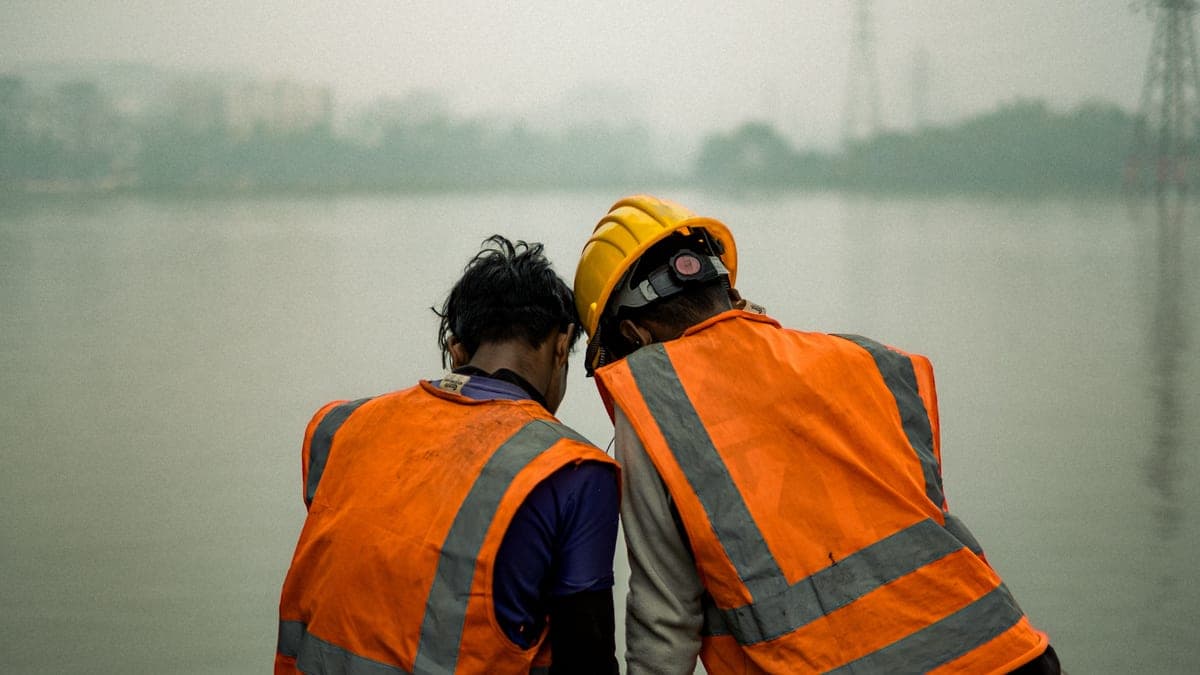
For work, a heated vest under your existing coat beats a heated jacket. The same 7.4 V pack drives the same chest and back elements, but your work coat keeps its abrasion resistance and supplies the insulation, your arms stay unrestricted, and the battery stays somewhere you can reach without undressing.
Why the vest is the trades answer
The case for a heated vest on a work site is not that it is warmer than a heated jacket. It is not — they run the same elements off the same packs. The case is that everything else about it suits the job better.
- Your coat stays your coat. Work outerwear is chosen for abrasion resistance, pockets and hi-vis. A heated jacket replaces all of that with a garment chosen for its electronics. A vest goes underneath and changes nothing.
- Arms stay free. A vest does not bunch at the elbow when you reach overhead, and there is no sleeve to catch. Anyone who has worn a puffy jacket up a ladder knows the difference.
- The battery is reachable. Swapping a pack should take seconds, not an undressing routine.
- Insulation you already paid for does the work. The efficiency argument, and the one that actually saves battery: your coat reduces the heat loss the element is fighting, so the same watt-hours last longer and feel warmer.
Quick picks
Tap any row to jump to the full write-up below. The energy column is the pack’s capacity times its voltage — the number this category does not print.
| # | Product | Best for | Energy | Price |
|---|---|---|---|---|
| 1 |  Milwaukee M12 Heated AXIS VestTwo zones instead of the jacket's three, and Milwaukee's own numbers say it runs out in a third of the time — which is… | The hottest thing in the M12 line | 21.6 Wh | $279.00View on Amazon |
| 2 | ororo Men's Lightweight Heated VestA vest puts the same pack energy into the same core zones as a jacket while heating far less fabric, which is why it i… | The best value in heated apparel | 38.5 Wh | Check price on Amazon |
| 3 |  Venustas Men's Heated Vest, Lightweight QuiltedVenustas puts larger carbon-fiber panels over more of the torso than most rivals, and publishes less about the power b… | Broad element coverage on a budget | 37.0 Wh | $149.99View on Amazon |
| 4 | 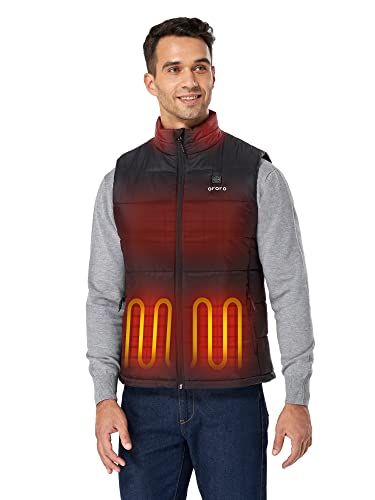 ororo Men's 4-Zone USB-C Heated Puffer VestUSB-C matters more than it sounds: the pack recharges from the same brick as your phone and your laptop, which removes… | Charging off one cable | 37.6 Wh | $149.99View on Amazon |
| 5 |  Milwaukee Women's M12 Heated AXIS VestThe same two zones and the same published hours as the men's AXIS vest, on a cut for a different torso — which matters… | A women's cut on the same platform | 21.6 Wh | $256.15View on Amazon |
#ad — buy links are tagged and earn us a commission at no extra cost to you. Prices come from a live feed; where none is available the button reads “Check price” rather than showing a number we cannot stand behind. How we are funded.
Milwaukee M12 Heated AXIS Vest
Two zones instead of the jacket's three, and Milwaukee's own numbers say it runs out in a third of the time — which is the tell that its elements pull harder. If you want heat rather than hours, this is the M12 garment that delivers it.
#ad Price as of October 17, 2026. How we are funded.
The numbers
- Energy
- 21.6 Wh
- Pack
- Any M12 pack; kits ship with a 2.0 Ah
- Heat zones
- 2
- Maker's runtime claim
- 8 h low / 4 h medium / 2 h high
- Implied draw on a 2.0 Ah
- ~2.7 W / ~5.4 W / ~10.8 W
- Heat zones
- Chest and back
- Settings
- Three, per zone, from a one-touch LED controller
- Care
- Machine washable with the battery removed
On wattage: Milwaukee publishes no wattage, but it publishes hours for all three settings — and the 8/4/2 pattern is a clean doubling of draw at each step. On a 2.0 Ah pack that inverts to roughly 2.7 W, 5.4 W and 10.8 W. Milwaukee does not state which pack those hours assume, so treat them as a shape rather than a fixed figure.
What we like
- The shortest claimed high-setting runtime in the M12 line, which on fixed pack energy is the arithmetic signature of the most heat
- A vest layers under the work coat you already own, so your coat does the insulating and the battery only tops up
- Runs off the same packs as your tools — the runtime problem becomes a ten-second swap
What we do not
- Two hours on high is genuinely short, and it is Milwaukee's own figure rather than our estimate
- No wattage published, and no pack named for the runtime claims
- Two zones means nothing at the shoulders, which the AXIS jacket does cover
Who this suits
Someone on M12 who is cold rather than impatient — standing still in hard cold, with spare packs in the van and a coat to wear over it.
Who should skip it
You want to set it and forget it for a shift. On high this is a two-hour garment by Milwaukee's own reckoning, and no amount of layering changes that.
Spec sources: Milwaukee Tool — M12 Heated Gear line (per-setting run-time and heat zones for every garment) · Milwaukee Tool — M12 REDLITHIUM CP2.0 battery, 12V 2.0Ah
ororo Men's Lightweight Heated Vest
A vest puts the same pack energy into the same core zones as a jacket while heating far less fabric, which is why it is the smarter buy for most people who think they want a jacket.
#ad No live price available, so we show none. How we are funded.
The numbers
- Energy
- 38.5 Wh
- Pack
- 7.4 V, 5,200 mAh
- Published output
- 2.5 A
- Heat zones
- 3
- Maker's runtime claim
- 8-10 h low / 2-3 h high
- Heat zones
- Left and right chest, mid-back
- Settings
- Three
- Care
- Machine washable with the battery removed
On wattage: No published wattage, but ororo's per-setting hours plus the published pack capacity give you the implied draw at each setting.
What we like
- Layers under any coat you already own, which is what most people actually need
- Identical core zones to the jacket at a lower price
- Arms stay free, which matters for anyone working with their hands
What we do not
- No arm or neck heat at all
- Needs an outer layer in wind
- The same unpublished wattage as everything else here
Who this suits
Almost everyone comparing a first heated purchase. Start here, and add gloves before you add sleeves.
Who should skip it
Your cold problem is your arms or your hands. A vest will not touch either, and one bought to fix cold hands is a wasted purchase.
Spec sources: ororo — Heated Apparel Battery Guide (capacity, voltage and output for every pack) · Amazon — ororo 7.4V 5200mAh battery listing (per-setting runtime claim)
Venustas Men's Heated Vest, Lightweight Quilted
Venustas puts larger carbon-fiber panels over more of the torso than most rivals, and publishes less about the power behind them than most rivals — you are buying coverage on trust.
The numbers
- Energy
- 37.0 Wh
- Pack
- 7.4 V (capacity varies)
- Heat zones
- 4
- Charge time
- About 2.5 h per the maker
- Heat zones
- Collar, both shoulders, mid-back, and pockets depending on SKU
- Settings
- Three
- Care
- Machine washable with the battery removed
On wattage: No published wattage, and one unqualified 10-hour figure.
On the pack: Capacity varies by SKU and is not published consistently. Check your listing.
What we like
- Larger heating panels than the three-zone norm
- Water-resistant face fabric
- Usually the cheapest way to get collar heat
What we do not
- The least complete power disclosure of any brand on this list
- Pack capacity is inconsistent between SKUs sold under similar names
- One runtime number with no setting attached tells you nothing you can act on
Who this suits
A price-led buyer who wants coverage and is not going to do the arithmetic.
Who should skip it
You are the kind of buyer who reads a spec sheet. Venustas does not publish enough of one to satisfy you.
Spec sources: Venustas — heated jacket collection
ororo Men's 4-Zone USB-C Heated Puffer Vest
USB-C matters more than it sounds: the pack recharges from the same brick as your phone and your laptop, which removes the proprietary-charger failure mode entirely.
The numbers
- Energy
- 37.6 Wh
- Pack
- ororo PD 5K, 5,075 mAh at 7.4 V
- Published output
- 2.5 A
- Recharge
- USB-C
- Heat zones
- 4
- Heat zones
- Left and right chest, mid-back, collar
- Settings
- Three
- Care
- Machine washable with the battery removed
On wattage: No published wattage. ororo does publish the pack's capacity, voltage and output current, which is three more useful numbers than most of this category prints.
What we like
- USB-C recharge kills the proprietary-brick problem, which is the most common way these packs get abandoned in a drawer
- Puffer insulation means the vest is warm before you switch anything on
- Published capacity, voltage and output amps — unusually complete for this category
What we do not
- Puffer bulk is real under a fitted coat
- Four zones on a 37.6 Wh pack is a thinner spread than three zones on the same energy
- Still no wattage figure
Who this suits
Someone who travels with the vest and does not want a second charger in the bag.
Who should skip it
You need it to disappear under a slim shell. It will not.
Spec sources: ororo — Heated Apparel Battery Guide (capacity, voltage and output for every pack)
Milwaukee Women's M12 Heated AXIS Vest
The same two zones and the same published hours as the men's AXIS vest, on a cut for a different torso — which matters more than it sounds, because an element only warms what it is pressed against.
#ad Price as of October 17, 2026. How we are funded.
The numbers
- Energy
- 21.6 Wh
- Pack
- Any M12 pack
- Heat zones
- 2
- Maker's runtime claim
- 8 h low / 4 h medium / 2 h high
- Fit
- Women's last
- Heat zones
- Chest and back
- Settings
- Three, per zone
- Care
- Washer and dryer safe, per Milwaukee's current-model page
On wattage: No published wattage. Milwaukee publishes the same 8/4/2 hours as the men's vest, so the same inversion applies and the same missing-pack caveat applies with it.
On the pack: The earlier generation's listing said "Battery Not Included" outright. The current listing's title does not say either way, and Milwaukee sells this vest both as a kit and vest-only — check which variant you have selected before you pay.
What we like
- A genuine women's cut rather than a downsized men's vest, which is what puts the elements over the right places
- Same pack ecosystem, so it shares a charger and spares with the rest of the platform
- Layers under an existing coat, which is the most efficient way to spend a small pack
What we do not
- Frequently sold as vest-only, with the pack and charger extra
- Two zones and two hours on high, exactly as with the men's version
- Milwaukee does not name the pack its 8/4/2 hour figures assume
Who this suits
A woman already on the M12 platform, or anyone whose shoulders a men's small does not fit.
Who should skip it
You own no M12 tools. Buying into a tool platform for a single vest is the most expensive route into heated clothing there is.
Spec sources: Milwaukee Tool — M12 Women's Heated AXIS Vest, F300B-21M (two zones, 8 h low / 4 h medium / 2 h high, washer and dryer safe) · Milwaukee Tool — M12 Heated Gear line (per-setting run-time and heat zones for every garment) · Milwaukee Tool — M12 REDLITHIUM CP2.0 battery, 12V 2.0Ah
The energy figures
Watt-hours, and what they buy
Energy is capacity times nominal voltage. The ceiling draw is the pack’s own published output current times its voltage. The implied draw runs the maker’s advertised hours backwards. Nothing here is measured — check our working.
| Product | Capacity | Volts | Energy | Ceiling draw | Shortest runtime | Implied draw at the claim |
|---|---|---|---|---|---|---|
| Milwaukee M12 Heated AXIS Vest | 2,000 mAh | 10.8 V | 21.6 Wh | Not published | Not derivable | 10.8 Wat 2 h high |
| ororo Men's Lightweight Heated Vest | 5,200 mAh | 7.4 V | 38.5 Wh | 18.5 W | 2h 05m | 15.4 Wat 2.5 h high |
| Venustas Men's Heated Vest, Lightweight Quilted | 5,000 mAh | 7.4 V | 37.0 Wh | Not published | Not derivable | 3.7 Wat 10 h maker's headline claim |
| ororo Men's 4-Zone USB-C Heated Puffer Vest | 5,075 mAh | 7.4 V | 37.6 Wh | 18.5 W | 2h 02m | 3.8 Wat 10 h maker's headline claim |
| Milwaukee Women's M12 Heated AXIS Vest | 2,000 mAh | 10.8 V | 21.6 Wh | Not published | Not derivable | 10.8 Wat 2 h high |
“Not derivable” means the manufacturer does not publish the figure the sum needs. We leave it blank rather than estimating it, borrowing a number from a similar model, or rounding one into existence. These are ceilings, not promises: cold, wind, movement and pack age all push real runtime below them. Run your own numbers.
Note the split in that table. The consumer packs sit around 35 to 38 watt-hours; the tool-platform packs come in smaller, at 21.6 watt-hours for an M12 2.0 Ah. On a spec sheet the consumer vests look like the obvious buy. On a job site the tool vests frequently win anyway, for the reason in the next section.
The shift is longer than the battery. That is the real problem.
Every heated garment in this category runs out before a full outdoor shift does, and no amount of shopping changes it. A standard 38.5 Wh consumer pack against the 18.5 W its own output rating allows is a little over two hours at maximum draw. On a lower setting you will do considerably better, but nobody is getting eight hours of useful heat from one pack.
So the question stops being "which vest lasts longest" and becomes "how fast can I put a fresh pack in". That reframing is what makes the tool-platform vests interesting despite their smaller batteries: if there are four charged M12 packs in the van because your impact driver needs them, the runtime problem is a ten-second swap rather than a specification you are stuck with.
If you are not on a tool platform, buy a consumer vest and buy a second pack at the same time. Heated jackets for work works through the same logistics for the jacket case, and the Milwaukee M12 line covers what that platform actually publishes.
Keep the pack warm and it lasts longer
One free improvement worth knowing. Lithium cells deliver less usable capacity when they are cold, which is an unfortunate property for a product that only gets used in the cold.
A pack in an inside pocket, against your torso and under your coat, stays meaningfully warmer than one in an outer hem pocket — and delivers closer to its rated capacity as a result. The same applies to spares: a spare pack kept in an inside jacket pocket comes online at close to full capacity, while one that has been sitting in a cold van does not. It costs nothing and it is the single easiest thing you can do about winter runtime.
What to check before you buy
- Will it fit under your actual work coat? Try it with the coat, not without. A puffer vest under a fitted shell is a tight combination.
- Is the pack capacity published? If a listing gives you a runtime and no capacity, there is nothing to check and no way to compare it with anything here.
- How cheap are spare packs, and are they stocked? For work use this matters more than the original pack's size. The pack fails long before the garment does.
- Is the shell quiet and washable? Site clothing gets filthy weekly. Check the element's wash rating rather than assuming, and see washing heated clothing.
- Does it have a collar element? The neck is the most commonly cold uncovered area and the zone most often left out. It is the one place paying for a fourth zone is clearly worth it.
Be honest about whether heat is the fix
One thing worth saying before you spend. If your current setup is a good insulated work coat and you are still cold standing still, a heated vest genuinely helps — a battery adds warmth that insulation alone cannot, because insulation only slows the loss of heat you are producing.
But if your current setup is a hoodie and a hi-vis, the cheapest large improvement available to you is a proper insulating mid-layer, not electricity. Thirty-eight watt-hours cannot compensate for clothing that is losing heat as fast as the element makes it. Are heated jackets worth it sets out where the money is best spent.
What we would skip, and why
- A heated vest as your outer layer on site
- A shell vest has almost no abrasion resistance and no real wind block. Worn on the outside it gets destroyed by the work and spends its battery fighting the weather at the same time. The whole efficiency argument for a vest depends on it going UNDER the coat you already own — your coat takes the abuse and provides the insulation, and the vest only tops up the heat.
- Any vest whose battery pocket you cannot reach with the coat on
- This sounds trivial until it is seven in the morning and you are unzipping a work coat in the wind to change a pack. Inside-chest pockets are warmer for the battery, which genuinely helps capacity in the cold — but if the coat goes over the top, an inside pocket becomes a two-minute job every couple of hours. Check where the pocket sits relative to how you will actually wear it.
- Buying a heated vest to fix cold hands on site
- Warming your core does help peripheral circulation, but it is an indirect route and an expensive one. If the complaint is that your fingers stop working, heated glove liners cost a fraction of a vest and address it where it is happening.
Our criteria, and what we did not do
- Battery reachability ranked first, because on a work day you will be changing packs with the coat on.
- Published capacity and voltage, converted at nominal voltage, as everywhere on this site.
- Spare-pack economics weighted. For a shift longer than the pack, what matters is how cheap and available the second battery is.
- Bulk under a work coat assessed — a vest that will not fit under your existing outerwear defeats the purpose.
- We have not worn any of these on a job or anywhere else. How we work.
We have not worn, tested or owned any of these products, and we say so on every page rather than in a footer. What we do instead is compile the published specifications and do the arithmetic. The full method.
Frequently asked
- Is a heated vest or heated jacket better for work?
- A vest, for most trades. Same elements and same pack, but your work coat keeps its abrasion resistance and supplies the insulation, your arms stay free, and the battery is reachable without undressing.
- Will a heated vest last a full work shift?
- Not on one pack at a useful setting. A standard 38.5 watt-hour pack against its own 18.5 W output ceiling is about two hours at maximum draw. Plan on spare packs, or use a tool-platform vest where spares already exist.
- Can you wear a heated vest under a work coat?
- Yes, and that is the intended and most efficient way to wear one. Your coat provides the insulation and the wind block; the vest only has to top up the heat, so the same battery goes further.
- Do heated vests work in freezer or cold-store work?
- They help, with two caveats. Constant cold reduces a lithium pack's usable capacity, so expect less than the rated figure. And a vest does nothing for hands, which is usually the limiting factor in cold-store work — heated glove liners address that directly.
- Are heated vests safe on a job site?
- Treat them as warmth, not PPE. They are not cut-rated, arc-rated or hi-vis unless the listing specifically says so, and a heated vest does not substitute for whatever your site requires. Worn under compliant outerwear it changes nothing about your protection.
- How do I make a heated vest battery last longer in winter?
- Keep it warm. Lithium delivers less when cold, so a pack in an inside pocket against your body outperforms one in an outer hem pocket, and a spare kept warm comes online at closer to full capacity. Running the lowest setting that works is the other free gain.
Sources
Related

Heated Vests
Same core zones as a jacket, less fabric to heat, and it layers under the coat you already own. Usually the smarter first purchase.
Heated jackets for work, where the runtime claim meets an eight-hour shift
Why the runtime question on a job site is really a logistics question, and which jackets answer it.
Milwaukee heated gear: the whole M12 line, run through the arithmetic
Milwaukee publishes hours for every setting on every garment. Inverted, the line says the jacket lasts longer and the vest gets hotter.
Heated gloves for work, where a glove you take off is worth nothing
Dexterity is the specification, not a preference. Which format survives a shift, and why the core comes first.
Layering heated clothing: the free upgrade almost nobody uses
Heat source inside the insulation, weather protection outside. The ordering is free and almost everyone gets it backwards.

Gobi Heat: the only brand here that publishes watt-hours — and the one runtime figure it repeats too often
The only apparel brand here that prints the watt-hours on its own battery pages - and the one whose 3-zone and 5-zone garments claim identical runtimes off an identical pack.
Gobi Heat Ibex review: the brand that publishes watt-hours, and the claim that undoes it
Gobi publishes the watt-hours, which is rare and real. It also gives this five-zone vest the same runtime as its three-zone one on the same pack - so buy the shell, not the zone count.