Heated jackets for work, where the runtime claim meets an eight-hour shift
One pack does not cover a working day. The jackets that solve this are the ones you can swap in ten seconds without taking anything off.
By Scooter M. · Published August 31, 2026
How this is funded: buy links here are tagged and earn us a commission at no extra cost to you. It does not affect what we recommend, and we take no free product and no sponsorship. Read the disclosure.
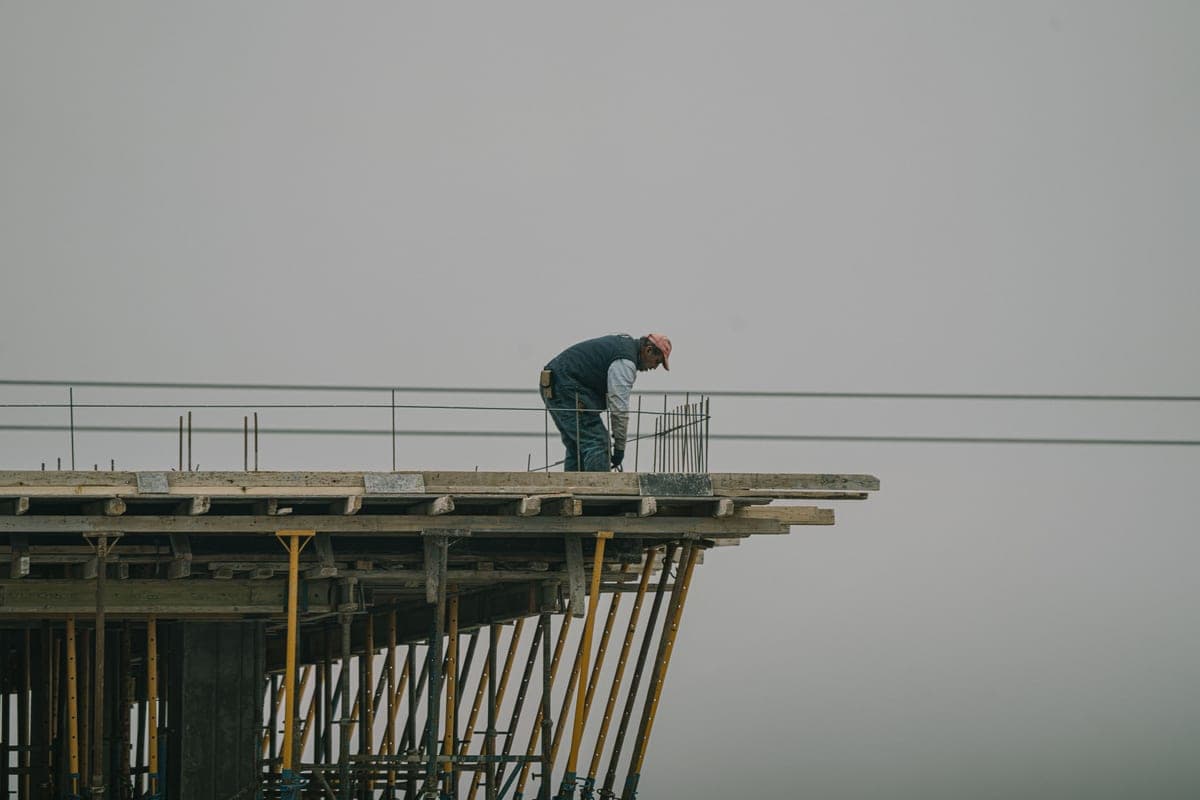
No heated jacket battery covers an eight-hour outdoor shift at a useful setting. The standard 7.4 V, 5,200 mAh pack holds 38.5 watt-hours and its own output rating caps draw at about 18.5 watts, so the floor is just over two hours. For work, the right question is not which jacket lasts longest but which one you can re-pack fastest.
The shift is longer than the battery. Plan around that.
Everything else on this page follows from one number. A full pack in the most common heated jacket configuration holds 38.5 watt-hours. The pack's own published output rating — 2.5 amps at 7.4 volts — means it can deliver at most 18.5 watts. Divide and you get 2 hours 05 minutes at maximum draw.
That is not the manufacturer being dishonest; it is arithmetic on the manufacturer's own published figures. And it means that if your day is eight hours in the cold, the interesting question is not runtime at all. It is logistics.
Quick picks
Tap any row to jump to the full write-up below. The energy column is the pack’s capacity times its voltage — the number this category does not print.
| # | Product | Best for | Energy | Price |
|---|---|---|---|---|
| 1 | 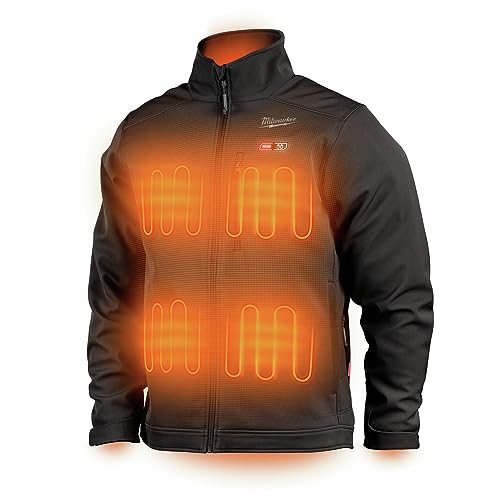 Milwaukee M12 Heated TOUGHSHELL Jacket (204B-20)Built like site clothing rather than outerwear, and the only jacket here whose battery you can swap in seconds because… | Anyone already on M12 | 21.6 Wh | $219.00View on Amazon |
| 2 |  ororo PD 7K Rechargeable Battery for Heated Apparel7,000 mAh of LG cells with a published 13.5-hour claim and a six-mark certification list — the biggest step up availab… | The largest ororo pack you can actually buy | 51.8 Wh | $89.99View on Amazon |
| 3 |  ororo Men's Soft Shell Heated JacketThe clearest power story in the category: ororo publishes capacity and voltage for every pack it sells, so you can wor… | A first heated jacket | 38.5 Wh | $159.99View on Amazon |
| 4 |  Venustas Men's Heated Vest, Lightweight QuiltedVenustas puts larger carbon-fiber panels over more of the torso than most rivals, and publishes less about the power b… | Broad element coverage on a budget | 37.0 Wh | $149.99View on Amazon |
| 5 |  Third-Party 7.4V 16,000mAh Heated Apparel BatteryThe largest capacity on this page by a wide margin, and the one we are most careful about: a third-party pack with a b… | Runtime at any cost | 118.4 Wh | $27.99View on Amazon |
#ad — buy links are tagged and earn us a commission at no extra cost to you. Prices come from a live feed; where none is available the button reads “Check price” rather than showing a number we cannot stand behind. How we are funded.
Milwaukee M12 Heated TOUGHSHELL Jacket (204B-20)
Built like site clothing rather than outerwear, and the only jacket here whose battery you can swap in seconds because you already own four of them.
#ad Price as of October 17, 2026. How we are funded.
The numbers
- Energy
- 21.6 Wh
- Pack
- M12 REDLITHIUM CP2.0, 2.0 Ah
- Voltage used here
- 10.8 V nominal (marketed as 12 V)
- Heat zones
- 3
- Maker's runtime claim
- 12 h low / 6 h medium / 3 h high
- Heat zones
- Chest, back and hand pockets
- Settings
- Three, plus a preheat cycle
- Care
- Machine washable with the battery removed
On wattage: Milwaukee publishes run-time, not watts — but it publishes all three settings, which is more than most of this category manages. The 12/6/3 pattern is a clean doubling of draw at each step. Milwaukee does not state which M12 pack those hours assume, so the resulting wattage is a shape rather than a fixed figure.
On the pack: Sold bare. The live listing title reads "Jacket Only" — no pack and no charger in the box. That is the right buy if you already run M12 and the wrong one if you do not. See [which garments include a battery](/battery/battery-included-or-separate).
What we like
- Hot-swappable packs — the only real answer to a short runtime is a second battery, and you already have one
- Genuinely durable shell fabric, built for work rather than for a catalog photo
- The pack doubles as a tool battery, so nothing in the van is single-purpose
What we do not
- The 2.0 Ah pack is small by heated-apparel standards once you convert it honestly
- Jacket-only SKUs ship without a battery, which is easy to miss at checkout
- Heavier than a soft-shell layer
Who this suits
A trades worker with an M12 kit already in the van, for whom a spare pack costs nothing extra to carry.
Who should skip it
You own no M12 tools. Buying into a tool platform for one jacket is the most expensive route into heated clothing.
Spec sources: Milwaukee Tool — M12 REDLITHIUM CP2.0 battery, 12V 2.0Ah · Milwaukee Tool — M12 Heated Jacket Kit (up to 8 hours on the REDLITHIUM 2.0) · Milwaukee Tool — M12 Heated TOUGHSHELL jacket kit
ororo PD 7K Rechargeable Battery for Heated Apparel
7,000 mAh of LG cells with a published 13.5-hour claim and a six-mark certification list — the biggest step up available to an ororo owner, because the larger PD 10K is not sold through this retailer.
#ad Price as of October 17, 2026. How we are funded.
The numbers
- Energy
- 51.8 Wh
- Capacity
- 7,000 mAh at 7.27 V — about 50.9 Wh
- Published output
- 30 W out, up to 24 W in
- Recharge
- Fully recharged within 3 hours
- Certification
- UL2056, CE, FCC, CB, WEEE, CA65 per ororo
- Heat zones
- Not applicable — this is a battery
- Settings
- Garment-dependent
- Care
- Not washable — remove before laundering the garment
On wattage: No garment wattage is published, but this pack states its own delivery figures: "up to 24W input" and "30W output". The 30 W output is a ceiling for charging devices rather than a figure any ororo garment draws — inverting the 13.5-hour claim against about 50.9 Wh gives roughly 3.8 W, which is the draw that claim actually assumes.
On the pack: Worth reading the voltage twice. This pack's own product page gives "7.27V", while ororo's battery guide lists the PD 7K at 7.4 V. At 7.27 V the 7,000 mAh works out to about 50.9 Wh; at 7.4 V it is 51.8 Wh. We use the figure printed on the product page itself and note the 2% disagreement rather than quietly picking the flattering one.
What we like
- The largest ororo pack actually purchasable here — roughly 43% more energy than the Mini 5K that ships with several ororo garments
- ororo publishes a real certification list, with UL2056 printed on the casing
- USB-C in and out at 30 W means it doubles as a fast phone bank
- Three-hour full recharge is quick for this capacity
What we do not
- ororo's own two pages disagree on the voltage — 7.27 V on the product page, 7.4 V in the battery guide
- No watt-hour figure printed for this pack, unlike ororo's Mini 5K and PD 5K pages
- The larger PD 10K exists in ororo's lineup but is not sold through this retailer
- Costs a meaningful fraction of a whole garment, which is the usual complaint about spare packs
Who this suits
An ororo owner whose garment shipped with a Mini 5K and who has discovered that the battery, not the jacket, is what ends their day.
Who should skip it
Your garment already ships a PD 5K or larger and your days are short. The jump from 37.5 Wh to 50.9 Wh is real but it is not transformative.
Spec sources: ororo — 7000 mAh PD 7K Rechargeable Battery ("7,000mAh" with "premium LG cells"; voltage given as "7.27V" on this page against 7.4 V in ororo's battery guide; "up to 24W input"; "30W output"; "fully recharged within 3 hours"; "up to 13.5 hours of heat"; "UL2056, CE, FCC, CB, WEEE, CA65 certified"; "1 USB-C Port, 1 USB-C Cable, 1 DC Port"; NTC sensor) · ororo — Heated Apparel Battery Guide (capacity, voltage and output for every pack)
ororo Men's Soft Shell Heated Jacket
The clearest power story in the category: ororo publishes capacity and voltage for every pack it sells, so you can work out what you are getting instead of taking a marketing number on faith.
The numbers
- Energy
- 38.5 Wh
- Pack
- 7.4 V, 5,200 mAh (ororo B19G)
- Published output
- 2.5 A
- Heat zones
- 3
- Maker's runtime claim
- 8-10 h low / 5-6 h medium / 2-3 h high
- Heat zones
- Left and right chest, mid-back
- Settings
- Three, cycled from a single chest button
- Care
- Machine washable with the battery removed
On wattage: ororo publishes no wattage for the garment. It does publish hours for each of the three settings, which states the draw whether it meant to or not.
What we like
- ororo publishes capacity AND voltage for every pack, which almost nobody else in this category does
- Per-setting runtime claims rather than one 'up to' number, so the low-to-high spread is visible before you buy
- Soft-shell cut layers under a work coat without bulk
What we do not
- No published wattage for the garment itself
- Three zones only — nothing at the arms or the kidneys
- The headline runtime figure is the low setting, as it is everywhere
Who this suits
Someone standing still outdoors for two to four hours at a stretch who wants the power figures on the table before buying.
Who should skip it
You need heat for a full eight-hour shift on high. No 38 Wh pack does that, and this one does not claim to.
Spec sources: ororo — Heated Apparel Battery Guide (capacity, voltage and output for every pack) · Amazon — ororo 7.4V 5200mAh battery listing (per-setting runtime claim)
Venustas Men's Heated Vest, Lightweight Quilted
Venustas puts larger carbon-fiber panels over more of the torso than most rivals, and publishes less about the power behind them than most rivals — you are buying coverage on trust.
The numbers
- Energy
- 37.0 Wh
- Pack
- 7.4 V (capacity varies)
- Heat zones
- 4
- Charge time
- About 2.5 h per the maker
- Heat zones
- Collar, both shoulders, mid-back, and pockets depending on SKU
- Settings
- Three
- Care
- Machine washable with the battery removed
On wattage: No published wattage, and one unqualified 10-hour figure.
On the pack: Capacity varies by SKU and is not published consistently. Check your listing.
What we like
- Larger heating panels than the three-zone norm
- Water-resistant face fabric
- Usually the cheapest way to get collar heat
What we do not
- The least complete power disclosure of any brand on this list
- Pack capacity is inconsistent between SKUs sold under similar names
- One runtime number with no setting attached tells you nothing you can act on
Who this suits
A price-led buyer who wants coverage and is not going to do the arithmetic.
Who should skip it
You are the kind of buyer who reads a spec sheet. Venustas does not publish enough of one to satisfy you.
Spec sources: Venustas — heated jacket collection
Third-Party 7.4V 16,000mAh Heated Apparel Battery
The largest capacity on this page by a wide margin, and the one we are most careful about: a third-party pack with a big number on it deserves more skepticism than a brand pack with a small one.
#ad Price as of October 17, 2026. How we are funded.
The numbers
- Energy
- 118.4 Wh
- Claimed capacity
- 16,000 mAh at 7.4 V
- Output current
- Not published
- Adapters
- Two cables for common garment connectors
- Heat zones
- Not applicable — this is a pack, not a garment
- Settings
- Not applicable
- Care
- Not washable
On wattage: No published wattage and no published output current, which means we cannot even state the pack's own delivery ceiling.
On the pack: Third-party capacity claims are not independently verified by anyone, including us. The watt-hour figure below is arithmetic on the seller's own numbers — it is not a measurement of the pack.
What we like
- If the claim holds, roughly three times the energy of the pack most jackets ship with
- An LED display means you know where you stand before you go out
- Adapter cables cover the common garment connectors
What we do not
- Third-party capacity claims are unverified by definition
- No published output current, so the delivery ceiling is unknown
- A pack this large deserves a certification you can look up, and this one's is not clearly stated
Who this suits
Someone whose jacket genuinely dies mid-shift and who has already weighed the trade-off.
Who should skip it
You are not comfortable buying an unverified capacity claim from a third party. That is the right instinct and we share it.
Spec sources: Amazon — third-party 7.4V 16000mAh heated apparel pack · ororo — Heated Apparel Battery Guide (capacity, voltage and output for every pack)
Why tool-platform jackets look better on site than on paper
An M12 2.0 Ah pack holds 21.6 watt-hours at the platform's 10.8 V nominal — the smallest battery of anything on this page. On a spec sheet that looks like a weakness. On a job site it is close to irrelevant, because you have four of them charged in the van and swapping one takes ten seconds with gloves on.
Milwaukee's own claim for the jacket is up to 8 hours on that REDLITHIUM 2.0 pack. Run that backwards: 21.6 watt-hours over 8 hours implies a draw of 2.7 watts. That is a very low setting, and it is the number the marketing is built on. But the platform argument survives the debunking, because the answer to a short runtime here is another pack rather than a compromise.
The condition is that you already own the platform. If you do not, the M12 versus 20V MAX comparison works through what buying in actually costs, and the honest answer for most people is that it is not worth it for a jacket alone. If you are already on M12, the full M12 heated line converted compares every garment Milwaukee makes on its own published hours.
Watt-hours, and what they buy
Energy is capacity times nominal voltage. The ceiling draw is the pack’s own published output current times its voltage. The implied draw runs the maker’s advertised hours backwards. Nothing here is measured — check our working.
| Product | Capacity | Volts | Energy | Ceiling draw | Shortest runtime | Implied draw at the claim |
|---|---|---|---|---|---|---|
| Milwaukee M12 Heated TOUGHSHELL Jacket (204B-20) | 2,000 mAh | 10.8 V | 21.6 Wh | Not published | Not derivable | 7.2 Wat 3 h high |
| ororo PD 7K Rechargeable Battery for Heated Apparel | 7,000 mAh | 7.4 V | 51.8 Wh | 22.2 W | 2h 20m | 3.8 Wat 13.5 h maker's headline claim, with ororo apparel |
| ororo Men's Soft Shell Heated Jacket | 5,200 mAh | 7.4 V | 38.5 Wh | 18.5 W | 2h 05m | 15.4 Wat 2.5 h high |
| Venustas Men's Heated Vest, Lightweight Quilted | 5,000 mAh | 7.4 V | 37.0 Wh | Not published | Not derivable | 3.7 Wat 10 h maker's headline claim |
| Third-Party 7.4V 16,000mAh Heated Apparel Battery | 16,000 mAh | 7.4 V | 118.4 Wh | Not published | Not derivable | No claim published |
“Not derivable” means the manufacturer does not publish the figure the sum needs. We leave it blank rather than estimating it, borrowing a number from a similar model, or rounding one into existence. These are ceilings, not promises: cold, wind, movement and pack age all push real runtime below them. Run your own numbers.
What a work jacket needs that a consumer jacket does not
- A pack you can change without undressing. If the battery pocket is inside the jacket, you are unzipping in the cold every two hours.
- Shell fabric that survives abrasion. Elbows, forearms and the small of the back are where a work jacket dies. The heating element outlives the fabric on most of these.
- A control you can hit with a glove on. A recessed soft button is a poor decision on a garment worn by people wearing gloves.
- Washability, and a lot of it. Site clothing gets filthy weekly. Check the element's wash rating, not just the shell's.
- Charging that fits the day. A pack that takes four hours to charge and runs for two is a pack you will use once.
The layering answer, which is cheaper than all of this
Before spending on a heated work jacket, it is worth being honest about what is failing. If your current setup is a good insulated coat and you are still cold, heat helps. If your current setup is a hoodie and a hi-vis, the cheapest large improvement is insulation, not electricity — a heated element cannot outrun a garment that is losing heat as fast as the battery makes it.
The efficient middle path for trades is a heated vest under an existing work coat. Same core zones, less fabric to warm, the coat doing the insulating, and the battery in a place you can reach. Heated vests covers it. Heated vests for work covers that case specifically, including the spare-pack math for a full shift.
What we would skip, and why
- Buying into a tool battery platform you do not already own
- The M12 jacket is excellent if there are four M12 packs in your van. If there are none, you are buying a jacket plus a battery plus a charger plus a platform commitment, and the total is far more than a consumer jacket with a spare pack. The platform argument only works when the platform is already sunk cost.
- Any single-pack jacket sold as an all-day solution
- 38 watt-hours does not cover eight hours at a setting you would actually use, and no shell fabric changes that. A jacket marketed for all-day outdoor work without a spare-pack story is selling you the low-setting number as if it were the working one.
Our criteria, and what we did not do
- Swap speed is the primary criterion here, not runtime. Over a shift, how fast you can change packs matters more than how long one lasts.
- Durability of the shell is weighted heavily — a work jacket that abrades through at the elbows in one season is a false economy regardless of its electronics.
- Published capacity and voltage, converted at nominal voltage as everywhere on this site.
- We have not worn any of these on a job site or anywhere else. See how we do this.
We have not worn, tested or owned any of these products, and we say so on every page rather than in a footer. What we do instead is compile the published specifications and do the arithmetic. The full method.
If your platform is DEWALT rather than Milwaukee, the same logistics apply and the packs are larger — a 20V MAX 2.0 Ah holds 36 Wh against the M12's 21.6. DEWALT heated jackets, converted covers every garment in that line that is currently in stock, including the one that publishes a runtime and the three that do not.
Frequently asked
- Will a heated jacket last an 8-hour shift?
- Not on one pack at a setting you would use. The common 38.5 watt-hour pack is capped at about 18.5 watts by its own published output rating, giving a floor of roughly two hours. Plan for spare packs, or use a tool-platform jacket where spares are already in the van.
- Is the Milwaukee M12 heated jacket worth it?
- If you already own M12 tools, yes — swapping packs solves the runtime problem outright. If you do not, you are buying a jacket plus a battery plus a charger plus a platform, and a consumer jacket with a spare pack costs considerably less for the same warmth.
- How many spare batteries do I need for a work day?
- Divide your outdoor hours by the runtime you get at your usual setting. For a 38.5 watt-hour pack at high, that is roughly two hours per pack, so a full eight-hour shift on high means four. On a medium setting you will do better, and most people settle there.
- Can heated jackets be washed after a dirty shift?
- Most can, machine, on a gentle cycle with the battery out. Check the element's rating rather than assuming, and never wash the pack. Site jackets need washing often enough that this is worth confirming before purchase.
- Is a heated vest better than a heated jacket for work?
- For most trades, yes. A vest under your existing work coat puts the elements over the same core zones, leaves your arms free, keeps your coat's insulation and abrasion resistance, and puts the battery somewhere you can reach without undressing.
Sources
Related
Heated Jackets
The biggest category and the noisiest claims. We convert capacity and voltage into watt-hours, then into hours at each setting.
M12 or 20V MAX for a heated jacket?
A 66% energy gap the labels hide — and why the platform you already own still wins anyway.
Running heated clothing off a tool battery
What M12 and 20V MAX packs really hold, and the adapter question we will not pretend to have an answer to.
Heated gloves for work, where a glove you take off is worth nothing
Dexterity is the specification, not a preference. Which format survives a shift, and why the core comes first.

Heated Vests
Same core zones as a jacket, less fabric to heat, and it layers under the coat you already own. Usually the smarter first purchase.
Spare and replacement batteries, converted before you buy
A second pack is the cheapest real upgrade here. Every capacity claim converted to watt-hours, with the airline band attached — including the class that quietly stops being carry-on legal.

Heated jackets in big and tall sizes
Most of the category stops at 2XL without saying so. What is documented past it, which maker offers a genuine tall cut, and why a bigger jacket needs a bigger battery it does not get.
DEWALT heated jackets: the 20V MAX line, run through the arithmetic
Every DEWALT heated garment you can buy, converted. Bigger packs than Milwaukee, one runtime claim that names its pack, three that name nothing — and a 90-day warranty on the newest vest.

Heated jackets for hunting, and the arms question nobody asks
One brand sells the same hunting garment as a jacket and a vest - same battery, same five zones. Only the placement changes, and for a long sit that is the whole decision.