Spare and replacement batteries, converted before you buy
The pack in the box is one pack, and one pack is not a day. Here is what a second one should be — with every capacity claim turned into watt-hours, because that is the number that decides both runtime and whether you can fly with it.
By Scooter M. · Published September 13, 2026
How this is funded: buy links here are tagged and earn us a commission at no extra cost to you. It does not affect what we recommend, and we take no free product and no sponsorship. Read the disclosure.
For most people the right spare is a 10,000 mAh 7.4 V pack — about 74 watt-hours, roughly double the pack most jackets ship with, and comfortably inside the 100 Wh airline carry-on threshold. Going bigger buys runtime you may not be able to fly with. Going smaller buys very little.
Why the second pack is the best money in this category
Almost every complaint about heated clothing is a runtime complaint wearing a disguise. The jacket is warm enough; it is warm enough for two hours. The socks work; they work until lunch. The garment is rarely the problem and replacing it rarely fixes anything, because the replacement ships with the same size of pack.
A spare pack costs a fraction of a garment and doubles the thing you were actually short of. It is the closest thing to a free win in this category, and the reason we keep pointing at it instead of at more expensive jackets.
Convert before you compare
Capacity in milliamp-hours is the number sellers print because it is the biggest one available. It is also not energy. Energy is capacity times voltage, and voltage varies across exactly the products being compared.
| Claimed capacity | At 3.7 V (cell) | At 7.4 V (pack) | Carry-on status at 7.4 V |
|---|---|---|---|
| 2,200 mAh | 8.1 Wh | 16.3 Wh | Clear |
| 5,200 mAh | 19.2 Wh | 38.5 Wh | Clear |
| 10,000 mAh | 37.0 Wh | 74.0 Wh | Clear |
| 16,000 mAh | 59.2 Wh | 118.4 Wh | Needs airline approval |
| 18,400 mAh | 68.1 Wh | 136.2 Wh | Needs airline approval |
The 100 Wh carry-on threshold and the 100-160 Wh approval band are the FAA's, not ours. Note how the ambiguity matters most exactly where the stakes are highest: a 16,000 mAh pack is either fine or a problem depending on which voltage the seller measured at, and the seller usually does not say.
This is the single most useful habit you can develop in this category. Two minutes of arithmetic separates a pack that genuinely doubles your day from one that is a smaller pack with a bigger number on it.
Quick picks
Tap any row to jump to the full write-up below. The energy column is the pack’s capacity times its voltage — the number this category does not print.
| # | Product | Best for | Energy | Price |
|---|---|---|---|---|
| 1 |  ororo PD 7K Rechargeable Battery for Heated Apparel7,000 mAh of LG cells with a published 13.5-hour claim and a six-mark certification list — the biggest step up availab… | The largest ororo pack you can actually buy | 51.8 Wh | $89.99View on Amazon |
| 2 |  ColdBye Compact 10,000mAh 7.4V Heated Apparel BatteryAbout double the energy of the pack most jackets ship with, in a size that still fits the pocket it is meant for and a… | The sane spare | 74.0 Wh | $24.99View on Amazon |
| 3 |  Third-Party 7.4V 16,000mAh Heated Apparel BatteryThe largest capacity on this page by a wide margin, and the one we are most careful about: a third-party pack with a b… | Runtime at any cost | 118.4 Wh | $27.99View on Amazon |
| 4 | 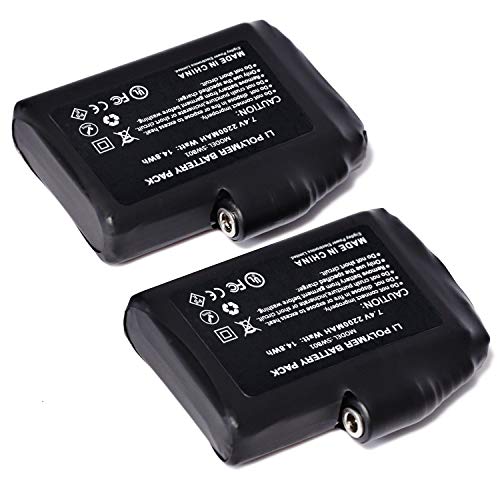 SAVIOR HEAT SWB01 7.4V 2,200mAh Glove BatteriesThe pack that most heated gloves, mittens and socks in this price class actually run on, sold as a pair — which matter… | Spares for gloves, mittens and socks | 16.3 Wh | $43.99View on Amazon |
| 5 |  Veauney 7.4V 18,400mAh Heated Apparel BatteryThe biggest number in this class, and the one that needs the most care: converted on the seller's own figures it lands… | The largest claim on the shelf | 136.2 Wh | $29.99View on Amazon |
#ad — buy links are tagged and earn us a commission at no extra cost to you. Prices come from a live feed; where none is available the button reads “Check price” rather than showing a number we cannot stand behind. How we are funded.
ororo PD 7K Rechargeable Battery for Heated Apparel
7,000 mAh of LG cells with a published 13.5-hour claim and a six-mark certification list — the biggest step up available to an ororo owner, because the larger PD 10K is not sold through this retailer.
#ad Price as of October 17, 2026. How we are funded.
The numbers
- Energy
- 51.8 Wh
- Capacity
- 7,000 mAh at 7.27 V — about 50.9 Wh
- Published output
- 30 W out, up to 24 W in
- Recharge
- Fully recharged within 3 hours
- Certification
- UL2056, CE, FCC, CB, WEEE, CA65 per ororo
- Heat zones
- Not applicable — this is a battery
- Settings
- Garment-dependent
- Care
- Not washable — remove before laundering the garment
On wattage: No garment wattage is published, but this pack states its own delivery figures: "up to 24W input" and "30W output". The 30 W output is a ceiling for charging devices rather than a figure any ororo garment draws — inverting the 13.5-hour claim against about 50.9 Wh gives roughly 3.8 W, which is the draw that claim actually assumes.
On the pack: Worth reading the voltage twice. This pack's own product page gives "7.27V", while ororo's battery guide lists the PD 7K at 7.4 V. At 7.27 V the 7,000 mAh works out to about 50.9 Wh; at 7.4 V it is 51.8 Wh. We use the figure printed on the product page itself and note the 2% disagreement rather than quietly picking the flattering one.
What we like
- The largest ororo pack actually purchasable here — roughly 43% more energy than the Mini 5K that ships with several ororo garments
- ororo publishes a real certification list, with UL2056 printed on the casing
- USB-C in and out at 30 W means it doubles as a fast phone bank
- Three-hour full recharge is quick for this capacity
What we do not
- ororo's own two pages disagree on the voltage — 7.27 V on the product page, 7.4 V in the battery guide
- No watt-hour figure printed for this pack, unlike ororo's Mini 5K and PD 5K pages
- The larger PD 10K exists in ororo's lineup but is not sold through this retailer
- Costs a meaningful fraction of a whole garment, which is the usual complaint about spare packs
Who this suits
An ororo owner whose garment shipped with a Mini 5K and who has discovered that the battery, not the jacket, is what ends their day.
Who should skip it
Your garment already ships a PD 5K or larger and your days are short. The jump from 37.5 Wh to 50.9 Wh is real but it is not transformative.
Spec sources: ororo — 7000 mAh PD 7K Rechargeable Battery ("7,000mAh" with "premium LG cells"; voltage given as "7.27V" on this page against 7.4 V in ororo's battery guide; "up to 24W input"; "30W output"; "fully recharged within 3 hours"; "up to 13.5 hours of heat"; "UL2056, CE, FCC, CB, WEEE, CA65 certified"; "1 USB-C Port, 1 USB-C Cable, 1 DC Port"; NTC sensor) · ororo — Heated Apparel Battery Guide (capacity, voltage and output for every pack)
ColdBye Compact 10,000mAh 7.4V Heated Apparel Battery
About double the energy of the pack most jackets ship with, in a size that still fits the pocket it is meant for and a capacity that stays comfortably inside the carry-on limit.
#ad Price as of October 17, 2026. How we are funded.
The numbers
- Energy
- 74.0 Wh
- Claimed capacity
- 10,000 mAh at 7.4 V
- Converted
- About 74 Wh on those figures
- Flying with it
- Inside the 100 Wh carry-on threshold
- Output current
- Not published
- Heat zones
- Not applicable — this is a pack, not a garment
- Settings
- Not applicable
- Care
- Not washable
On wattage: No published wattage and no published output current.
On the pack: 10,000 mAh at the stated 7.4 V is about 74 Wh — under the FAA's 100 Wh carry-on threshold with room to spare, which is the practical argument for stopping at this capacity rather than going bigger.
What we like
- Roughly double a standard 5,200 mAh apparel pack
- Stays under the carry-on threshold, so it travels without a conversation
- Compact enough for the pocket the garment already has
What we do not
- Third-party capacity claim, unverified like all of them
- No published output current
- No published cycle life or certification detail
Who this suits
Someone who wants a real runtime improvement and a pack they can still take on a plane.
Who should skip it
Your garment's maker sells its own pack and you would rather have the warranty story than the capacity.
Spec sources: Amazon — ColdBye compact 10,000 mAh 7.4 V heated apparel pack · ororo — Heated Apparel Battery Guide (capacity, voltage and output for every pack)
Third-Party 7.4V 16,000mAh Heated Apparel Battery
The largest capacity on this page by a wide margin, and the one we are most careful about: a third-party pack with a big number on it deserves more skepticism than a brand pack with a small one.
#ad Price as of October 17, 2026. How we are funded.
The numbers
- Energy
- 118.4 Wh
- Claimed capacity
- 16,000 mAh at 7.4 V
- Output current
- Not published
- Adapters
- Two cables for common garment connectors
- Heat zones
- Not applicable — this is a pack, not a garment
- Settings
- Not applicable
- Care
- Not washable
On wattage: No published wattage and no published output current, which means we cannot even state the pack's own delivery ceiling.
On the pack: Third-party capacity claims are not independently verified by anyone, including us. The watt-hour figure below is arithmetic on the seller's own numbers — it is not a measurement of the pack.
What we like
- If the claim holds, roughly three times the energy of the pack most jackets ship with
- An LED display means you know where you stand before you go out
- Adapter cables cover the common garment connectors
What we do not
- Third-party capacity claims are unverified by definition
- No published output current, so the delivery ceiling is unknown
- A pack this large deserves a certification you can look up, and this one's is not clearly stated
Who this suits
Someone whose jacket genuinely dies mid-shift and who has already weighed the trade-off.
Who should skip it
You are not comfortable buying an unverified capacity claim from a third party. That is the right instinct and we share it.
Spec sources: Amazon — third-party 7.4V 16000mAh heated apparel pack · ororo — Heated Apparel Battery Guide (capacity, voltage and output for every pack)
SAVIOR HEAT SWB01 7.4V 2,200mAh Glove Batteries
The pack that most heated gloves, mittens and socks in this price class actually run on, sold as a pair — which matters, because extremities take two packs and a dead one ends the day.
#ad Price as of October 17, 2026. How we are funded.
The numbers
- Energy
- 16.3 Wh
- Capacity
- 2,200 mAh at 7.4 V
- Converted
- About 16.3 Wh per hand
- Supplied
- As a pair
- Fits
- SAVIOR HEAT gloves, mittens and socks
- Heat zones
- Not applicable — this is a pack, not a garment
- Settings
- Not applicable
- Care
- Not washable — remove before cleaning the glove
On wattage: No published wattage. What the capacity does tell you is the ceiling — 16.3 Wh cannot deliver eight hours of serious heat no matter whose glove it is plugged into.
On the pack: 2,200 mAh at 7.4 V is about 16.3 Wh per hand or foot. That is a small budget by design: there is only so much weight you can hang off a cuff, which is why glove runtime is measured in hours rather than shifts.
What we like
- Sold as a pair, which is how extremities actually consume packs
- The same pack family runs the gloves, the mittens and the socks
- A charged spare pair is the cheapest way to double a day's heat
What we do not
- Small by any standard — 16.3 Wh is under half what a standard 5,200 mAh jacket pack holds
- Fit is brand-specific; check the connector before assuming it works
- No published output current
Who this suits
Anyone already running SAVIOR HEAT extremity gear who wants a second day out of it.
Who should skip it
Your gloves are a different brand. Connector shapes in this category are not standardized and a near-fit is not a fit.
Spec sources: Amazon — SAVIOR HEAT SWB01 7.4 V 2,200 mAh glove and mitten packs · Amazon — SNOW DEER 7.4V 2200mAh replacement pack
Veauney 7.4V 18,400mAh Heated Apparel Battery
The biggest number in this class, and the one that needs the most care: converted on the seller's own figures it lands in the band where an airline can refuse it.
#ad Price as of October 17, 2026. How we are funded.
The numbers
- Energy
- 136.2 Wh
- Claimed capacity
- 18,400 mAh at 7.4 V
- Converted
- About 136 Wh on those figures
- Flying with it
- Needs airline approval in that band
- Output current
- Not published
- Heat zones
- Not applicable — this is a pack, not a garment
- Settings
- Not applicable
- Care
- Not washable
On wattage: No published wattage and no published output current, so the pack's own delivery ceiling is unknown.
On the pack: Taken at the seller's stated 7.4 V, 18,400 mAh converts to about 136 Wh — past the FAA's 100 Wh carry-on threshold and into the 100-160 Wh band that needs airline approval. If the capacity was instead measured at the 3.7 V cell level, the true figure is about half that. The seller does not say which, and that ambiguity is the whole problem with buying on the headline number.
What we like
- If the claim holds it is roughly three and a half times the pack most jackets ship with
- Dual output, so it charges a phone as well as running a garment
- LED display tells you where you stand before you go out
What we do not
- The capacity claim is unverified, as all third-party claims are
- On the seller's own numbers it is not straightforwardly carry-on legal
- No published output current, so the delivery ceiling is unknown
- Heavy enough that the weight is a real consideration in a vest pocket
Who this suits
Someone who needs a full shift of heat and is not getting on a plane with it.
Who should skip it
You fly with your gear. Read [what the watt-hour limits actually are](/battery/travel-and-airlines) before buying anything in this capacity class.
Spec sources: Amazon — Veauney 7.4V / 5V 18,400 mAh heated apparel pack · ororo — Heated Apparel Battery Guide (capacity, voltage and output for every pack)
The packs, converted
Watt-hours, and what they buy
Energy is capacity times nominal voltage. The ceiling draw is the pack’s own published output current times its voltage. The implied draw runs the maker’s advertised hours backwards. Nothing here is measured — check our working.
| Product | Capacity | Volts | Energy | Ceiling draw | Shortest runtime | Implied draw at the claim |
|---|---|---|---|---|---|---|
| ororo PD 7K Rechargeable Battery for Heated Apparel | 7,000 mAh | 7.4 V | 51.8 Wh | 22.2 W | 2h 20m | 3.8 Wat 13.5 h maker's headline claim, with ororo apparel |
| ColdBye Compact 10,000mAh 7.4V Heated Apparel Battery | 10,000 mAh | 7.4 V | 74.0 Wh | Not published | Not derivable | No claim published |
| Third-Party 7.4V 16,000mAh Heated Apparel Battery | 16,000 mAh | 7.4 V | 118.4 Wh | Not published | Not derivable | No claim published |
| SAVIOR HEAT SWB01 7.4V 2,200mAh Glove Batteries | 2,200 mAh | 7.4 V | 16.3 Wh | Not published | Not derivable | No claim published |
| Veauney 7.4V 18,400mAh Heated Apparel Battery | 18,400 mAh | 7.4 V | 136.2 Wh | Not published | Not derivable | No claim published |
“Not derivable” means the manufacturer does not publish the figure the sum needs. We leave it blank rather than estimating it, borrowing a number from a similar model, or rounding one into existence. These are ceilings, not promises: cold, wind, movement and pack age all push real runtime below them. Run your own numbers.
ColdBye Compact 10,000mAh 7.4V Heated Apparel Battery
- Energy in the pack
- (10,000 mAh ÷ 1000) × 7.4 V = 74.0 Wh
- Most the pack can deliver
- Not published — no output current stated, so the ceiling cannot be computed.
- The draw at the advertised runtime
- No runtime claim published for this product, so there is nothing to invert.
Source for the pack figures: Amazon — ColdBye compact 10,000 mAh 7.4 V heated apparel pack.
That worked example is the one we would point most readers at. It roughly doubles a standard garment pack, it stays under the threshold that makes flying simple, and it fits the pocket the garment already has. The packs above it in capacity buy real runtime and a real complication; the packs below it barely move the needle.
Extremities are a different problem
Everything above is about torso garments. Gloves, mittens and socks work differently and the advice does not transfer.
An extremity pack has to hang off a cuff or a calf, so it is small by necessity — the SAVIOR-class 2,200 mAh pack is about 16.3 watt-hours per hand or foot. You cannot fix that with a bigger battery, because there is nowhere to put one. What you can do is carry a charged second pair, which is why the glove packs on this page are sold two at a time and why we list them alongside the torso packs rather than treating them as an afterthought.
What to check before you buy
- Does the listing state a voltage as well as a capacity? If not, you cannot convert it and you are buying a number rather than an amount of energy.
- Convert it yourself and check the airline band. The runtime calculator does the arithmetic; travel and airlines explains what the result means at security.
- Is the output current published? Almost never on third-party packs. Where it is, it tells you whether the pack can actually feed your garment's high setting.
- Does it name your garment brand? Adapter cables help, but a listing that names ororo or Venustas or your platform has told you something a generic one has not.
- Is there a certification you can look up? UL2056 is the relevant one for portable power banks. A large-capacity pack with no traceable certification is the one place in this category we would spend more to avoid.
- Buy two if you are buying one. The failure mode is a dead pack halfway through a day, and the fix is in your pocket rather than at home.
What we would skip, and why
- Any pack sold on milliamp-hours alone
- Milliamp-hours is not energy. 10,000 mAh at 3.7 V and 10,000 mAh at 7.4 V differ by a factor of two, and sellers in this category are inconsistent about which voltage the number refers to. If a listing gives you a capacity and no voltage, it has given you half a specification and you cannot convert it.
- A pack with no published output current
- Capacity tells you how much energy is in the pack. Output current tells you how fast it is allowed to leave. A large pack with a low output ceiling will run your garment on medium and refuse it on high, and almost no third-party listing publishes the figure at all.
- Anything above 100 Wh if you fly with your gear
- The FAA lets you carry lithium packs under 100 Wh without asking anyone. Between 100 and 160 Wh you need airline approval, which in practice means a conversation at the gate you may lose. Several third-party apparel packs cross that line on their own stated figures. Travel and airlines has the detail.
- A near-fit connector
- Barrel connectors in heated apparel come in several sizes and polarities and none of it is standardized. A plug that goes in is not a plug that is correct, and reverse polarity on a heating element is not a recoverable mistake. Buy for your garment's brand or buy an adapter set that names it.
Our criteria, and what we did not do
- Every capacity claim converted to watt-hours at the voltage the seller states — capacity times voltage, the same arithmetic used everywhere on this site.
- Airline bands applied to the result, because a pack you cannot take through security is a pack you cannot take skiing.
- Published output current weighted heavily, since it sets the delivery ceiling and almost nobody publishes it.
- Third-party claims labeled as claims. Nobody independently verifies these numbers, including us. We do the arithmetic on the seller's own figures and say so.
- We have not opened, load-tested or cycled any of these packs. How we work.
We have not worn, tested or owned any of these products, and we say so on every page rather than in a footer. What we do instead is compile the published specifications and do the arithmetic. The full method.
Frequently asked
- What size spare battery should I buy for a heated jacket?
- A 10,000 mAh 7.4 V pack, for most people. That converts to about 74 watt-hours, roughly double the 38.5 Wh a standard 5,200 mAh garment pack holds, and it stays under the 100 Wh airline carry-on threshold so it travels without a conversation.
- Can I take a heated jacket battery on a plane?
- Under 100 watt-hours, yes, in carry-on. Between 100 and 160 Wh you need the airline's approval. Convert before you fly: capacity in amp-hours times voltage. A 16,000 mAh pack at 7.4 V is 118 Wh and lands in the approval band.
- Are third-party heated clothing batteries safe?
- The honest answer is that nobody independently verifies the capacity claims, including us, and most listings publish no output current and no traceable certification. That is not the same as saying they are dangerous, but it is a real reason to prefer a pack with a UL2056 number you can look up when you are buying large capacities.
- Why does my heated jacket battery die so fast?
- Usually because the pack is smaller than the setting you are running. A 38.5 Wh pack against an 18.5 W ceiling draw is about two hours at maximum. Cold makes it worse, because lithium delivers less when chilled. Running one setting lower and keeping the pack warm are both free.
- Can I use a power bank instead of the proper battery?
- Only if your garment is designed for USB power, and most 7.4 V garments are not. A 5 V USB bank cannot drive a 7.4 V element properly, and forcing the connection will at best underheat and at worst damage something. USB-C garments are the exception and they say so.
- How many spare batteries do I need?
- One spare doubles your day and is the right answer for nearly everyone. Two spares start to be about logistics rather than warmth — at that point a larger single pack, or a tool-platform garment where charged packs already exist, is usually the better structure.
Sources
Related
Battery & Power
The conversion nobody publishes: capacity and voltage into watt-hours, watt-hours into hours. Plus the calculator that does it for you.
Does it come with a battery, or is that a second purchase?
We read the live listing title for every garment on this site and sorted them: says it includes a pack, says it does not, does not say. Two popular picks are bare.
Flying with heated clothing, and the unit mismatch that makes it confusing
The FAA writes the rule in watt-hours; makers print milliamp-hours. The conversion table, and where every pack lands.
Charging a heated clothing battery, and making it last
Charge time is energy divided by charger watts. That sum, plus the storage habits that decide whether a pack lasts two winters or five.

Watts, volts and the number on the label that is not quite true
Volts, amps, watt-hours and the labeling convention that overstates every tool-battery jacket by 11%.

ororo heated apparel, and the 2x battery spread hiding inside one brand
The only brand here publishing a full battery lineup - which is how you can see that its packs run 35.4 Wh to 75.1 Wh, and the priciest jacket ships the smallest one.
Gerbing heated gear, and the 12V trap sitting next to the 7V one
Two platforms under one brand: 7V ships a battery and the most checkable runtime table we have tested, 12V ships a plug and expects a motorcycle.
Venustas heated apparel, and the brand that puts the watt-hours in the name
The only brand here that names its batteries after their energy - 19, 36, 54 and 74 Wh. Its garment pages publish almost nothing, which makes finding the pack the whole job.