Flying with heated clothing, and the unit mismatch that makes it confusing
The rule is written in watt-hours. Your battery is labeled in milliamp-hours. You cannot check compliance without doing the conversion, so here it is.
By Scooter M. · Published August 31, 2026
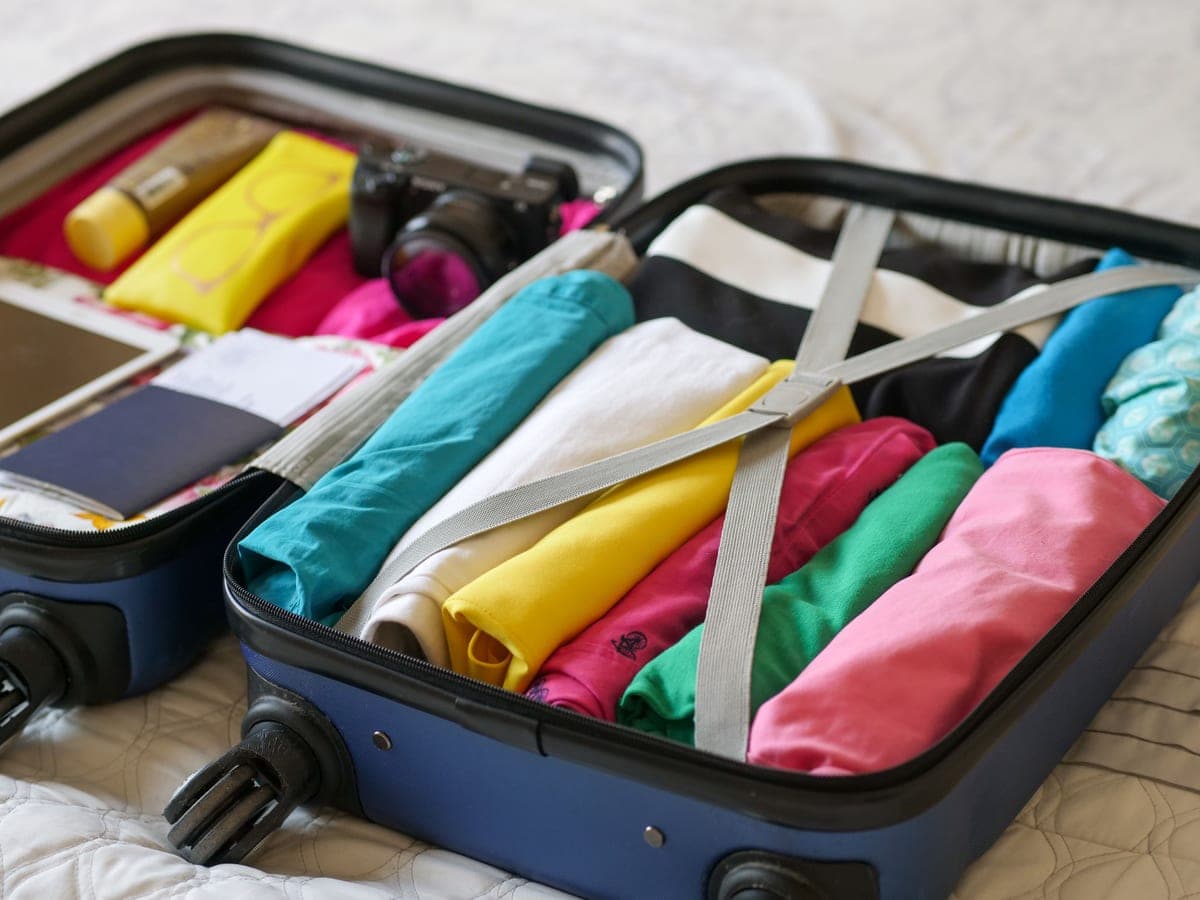
The FAA sets lithium battery limits in watt-hours: at or below 100 Wh travels freely in carry-on, 101 to 160 Wh needs airline approval and is capped at two spares, and above 160 Wh is forbidden. Heated clothing packs are labeled in milliamp-hours, so you must convert first. Every mainstream heated apparel pack lands well under 100 Wh.
The rules, as published
| Energy | Carry-on | Checked | Conditions |
|---|---|---|---|
| 0-100 Wh | Allowed | Device only, not spares | The band every heated clothing pack falls into |
| 101-160 Wh | With airline approval | No | Maximum two spare batteries per passenger |
| Over 160 Wh | Forbidden | Forbidden | Not carried on passenger aircraft |
Spare batteries and power banks must be carried on, never checked. Individual airlines may set stricter limits, including on the number of power banks per passenger.
The rules are clear enough. The problem is the unit. The FAA speaks watt-hours; your heated jacket's battery says 5,200 mAh on the side and, in many cases, does not say the voltage anywhere on the pack itself. There is no way to check compliance without doing the conversion — which is the same conversion that runs through this entire site.
Where heated clothing packs actually land
| Pack | Capacity | Nominal V | Watt-hours | FAA band |
|---|---|---|---|---|
| Heated sock / glove pack | 2,200 mAh | 7.4 V | 16.3 Wh | Clear |
| Gerbing 7V glove pack | 3,400 mAh | 7.0 V | 23.8 Wh | Clear |
| ororo Mini 5K | 4,800 mAh | 7.4 V | 35.5 Wh | Clear |
| ororo PD 5K | 5,075 mAh | 7.4 V | 37.6 Wh | Clear |
| ororo B19G | 5,200 mAh | 7.4 V | 38.5 Wh | Clear |
| ororo PD 7K | 7,000 mAh | 7.4 V | 51.8 Wh | Clear |
| ororo PD 10K | 10,150 mAh | 7.4 V | 75.1 Wh | Clear |
| Third-party 16,000 mAh (claimed) | 16,000 mAh | 7.4 V | 118.4 Wh | Approval required |
| Milwaukee M12 2.0 Ah | 2.0 Ah | 10.8 V | 21.6 Wh | Clear |
| DEWALT 20V MAX 5.0 Ah | 5.0 Ah | 18 V | 90.0 Wh | Clear |
Computed as capacity x nominal voltage from the sources listed below. The DEWALT row is the one to note: at its 20 V label it computes to exactly 100 Wh, right on the threshold. At its stated 18 V nominal it is 90 Wh, comfortably clear.
The reassuring conclusion is that essentially every mainstream heated apparel battery is well inside the carry-on band. The largest published capacity in the category — the ororo PD 10K — works out to 75.1 Wh, with room to spare.
The exception is instructive. A third-party pack claiming 16,000 mAh at 7.4 V computes to 118.4 Wh, which lands in the approval-required band. That is a pack you would need to clear with the airline in advance, and it is exactly the sort of thing a traveler would never discover because the listing quotes milliamp-hours and the rule is written in watt-hours. Whether the claimed capacity is real is a separate question we cannot answer.
Quick picks
Tap any row to jump to the full write-up below. The energy column is the pack’s capacity times its voltage — the number this category does not print.
| # | Product | Best for | Energy | Price |
|---|---|---|---|---|
| 1 |  ororo PD 7K Rechargeable Battery for Heated Apparel7,000 mAh of LG cells with a published 13.5-hour claim and a six-mark certification list — the biggest step up availab… | The largest ororo pack you can actually buy | 51.8 Wh | $89.99View on Amazon |
| 2 |  Third-Party 7.4V 16,000mAh Heated Apparel BatteryThe largest capacity on this page by a wide margin, and the one we are most careful about: a third-party pack with a b… | Runtime at any cost | 118.4 Wh | $27.99View on Amazon |
| 3 |  ororo Men's Soft Shell Heated JacketThe clearest power story in the category: ororo publishes capacity and voltage for every pack it sells, so you can wor… | A first heated jacket | 38.5 Wh | $159.99View on Amazon |
#ad — buy links are tagged and earn us a commission at no extra cost to you. Prices come from a live feed; where none is available the button reads “Check price” rather than showing a number we cannot stand behind. How we are funded.
ororo PD 7K Rechargeable Battery for Heated Apparel
7,000 mAh of LG cells with a published 13.5-hour claim and a six-mark certification list — the biggest step up available to an ororo owner, because the larger PD 10K is not sold through this retailer.
#ad Price as of October 17, 2026. How we are funded.
The numbers
- Energy
- 51.8 Wh
- Capacity
- 7,000 mAh at 7.27 V — about 50.9 Wh
- Published output
- 30 W out, up to 24 W in
- Recharge
- Fully recharged within 3 hours
- Certification
- UL2056, CE, FCC, CB, WEEE, CA65 per ororo
- Heat zones
- Not applicable — this is a battery
- Settings
- Garment-dependent
- Care
- Not washable — remove before laundering the garment
On wattage: No garment wattage is published, but this pack states its own delivery figures: "up to 24W input" and "30W output". The 30 W output is a ceiling for charging devices rather than a figure any ororo garment draws — inverting the 13.5-hour claim against about 50.9 Wh gives roughly 3.8 W, which is the draw that claim actually assumes.
On the pack: Worth reading the voltage twice. This pack's own product page gives "7.27V", while ororo's battery guide lists the PD 7K at 7.4 V. At 7.27 V the 7,000 mAh works out to about 50.9 Wh; at 7.4 V it is 51.8 Wh. We use the figure printed on the product page itself and note the 2% disagreement rather than quietly picking the flattering one.
What we like
- The largest ororo pack actually purchasable here — roughly 43% more energy than the Mini 5K that ships with several ororo garments
- ororo publishes a real certification list, with UL2056 printed on the casing
- USB-C in and out at 30 W means it doubles as a fast phone bank
- Three-hour full recharge is quick for this capacity
What we do not
- ororo's own two pages disagree on the voltage — 7.27 V on the product page, 7.4 V in the battery guide
- No watt-hour figure printed for this pack, unlike ororo's Mini 5K and PD 5K pages
- The larger PD 10K exists in ororo's lineup but is not sold through this retailer
- Costs a meaningful fraction of a whole garment, which is the usual complaint about spare packs
Who this suits
An ororo owner whose garment shipped with a Mini 5K and who has discovered that the battery, not the jacket, is what ends their day.
Who should skip it
Your garment already ships a PD 5K or larger and your days are short. The jump from 37.5 Wh to 50.9 Wh is real but it is not transformative.
Spec sources: ororo — 7000 mAh PD 7K Rechargeable Battery ("7,000mAh" with "premium LG cells"; voltage given as "7.27V" on this page against 7.4 V in ororo's battery guide; "up to 24W input"; "30W output"; "fully recharged within 3 hours"; "up to 13.5 hours of heat"; "UL2056, CE, FCC, CB, WEEE, CA65 certified"; "1 USB-C Port, 1 USB-C Cable, 1 DC Port"; NTC sensor) · ororo — Heated Apparel Battery Guide (capacity, voltage and output for every pack)
Third-Party 7.4V 16,000mAh Heated Apparel Battery
The largest capacity on this page by a wide margin, and the one we are most careful about: a third-party pack with a big number on it deserves more skepticism than a brand pack with a small one.
#ad Price as of October 17, 2026. How we are funded.
The numbers
- Energy
- 118.4 Wh
- Claimed capacity
- 16,000 mAh at 7.4 V
- Output current
- Not published
- Adapters
- Two cables for common garment connectors
- Heat zones
- Not applicable — this is a pack, not a garment
- Settings
- Not applicable
- Care
- Not washable
On wattage: No published wattage and no published output current, which means we cannot even state the pack's own delivery ceiling.
On the pack: Third-party capacity claims are not independently verified by anyone, including us. The watt-hour figure below is arithmetic on the seller's own numbers — it is not a measurement of the pack.
What we like
- If the claim holds, roughly three times the energy of the pack most jackets ship with
- An LED display means you know where you stand before you go out
- Adapter cables cover the common garment connectors
What we do not
- Third-party capacity claims are unverified by definition
- No published output current, so the delivery ceiling is unknown
- A pack this large deserves a certification you can look up, and this one's is not clearly stated
Who this suits
Someone whose jacket genuinely dies mid-shift and who has already weighed the trade-off.
Who should skip it
You are not comfortable buying an unverified capacity claim from a third party. That is the right instinct and we share it.
Spec sources: Amazon — third-party 7.4V 16000mAh heated apparel pack · ororo — Heated Apparel Battery Guide (capacity, voltage and output for every pack)
ororo Men's Soft Shell Heated Jacket
The clearest power story in the category: ororo publishes capacity and voltage for every pack it sells, so you can work out what you are getting instead of taking a marketing number on faith.
The numbers
- Energy
- 38.5 Wh
- Pack
- 7.4 V, 5,200 mAh (ororo B19G)
- Published output
- 2.5 A
- Heat zones
- 3
- Maker's runtime claim
- 8-10 h low / 5-6 h medium / 2-3 h high
- Heat zones
- Left and right chest, mid-back
- Settings
- Three, cycled from a single chest button
- Care
- Machine washable with the battery removed
On wattage: ororo publishes no wattage for the garment. It does publish hours for each of the three settings, which states the draw whether it meant to or not.
What we like
- ororo publishes capacity AND voltage for every pack, which almost nobody else in this category does
- Per-setting runtime claims rather than one 'up to' number, so the low-to-high spread is visible before you buy
- Soft-shell cut layers under a work coat without bulk
What we do not
- No published wattage for the garment itself
- Three zones only — nothing at the arms or the kidneys
- The headline runtime figure is the low setting, as it is everywhere
Who this suits
Someone standing still outdoors for two to four hours at a stretch who wants the power figures on the table before buying.
Who should skip it
You need heat for a full eight-hour shift on high. No 38 Wh pack does that, and this one does not claim to.
Spec sources: ororo — Heated Apparel Battery Guide (capacity, voltage and output for every pack) · Amazon — ororo 7.4V 5200mAh battery listing (per-setting runtime claim)
Practical packing
- Spares go in your carry-on, never in checked baggage. This applies to every spare lithium battery and power bank, at any capacity.
- Protect the terminals. Original packaging, a battery case, or tape over the contacts. Loose packs in a bag with keys and coins are the specific scenario the rule exists to prevent.
- The garment itself can be worn or packed — it is the battery that carries the restriction, and a garment with the pack removed is just a jacket.
- Compute your Wh before you leave. Capacity divided by 1,000, times nominal voltage. The runtime calculator will do it for you.
- Check your specific airline. Several carriers now limit the number of power banks per passenger regardless of watt-hours, and international carriers frequently differ from US ones.
Watt-hours, and what they buy
Energy is capacity times nominal voltage. The ceiling draw is the pack’s own published output current times its voltage. The implied draw runs the maker’s advertised hours backwards. Nothing here is measured — check our working.
| Product | Capacity | Volts | Energy | Ceiling draw | Shortest runtime | Implied draw at the claim |
|---|---|---|---|---|---|---|
| ororo PD 7K Rechargeable Battery for Heated Apparel | 7,000 mAh | 7.4 V | 51.8 Wh | 22.2 W | 2h 20m | 3.8 Wat 13.5 h maker's headline claim, with ororo apparel |
| Third-Party 7.4V 16,000mAh Heated Apparel Battery | 16,000 mAh | 7.4 V | 118.4 Wh | Not published | Not derivable | No claim published |
| ororo Men's Soft Shell Heated Jacket | 5,200 mAh | 7.4 V | 38.5 Wh | 18.5 W | 2h 05m | 15.4 Wat 2.5 h high |
“Not derivable” means the manufacturer does not publish the figure the sum needs. We leave it blank rather than estimating it, borrowing a number from a similar model, or rounding one into existence. These are ceilings, not promises: cold, wind, movement and pack age all push real runtime below them. Run your own numbers.
Why this is a genuinely useful conversion to know
Most of this site's arithmetic exists to help you compare products. This page is the case where it does something more concrete: it is the difference between confidently boarding with your heated jacket and having a conversation at a security desk about a number nobody printed on the pack.
It is also the clearest illustration of why the industry's silence on watt-hours matters. A federal regulation is written in a unit that heated apparel makers do not print, and the buyer is left to bridge the gap. That is the whole reason this hub exists.
The limits above are a shopping constraint as well as a packing one. Spare and replacement batteries converts every capacity class on the shelf into watt-hours and marks which ones cross the 100 Wh line before you own them.
Frequently asked
- Can you take a heated jacket on a plane?
- Yes. The garment is unrestricted; the battery carries the rule. Every mainstream heated apparel pack converts to well under the FAA's 100 Wh carry-on threshold — the largest published capacity in the category is about 75 Wh.
- How do I know if my heated jacket battery is under 100 watt-hours?
- Convert it. Divide the milliamp-hours by 1,000 and multiply by nominal voltage. A 5,200 mAh pack at 7.4 V is 38.5 Wh, comfortably clear. If your pack does not state a voltage, look for the maker's battery specifications page.
- Do heated clothing batteries go in carry-on or checked baggage?
- Carry-on. Spare lithium batteries and power banks must not be checked, at any capacity. The garment itself can go either way once the pack is removed.
- What happens if my battery is over 100 watt-hours?
- Between 101 and 160 Wh you need your airline's approval in advance, and you are limited to two spares. Above 160 Wh it is not permitted on a passenger aircraft at all. Very few heated apparel packs reach either band, but some large third-party ones do.
- Do I need to tell the airline about my heated jacket battery?
- Not if it is under 100 Wh, which covers essentially every mainstream pack. Above that you need prior approval. Airline policies also change and some now cap the number of power banks per passenger, so check your carrier before you travel.
Sources
Related
Battery & Power
The conversion nobody publishes: capacity and voltage into watt-hours, watt-hours into hours. Plus the calculator that does it for you.

Watts, volts and the number on the label that is not quite true
Volts, amps, watt-hours and the labeling convention that overstates every tool-battery jacket by 11%.
When the battery stops behaving: a diagnosis order
Five causes in the order worth checking. Four are cheap, and the connector is the one nobody suspects.
Heated clothing safety: what to check, and what to ask a professional
Certification marks worth checking, the burn question, and the medical-device question we send to your doctor.
Spare and replacement batteries, converted before you buy
A second pack is the cheapest real upgrade here. Every capacity claim converted to watt-hours, with the airline band attached — including the class that quietly stops being carry-on legal.