Charging a heated clothing battery, and making it last
Charge time is one of the few figures in this category you can compute rather than take on faith. The habits that decide the pack's lifespan are just as knowable, and cost nothing.
By Scooter M. · Published September 6, 2026
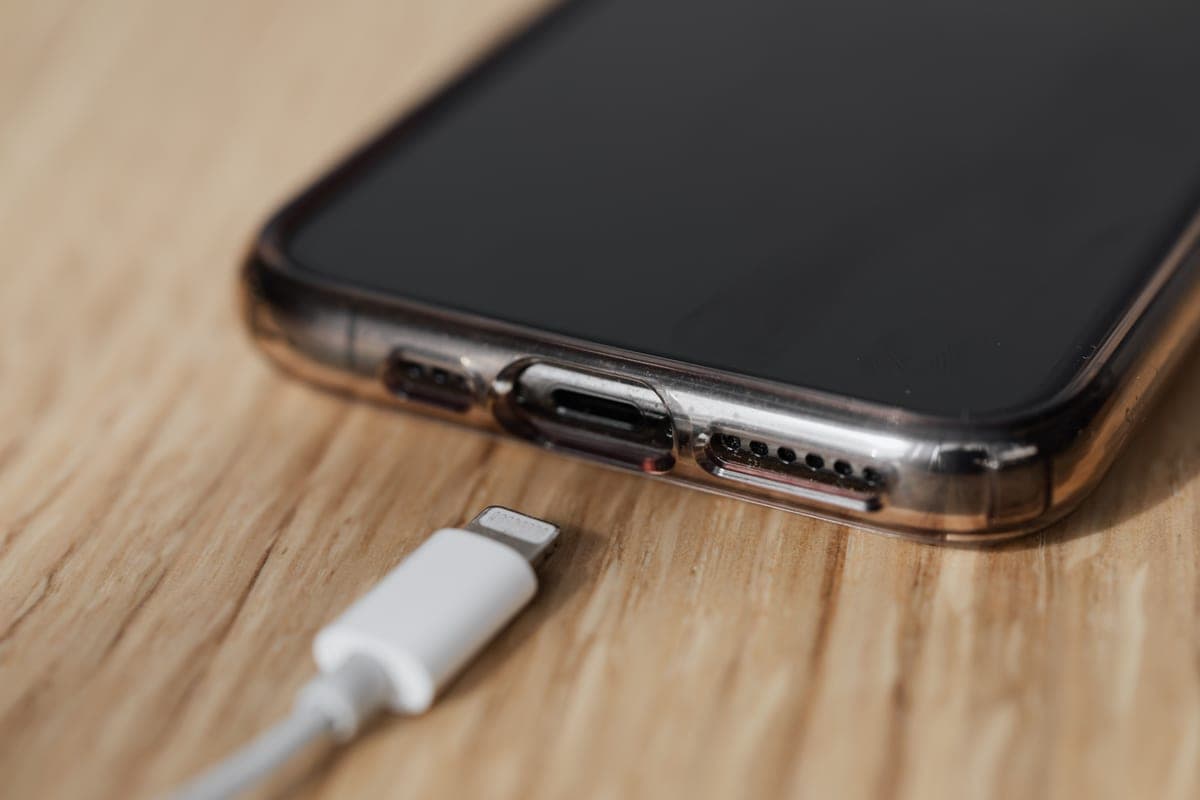
Charge time is energy divided by charge rate: a 38.5 Wh pack on a 10 W charger takes roughly 4 to 5 hours allowing for losses. Makers publish charge times more often than they publish anything else useful, and USB-C packs charge fastest. Storage habits — around half charge, indoors, never flat — decide whether the pack lasts two winters or five.
How long a pack takes to charge, and why you can work it out
This site spends most of its time pointing out figures the category refuses to publish. Charge time is a happy exception: it is usually stated, and where it is not, it is derivable from the same numbers everything else here comes from.
The arithmetic mirrors the runtime calculation, run the other way:
The losses are real and unavoidable. Some of the energy going in becomes heat rather than stored charge, and lithium cells deliberately slow their intake over the last stretch to protect the cell — which is why the final 10% always takes disproportionately long. A pack that reaches 90% in three hours may take another hour for the rest.
| Pack | Energy | On a 5 W charger | On a 10 W charger |
|---|---|---|---|
| Heated sock or glove pack | 16.3 Wh | ~4 h | ~2 h |
| Gerbing 7V glove pack | 23.8 Wh | ~5.5 h | ~3 h |
| ororo Mini 5K | 35.5 Wh | ~8 h | ~4 h |
| ororo PD 5K | 37.6 Wh | ~9 h | ~4.5 h |
| Standard 5,200 mAh apparel pack | 38.5 Wh | ~9 h | ~4.5 h |
| ororo PD 10K | 75.1 Wh | ~18 h | ~9 h |
Computed as energy divided by charger output, plus an allowance for losses. These are estimates from published capacities, not measurements — and a pack will only draw what its own circuitry accepts, so a faster charger does not always mean a faster charge.
The charger matters more than people expect
Two packs with identical capacity can take very different times to fill, and the difference is usually the charging standard rather than the cells.
The PD line in this category accepts USB-C Power Delivery and, in ororo's case, is rated for 45 W input with a claimed full charge in about two and a half hours. A pack with a proprietary barrel charger at 5 W is on a different planet: same energy, three or four times the wait.
That is worth weighting at purchase for a reason beyond convenience. A proprietary brick is the single most common way these packs get retired — it goes missing, it frays at the strain relief, the model is discontinued, and an otherwise healthy battery becomes scrap because nothing will charge it. A USB-C pack can be charged by any phone charger in the house. The troubleshooting guide covers diagnosing a charger fault, which is far more common than a dead pack.
Quick picks
Tap any row to jump to the full write-up below. The energy column is the pack’s capacity times its voltage — the number this category does not print.
| # | Product | Best for | Energy | Price |
|---|---|---|---|---|
| 1 |  ororo PD 7K Rechargeable Battery for Heated Apparel7,000 mAh of LG cells with a published 13.5-hour claim and a six-mark certification list — the biggest step up availab… | The largest ororo pack you can actually buy | 51.8 Wh | $89.99View on Amazon |
| 2 | 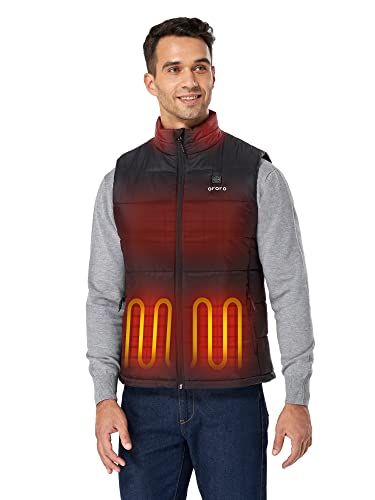 ororo Men's 4-Zone USB-C Heated Puffer VestUSB-C matters more than it sounds: the pack recharges from the same brick as your phone and your laptop, which removes… | Charging off one cable | 37.6 Wh | $149.99View on Amazon |
| 3 |  Third-Party 7.4V 16,000mAh Heated Apparel BatteryThe largest capacity on this page by a wide margin, and the one we are most careful about: a third-party pack with a b… | Runtime at any cost | 118.4 Wh | $27.99View on Amazon |
#ad — buy links are tagged and earn us a commission at no extra cost to you. Prices come from a live feed; where none is available the button reads “Check price” rather than showing a number we cannot stand behind. How we are funded.
ororo PD 7K Rechargeable Battery for Heated Apparel
7,000 mAh of LG cells with a published 13.5-hour claim and a six-mark certification list — the biggest step up available to an ororo owner, because the larger PD 10K is not sold through this retailer.
#ad Price as of October 17, 2026. How we are funded.
The numbers
- Energy
- 51.8 Wh
- Capacity
- 7,000 mAh at 7.27 V — about 50.9 Wh
- Published output
- 30 W out, up to 24 W in
- Recharge
- Fully recharged within 3 hours
- Certification
- UL2056, CE, FCC, CB, WEEE, CA65 per ororo
- Heat zones
- Not applicable — this is a battery
- Settings
- Garment-dependent
- Care
- Not washable — remove before laundering the garment
On wattage: No garment wattage is published, but this pack states its own delivery figures: "up to 24W input" and "30W output". The 30 W output is a ceiling for charging devices rather than a figure any ororo garment draws — inverting the 13.5-hour claim against about 50.9 Wh gives roughly 3.8 W, which is the draw that claim actually assumes.
On the pack: Worth reading the voltage twice. This pack's own product page gives "7.27V", while ororo's battery guide lists the PD 7K at 7.4 V. At 7.27 V the 7,000 mAh works out to about 50.9 Wh; at 7.4 V it is 51.8 Wh. We use the figure printed on the product page itself and note the 2% disagreement rather than quietly picking the flattering one.
What we like
- The largest ororo pack actually purchasable here — roughly 43% more energy than the Mini 5K that ships with several ororo garments
- ororo publishes a real certification list, with UL2056 printed on the casing
- USB-C in and out at 30 W means it doubles as a fast phone bank
- Three-hour full recharge is quick for this capacity
What we do not
- ororo's own two pages disagree on the voltage — 7.27 V on the product page, 7.4 V in the battery guide
- No watt-hour figure printed for this pack, unlike ororo's Mini 5K and PD 5K pages
- The larger PD 10K exists in ororo's lineup but is not sold through this retailer
- Costs a meaningful fraction of a whole garment, which is the usual complaint about spare packs
Who this suits
An ororo owner whose garment shipped with a Mini 5K and who has discovered that the battery, not the jacket, is what ends their day.
Who should skip it
Your garment already ships a PD 5K or larger and your days are short. The jump from 37.5 Wh to 50.9 Wh is real but it is not transformative.
Spec sources: ororo — 7000 mAh PD 7K Rechargeable Battery ("7,000mAh" with "premium LG cells"; voltage given as "7.27V" on this page against 7.4 V in ororo's battery guide; "up to 24W input"; "30W output"; "fully recharged within 3 hours"; "up to 13.5 hours of heat"; "UL2056, CE, FCC, CB, WEEE, CA65 certified"; "1 USB-C Port, 1 USB-C Cable, 1 DC Port"; NTC sensor) · ororo — Heated Apparel Battery Guide (capacity, voltage and output for every pack)
ororo Men's 4-Zone USB-C Heated Puffer Vest
USB-C matters more than it sounds: the pack recharges from the same brick as your phone and your laptop, which removes the proprietary-charger failure mode entirely.
The numbers
- Energy
- 37.6 Wh
- Pack
- ororo PD 5K, 5,075 mAh at 7.4 V
- Published output
- 2.5 A
- Recharge
- USB-C
- Heat zones
- 4
- Heat zones
- Left and right chest, mid-back, collar
- Settings
- Three
- Care
- Machine washable with the battery removed
On wattage: No published wattage. ororo does publish the pack's capacity, voltage and output current, which is three more useful numbers than most of this category prints.
What we like
- USB-C recharge kills the proprietary-brick problem, which is the most common way these packs get abandoned in a drawer
- Puffer insulation means the vest is warm before you switch anything on
- Published capacity, voltage and output amps — unusually complete for this category
What we do not
- Puffer bulk is real under a fitted coat
- Four zones on a 37.6 Wh pack is a thinner spread than three zones on the same energy
- Still no wattage figure
Who this suits
Someone who travels with the vest and does not want a second charger in the bag.
Who should skip it
You need it to disappear under a slim shell. It will not.
Spec sources: ororo — Heated Apparel Battery Guide (capacity, voltage and output for every pack)
Third-Party 7.4V 16,000mAh Heated Apparel Battery
The largest capacity on this page by a wide margin, and the one we are most careful about: a third-party pack with a big number on it deserves more skepticism than a brand pack with a small one.
#ad Price as of October 17, 2026. How we are funded.
The numbers
- Energy
- 118.4 Wh
- Claimed capacity
- 16,000 mAh at 7.4 V
- Output current
- Not published
- Adapters
- Two cables for common garment connectors
- Heat zones
- Not applicable — this is a pack, not a garment
- Settings
- Not applicable
- Care
- Not washable
On wattage: No published wattage and no published output current, which means we cannot even state the pack's own delivery ceiling.
On the pack: Third-party capacity claims are not independently verified by anyone, including us. The watt-hour figure below is arithmetic on the seller's own numbers — it is not a measurement of the pack.
What we like
- If the claim holds, roughly three times the energy of the pack most jackets ship with
- An LED display means you know where you stand before you go out
- Adapter cables cover the common garment connectors
What we do not
- Third-party capacity claims are unverified by definition
- No published output current, so the delivery ceiling is unknown
- A pack this large deserves a certification you can look up, and this one's is not clearly stated
Who this suits
Someone whose jacket genuinely dies mid-shift and who has already weighed the trade-off.
Who should skip it
You are not comfortable buying an unverified capacity claim from a third party. That is the right instinct and we share it.
Spec sources: Amazon — third-party 7.4V 16000mAh heated apparel pack · ororo — Heated Apparel Battery Guide (capacity, voltage and output for every pack)
The habits that decide how many winters you get
Lithium packs lose capacity with use and with time, and both are partly under your control. None of the following costs anything.
- Store at around half charge for the off-season. This is the single highest-value habit here. A pack stored full sits under sustained cell stress for months; a pack stored flat risks discharging below the level its protection circuit can recover from. Around half is where the chemistry is happiest for long periods.
- Store indoors, at room temperature. Not a freezing garage, not a hot car, not a van in July. Heat ages lithium faster than almost anything else, and deep cold brings its own problems.
- Charge indoors and at room temperature. Charging a cold pack is genuinely hard on it, and many packs refuse below a threshold — which is a protection feature, not a fault. A pack that will not take charge in a cold garage will often accept it happily an hour after coming inside.
- Do not leave it on the charger for days. Modern packs stop when full, but sitting at 100% indefinitely is the stressed state described above.
- Run the lowest setting that works. Fewer full cycles is less wear, and it is the only free way to extend a day's runtime at the same time.
- Top up rather than running to empty. Repeatedly draining a lithium pack flat is harder on it than partial cycles. There is no memory effect to worry about here.
- Buy a spare while your model is current. Replacement packs disappear from the market before garments wear out, and a garment with no available pack is finished regardless of its condition.
What normal capacity loss looks like
Makers commonly quote several hundred charge cycles. In practice most people notice the drop as a season that feels worse than they remember — because the loss is gradual and you have no baseline to compare against mid-winter.
After two or three winters of regular use, a noticeable reduction is normal lithium behavior rather than a defect. The honest check is to charge fully at room temperature, run on a known setting, and compare against what you got in the first season. If it is well down and the connector and charger are ruled out, the pack has aged out — and a replacement costs far less than the garment.
Charging safely
- Do not mix chargers between brands. Voltages and connector polarities differ between makers, and a mismatch is exactly the failure mode certification exists to prevent.
- Charge on a hard surface, not a bed or a sofa. Standard lithium advice, and it costs nothing to follow.
- Retire a damaged pack rather than nursing it. Swelling, a cracked case, an unusually hot charge or an unexplained smell means stop. Replacements are inexpensive relative to the alternative.
- Look for a certification you can actually look up — UL2056 for power banks, plus CE and FCC. A named standard is worth far more than the words 'certified safe'. Our safety guide covers this properly.
- Take the pack out before washing the garment. Every time. It is the most common way heated clothing is destroyed, and it destroys the expensive half.
One more reason to know your watt-hours
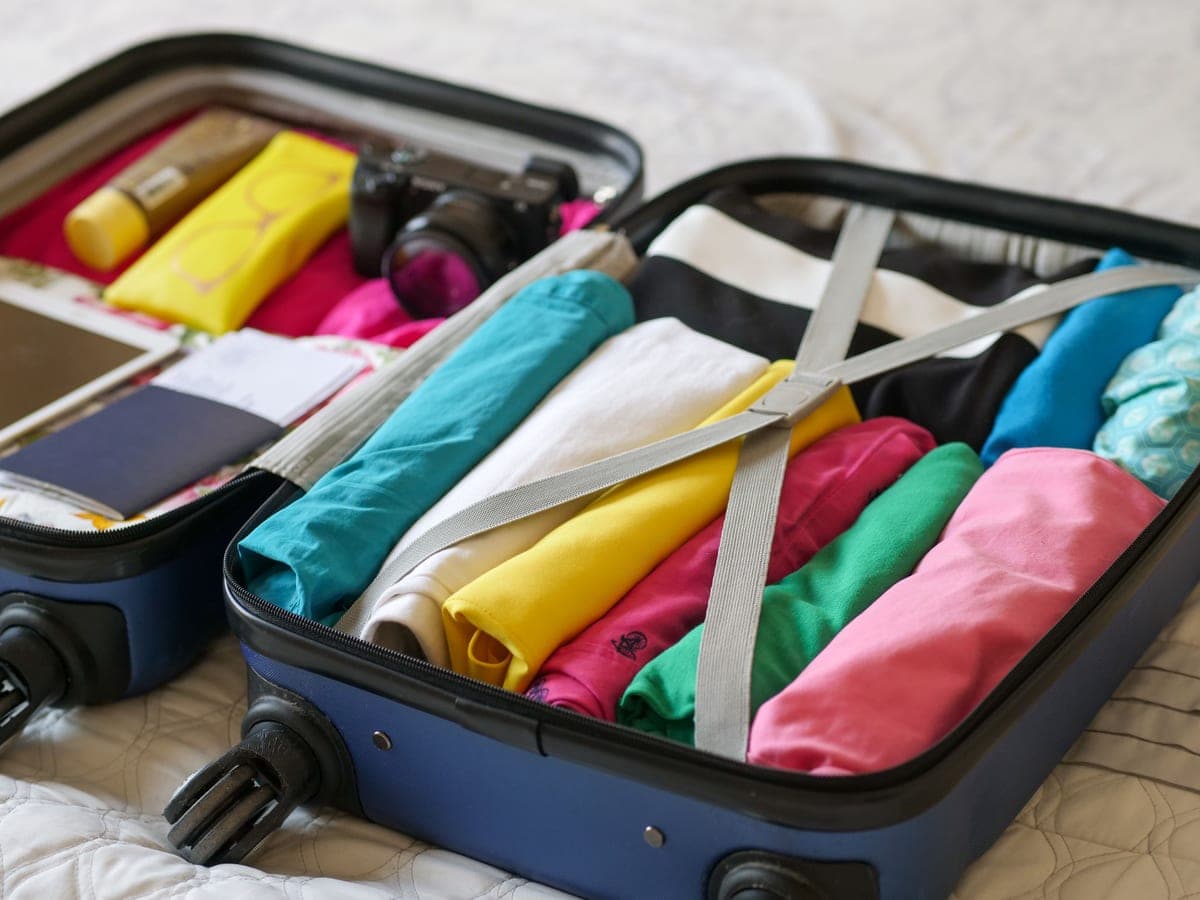
If you travel with heated gear, the same energy figure that gives you charge time also determines whether the pack can fly. The FAA writes its limits in watt-hours while makers publish milliamp-hours, so the conversion is the only way to check compliance — and every mainstream heated apparel pack comes in comfortably under the 100 Wh carry-on threshold. Flying with heated clothing batteries has the table.
The runtime calculator will convert any pack you put into it, which gives you the charge-time input as well.
Frequently asked
- How long does a heated jacket battery take to charge?
- Divide the pack's watt-hours by the charger's watts and add 15-25% for losses. A standard 38.5 Wh pack on a 10 W charger is roughly 4 to 5 hours; on a 5 W charger closer to 9. USB-C Power Delivery packs are considerably faster.
- Can I leave a heated clothing battery charging overnight?
- Modern packs stop when full, so it is not dangerous in the way it once was. But sitting at 100% for long periods is the stressed state that ages cells fastest, so it is not the habit that gets you the most winters out of a pack.
- How should I store heated clothing batteries in summer?
- At around half charge, indoors at room temperature. Stored full puts the cells under sustained stress for months; stored flat risks discharging past the point the protection circuit can recover from. Not a garage, not a car.
- Why won't my heated jacket battery charge in the garage?
- Many packs refuse to charge below a temperature threshold, which is a protection feature rather than a fault. Bring it indoors, let it reach room temperature, and try again — it will usually accept the charge happily an hour later.
- How many times can you recharge a heated clothing battery?
- Makers commonly quote several hundred cycles. In practice expect a noticeable capacity drop after two or three winters of regular use, which is normal rather than a defect. Replacement packs cost far less than the garment.
- Can I use a different charger for my heated jacket battery?
- Only if the voltage and connector match exactly, and never across brands. If the pack has a USB-C input, any USB-C charger is fine and that is one of the strongest arguments for buying a USB-C pack in the first place.
Sources
Related
Battery & Power
The conversion nobody publishes: capacity and voltage into watt-hours, watt-hours into hours. Plus the calculator that does it for you.
When the battery stops behaving: a diagnosis order
Five causes in the order worth checking. Four are cheap, and the connector is the one nobody suspects.
Flying with heated clothing, and the unit mismatch that makes it confusing
The FAA writes the rule in watt-hours; makers print milliamp-hours. The conversion table, and where every pack lands.
What it costs to run heated clothing
0.71 cents a charge at the EIA average rate. The full table, the space-heater comparison, and the cost that does add up.
Heated clothing safety: what to check, and what to ask a professional
Certification marks worth checking, the burn question, and the medical-device question we send to your doctor.
Spare and replacement batteries, converted before you buy
A second pack is the cheapest real upgrade here. Every capacity claim converted to watt-hours, with the airline band attached — including the class that quietly stops being carry-on legal.