Heated gloves for work, where a glove you take off is worth nothing
The warmest heated glove in the world does not help if you have to remove it to do the job. That constraint decides this entire page.
By Scooter M. · Published August 31, 2026
How this is funded: buy links here are tagged and earn us a commission at no extra cost to you. It does not affect what we recommend, and we take no free product and no sponsorship. Read the disclosure.
For work, heated glove liners under your existing gloves are usually the right buy: they keep your grip, your fit and your glove's abrasion resistance while adding heat. Full heated gloves make sense where dexterity is not required — freezer picking, outdoor stationary work — but 16 to 24 watt-hours a hand is a small budget for a long shift.
The constraint that decides everything
Ask what you have to do with your hands. If the answer involves anything smaller than a shovel handle, dexterity is not a preference — it is the specification. A heated glove that has to come off to fit a connector is a heated glove that spends the shift in a pocket, and hands are colder after coming out of a warm glove than they were before.
That is why the liner leads this page. It is not the warmest option and does not pretend to be. It is the option that is still on your hands at three in the afternoon.
Quick picks
Tap any row to jump to the full write-up below. The energy column is the pack’s capacity times its voltage — the number this category does not print.
| # | Product | Best for | Energy | Price |
|---|---|---|---|---|
| 1 |  SAVIOR HEAT Heated Glove LinersThe most underrated format in heated apparel: a thin heated liner under your existing work glove beats a bulky heated … | Keeping the gloves you already own | 16.3 Wh | $107.99View on Amazon |
| 2 |  SAVIOR HEAT 7.4V Heated GlovesA competent middle option: warmer than a liner, less bulky than the Gerbing, and with the same missing wattage figure … | General cold-weather use | 16.3 Wh | $79.99View on Amazon |
| 3 | Gerbing 7V S7 Heated GlovesTwo 3,400 mAh packs is the largest per-hand energy figure on this list, and it still will not get you a full day on hi… | The most energy per hand | 23.8 Wh | Check price on Amazon |
| 4 |  SAVIOR HEAT Heated Ski MittensPhysics before electronics: fingers sharing one chamber lose less heat than fingers in separate ones, so a mitten gets… | The coldest hands on the list | 16.3 Wh | $109.99View on Amazon |
| 5 | 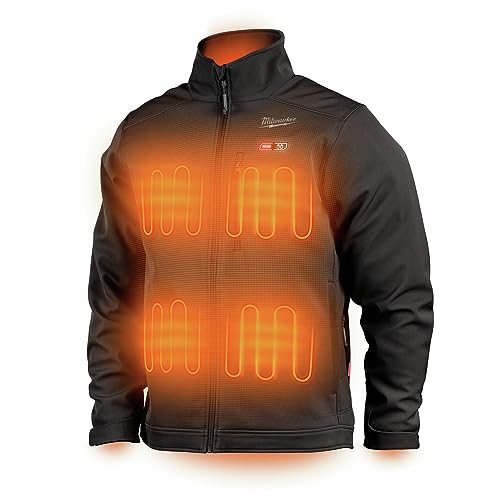 Milwaukee M12 Heated TOUGHSHELL Jacket (204B-20)Built like site clothing rather than outerwear, and the only jacket here whose battery you can swap in seconds because… | Anyone already on M12 | 21.6 Wh | $219.00View on Amazon |
#ad — buy links are tagged and earn us a commission at no extra cost to you. Prices come from a live feed; where none is available the button reads “Check price” rather than showing a number we cannot stand behind. How we are funded.
SAVIOR HEAT Heated Glove Liners
The most underrated format in heated apparel: a thin heated liner under your existing work glove beats a bulky heated glove for anyone who has to actually use their hands.
The numbers
- Energy
- 16.3 Wh
- Pack
- 7.4 V, 2,200 mAh per hand
- Thickness
- Liner — fits inside a work or ski glove
- Touchscreen
- Yes, per the listing
- Heat zones
- Back of hand and fingers
- Settings
- Three
- Care
- Hand wash with the battery out
On wattage: No published wattage. Small packs and a small element area, so the runtime spread between settings is wide.
On the pack: Liner packs in this class are 7.4 V, 2,200 mAh. The capacity is stated on the replacement-pack listing rather than on the glove listing.
What we like
- Fits under gloves you already trust, so you keep your grip and your dexterity
- Cheapest route into heated hands by a wide margin
- Packs are small enough to live in a coat pocket
What we do not
- Smallest packs here — about 16 Wh a hand, and the arithmetic on that is unforgiving
- No wind or water protection of their own
- The fit under a tight glove can be a squeeze
Who this suits
Trades workers, photographers, anyone who has to do something with their fingers in the cold.
Who should skip it
You want long runtime. This is the smallest energy budget on the site and it shows.
Spec sources: Amazon — SNOW DEER 7.4V 2200mAh replacement pack
SAVIOR HEAT 7.4V Heated Gloves
A competent middle option: warmer than a liner, less bulky than the Gerbing, and with the same missing wattage figure as everything else in the category.
#ad Price as of October 17, 2026. How we are funded.
The numbers
- Energy
- 16.3 Wh
- Pack
- 7.4 V per hand
- Element
- Doubled in the thumb and index finger
- Shell
- Water-repellent insulated polyester
- Heat zones
- Back of hand, with the element doubled in the thumb and index finger
- Settings
- Three
- Care
- Spot clean
On wattage: No published wattage.
On the pack: 7.4 V packs. Capacity is stated on the replacement-pack listings for this class rather than on the glove page.
What we like
- Doubled element in the thumb and index finger, which is where cold bites first
- The insulated shell does real work before the battery is switched on
- Widely stocked, so replacement packs are easy to find
What we do not
- No wattage published
- Middling capacity
- Bulkier than a liner without being as warm as a mitten
Who this suits
Someone who wants one pair of heated gloves for general winter use.
Who should skip it
You are stationary for hours in hard cold. Mittens hold heat better than fingers do.
Spec sources: Amazon — SNOW DEER 7.4V 2200mAh replacement pack
Gerbing 7V S7 Heated Gloves
Two 3,400 mAh packs is the largest per-hand energy figure on this list, and it still will not get you a full day on high — which tells you most of what you need to know about heated gloves.
#ad No live price available, so we show none. How we are funded.
The numbers
- Energy
- 23.8 Wh
- Pack
- 7 V, 3,400 mAh per glove
- Packs included
- Two, plus a dual charger
- Element coverage
- Full finger
- Heat zones
- Back of hand and along all five fingers
- Settings
- Three
- Care
- Spot clean only
On wattage: Gerbing publishes no wattage. It does publish pack capacity and voltage, which is more than most glove makers do and enough for the energy half of the arithmetic.
What we like
- The element runs the full length of the fingers, not just across the back of the hand
- Largest published per-hand capacity here
- Ships with both packs and a dual charger, so there is nothing else to buy
What we do not
- No published wattage, so the runtime half of the sum is unavailable from Gerbing alone
- Bulky enough that fine work is awkward
- Expensive
Who this suits
Motorcyclists and anyone whose hands sit in moving air, where the heat is fighting convection rather than still cold.
Who should skip it
You need dexterity. These are warm mitts with fingers, not working gloves — look at liners instead.
Spec sources: Amazon — Gerbing 7V Men's S7 heated gloves (two 7V 3400mAh packs included)
SAVIOR HEAT Heated Ski Mittens
Physics before electronics: fingers sharing one chamber lose less heat than fingers in separate ones, so a mitten gets more warmth out of the same watt-hours than a glove does.
The numbers
- Energy
- 16.3 Wh
- Pack
- 7.4 V, 2,200 mAh per hand — about 16.3 Wh
- Capacity conflict
- SAVIOR's own Tech Specs says 3,000 mAh instead
- Coverage
- Full hand including palm, per SAVIOR
- Shell
- Waterproof and windproof; 100D twill with laminated coating
- Format
- Mitten
- Heat zones
- "Full-Hand Heating Coverage" from "Carbon fiber heating elements", with "Added palm heating" as well as the back of the hand, per SAVIOR
- Settings
- Three, published as Low 104-113°F, Medium 122-131°F and High 131-149°F
- Care
- "Hand washing is recommended, and the battery should be removed before cleaning", per SAVIOR
On wattage: Not published, and barely derivable — this is the worst-documented product this site recommends first anywhere. SAVIOR's own page gives THREE different runtime sets and TWO different capacities. Taking the hours above against 16.3 Wh gives about 6.5 W high, 2.7 W medium and 2.0 W low; swap in the Tech Specs hours (2-3 / 5-6 / 10-12) or the 3,000 mAh figure and the implied low-setting draw moves between about 1.4 W and 3.7 W. A 2.7x spread, entirely from one manufacturer page.
On the pack: 7.4 V, 2,200 mAh per hand — about 16.3 Wh — which is the figure in SAVIOR's own body copy and matches the replacement-pack listing. SAVIOR's Tech Specs block on the SAME page says "7.4V 3000mAh battery" instead, which would be 22.2 Wh. We use the smaller figure because it is the one two independent sources agree on, and we flag the disagreement rather than averaging it.
What we like
- Mitten geometry keeps fingers warmer at any given power level
- Better for circulation-limited hands than a fingered glove
- Same pack family as the rest of the SAVIOR line
What we do not
- You cannot do anything precise in them
- SAVIOR's own page contradicts itself on capacity (2,200 vs 3,000 mAh) and gives three different runtime sets
- No wattage published, and the runtime conflict makes it hard to derive one
- Getting them on and off around a pole strap is a fiddle
Who this suits
Skiers and anyone whose hands go numb regardless of what they wear.
Who should skip it
You need to hold a tool, a camera or a phone.
Spec sources: Savior Heat — Heated Ski Mittens, the brand's own product page ("Three Adjustable Heating Settings"; "3 heat levels (Low: 104-113°F, Medium:122-131 °F, High: 131- 149°F)"; "Carbon fiber heating elements" with "Full-Hand Heating Coverage" and "Added palm heating helps warm every finger, fingertip, palm, and back of hand"; "Waterproof and windproof materials"; velvet lining and "100D twill fabric with laminated coating" outer; "hand washing is recommended, and the battery should be removed before cleaning"; "Free 1-Year Extended Warranty"; product named "S66E Classic Heated Winter Mittens". THE PAGE CONTRADICTS ITSELF: the body copy says "7.4V 2200mAh rechargeable battery power" while the Tech Specs section says "7.4V 3000mAh battery", and it gives THREE different runtime sets — Heating Performance "High: 149°F / 65°C | Up to 2.5H Runtime", "Medium: 131°F / 55°C | Up to 6H Runtime", "Low: 113°F / 45°C | Up to 8H Runtime"; Tech Specs "High: 2-3 hours", "Medium: 5-6 hours", "Low: 10-12 hours"; and the FAQ "about 2–3 hours on high, 4–5 hours on medium, and 6–10 hours on low") · Amazon — SNOW DEER 7.4V 2200mAh replacement pack
Milwaukee M12 Heated TOUGHSHELL Jacket (204B-20)
Built like site clothing rather than outerwear, and the only jacket here whose battery you can swap in seconds because you already own four of them.
#ad Price as of October 17, 2026. How we are funded.
The numbers
- Energy
- 21.6 Wh
- Pack
- M12 REDLITHIUM CP2.0, 2.0 Ah
- Voltage used here
- 10.8 V nominal (marketed as 12 V)
- Heat zones
- 3
- Maker's runtime claim
- 12 h low / 6 h medium / 3 h high
- Heat zones
- Chest, back and hand pockets
- Settings
- Three, plus a preheat cycle
- Care
- Machine washable with the battery removed
On wattage: Milwaukee publishes run-time, not watts — but it publishes all three settings, which is more than most of this category manages. The 12/6/3 pattern is a clean doubling of draw at each step. Milwaukee does not state which M12 pack those hours assume, so the resulting wattage is a shape rather than a fixed figure.
On the pack: Sold bare. The live listing title reads "Jacket Only" — no pack and no charger in the box. That is the right buy if you already run M12 and the wrong one if you do not. See [which garments include a battery](/battery/battery-included-or-separate).
What we like
- Hot-swappable packs — the only real answer to a short runtime is a second battery, and you already have one
- Genuinely durable shell fabric, built for work rather than for a catalog photo
- The pack doubles as a tool battery, so nothing in the van is single-purpose
What we do not
- The 2.0 Ah pack is small by heated-apparel standards once you convert it honestly
- Jacket-only SKUs ship without a battery, which is easy to miss at checkout
- Heavier than a soft-shell layer
Who this suits
A trades worker with an M12 kit already in the van, for whom a spare pack costs nothing extra to carry.
Who should skip it
You own no M12 tools. Buying into a tool platform for one jacket is the most expensive route into heated clothing.
Spec sources: Milwaukee Tool — M12 REDLITHIUM CP2.0 battery, 12V 2.0Ah · Milwaukee Tool — M12 Heated Jacket Kit (up to 8 hours on the REDLITHIUM 2.0) · Milwaukee Tool — M12 Heated TOUGHSHELL jacket kit
Where the full heated glove is right
There are real work cases for the bulkier product. Freezer and cold-store work, where the temperature is constant and the handling is coarse. Outdoor stationary work — traffic management, site security, marshalling. Anything where your hands are exposed to moving air for hours and you are not manipulating anything small.
In those cases, buy the largest published capacity you can find and buy spare packs at the same time. The energy budget is the binding constraint and there is no way around it except carrying more.
Watt-hours, and what they buy
Energy is capacity times nominal voltage. The ceiling draw is the pack’s own published output current times its voltage. The implied draw runs the maker’s advertised hours backwards. Nothing here is measured — check our working.
| Product | Capacity | Volts | Energy | Ceiling draw | Shortest runtime | Implied draw at the claim |
|---|---|---|---|---|---|---|
| SAVIOR HEAT Heated Glove Liners | 2,200 mAh | 7.4 V | 16.3 Wh | Not published | Not derivable | No claim published |
| SAVIOR HEAT 7.4V Heated Gloves | 2,200 mAh | 7.4 V | 16.3 Wh | Not published | Not derivable | No claim published |
| Gerbing 7V S7 Heated Gloves | 3,400 mAh | 7 V | 23.8 Wh | Not published | Not derivable | No claim published |
| SAVIOR HEAT Heated Ski Mittens | 2,200 mAh | 7.4 V | 16.3 Wh | Not published | Not derivable | 6.5 Wat 2.5 h high, 149°f / 65°c |
| Milwaukee M12 Heated TOUGHSHELL Jacket (204B-20) | 2,000 mAh | 10.8 V | 21.6 Wh | Not published | Not derivable | 7.2 Wat 3 h high |
“Not derivable” means the manufacturer does not publish the figure the sum needs. We leave it blank rather than estimating it, borrowing a number from a similar model, or rounding one into existence. These are ceilings, not promises: cold, wind, movement and pack age all push real runtime below them. Run your own numbers.
The shift-length arithmetic
A heated glove carries between 16 and 24 watt-hours a hand. A heated jacket carries 38 and cannot cover an eight-hour shift on a useful setting. The gloves are working with less than two-thirds of that, per hand, against a harder heat-loss problem.
No glove maker publishes the element's draw, so we will not put an hours figure on it — that is exactly the kind of number this site exists to avoid inventing. What we will say is that any plan for a full outdoor shift on one pack per hand is optimistic, and that spare packs for the common 7.4 V class cost little. The runtime calculator will do the sum the moment you find a draw figure for your specific gloves.
Warm the core first
Worth repeating because it saves money. When your core temperature drops, your body constricts peripheral blood flow to protect it — your hands get cold as a consequence of your torso being cold, not independently of it.
So the cheapest fix for cold hands on a work site is frequently not gloves at all. A heated vest under your existing work coat, or simply better insulation, removes the reason your body is shutting down your fingers. Heated jackets for work covers the core side of the same problem. If it is your feet rather than your hands, heated socks for work covers standing on cold concrete.
What we would skip, and why
- Bulky heated gloves for any job involving fasteners
- If the work involves screws, connectors, small tools or a phone, a thick heated glove comes off within the hour and the purchase is wasted. This is the single most common way money is thrown away on heated hands, and the liner format exists precisely to avoid it.
- Heated gloves as the answer to a cold core
- If your torso is cold, your body is deliberately restricting blood flow to your hands to protect it. Heating the hands then is fighting your own circulation. Warm the core first — a heated vest under your work coat — and the hands often stop being the problem.
Our criteria, and what we did not do
- Dexterity is the first filter. Anything that comes off to do the job is ranked below anything that stays on.
- Abrasion and grip surface assessed — a work glove that wears through in a season is a false economy.
- Published pack capacity converted at nominal voltage where the maker publishes it, and marked not published where they do not.
- Replacement pack cost and availability weighted heavily, because work gear gets used every day.
- We have not worn any of these on a job or anywhere else. See how we do this.
We have not worn, tested or owned any of these products, and we say so on every page rather than in a footer. What we do instead is compile the published specifications and do the arithmetic. The full method.
Frequently asked
- What are the best heated gloves for outdoor work?
- For most trades, heated liners under the gloves you already use — you keep grip, fit and abrasion resistance and add heat. Full heated gloves suit freezer work and stationary outdoor roles where dexterity is not required.
- Will heated gloves last a full work shift?
- On one pack per hand, that is optimistic. These packs hold 16 to 24 watt-hours a hand, and makers do not publish the draw, so we will not put an hours figure on it. Spare packs are cheap and are the practical answer.
- Are heated gloves safe for construction work?
- Treat them as warmth, not protection. Heated gloves are not cut-rated, impact-rated or arc-rated unless the listing specifically says so. Where PPE is required, the liner format is usually the correct approach because it goes under whatever glove your site already mandates.
- Why are my hands still cold with heated gloves on?
- Three usual causes. The glove is too tight, restricting circulation. Your core is cold, so your body is deliberately reducing blood flow to your hands. Or the element is back-of-hand only and your fingertips have no element over them at all.
- Can I wash heated work gloves?
- Most heated gloves are spot-clean only, which is a real limitation for work gear. Liners are usually hand-washable with the pack removed. Check before buying — a work glove you cannot clean has a short life.
Sources
Related

Heated Gloves
The smallest packs in heated apparel, fighting the worst heat loss on the body. Liners are the underrated answer.

Heated glove liners: less battery, more useful
The smallest packs on the site in the format most likely to still be on your hands at the end of the day.

Heated jackets for work, where the runtime claim meets an eight-hour shift
Why the runtime question on a job site is really a logistics question, and which jackets answer it.
Running heated clothing off a tool battery
What M12 and 20V MAX packs really hold, and the adapter question we will not pretend to have an answer to.

Heated Socks
One toe element, one 7.4V pack, roughly 16 watt-hours a foot. The simplest arithmetic on the site.

Heated gloves for women, and the fit problem nobody mentions
Most heated gloves sold as women's are the unisex glove in smaller sizes. Fit is a performance specification here, not a preference — and a loose glove heats air.

Heated gloves for men, and why the size run matters more than the label
Almost every heated glove sold is unisex and sized by palm circumference. Which ones actually reach XXL - and why the thin liner formats run out of sizes first.