Milwaukee heated gear: the whole M12 line, run through the arithmetic
Milwaukee is the only maker in this category that publishes hours for every setting on every garment. Do the division and the line tells you something its catalog does not.
By Scooter M. · Published September 4, 2026
How this is funded: buy links here are tagged and earn us a commission at no extra cost to you. It does not affect what we recommend, and we take no free product and no sponsorship. Read the disclosure.
Milwaukee publishes runtime for all three settings on every M12 heated garment. The three-zone jackets claim 12/6/3 hours; the two-zone vests and hoodies claim 8/4/2. On the same battery, the jacket with MORE elements claims 50% more runtime — which means its elements draw less. If you want hours, buy the jacket. If you want heat, the vest is the hotter garment.
Why this line is worth the arithmetic
Almost every maker in heated apparel publishes one runtime number, prefixed with "up to", describing the lowest setting. Milwaukee does something unusual: it publishes hours for low, medium and high, on every garment in the range. That is three data points per product instead of one, and it turns a catalog page into something you can actually reason about.
It still does not publish a wattage — nobody in this category does. But hours and capacity are enough. Divide the pack's energy by the advertised hours and you get the draw the claim assumes, whether or not the maker intended to tell you. Run that across the whole line and a pattern falls out that the product pages never state. Run it across the whole *category* and a second pattern appears — every brand's battery-life claim, converted.
Quick picks
Tap any row to jump to the full write-up below. The energy column is the pack’s capacity times its voltage — the number this category does not print.
| # | Product | Best for | Energy | Price |
|---|---|---|---|---|
| 1 | 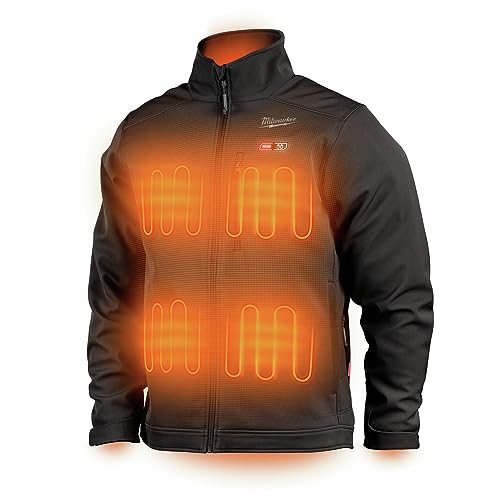 Milwaukee M12 Heated TOUGHSHELL Jacket (204B-20)Built like site clothing rather than outerwear, and the only jacket here whose battery you can swap in seconds because… | Anyone already on M12 | 21.6 Wh | $219.00View on Amazon |
| 2 |  Milwaukee M12 Heated AXIS VestTwo zones instead of the jacket's three, and Milwaukee's own numbers say it runs out in a third of the time — which is… | The hottest thing in the M12 line | 21.6 Wh | $279.00View on Amazon |
| 3 |  Milwaukee M12 Heated Jacket Kit (battery and charger included)The only Milwaukee heated listing whose runtime claim names the pack it was measured on — which, on a site built from … | Buying in without owning M12 already | 21.6 Wh | $319.00View on Amazon |
| 4 |  Milwaukee M12 Heated HoodieThe same two-zone layout and the same 8/4/2 hours as the AXIS vest, wrapped in a sweatshirt — which makes it the M12 g… | Heat that does not read as workwear | 21.6 Wh | Check price on Amazon |
| 5 |  Milwaukee Women's M12 Heated AXIS VestThe same two zones and the same published hours as the men's AXIS vest, on a cut for a different torso — which matters… | A women's cut on the same platform | 21.6 Wh | $256.15View on Amazon |
#ad — buy links are tagged and earn us a commission at no extra cost to you. Prices come from a live feed; where none is available the button reads “Check price” rather than showing a number we cannot stand behind. How we are funded.
Milwaukee M12 Heated TOUGHSHELL Jacket (204B-20)
Built like site clothing rather than outerwear, and the only jacket here whose battery you can swap in seconds because you already own four of them.
#ad Price as of October 19, 2026. How we are funded.
The numbers
- Energy
- 21.6 Wh
- Pack
- M12 REDLITHIUM CP2.0, 2.0 Ah
- Voltage used here
- 10.8 V nominal (marketed as 12 V)
- Heat zones
- 3
- Maker's runtime claim
- 12 h low / 6 h medium / 3 h high
- Heat zones
- Chest, back and hand pockets
- Settings
- Three, plus a preheat cycle
- Care
- Machine washable with the battery removed
On wattage: Milwaukee publishes run-time, not watts — but it publishes all three settings, which is more than most of this category manages. The 12/6/3 pattern is a clean doubling of draw at each step. Milwaukee does not state which M12 pack those hours assume, so the resulting wattage is a shape rather than a fixed figure.
On the pack: Sold bare. The live listing title reads "Jacket Only" — no pack and no charger in the box. That is the right buy if you already run M12 and the wrong one if you do not. See [which garments include a battery](/battery/battery-included-or-separate).
What we like
- Hot-swappable packs — the only real answer to a short runtime is a second battery, and you already have one
- Genuinely durable shell fabric, built for work rather than for a catalog photo
- The pack doubles as a tool battery, so nothing in the van is single-purpose
What we do not
- The 2.0 Ah pack is small by heated-apparel standards once you convert it honestly
- Jacket-only SKUs ship without a battery, which is easy to miss at checkout
- Heavier than a soft-shell layer
Who this suits
A trades worker with an M12 kit already in the van, for whom a spare pack costs nothing extra to carry.
Who should skip it
You own no M12 tools. Buying into a tool platform for one jacket is the most expensive route into heated clothing.
Spec sources: Milwaukee Tool — M12 REDLITHIUM CP2.0 battery, 12V 2.0Ah · Milwaukee Tool — M12 Heated Jacket Kit (up to 8 hours on the REDLITHIUM 2.0) · Milwaukee Tool — M12 Heated TOUGHSHELL jacket kit
Milwaukee M12 Heated AXIS Vest
Two zones instead of the jacket's three, and Milwaukee's own numbers say it runs out in a third of the time — which is the tell that its elements pull harder. If you want heat rather than hours, this is the M12 garment that delivers it.
#ad Price as of October 19, 2026. How we are funded.
The numbers
- Energy
- 21.6 Wh
- Pack
- Any M12 pack; kits ship with a 2.0 Ah
- Heat zones
- 2
- Maker's runtime claim
- 8 h low / 4 h medium / 2 h high
- Implied draw on a 2.0 Ah
- ~2.7 W / ~5.4 W / ~10.8 W
- Heat zones
- Chest and back
- Settings
- Three, per zone, from a one-touch LED controller
- Care
- Machine washable with the battery removed
On wattage: Milwaukee publishes no wattage, but it publishes hours for all three settings — and the 8/4/2 pattern is a clean doubling of draw at each step. On a 2.0 Ah pack that inverts to roughly 2.7 W, 5.4 W and 10.8 W. Milwaukee does not state which pack those hours assume, so treat them as a shape rather than a fixed figure.
What we like
- The shortest claimed high-setting runtime in the M12 line, which on fixed pack energy is the arithmetic signature of the most heat
- A vest layers under the work coat you already own, so your coat does the insulating and the battery only tops up
- Runs off the same packs as your tools — the runtime problem becomes a ten-second swap
What we do not
- Two hours on high is genuinely short, and it is Milwaukee's own figure rather than our estimate
- No wattage published, and no pack named for the runtime claims
- Two zones means nothing at the shoulders, which the AXIS jacket does cover
Who this suits
Someone on M12 who is cold rather than impatient — standing still in hard cold, with spare packs in the van and a coat to wear over it.
Who should skip it
You want to set it and forget it for a shift. On high this is a two-hour garment by Milwaukee's own reckoning, and no amount of layering changes that.
Spec sources: Milwaukee Tool — M12 Heated Gear line (per-setting run-time and heat zones for every garment) · Milwaukee Tool — M12 REDLITHIUM CP2.0 battery, 12V 2.0Ah
Milwaukee M12 Heated Jacket Kit (battery and charger included)
The only Milwaukee heated listing whose runtime claim names the pack it was measured on — which, on a site built from published specifications, makes it the most useful SKU in the line even before you wear it.
#ad Price as of October 19, 2026. How we are funded.
The numbers
- Energy
- 21.6 Wh
- In the box
- Jacket, M12 2.0 Ah pack and charger
- Energy in that pack
- 21.6 Wh at 10.8 V nominal
- Maker's runtime claim
- Up to 8 h, on the named 2.0 Ah pack
- Implied draw
- ~2.7 W at that claim
- Heat zones
- Chest, back and hand pockets
- Settings
- Three, per zone
- Care
- Machine washable with the battery removed
On wattage: Milwaukee states 'up to 8 hours on the M12 REDLITHIUM 2.0 Battery' for this kit — the one place in the line where the claim and the pack are stated together. 21.6 Wh over 8 hours implies about 2.7 W, and that named figure is what lets us sanity-check the rest of the range.
What we like
- Ships with the pack and charger, so there is no second purchase and no platform to join first
- The runtime claim names its battery, which almost nothing else in heated apparel does
- That 2.0 Ah pack then works in any M12 tool you buy later
What we do not
- The included 2.0 Ah is the smallest pack in the range at 21.6 Wh
- 8 hours is the low setting, and Milwaukee does not say what the higher ones give on this SKU
- Older jacket styling than the current TOUGHSHELL and AXIS shells
Who this suits
Someone who wants a heated jacket and owns no cordless platform, and would rather buy one box than assemble a kit.
Who should skip it
You already own M12 packs. Then you are paying for a battery and charger you do not need — buy a jacket-only SKU instead.
Spec sources: Milwaukee Tool — M12 Heated Jacket Kit (up to 8 hours on the REDLITHIUM 2.0) · Milwaukee Tool — M12 REDLITHIUM CP2.0 battery, 12V 2.0Ah · Milwaukee Tool — M12 Heated Gear line (per-setting run-time and heat zones for every garment)
Milwaukee M12 Heated Hoodie
The same two-zone layout and the same 8/4/2 hours as the AXIS vest, wrapped in a sweatshirt — which makes it the M12 garment you can wear somewhere other than a job site without looking like you came straight from one.
#ad No live price available, so we show none. How we are funded.
The numbers
- Energy
- 21.6 Wh
- Pack
- Any M12 pack; kits ship with a 2.0 Ah
- Heat zones
- 2
- Maker's runtime claim
- 8 h low / 4 h medium / 2 h high
- Layer
- Mid-layer sweatshirt, not outerwear
- Heat zones
- Chest and back
- Settings
- Three, per zone
- Care
- Machine washable with the battery removed
On wattage: No published wattage. The 8/4/2 hours are identical to the AXIS vest's, which suggests the same element output in a different shell — but Milwaukee publishes nothing that would confirm it, so we note the coincidence rather than asserting a cause.
What we like
- Cotton-blend face is far more comfortable against a shirt than a technical shell
- Same M12 pack as everything else in the van
- The hood is the only one in the heated line that layers under a hard hat comfortably
What we do not
- Almost no wind or water resistance — it is a sweatshirt with elements in it
- Two zones, and no shoulder coverage
- Hoodie-only SKUs ship without a pack, which is easy to miss at checkout
Who this suits
Anyone cold in a shop, a warehouse or a cold cab who wants the M12 platform without the outerwear silhouette.
Who should skip it
You will be standing in wind. Put a shell over it or buy the TOUGHSHELL, because this fabric will not hold the heat the battery is making.
Spec sources: Milwaukee Tool — M12 Heated Gear line (per-setting run-time and heat zones for every garment) · Milwaukee Tool — M12 REDLITHIUM CP2.0 battery, 12V 2.0Ah
Milwaukee Women's M12 Heated AXIS Vest
The same two zones and the same published hours as the men's AXIS vest, on a cut for a different torso — which matters more than it sounds, because an element only warms what it is pressed against.
#ad Price as of October 19, 2026. How we are funded.
The numbers
- Energy
- 21.6 Wh
- Pack
- Any M12 pack
- Heat zones
- 2
- Maker's runtime claim
- 8 h low / 4 h medium / 2 h high
- Fit
- Women's last
- Heat zones
- Chest and back
- Settings
- Three, per zone
- Care
- Washer and dryer safe, per Milwaukee's current-model page
On wattage: No published wattage. Milwaukee publishes the same 8/4/2 hours as the men's vest, so the same inversion applies and the same missing-pack caveat applies with it.
On the pack: The earlier generation's listing said "Battery Not Included" outright. The current listing's title does not say either way, and Milwaukee sells this vest both as a kit and vest-only — check which variant you have selected before you pay.
What we like
- A genuine women's cut rather than a downsized men's vest, which is what puts the elements over the right places
- Same pack ecosystem, so it shares a charger and spares with the rest of the platform
- Layers under an existing coat, which is the most efficient way to spend a small pack
What we do not
- Frequently sold as vest-only, with the pack and charger extra
- Two zones and two hours on high, exactly as with the men's version
- Milwaukee does not name the pack its 8/4/2 hour figures assume
Who this suits
A woman already on the M12 platform, or anyone whose shoulders a men's small does not fit.
Who should skip it
You own no M12 tools. Buying into a tool platform for a single vest is the most expensive route into heated clothing there is.
Spec sources: Milwaukee Tool — M12 Women's Heated AXIS Vest, F300B-21M (two zones, 8 h low / 4 h medium / 2 h high, washer and dryer safe) · Milwaukee Tool — M12 Heated Gear line (per-setting run-time and heat zones for every garment) · Milwaukee Tool — M12 REDLITHIUM CP2.0 battery, 12V 2.0Ah
The finding: more zones, longer runtime, less heat
Here is what Milwaukee publishes, side by side. The three-zone jackets — TOUGHSHELL and the AXIS hooded jacket — claim 12 hours low, 6 medium, 3 high. The two-zone garments — the AXIS vests and both hoodies — claim 8 hours low, 4 medium, 2 high.
| Garment | Zones | Low | Medium | High | Implied draw (low / med / high) |
|---|---|---|---|---|---|
| TOUGHSHELL jacket, AXIS hooded jacket | 3 | 12 h | 6 h | 3 h | 1.8 W / 3.6 W / 7.2 W |
| AXIS vest (men's and women's), hoodies | 2 | 8 h | 4 h | 2 h | 2.7 W / 5.4 W / 10.8 W |
Hours are Milwaukee's own, from its heated-gear line page. The draw column is those hours divided into 21.6 Wh — see the caveat below about which pack they assume.
Read that twice, because it runs against the instinct. The garment with more heating elements claims 50% more runtime. On the same battery platform. That is only possible if the three-zone jackets run their elements at a lower output than the two-zone garments run theirs — and the implied draw column is where you see it: roughly 1.8 W against 2.7 W on low, 7.2 W against 10.8 W on high.
So the AXIS vest is, by Milwaukee's own numbers, the hottest garment in the M12 heated range. Not the jacket. The vest concentrates a larger draw into two panels over your chest and back, empties the pack in two hours doing it, and gets genuinely warm in the process. The jacket spreads a smaller draw across three zones and lasts four times as long.
The settings are a clean doubling — which is a good sign
One detail worth noticing: both patterns are exact power-of-two steps. 12/6/3 and 8/4/2. Each setting up doubles the draw and halves the runtime, with no rounding and no fudge.
That is a small thing, but it is the kind of small thing that suggests the figures came from a real measurement rather than a marketing meeting. Numbers massaged for a catalog tend to look like "up to 10 hours" — round, generous and attached to nothing. Numbers that fall out of a controller design tend to look like this.
The caveat Milwaukee leaves open
There is one gap in the data and it is worth being precise about, because it changes the absolute figures without changing the comparison.
Milwaukee's heated-gear page says every garment takes any M12 battery — and then quotes runtime without saying which pack the hours were measured on. A 2.0 Ah pack holds 21.6 Wh; a 3.0 Ah holds 32.4 Wh; a 4.0 Ah XC holds 43.2 Wh. The draw figures in the table above assume the 2.0 Ah, because that is the pack the kits ship with. On a larger pack, every implied wattage rises proportionally.
There is one place Milwaukee does name the pack, and it is a useful anchor: the M12 Heated Jacket Kit states "up to 8 hours on the M12 REDLITHIUM 2.0 Battery." That is 21.6 Wh over 8 hours — about 2.7 W. Which is exactly the low-setting draw the two-zone garments imply on the same pack.
Watt-hours, and what they buy
Energy is capacity times nominal voltage. The ceiling draw is the pack’s own published output current times its voltage. The implied draw runs the maker’s advertised hours backwards. Nothing here is measured — check our working.
| Product | Capacity | Volts | Energy | Ceiling draw | Shortest runtime | Implied draw at the claim |
|---|---|---|---|---|---|---|
| Milwaukee M12 Heated TOUGHSHELL Jacket (204B-20) | 2,000 mAh | 10.8 V | 21.6 Wh | Not published | Not derivable | 7.2 Wat 3 h high |
| Milwaukee M12 Heated AXIS Vest | 2,000 mAh | 10.8 V | 21.6 Wh | Not published | Not derivable | 10.8 Wat 2 h high |
| Milwaukee M12 Heated Jacket Kit (battery and charger included) | 2,000 mAh | 10.8 V | 21.6 Wh | Not published | Not derivable | 2.7 Wat 8 h maker's pack-named claim |
| Milwaukee M12 Heated Hoodie | 2,000 mAh | 10.8 V | 21.6 Wh | Not published | Not derivable | 10.8 Wat 2 h high |
| Milwaukee Women's M12 Heated AXIS Vest | 2,000 mAh | 10.8 V | 21.6 Wh | Not published | Not derivable | 10.8 Wat 2 h high |
“Not derivable” means the manufacturer does not publish the figure the sum needs. We leave it blank rather than estimating it, borrowing a number from a similar model, or rounding one into existence. These are ceilings, not promises: cold, wind, movement and pack age all push real runtime below them. Run your own numbers.
Which M12 garment is right for you
You already own M12 tools
Then this line is genuinely the best answer in heated apparel, and the reason has nothing to do with the garments. Every other heated jacket on the market poses runtime as a specification you are stuck with. On a platform you already own, it becomes a ten-second swap with gloves on, from a bag with four charged packs in it.
Buy garment-only, not the kit. Pick the jacket for duration or the vest for heat, per the rule above.
You own no cordless platform
Then be honest about what you are buying. The M12 Heated Jacket Kit is the sensible entry — one box, pack and charger included, and a runtime claim that names its own battery. But a consumer heated jacket with a larger pack will cost less and hold more energy: a typical 7.4 V, 5,200 mAh consumer pack is 38.5 Wh against the M12 2.0 Ah's 21.6 Wh, nearly double.
The M12 route only pulls ahead once there is a second pack in the picture. If you are never going to own one, the wider jacket roundup is the better place to shop, and heated jackets for work covers the shift-length problem in general.
You want the smallest, cheapest way in
The hoodie. Same two zones and the same 8/4/2 hours as the vest, in a garment you can wear somewhere other than a job site. It gives up essentially all wind resistance to do it, so put a shell over it if you are going to stand outside in weather.
How this line compares to the rest of the category
On raw energy, badly — and that is worth stating plainly. The M12 2.0 Ah pack holds 21.6 Wh, which is a little over half of what a standard consumer heated-apparel pack carries. Even the 4.0 Ah XC, at 43.2 Wh, is only modestly ahead of a mainstream 38.5 Wh consumer pack.
On disclosure, extremely well. Milwaukee publishes three runtime figures per garment where the rest of the category publishes one, and states its zones precisely. That is the difference between a product you can evaluate and one you have to take on faith, which is the axis this site cares about most.
And on the thing that actually decides satisfaction — whether you run out of heat before you run out of cold — the platform wins outright, provided you already own it. Milwaukee M12 versus DEWALT 20V MAX works through the platform choice for anyone deciding between the two, and tool battery compatibility covers what does and does not cross between systems, including why we will not recommend a specific adapter.
What we would skip, and why
- The heated gloves, if you assumed your M12 packs power them
- They do not. Milwaukee's heated gloves and glove liners run on a dedicated 48-11-2320 heated-gloves battery, not the M12 packs in your van — it is listed as their power source on Milwaukee's own line page. Everything else in the heated range takes any M12 pack, which makes the gloves the one place the platform argument quietly stops working. Buy them on their merits if you want them, but not on the assumption that your existing batteries fit. If it is warm hands you are after, heated glove liners are a cheaper and more flexible answer.
- Any M12 garment bought without checking whether the SKU includes a pack
- Milwaukee sells nearly every heated garment twice: as a kit with a battery and charger, and as garment-only. The listings look near-identical and the price gap is most of the reason people feel misled after ordering. If you already own M12 packs, garment-only is the right buy and the kit is money wasted. If you do not, garment-only leaves you with a jacket you cannot switch on.
- Buying into M12 for the heated gear alone
- The entire case for a tool-platform garment is that spare packs already exist, already charged, in a bag you already carry. Strip that away and you are buying a jacket plus a battery plus a charger plus a commitment to one brand's battery family — which costs considerably more than a consumer heated jacket and a spare pack. The platform argument only works when the platform is already sunk cost.
Our criteria, and what we did not do
- Milwaukee's own published hours, per setting, for every garment. This is the rare line where all three settings are stated, which means all three can be inverted into a draw rather than just the marketing headline.
- Converted at 10.8 V nominal, not the 12 V on the label. US lithium packs are labeled at peak charge voltage; using the label would overstate every figure here by about 11%.
- Zone count recorded, never credited. More elements on a fixed pack is more coverage, not more heat — and on this line it demonstrably costs runtime.
- Where Milwaukee does not name the pack behind a runtime claim, we say so on the card rather than picking a pack that makes the number look good.
- We have not worn any of this gear. Every figure below is arithmetic on published specifications. How we work.
We have not worn, tested or owned any of these products, and we say so on every page rather than in a footer. What we do instead is compile the published specifications and do the arithmetic. The full method.
One last thing to check on any M12 garment before you pay: whether the variant you selected is the kit or the bare jacket. The TOUGHSHELL's listing says "Jacket Only" and the jacket kit's says "Battery and Charger Included", and they sit next to each other in the same results. Which garments include a battery has every listing on this site sorted.
Milwaukee is the only tool brand that publishes a runtime for every setting on every garment. Its main rival on job sites does not, and the difference is instructive: DEWALT's 20V MAX heated line, converted has bigger packs, more zones on its coat, and one pack-named runtime claim across four garments.
Frequently asked
- How long does a Milwaukee heated jacket last?
- Milwaukee publishes 12 hours on low, 6 on medium and 3 on high for its three-zone jackets (TOUGHSHELL and the AXIS hooded jacket), and 8/4/2 for the two-zone vests and hoodies. It does not state which M12 pack those hours assume — the one place it does name a pack is the Heated Jacket Kit, at 'up to 8 hours on the M12 REDLITHIUM 2.0'.
- Why does the Milwaukee jacket last longer than the vest?
- Because its elements draw less. The three-zone jackets claim 12 hours low against the two-zone garments' 8, on the same battery platform — which only works if the jacket runs a lower output. Inverted on a 2.0 Ah pack that is roughly 1.8 W against 2.7 W. More zones, less heat each, longer life.
- Which Milwaukee heated garment is the warmest?
- By Milwaukee's own numbers, the AXIS vest. It claims just 2 hours on high against the jacket's 3, on the same platform, which implies a substantially higher draw — about 10.8 W against 7.2 W on a 2.0 Ah pack. It is the hottest and the shortest-lived thing in the range.
- Do all M12 batteries work with Milwaukee heated gear?
- For the jackets, vests and hoodies, yes — Milwaukee states any M12 pack is compatible. The heated gloves and glove liners are the exception: they run on a dedicated 48-11-2320 heated-gloves battery, not the M12 packs you already own. That catches people out.
- How many watt-hours is a Milwaukee M12 battery?
- At 10.8 V nominal: a 2.0 Ah pack is 21.6 Wh, a 3.0 Ah is 32.4 Wh, a 4.0 Ah XC is 43.2 Wh and a 6.0 Ah XC is 64.8 Wh. Milwaukee markets the platform as 12 V, which is the peak-charge figure — using it would overstate every one of those by about 11%.
- Is a Milwaukee heated jacket worth it if I do not own M12 tools?
- Usually not. The whole advantage is that charged spare packs already exist in your bag. Without that, you are buying a jacket, a battery, a charger and a platform commitment — and a consumer heated jacket typically ships with a 38.5 Wh pack against the M12 2.0 Ah's 21.6 Wh.
- Should I buy the Milwaukee kit or the garment on its own?
- Kit if you own no M12 packs, garment-only if you do. Milwaukee sells nearly every heated item both ways and the listings look almost identical, so check before ordering — it is the single most common source of buyer's remorse on this line.
Sources
- Milwaukee Tool — M12 Heated Gear line page (per-setting run-time, heat zones and battery compatibility for every garment)
- Milwaukee Tool — M12 Heated Jacket Kit (the one pack-named runtime claim)
- Milwaukee Tool — M12 REDLITHIUM CP2.0 battery, 12V 2.0Ah
- ToolGuyd — DEWALT's 20V MAX / 18V nominal packaging statement (the same labeling convention)
Related

Heated Jackets
The biggest category and the noisiest claims. We convert capacity and voltage into watt-hours, then into hours at each setting.
Milwaukee M12 Heated TOUGHSHELL: the smallest pack, and why it wins anyway
The smallest battery on the site, and the jacket we would still recommend to anyone already on M12.
M12 or 20V MAX for a heated jacket?
A 66% energy gap the labels hide — and why the platform you already own still wins anyway.
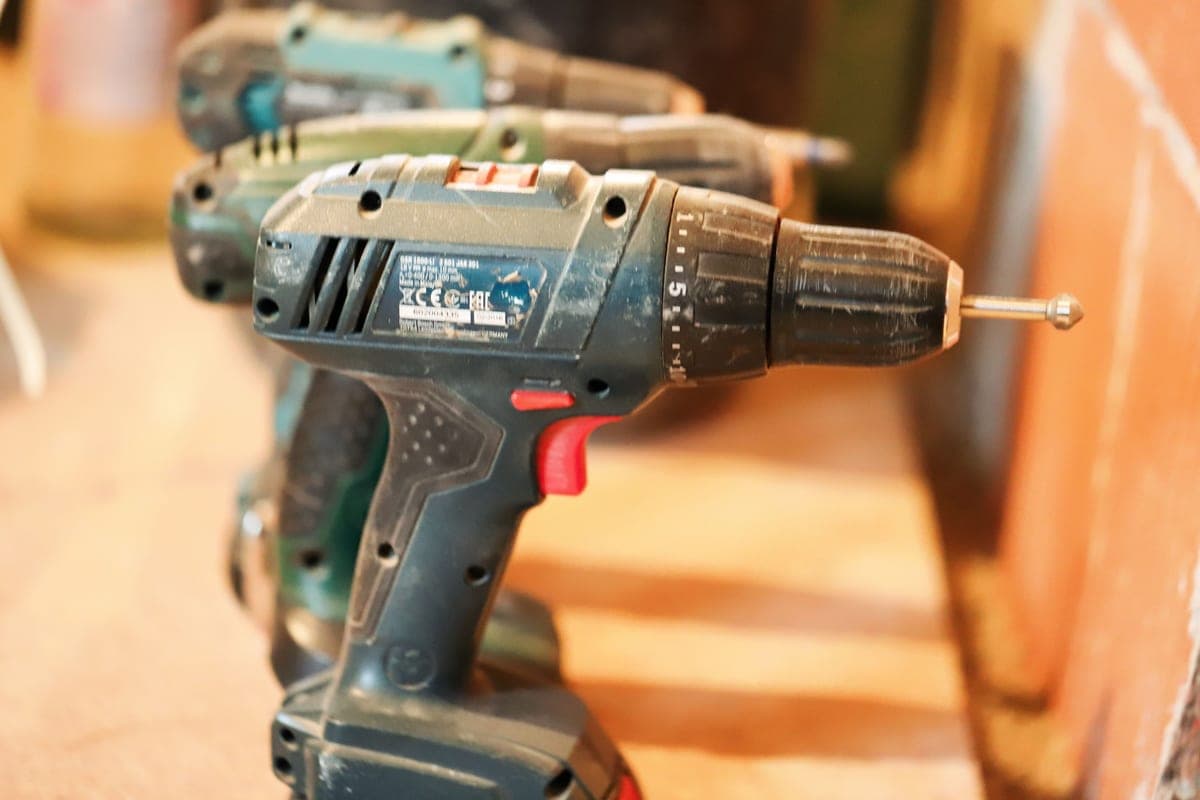
Running heated clothing off a tool battery
What M12 and 20V MAX packs really hold, and the adapter question we will not pretend to have an answer to.
Heated jackets for work, where the runtime claim meets an eight-hour shift
Why the runtime question on a job site is really a logistics question, and which jackets answer it.
Does it come with a battery, or is that a second purchase?
We read the live listing title for every garment on this site and sorted them: says it includes a pack, says it does not, does not say. Two popular picks are bare.
DEWALT heated jackets: the 20V MAX line, run through the arithmetic
Every DEWALT heated garment you can buy, converted. Bigger packs than Milwaukee, one runtime claim that names its pack, three that name nothing — and a 90-day warranty on the newest vest.