Heated jackets in big and tall sizes
Most of this category stops at 2XL and does not say so until checkout. We went to each maker's own size chart, kept only what is documented, and added the part nobody mentions: a larger garment has more area to heat from the same pack.
By Scooter M. · Published September 13, 2026 · Updated September 17, 2026
How this is funded: buy links here are tagged and earn us a commission at no extra cost to you. It does not affect what we recommend, and we take no free product and no sponsorship. Read the disclosure.
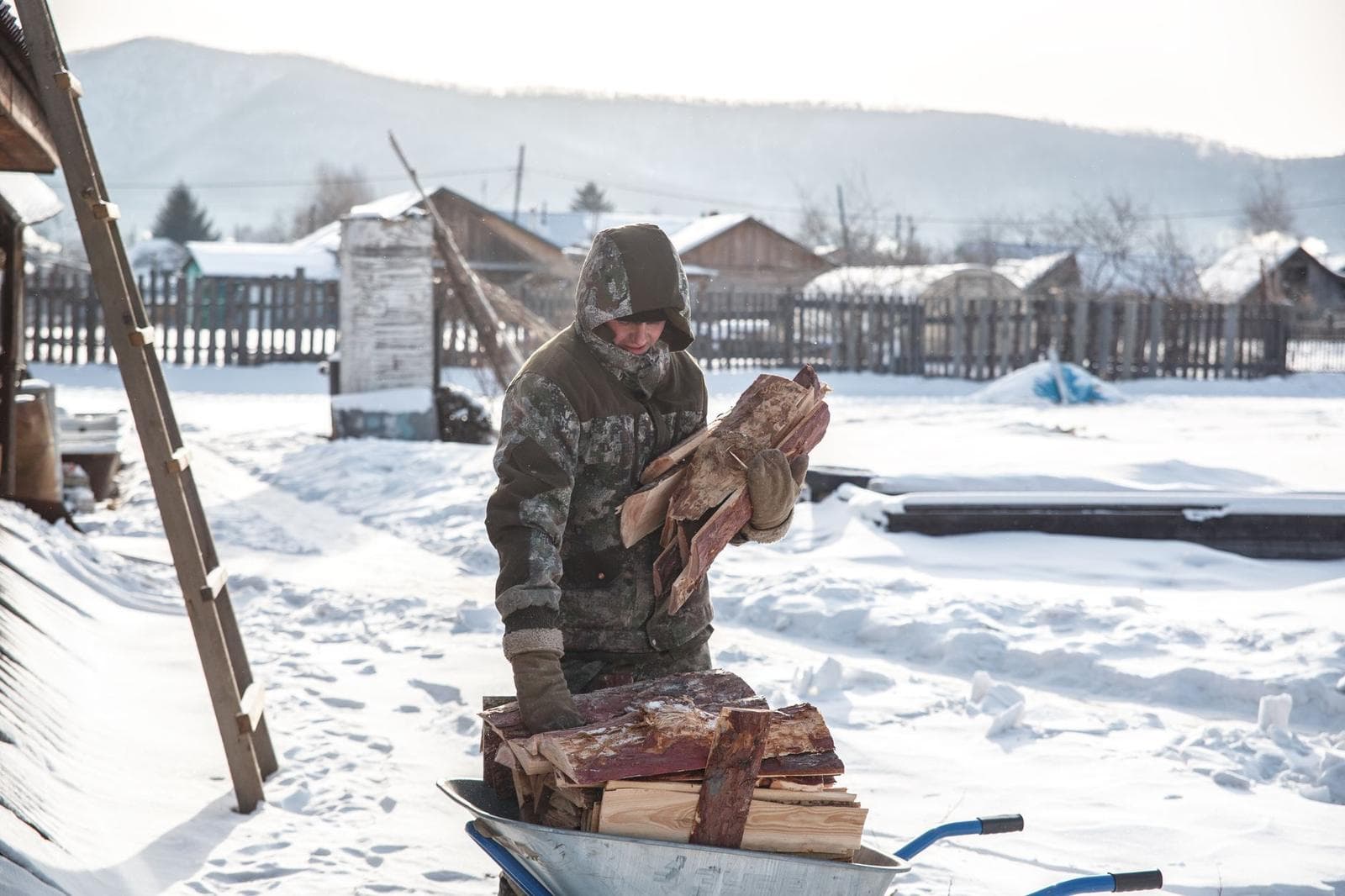
Verified past 2XL: Milwaukee's M12 line runs S to 3XL, DEWALT's heated coat is sold in 3XL, ororo's Classic chart runs to 4XL and adds MT/LT/XLT/2XLT tall cuts, and Gerbing's 12V liner runs XS to 4XL. All of them ship the same size pack as the small, which is the part worth planning around.
The category stops at 2XL more often than it admits
Search for a heated jacket and you will find hundreds. Filter for 3XL and the list collapses, and filter for a genuine tall cut and it very nearly disappears.
There is a straightforward reason. Heated garments are built around a wiring harness, and a harness is a physical object that has to be manufactured at each length. Extending a size range in ordinary clothing is a pattern change; extending it in heated clothing is a pattern change plus a new harness plus new testing. Makers do it for the sizes that sell in volume and stop.
So the practical position is that your choice is narrower than the category's apparent size suggests, and most of what remains comes from the tool brands — who have been dressing trades in extended sizes for decades and carried that over.
What each maker actually documents
| Garment | Largest documented size | Tall cuts? | Zones |
|---|---|---|---|
| Milwaukee M12 heated line | 3XL | No | 3 |
| DEWALT DCHJ076A heated coat | 3XL (this listing is the 3XL) | No | 5 |
| ororo Classic heated jacket | 4XL | Yes — MT, LT, XLT, 2XLT | 4 |
| Gerbing 12V Jacket Liner 2.0 | 4XL | No | 7 |
Sizes read from each maker's published size chart or from the listing title of the specific variant. Note the two-way split: the tool brands stop at 3XL but are easy to find in it, while ororo goes further and is the only one here offering a genuine tall cut.
One thing the table does not capture. ororo's tall cuts are documented on the Classic jacket's chart, not on every ororo product — so if length is your problem rather than width, the specific model matters and the brand alone will not get you there.
Quick picks
Tap any row to jump to the full write-up below. The energy column is the pack’s capacity times its voltage — the number this category does not print.
| # | Product | Best for | Energy | Price |
|---|---|---|---|---|
| 1 | 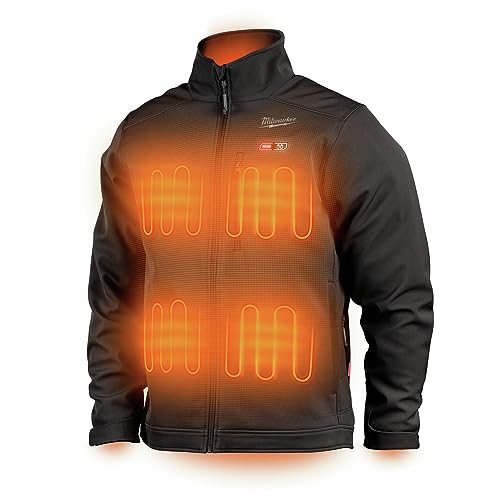 Milwaukee M12 Heated TOUGHSHELL Jacket (204B-20)Built like site clothing rather than outerwear, and the only jacket here whose battery you can swap in seconds because… | Anyone already on M12 | 21.6 Wh | $219.00View on Amazon |
| 2 | 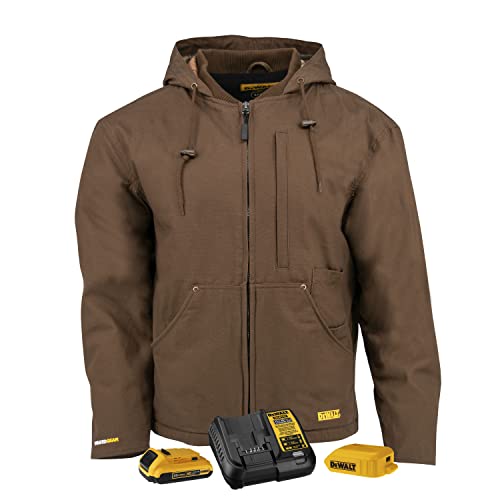 DEWALT DCHJ076A Heated Coat Kit (3XL)The only garment here whose pack is a tool battery, which means the energy ceiling is not the jacket but whatever you … | The largest energy budget in extended sizes | 36.0 Wh | $264.99View on Amazon |
| 3 |  ororo Men's Soft Shell Heated JacketThe clearest power story in the category: ororo publishes capacity and voltage for every pack it sells, so you can wor… | A first heated jacket | 38.5 Wh | $159.99View on Amazon |
| 4 | 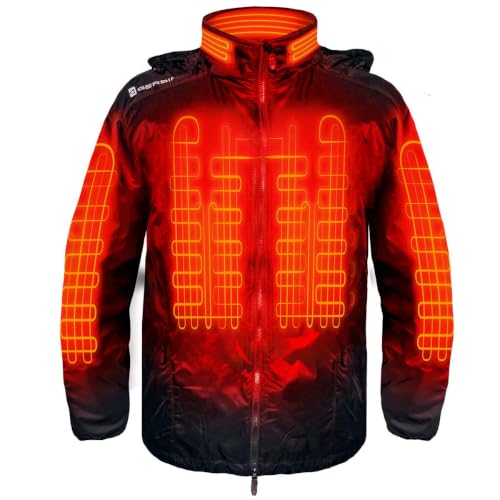 Gerbing 12V Heated Jacket Liner 2.0 (3XL)Seven zones, sizes to 4XL, and the only garment on this site whose maker prints an actual wattage — 77 W — which is al… | The one garment that publishes its wattage | — | $274.45View on Amazon |
#ad — buy links are tagged and earn us a commission at no extra cost to you. Prices come from a live feed; where none is available the button reads “Check price” rather than showing a number we cannot stand behind. How we are funded.
Milwaukee M12 Heated TOUGHSHELL Jacket (204B-20)
Built like site clothing rather than outerwear, and the only jacket here whose battery you can swap in seconds because you already own four of them.
#ad Price as of October 17, 2026. How we are funded.
The numbers
- Energy
- 21.6 Wh
- Pack
- M12 REDLITHIUM CP2.0, 2.0 Ah
- Voltage used here
- 10.8 V nominal (marketed as 12 V)
- Heat zones
- 3
- Maker's runtime claim
- 12 h low / 6 h medium / 3 h high
- Heat zones
- Chest, back and hand pockets
- Settings
- Three, plus a preheat cycle
- Care
- Machine washable with the battery removed
On wattage: Milwaukee publishes run-time, not watts — but it publishes all three settings, which is more than most of this category manages. The 12/6/3 pattern is a clean doubling of draw at each step. Milwaukee does not state which M12 pack those hours assume, so the resulting wattage is a shape rather than a fixed figure.
On the pack: Sold bare. The live listing title reads "Jacket Only" — no pack and no charger in the box. That is the right buy if you already run M12 and the wrong one if you do not. See [which garments include a battery](/battery/battery-included-or-separate).
What we like
- Hot-swappable packs — the only real answer to a short runtime is a second battery, and you already have one
- Genuinely durable shell fabric, built for work rather than for a catalog photo
- The pack doubles as a tool battery, so nothing in the van is single-purpose
What we do not
- The 2.0 Ah pack is small by heated-apparel standards once you convert it honestly
- Jacket-only SKUs ship without a battery, which is easy to miss at checkout
- Heavier than a soft-shell layer
Who this suits
A trades worker with an M12 kit already in the van, for whom a spare pack costs nothing extra to carry.
Who should skip it
You own no M12 tools. Buying into a tool platform for one jacket is the most expensive route into heated clothing.
Spec sources: Milwaukee Tool — M12 REDLITHIUM CP2.0 battery, 12V 2.0Ah · Milwaukee Tool — M12 Heated Jacket Kit (up to 8 hours on the REDLITHIUM 2.0) · Milwaukee Tool — M12 Heated TOUGHSHELL jacket kit
DEWALT DCHJ076A Heated Coat Kit (3XL)
The only garment here whose pack is a tool battery, which means the energy ceiling is not the jacket but whatever you are willing to buy: a 5.0 Ah 20V MAX holds 90 Wh against the 38.5 Wh most heated jackets ship with.
#ad Price as of October 17, 2026. How we are funded.
The numbers
- Energy
- 36.0 Wh
- Sizes
- This listing is the 3XL
- Pack
- 20V MAX, 18 V nominal — kit ships 2.0 Ah
- Shell
- Water- and wind-resistant duck canvas
- Zones
- Five, including both arms
- Heat zones
- Left chest, right chest, both arms and mid-back, per DEWALT
- Settings
- Three, plus a preheat function
- Care
- Not stated by DEWALT on the kit page
On wattage: DEWALT publishes no draw figure and no per-setting runtime on the kit page, so nothing here can be inverted. What it does publish is the zone layout and the setting count, which is more than most.
On the pack: The kit ships the compact 2.0 Ah pack. The jacket takes any 20V MAX pack, so the ceiling is whatever you already own — a 5.0 Ah holds 90 Wh, against 38.5 Wh for the 5,200 mAh pack most heated jackets ship with, and it is still inside the FAA carry-on threshold.
What we like
- Five zones including the arms, which most jackets at any price leave unheated
- Runs on a platform where a 90 Wh pack is an ordinary shelf item
- Duck canvas shell that survives a worksite rather than a commute
- Battery and charger are in the box, so there is no second purchase
What we do not
- No published wattage and no per-setting runtime, so the draw cannot be derived
- The 2.0 Ah pack in the kit holds 36 Wh — respectable, but the appeal is the packs you add later
- Heavy. This is a work coat with a tool battery in the pocket, not a layer
- DEWALT does not publish washing instructions on the kit page
Who this suits
Someone in an extended size who already owns 20V MAX packs, or who wants the option of a 90 Wh pack rather than a 38 Wh one.
Who should skip it
You do not own the platform and do not want to. Bought outright, the pack-and-charger premium is real and a consumer jacket costs less.
Spec sources: DEWALT — Heavy Duty Tobacco Heated Work Jacket Kit (five heating zones, three temperature settings plus preheat, 1-year limited warranty) · DEWALT — 20V MAX 2.0 Ah battery (DCB203)
ororo Men's Soft Shell Heated Jacket
The clearest power story in the category: ororo publishes capacity and voltage for every pack it sells, so you can work out what you are getting instead of taking a marketing number on faith.
The numbers
- Energy
- 38.5 Wh
- Pack
- 7.4 V, 5,200 mAh (ororo B19G)
- Published output
- 2.5 A
- Heat zones
- 3
- Maker's runtime claim
- 8-10 h low / 5-6 h medium / 2-3 h high
- Heat zones
- Left and right chest, mid-back
- Settings
- Three, cycled from a single chest button
- Care
- Machine washable with the battery removed
On wattage: ororo publishes no wattage for the garment. It does publish hours for each of the three settings, which states the draw whether it meant to or not.
What we like
- ororo publishes capacity AND voltage for every pack, which almost nobody else in this category does
- Per-setting runtime claims rather than one 'up to' number, so the low-to-high spread is visible before you buy
- Soft-shell cut layers under a work coat without bulk
What we do not
- No published wattage for the garment itself
- Three zones only — nothing at the arms or the kidneys
- The headline runtime figure is the low setting, as it is everywhere
Who this suits
Someone standing still outdoors for two to four hours at a stretch who wants the power figures on the table before buying.
Who should skip it
You need heat for a full eight-hour shift on high. No 38 Wh pack does that, and this one does not claim to.
Spec sources: ororo — Heated Apparel Battery Guide (capacity, voltage and output for every pack) · Amazon — ororo 7.4V 5200mAh battery listing (per-setting runtime claim)
Gerbing 12V Heated Jacket Liner 2.0 (3XL)
Seven zones, sizes to 4XL, and the only garment on this site whose maker prints an actual wattage — 77 W — which is also the reason it needs a motorcycle rather than a pocket battery.
#ad Price as of October 17, 2026. How we are funded.
The numbers
- Sizes
- XS to 4XL, including 3XL, per Gerbing
- Draw
- 77 W at 12 V DC, 6.4 A
- Maximum temperature
- 135°F
- Power source
- Vehicle 12 V — harness sold separately
- Heat zones
- Collar (1), chest (2), sleeves (2), back (2), per Gerbing
- Settings
- Continuously variable via the separate temperature controller
- Care
- Not stated by Gerbing on the product page
On wattage: 77 W is roughly eight times what a 7.4 V consumer jacket draws on high. That is not Gerbing being wasteful — it is what heat at highway speed actually costs, and it is exactly why the garment is wired to an engine instead of a battery you carry.
On the pack: There is no pack. This liner draws 6.4 A from a vehicle's 12 V system, and Gerbing states plainly that every installation also needs a battery harness and a temperature controller, both sold separately. Budget for all three.
What we like
- Publishes a real wattage, which almost nothing in heated apparel does
- Seven zones, including two in the sleeves and two in the back
- Sizes run to 4XL with the full range documented on Gerbing's own page
- Lifetime warranty on the heating elements
What we do not
- Needs a vehicle. There is no portable-battery option at 6.4 A
- The harness and the controller are both separate purchases
- Gerbing publishes no care instructions on the product page
- Costs more than a complete consumer jacket before you have bought the parts that make it work
Who this suits
A rider in an extended size who wants heat that does not run out, and who accepts that the tether is the price of it.
Who should skip it
You are not on a motorcycle, a snowmobile or an ATV. Off the bike this garment does nothing at all.
Spec sources: Gerbing — 12V Heated Jacket Liner 2.0 (seven zones; 135°F at 77 W; 12 V DC, 6.4 A; XS through 4XL)
The energy, and the part nobody mentions
Watt-hours, and what they buy
Energy is capacity times nominal voltage. The ceiling draw is the pack’s own published output current times its voltage. The implied draw runs the maker’s advertised hours backwards. Nothing here is measured — check our working.
| Product | Capacity | Volts | Energy | Ceiling draw | Shortest runtime | Implied draw at the claim |
|---|---|---|---|---|---|---|
| Milwaukee M12 Heated TOUGHSHELL Jacket (204B-20) | 2,000 mAh | 10.8 V | 21.6 Wh | Not published | Not derivable | 7.2 Wat 3 h high |
| DEWALT DCHJ076A Heated Coat Kit (3XL) | 2,000 mAh | 18 V | 36.0 Wh | Not published | Not derivable | No claim published |
| ororo Men's Soft Shell Heated Jacket | 5,200 mAh | 7.4 V | 38.5 Wh | 18.5 W | 2h 05m | 15.4 Wat 2.5 h high |
“Not derivable” means the manufacturer does not publish the figure the sum needs. We leave it blank rather than estimating it, borrowing a number from a similar model, or rounding one into existence. These are ceilings, not promises: cold, wind, movement and pack age all push real runtime below them. Run your own numbers.
Here is the fact that changes how you should shop in an extended size, and we have not seen it stated anywhere in this category: a larger jacket ships the same battery as a smaller one.
The element pattern may be slightly longer, but the pack is the pack. A 5,200 mAh, 7.4 V pack holds about 38.5 watt-hours whether it is powering a small or a 4XL. Meanwhile the garment it is sitting in has meaningfully more surface area radiating heat away, and more air volume inside it to warm before you feel anything.
The consequences are worth stating plainly rather than implying:
- Expect to run a setting higher for the same felt warmth, which shortens runtime rather than reducing it in some abstract way.
- A spare pack matters more here than at any other size. If we push spares generally, we push them harder for anyone in 3XL and above. Spare and replacement batteries has the options converted.
- Zone count is worth paying for. More zones means the pattern reaches further across a larger frame rather than concentrating in the middle of it. The Gerbing liner's seven zones and DEWALT's five are meaningful advantages at these sizes in a way they are not at medium.
- Tool platforms get more attractive. A 20V MAX 5.0 Ah holds 90 watt-hours against a consumer pack's 38.5, and the extra surface area you are heating is exactly the case that can use it.
Big and tall are two different problems
Worth separating, because the category treats them as one and they are not.
Big is a girth problem. You need chest and waist measurement, and going up the standard size run gets you there. Every maker on this page can help, up to their documented limit.
Tall is a length problem, and going up the standard run is a bad solution to it: you get the length by buying width you do not need, which leaves you in a garment that is loose everywhere it should be snug. On a heated jacket that loose fit is a performance cost, not just a look — the element ends up further from you.
For a tall frame specifically, two things matter more than anything else. The hem has to stay below your waistband when you reach overhead, because the mid-back zone is the one that leaves your back when the garment rides up. And the sleeves have to reach your wrist with your arms forward, not hanging at your sides. Only ororo publishes cuts designed around that, and only on some models.
What to check before you buy
- Find the maker's own size chart, not the retailer's. Retail listings inherit approximate size ranges and get them wrong more often than the maker does.
- Check the largest size is actually stocked, not just listed. A chart that runs to 4XL and a shelf that has 4XL are different things in this category.
- Look at the zone diagram against your own frame. More zones is a proxy for better coverage at larger sizes, in the absence of anyone publishing anything better.
- Reach overhead in it. If the hem rides above your belt, the back zone leaves your back exactly when you are working.
- Confirm whether a battery is included. The two tool-platform jackets here have both bare and kit versions and the price difference is large. Which garments include a battery sorts them out.
- Budget for the spare. See above. This is the size range where one pack is least likely to be enough.
What we would skip, and why
- Any listing that says 'one size fits most'
- It does not, and in heated apparel the failure is worse than usual. A garment that does not close properly leaves the element sitting away from you and a gap at the front for cold air, which is the same problem as a glove that is too loose — you end up heating air and losing it.
- Sizing up a standard cut to get the chest measurement
- This is the tall problem, not the big problem. Going up two sizes for the chest gives you sleeves that are still too short and a hem that rides up when you reach, which is exactly when a heated jacket's back zone stops covering your back. A genuine tall cut adds length without adding width. ororo publishes MT/LT/XLT/2XLT cuts; almost nobody else does.
- A jacket whose zones were designed for a smaller body
- Element layouts are designed around a torso, and most are designed around a mid-size one. On a larger frame the same element pattern covers proportionally less of you, and the gaps land in different places. There is no specification published for this anywhere in the category — the honest advice is to favor higher zone counts in larger sizes, because more zones means the pattern reaches further.
- Assuming a bigger jacket comes with a bigger battery
- It does not. A 5XL garment ships the same pack as the small, which means the same watt-hours are being asked to cover meaningfully more surface area. This is the single most under-discussed fact about extended-size heated apparel, and it is the reason we would push anyone in a large size toward a spare pack harder than we would push anyone else.
Our criteria, and what we did not do
- Only sizes we could verify on a maker's own chart or a listing title. Where the largest documented size is 2XL, the product is not on this page regardless of how good it is.
- Tall cuts noted separately from large cuts, because they are different problems and only one maker here addresses both.
- Zone count weighted more heavily than usual, since element patterns cover proportionally less of a larger frame.
- Published capacity converted at nominal voltage, as everywhere, with the surface-area point made explicitly.
- We have not worn any of these, in any size. How we work.
We have not worn, tested or owned any of these products, and we say so on every page rather than in a footer. What we do instead is compile the published specifications and do the arithmetic. The full method.
Frequently asked
- Do heated jackets come in 3XL and larger?
- Some do. Milwaukee's M12 heated line runs to 3XL, DEWALT's heated coat is sold in 3XL, and both ororo's Classic jacket and Gerbing's 12V liner document charts to 4XL. Most of the rest of the category stops at 2XL, which is why the list is short.
- Are there heated jackets in tall sizes?
- Very few. ororo publishes MT, LT, XLT and 2XLT cuts on its Classic jacket, which is the only genuine tall sizing we could verify in this category. Sizing up a standard cut to get length gives you a garment that is loose everywhere else, and on a heated jacket loose means the element sits away from you.
- Does a bigger heated jacket need a bigger battery?
- It should, and it does not get one. A 4XL ships the same pack as a small — about 38.5 watt-hours in the standard consumer case — while covering meaningfully more surface area. Expect to run a setting higher, and buy a spare pack at the same time as the jacket.
- Which heated jacket has the most heating zones in a large size?
- The Gerbing 12V Jacket Liner 2.0, with seven zones documented to 4XL — although it runs off a vehicle's 12 V system rather than a portable pack, so it is only an option if you ride. Among battery garments, the DEWALT coat's five zones is the highest here in 3XL.
- Why do heated jackets stop at 2XL so often?
- Because extending a heated garment's size range means a new wiring harness at each length, not just a new pattern. That is a manufacturing and testing cost, so makers cover the sizes that sell in volume. The tool brands are the exception, having dressed trades in extended sizes for decades.
- Is a heated vest easier to find in big sizes than a jacket?
- Slightly, because a vest has no sleeves and therefore a simpler harness. The same battery caveat applies and applies harder, since a vest has less insulation of its own. Heated vests covers the category.
Sources
- ororo Help Center — Men's 4-Zone Classic heated jacket size chart (S to 4XL, plus MT/LT/XLT/2XLT tall cuts)
- Gerbing — 12V Heated Jacket Liner 2.0 (sizes XS through 4XL; seven zones; 135°F at 77 W)
- DEWALT — Heavy Duty Heated Work Jacket Kit (five zones, three settings plus preheat, 1-year limited warranty)
- Milwaukee Tool — M12 Heated TOUGHSHELL jacket kit (S to 3XL)
Related
Heated Jackets
The biggest category and the noisiest claims. We convert capacity and voltage into watt-hours, then into hours at each setting.
Heated jackets for work, where the runtime claim meets an eight-hour shift
Why the runtime question on a job site is really a logistics question, and which jackets answer it.
Milwaukee heated gear: the whole M12 line, run through the arithmetic
Milwaukee publishes hours for every setting on every garment. Inverted, the line says the jacket lasts longer and the vest gets hotter.
Heated clothing sizing: contact is the whole point
Elements warm what they touch. Sizing rules for jackets, vests, gloves and socks, and the trap in each.
Does it come with a battery, or is that a second purchase?
We read the live listing title for every garment on this site and sorted them: says it includes a pack, says it does not, does not say. Two popular picks are bare.
Spare and replacement batteries, converted before you buy
A second pack is the cheapest real upgrade here. Every capacity claim converted to watt-hours, with the airline band attached — including the class that quietly stops being carry-on legal.

Heated gloves for men, and why the size run matters more than the label
Almost every heated glove sold is unisex and sized by palm circumference. Which ones actually reach XXL - and why the thin liner formats run out of sizes first.