Gobi Heat: the only brand here that publishes watt-hours — and the one runtime figure it repeats too often
Two findings, pulling in opposite directions. Gobi tells you the energy in its batteries, which almost nobody does. Then it tells you the same 10/8/5 hours for every garment it makes, which cannot be true for all of them.
By Scooter M. · Published September 21, 2026
How this is funded: buy links here are tagged and earn us a commission at no extra cost to you. It does not affect what we recommend, and we take no free product and no sponsorship. Read the disclosure.

Gobi Heat publishes what almost no other brand in this category will: the watt-hours in its batteries. The pack in the box is 5,000 mAh and 36.5 Wh; the upgrade pack is 6,500 mAh at 7.4 V and 48.1 Wh, and Gobi prints both figures itself. The catch is on the garment side — every Gobi jacket, hoodie and vest we checked claims the same 10 hours low, 8 medium, 5 high, whether it has three heating zones or five. Buy on the shell and the fit; do not buy on the zone count.
The good finding first
This site exists because heated-apparel makers publish milliamp-hours without voltages, which is like publishing a distance without a unit. We spend most of our time doing conversions the maker should have done.
Gobi does them for you. Its 5,000 mAh pack page states 36.5 Wh. Its 6,500 mAh pack page states 7.4v and 48.1 Wh. Multiply 6.5 Ah by 7.4 V and you get 48.1 exactly — the numbers are not decorative, they are the same numbers.
Worth noting what the 5,000 mAh pack's "5V-20V" label actually means. That is the range of voltages it can OUTPUT — it lists 12 V, 9 V and 7.4 V compatibility so one pack serves the whole range of Gobi gear. The cells inside are a 7.3 V nominal stack, which is what 36.5 Wh over 5,000 mAh works out to. The multi-voltage badge is about the output side, not a bigger battery.
Quick picks
Tap any row to jump to the full write-up below. The energy column is the pack’s capacity times its voltage — the number this category does not print.
| # | Product | Best for | Energy | Price |
|---|---|---|---|---|
| 1 |  Gobi Heat Ibex Men's 5-Zone Heated Workwear VestFive zones and a 380g duck cotton shell make this the most substantial vest Gobi builds — but it claims exactly the sa… | The most heating zones per watt-hour on this site | 36.5 Wh | $199.00View on Amazon |
| 2 |  Gobi Heat Dune Women's Heated VestThree zones on a 36.5 Wh pack is a combination that actually works out — about 2.4 W per zone on high, which is a beli… | The most honest energy budget in Gobi's women's line | 36.5 Wh | $189.00View on Amazon |
| 3 |  Gobi Heat Sahara II Men's Heated JacketGobi publishes 113°F, 131°F and 140°F for this jacket and for no other model we checked, which makes it the one place … | The only Gobi garment with published temperatures | 36.5 Wh | $199.00View on Amazon |
| 4 |  Gobi Heat Ridge Women's Heated HoodieA cotton-poly hoodie with the elements woven in and a pack that doubles as a phone charger — the least conspicuous way… | Heat that does not look like heated gear | 36.5 Wh | $169.00View on Amazon |
#ad — buy links are tagged and earn us a commission at no extra cost to you. Prices come from a live feed; where none is available the button reads “Check price” rather than showing a number we cannot stand behind. How we are funded.
Gobi Heat Ibex Men's 5-Zone Heated Workwear Vest
Five zones and a 380g duck cotton shell make this the most substantial vest Gobi builds — but it claims exactly the same runtime as Gobi's three-zone vest off exactly the same pack, and both cannot be right.
#ad Price as of October 17, 2026. How we are funded.
The numbers
- Energy
- 36.5 Wh
- Maker's stated energy
- 5,000 mAh, published by Gobi as 36.5 Wh
- Shell
- 380g duck cotton, wind and water resistant
- Upgrade pack
- 6,500 mAh / 48.1 Wh hard shell, same fit
- Claims
- All three settings, no temperatures on this model's page
- Heat zones
- Two in the chest, two in the abdomen and one large zone in the back, per Gobi
- Settings
- Three — low, medium and high
- Care
- Machine washable on a gentle cycle with the battery removed, per Gobi
On wattage: No wattage is published. Gobi's own figures invert to about 7.3 W on high (36.5 Wh over 5 hours), which spread across five zones is roughly 1.5 W per zone — against about 2.4 W per zone on the three-zone Dune, which claims an identical 5 hours off an identical pack. Either the Ibex runs cooler per zone or the runtime figure is line-wide rather than measured. We would not assume five zones means more heat.
On the pack: Ships with Gobi's 5,000 mAh PD pack, which Gobi itself publishes as 36.5 Wh — a rarity worth crediting. The 6,500 mAh hard-shell pack (48.1 Wh) fits the same vest and is the single most effective upgrade you can make to it.
What we like
- Gobi publishes watt-hours on its battery pages — almost nobody else in this category does
- Five zones including two in the abdomen, which is more coverage than most vests attempt
- 380g duck cotton is genuinely workwear-weight rather than a shell pretending to be one
- A larger 48.1 Wh pack fits without changing anything else
What we do not
- Claims the same 10/8/5 hours as Gobi's three-zone vest off the same pack, which cannot be true of both
- No temperature figures published for this model
- 36.5 Wh in the box is mid-pack energy for a five-zone garment
- Duck cotton is heavy and slow to dry compared with a nylon shell
Who this suits
Someone working outdoors who wants abdominal coverage and a shell that survives a work site.
Who should skip it
You are buying it because five zones sounds warmer than three. Gobi's own runtime figures give you no reason to believe that.
Spec sources: Gobi Heat — Ibex Men's 5-Zone Heated Workwear Vest (5 heating zones: chest, stomach, back; low up to 10 hrs / medium up to 8 hrs / high up to 5 hrs; 5,000 mAh battery; 380g duck cotton; machine washable; 1 year warranty) · Gobi Heat — 5,000 mAh PD Fast-Charge Battery ("5V-20V", "12V, 9V, and 7.4V compatible"; published as "36.5 Wh"; USB-C PD, USB-C, USB-A and barrel ports; 2-3 hour charge; fits heated vests, jackets, parkas and base layers, excluding hats, socks and gloves) · Gobi Heat — Replacement Jacket/Chair Battery, 6,500 mAh, 7.4v, Hard Shell (published as "48.1 Wh"; USB-C, barrel plug and USB-A; 5-6 hour charge; works with all Gobi Heat jackets, hoodies and vests)
Gobi Heat Dune Women's Heated Vest
Three zones on a 36.5 Wh pack is a combination that actually works out — about 2.4 W per zone on high, which is a believable number rather than a marketing one.
#ad Price as of October 17, 2026. How we are funded.
The numbers
- Energy
- 36.5 Wh
- Maker's stated energy
- 5,000 mAh, published by Gobi as 36.5 Wh
- Shell
- Wind and water resistant nylon
- Implied draw
- About 7.3 W on high, our arithmetic from Gobi's figures
- Charge time
- 2-3 hours on the PD pack
- Heat zones
- Chest and back, per Gobi
- Settings
- Three — low, medium and high
- Care
- Machine washable: remove the battery, tuck the charging cable back into its pocket, then wash and dry on gentle cycles, per Gobi
On wattage: Not published. Inverting Gobi's own numbers gives about 7.3 W on high across three zones — roughly 2.4 W per zone, which is in the right range for a garment that claims to reach the low 140s Fahrenheit. This is the Gobi garment whose arithmetic we trust most.
On the pack: The same 5,000 mAh / 36.5 Wh PD pack that powers the rest of the Gobi line, with USB-C PD fast charging and a 2-3 hour charge time. The 6,500 mAh hard-shell pack fits too.
What we like
- Three zones over 36.5 Wh is an energy budget that adds up rather than one that has to be excused
- Gobi publishes the watt-hours, so no guesswork is needed to compare it with anything else here
- Nylon shell is lighter and faster-drying than the duck cotton on the workwear models
- Washing instructions are specific rather than a vague "machine washable"
What we do not
- The 10/8/5 hour claim is identical across Gobi's whole garment line regardless of zone count
- No temperature figures on this model's page, though Gobi publishes them for the Sahara II
- Three zones means no abdominal coverage
- 36.5 Wh is below the 48.1 Wh pack Gobi sells separately — the better battery costs extra
Who this suits
A woman who wants a vest whose published numbers survive being multiplied out, and a light shell rather than a work jacket.
Who should skip it
You want heat on your stomach or lower back. Three zones here means chest and back only.
Spec sources: Gobi Heat — Dune Women's Heated Vest (3 heating zones: chest, back; low up to 10 hrs / medium up to 8 hrs / high up to 5 hrs; 5,000 mAh battery; wind and water resistant nylon; 1-year warranty, full coverage) · Gobi Heat — 5,000 mAh PD Fast-Charge Battery ("5V-20V", "12V, 9V, and 7.4V compatible"; published as "36.5 Wh"; USB-C PD, USB-C, USB-A and barrel ports; 2-3 hour charge; fits heated vests, jackets, parkas and base layers, excluding hats, socks and gloves)
Gobi Heat Sahara II Men's Heated Jacket
Gobi publishes 113°F, 131°F and 140°F for this jacket and for no other model we checked, which makes it the one place in the line where you can see what the settings actually mean.
#ad Price as of October 17, 2026. How we are funded.
The numbers
- Energy
- 36.5 Wh
- Maker's stated energy
- 5,000 mAh, published by Gobi as 36.5 Wh
- Temperatures
- 113°F / 131°F / 140°F — published
- Shell
- Polyester and spandex blend, wind and water resistant
- Upgrade pack
- 6,500 mAh / 48.1 Wh, about 32% more time
- Heat zones
- Chest and back, per Gobi
- Settings
- Three, with temperatures published: 113°F, 131°F and 140°F
- Care
- Machine washable with the battery removed, per Gobi
On wattage: Not published. 36.5 Wh over the claimed 5 hours on high is about 7.3 W — the same implied draw as every other Gobi garment, because every other Gobi garment claims the same hours. The temperatures are the part of this spec sheet that is specific to the jacket.
On the pack: 5,000 mAh with USB-C PD fast charging, published by Gobi as 36.5 Wh and charging in 2-3 hours. The 6,500 mAh / 48.1 Wh hard-shell pack fits this jacket and buys about 32% more time at the same power.
What we like
- A temperature for every setting, which no other Gobi model page we read provides
- Watt-hours published on the battery side, so the whole energy picture is Gobi's own arithmetic rather than ours
- USB-C PD charging in 2-3 hours is genuinely fast for this category
- Stretch blend shell moves better than the duck cotton workwear models
What we do not
- The 10/8/5 hour runtime is the line-wide figure again, not specific to this jacket
- 140°F on high is warm but not the hottest claim in the category
- A polyester and spandex shell is a layering piece, not a winter coat
- 36.5 Wh means five hours on high is the honest ceiling, and that is a short day
Who this suits
Someone who wants to know what "high" means in degrees before buying, and to layer the heat under or over something else.
Who should skip it
You need the jacket to be your outer shell in real winter. This is a mid-weight stretch softshell.
Spec sources: Gobi Heat — Sahara II Men's Heated Jacket (3 zones, chest and back; Low 113°F / Medium 131°F / High 140°F; low up to 10 hrs / medium up to 8 hrs / high up to 5 hrs; 5,000 mAh USB-C PD battery; polyester/spandex blend; 1 year warranty) · Gobi Heat — 5,000 mAh PD Fast-Charge Battery ("5V-20V", "12V, 9V, and 7.4V compatible"; published as "36.5 Wh"; USB-C PD, USB-C, USB-A and barrel ports; 2-3 hour charge; fits heated vests, jackets, parkas and base layers, excluding hats, socks and gloves) · Gobi Heat — Replacement Jacket/Chair Battery, 6,500 mAh, 7.4v, Hard Shell (published as "48.1 Wh"; USB-C, barrel plug and USB-A; 5-6 hour charge; works with all Gobi Heat jackets, hoodies and vests)
Gobi Heat Ridge Women's Heated Hoodie
A cotton-poly hoodie with the elements woven in and a pack that doubles as a phone charger — the least conspicuous way into this category, at the cost of any weather resistance.
#ad Price as of October 17, 2026. How we are funded.
The numbers
- Energy
- 36.5 Wh
- Maker's stated energy
- 5,000 mAh, published by Gobi as 36.5 Wh
- Fabric
- Cotton and poly blend, soft lining
- Pack doubles as
- A USB phone power bank
- Claims
- Low only — up to 10 hours
- Heat zones
- Two in the chest and one large zone in the back, per Gobi
- Settings
- Three — low, medium and high
- Care
- Machine washable with the battery removed, per Gobi
On wattage: Not published, and this model's page gives only the low-setting figure of up to 10 hours rather than the full three-setting ladder. At 36.5 Wh that low figure implies roughly 3.7 W. We have not listed medium and high claims because Gobi does not state them specifically for this garment.
On the pack: The 5,000 mAh / 36.5 Wh pack, which Gobi notes has a USB port you can use to charge a phone when the hoodie is off. On a cold day that is not a throwaway feature — phone batteries fade fast in the cold.
What we like
- Elements woven into the fabric rather than sitting in panels, so it reads as an ordinary hoodie
- The included pack charges a phone, which makes it useful even on days you do not need heat
- Cotton-poly next to the skin is more comfortable than a nylon shell for all-day indoor-outdoor wear
- Gobi's published watt-hours let you compare it honestly with everything else on this site
What we do not
- No wind or water resistance at all — this is a sweatshirt with heat in it
- Only the low-setting runtime is published for this specific model
- Cotton holds moisture, which is the wrong property in genuinely cold weather
- No temperature figures published
Who this suits
Someone who wants heat for the commute, the sideline or a cold office and does not want to look like they are wearing equipment.
Who should skip it
You will be out in wind or wet. A cotton blend with no shell is the wrong tool and no amount of heat fixes it.
Spec sources: Gobi Heat — Ridge Women's Heated Hoodie Jacket (3 heat zones, 2 chest and 1 back; up to 10 hours on low; 5,000 mAh battery with a USB port that doubles as a phone power bank; cotton/poly blend) · Gobi Heat — 5,000 mAh PD Fast-Charge Battery ("5V-20V", "12V, 9V, and 7.4V compatible"; published as "36.5 Wh"; USB-C PD, USB-C, USB-A and barrel ports; 2-3 hour charge; fits heated vests, jackets, parkas and base layers, excluding hats, socks and gloves)
The less good finding
Here is what Gobi publishes for runtime, garment by garment:
| Garment | Zones | Low | Medium | High | Implied W per zone on high |
|---|---|---|---|---|---|
| Ibex men's vest | 5 | 10 h | 8 h | 5 h | ~1.5 W |
| Dune women's vest | 3 | 10 h | 8 h | 5 h | ~2.4 W |
| Sahara II men's jacket | 3 | 10 h | 8 h | 5 h | ~2.4 W |
All three ship the same 36.5 Wh pack. The runtime column is identical down the page. The only thing that changes is how many zones that fixed energy budget has to be divided between.
36.5 watt-hours drawn over 5 hours is 7.3 watts, and that is true for all three garments because all three claim 5 hours. So the five-zone Ibex is putting 7.3 W through five elements and the three-zone Dune is putting 7.3 W through three. Unless the Ibex's elements are deliberately cooler, one of those runtimes is wrong.
We are not calling it dishonest. It is almost certainly a line-wide figure applied to every product page — the same pattern we found at ororo and SNOW DEER. But it does mean the runtime number carries no information about the specific garment, and the zone count is not a warmth rating.
For contrast, Fieldsheer publishes a different runtime for each garment that scales correctly with its zone count, and Lenz publishes a runtime range that changes by pack size AND garment class. Both of those look calculated. Gobi's looks copied.
The energy, converted
Watt-hours, and what they buy
Energy is capacity times nominal voltage. The ceiling draw is the pack’s own published output current times its voltage. The implied draw runs the maker’s advertised hours backwards. Nothing here is measured — check our working.
| Product | Capacity | Volts | Energy | Ceiling draw | Shortest runtime | Implied draw at the claim |
|---|---|---|---|---|---|---|
| Gobi Heat Ibex Men's 5-Zone Heated Workwear Vest | 5,000 mAh | 7.3 V | 36.5 Wh | Not published | Not derivable | 7.3 Wat 5 h high |
| Gobi Heat Dune Women's Heated Vest | 5,000 mAh | 7.3 V | 36.5 Wh | Not published | Not derivable | 7.3 Wat 5 h high |
| Gobi Heat Sahara II Men's Heated Jacket | 5,000 mAh | 7.3 V | 36.5 Wh | Not published | Not derivable | 7.3 Wat 5 h high, 140°f |
| Gobi Heat Ridge Women's Heated Hoodie | 5,000 mAh | 7.3 V | 36.5 Wh | Not published | Not derivable | 3.6 Wat 10 h low |
“Not derivable” means the manufacturer does not publish the figure the sum needs. We leave it blank rather than estimating it, borrowing a number from a similar model, or rounding one into existence. These are ceilings, not promises: cold, wind, movement and pack age all push real runtime below them. Run your own numbers.
Gobi Heat Dune Women's Heated Vest
- Energy in the pack
- (5,000 mAh ÷ 1000) × 7.3 V = 36.5 Wh
- Most the pack can deliver
- Not published — no output current stated, so the ceiling cannot be computed.
- And the draw the maker’s own claim assumes
- 36.5 Wh ÷ 10 h = 3.6 W — which is the low figure.
Source for the pack figures: Gobi Heat — 5,000 mAh PD Fast-Charge Battery ("5V-20V", "12V, 9V, and 7.4V compatible"; published as "36.5 Wh"; USB-C PD, USB-C, USB-A and barrel ports; 2-3 hour charge; fits heated vests, jackets, parkas and base layers, excluding hats, socks and gloves).
The upgrade nobody mentions
Every Gobi garment comes with the 36.5 Wh pack. Gobi also sells a 48.1 Wh hard-shell pack that fits all its jackets, hoodies and vests. That is 32% more energy, and at the same power draw, 32% more time — the 5-hour high setting becomes about 6.6 hours.
- The 36.5 Wh PD pack charges in 2-3 hours over USB-C PD and has USB-C, USB-A and a barrel plug.
- The 48.1 Wh hard-shell pack takes 5-6 hours to charge and has the same three port types.
- Faster charge on the small one, longer run on the big one. If you are out all day and charge overnight, the big one is the better trade.
Which Gobi
You work outside
The Ibex. 380g duck cotton is genuine workwear weight rather than a shell pretending, and the two abdominal zones are coverage most vests skip. Ignore the zone count as a warmth signal and buy it for the shell.
You want the numbers to add up
The Dune. Three zones over 36.5 Wh works out to about 2.4 W per zone, which is a believable figure for a garment in this class. It is the Gobi whose spec sheet we would bet on.
You want to know what "high" means
The Sahara II, and only the Sahara II. It is the one Gobi product page that publishes temperatures: 113°F low, 131°F medium, 140°F high. Everywhere else in the line you get three unlabelled steps.
You want it to not look like heated gear
The Ridge hoodie, with the elements woven into the fabric and a pack that charges your phone. Indoors, sidelines and commutes only — see the skip list.
Where Gobi sits
| Platform | Pack | Energy | Who publishes the Wh |
|---|---|---|---|
| Gobi Heat (upgrade) | 6,500 mAh, 7.4 V | 48.1 Wh | Gobi |
| Gobi Heat (in the box) | 5,000 mAh | 36.5 Wh | Gobi |
| Fieldsheer 12V Powersheer | 5,200 mAh, 11.1 V | 57.7 Wh | We did |
| Consumer 7.4 V standard | 5,200 mAh | 38.5 Wh | We did |
| ActionHeat 5V USB | 6,000 mAh | ~22.2 Wh | We did |
| Lenz rcB packs | Not published | Not derivable | Nobody |
Gobi is mid-pack on energy and alone at the top on disclosure. Given how often the published number is the only thing a buyer can check, we weight that heavily.
What we would skip, and why
- Assuming five zones is warmer than three
- Gobi's own figures say the Ibex (5 zones) and the Dune (3 zones) both run 5 hours on high off the same 36.5 Wh pack. Same energy, same time, more zones — the arithmetic says each Ibex zone gets about 1.5 W against the Dune's 2.4 W. More zones may mean better distribution. It does not mean more heat.
- Buying the garment without pricing the bigger pack
- Everything ships with the 5,000 mAh / 36.5 Wh pack. The 6,500 mAh hard-shell pack is 48.1 Wh and fits every Gobi jacket, hoodie and vest. That is about 32% more time for the price of an accessory, and it is the single highest-value upgrade in the line.
- The cooling vests, if you came here for heat
- Gobi now sells Breeze, Canyon and Strata COOLING vests, and they sit next to the heated ones in every search result at similar prices. Read the model name. A cooling vest is the exact opposite of what you are shopping for and the listings do not always make that obvious at a glance.
- The Ridge hoodie for weather
- It is a cotton-poly sweatshirt with elements woven in. No wind resistance, no water resistance, and cotton holds damp. Wonderful for a cold office or a touchline, wrong for a hillside.
Our criteria, and what we did not do
- Watt-hours taken from Gobi where Gobi states them. Both current packs carry a published Wh figure, so the energy numbers on this page are the maker's own, not our multiplication.
- Runtime claims inverted into implied draws and then compared ACROSS models — which is how the repeated figure showed up.
- Per-zone draw calculated by dividing the implied wattage by Gobi's published zone count.
- Only garments whose specifications we could read on gobiheat.com. Two in-stock Gobi products are excluded and the reasons are on this page.
- We have not worn any of these. How we work.
We have not worn, tested or owned any of these products, and we say so on every page rather than in a footer. What we do instead is compile the published specifications and do the arithmetic. The full method.
Frequently asked
- How many watt-hours is a Gobi Heat battery?
- Gobi publishes both figures itself: the 5,000 mAh PD pack that ships with its garments is 36.5 Wh, and the 6,500 mAh hard-shell upgrade pack is 48.1 Wh at 7.4 V. It is one of very few heated-apparel brands that prints the watt-hour number rather than leaving you to work it out.
- How long does a Gobi Heat vest last on a charge?
- Gobi claims up to 10 hours on low, 8 on medium and 5 on high. Treat that as a line-wide figure rather than a measurement — it is identical across Gobi's three-zone and five-zone garments despite both using the same 36.5 Wh pack, which cannot be true of both.
- Is the Gobi Ibex warmer than the Dune because it has five zones?
- Gobi's own numbers give no reason to think so. Both claim 5 hours on high from the same 36.5 Wh pack, which means the same roughly 7.3 watts spread over five elements instead of three. More zones is better distribution, not more heat.
- Will the bigger Gobi battery fit my jacket?
- Yes. Gobi states the 6,500 mAh hard-shell pack works with all its jackets, hoodies and vests, as well as its heated chair and stadium seat. It is about 32% more energy than the pack in the box.
- What does 5V-20V mean on the Gobi battery?
- It describes the output, not the cells. That pack can supply 12 V, 9 V or 7.4 V depending on what you plug into it, which is why one battery serves the whole Gobi range. The stored energy is still 36.5 Wh.
- Can you wash a Gobi Heat vest?
- Yes — Gobi says to remove the battery, tuck the charging cable back into its pocket, and then wash and dry on gentle cycles. Washing heated clothing has the wider picture on what those ratings survive.
Sources
- Gobi Heat — Ibex Men's 5-Zone Heated Workwear Vest (5 zones: chest, stomach, back; low 10 h / medium 8 h / high 5 h; 5,000 mAh; 380g duck cotton; 1 year warranty)
- Gobi Heat — Dune Women's Heated Vest (3 zones: chest, back; low 10 h / medium 8 h / high 5 h; 5,000 mAh; wind and water resistant nylon)
- Gobi Heat — Sahara II Men's Heated Jacket (3 zones; Low 113°F / Medium 131°F / High 140°F; low 10 h / medium 8 h / high 5 h; 5,000 mAh USB-C PD)
- Gobi Heat — Ridge Women's Heated Hoodie Jacket (3 zones; up to 10 hours on low; 5,000 mAh with USB power-bank port)
- Gobi Heat — 5,000 mAh PD Fast-Charge Battery, published as 36.5 Wh, "5V-20V", 2-3 hour charge
- Gobi Heat — Replacement Jacket/Chair Battery, 6,500 mAh, 7.4v, published as 48.1 Wh, 5-6 hour charge
Related
Heated Vests
Same core zones as a jacket, less fabric to heat, and it layers under the coat you already own. Usually the smarter first purchase.
Heated vests for women, and the zone the category keeps forgetting
Women's cuts, the collar-element question, and watt-hours per zone rather than zone count.
Heated vests for work, where free arms beat extra fabric
On site the vest wins on free arms, a reachable battery and a coat that keeps its abrasion resistance. Plus the spare-pack math.

Fieldsheer and Mobile Warming: the best garment specs in the category, on top of a battery page that tells you nothing
Four settings with a temperature and a runtime for each, and per-zone draws that hold across three garments - sitting on top of a battery page with eight packs and no capacity figures at all.

ActionHeat heated jackets: a 5V platform, and numbers that add up
A 5V USB platform where any phone bank is a spare — and the only brand we have converted whose published temperature, runtime and output ceiling all agree with each other.

Watts, volts and the number on the label that is not quite true
Volts, amps, watt-hours and the labeling convention that overstates every tool-battery jacket by 11%.
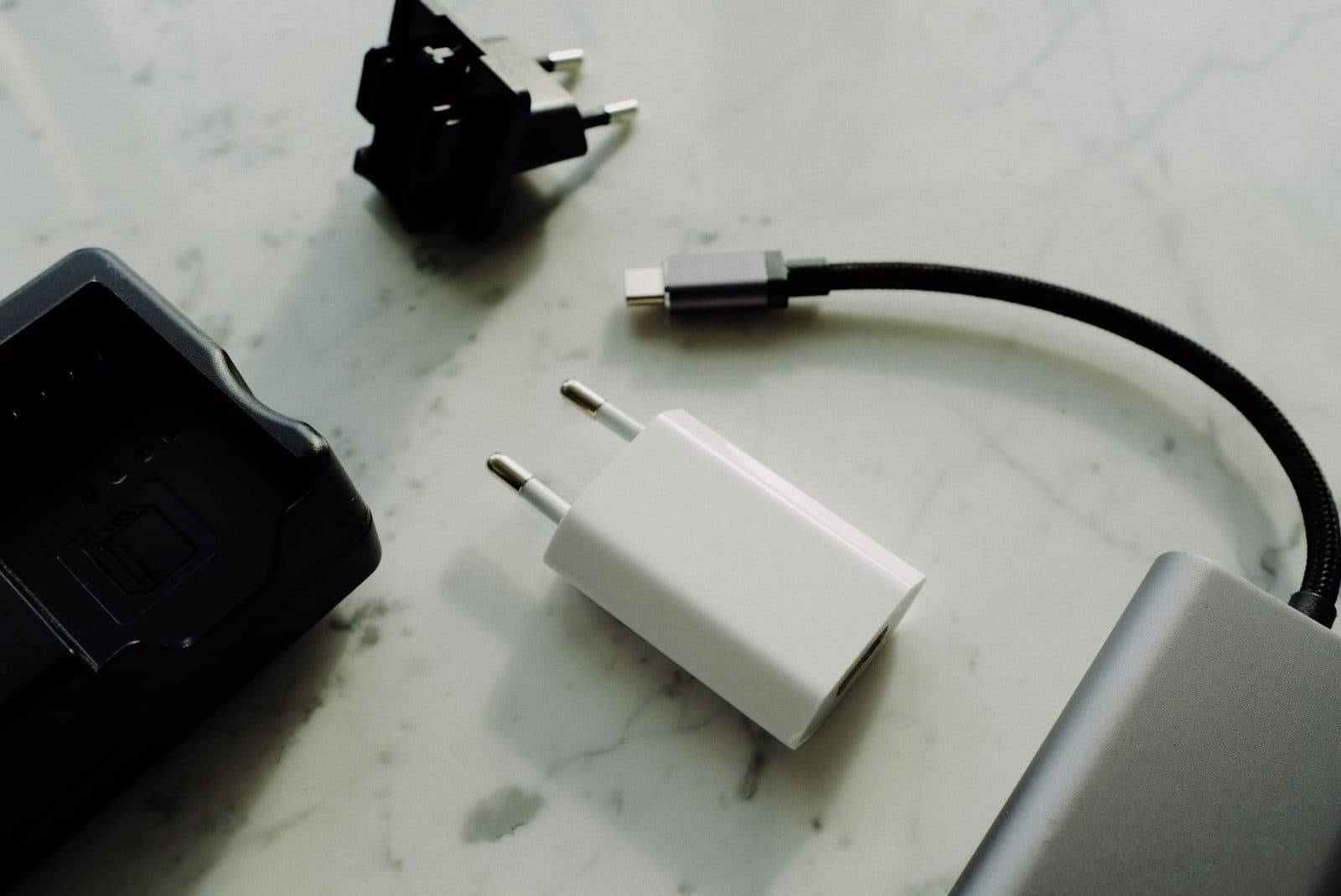
Spare and replacement batteries, converted before you buy
A second pack is the cheapest real upgrade here. Every capacity claim converted to watt-hours, with the airline band attached — including the class that quietly stops being carry-on legal.

Gobi Heat Ibex review: the brand that publishes watt-hours, and the claim that undoes it
Gobi publishes the watt-hours, which is rare and real. It also gives this five-zone vest the same runtime as its three-zone one on the same pack - so buy the shell, not the zone count.