Heated vests for women, and the zone the category keeps forgetting
The collar is the most-noticed cold spot and the least-included element. It is the one place paying for an extra zone is clearly worth it.
By Scooter M. · Published August 31, 2026
How this is funded: buy links here are tagged and earn us a commission at no extra cost to you. It does not affect what we recommend, and we take no free product and no sponsorship. Read the disclosure.
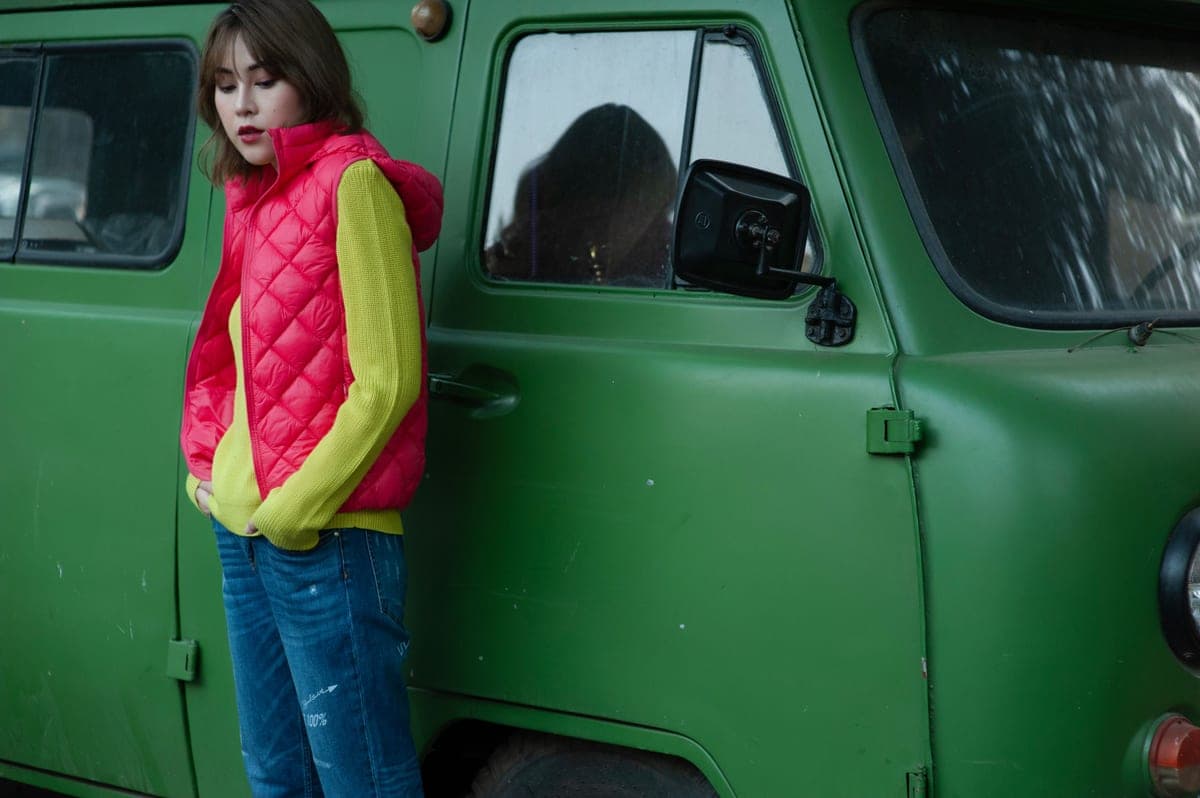
Women's heated vests run the same 7.4 V packs as men's — 35 to 38.5 watt-hours typically — across three or four elements. The meaningful difference is where those elements sit relative to the torso, and whether one of them reaches the collar, which is the coldest commonly-uncovered spot and the one most often left out.
Why the collar keeps coming up
Across the recovered search data for this category, neck and collar warmth appears far more often than its representation in the products would suggest. That is a straightforward mismatch: the three-zone layout that dominates heated apparel puts elements on the left chest, the right chest and the mid-back, and stops there.
The neck is a genuinely poor place to be cold. It has major blood vessels close to the surface, it is frequently exposed above a collar, and it is where wind gets in first. An element there does disproportionate work for its share of the battery — which is the rare case where adding a zone is worth the energy it costs the others.
Quick picks
Tap any row to jump to the full write-up below. The energy column is the pack’s capacity times its voltage — the number this category does not print.
| # | Product | Best for | Energy | Price |
|---|---|---|---|---|
| 1 |  ororo Men's Heated Fleece Vest, 4-ZoneFour zones instead of three and a fleece face instead of a shell, trading wind resistance for something you can wear a… | A heated mid-layer for indoors | 35.5 Wh | $139.99View on Amazon |
| 2 | 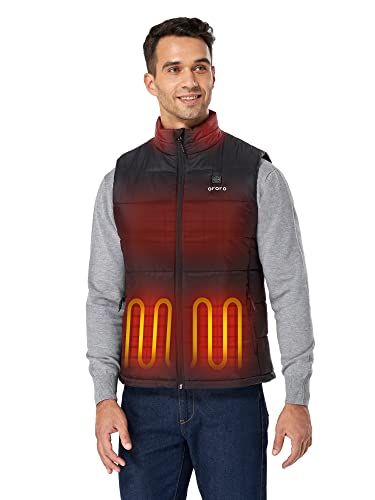 ororo Men's 4-Zone USB-C Heated Puffer VestUSB-C matters more than it sounds: the pack recharges from the same brick as your phone and your laptop, which removes… | Charging off one cable | 37.6 Wh | $149.99View on Amazon |
| 3 |  Venustas Men's Heated Vest, Lightweight QuiltedVenustas puts larger carbon-fiber panels over more of the torso than most rivals, and publishes less about the power b… | Broad element coverage on a budget | 37.0 Wh | $149.99View on Amazon |
| 4 | ororo Men's Lightweight Heated VestA vest puts the same pack energy into the same core zones as a jacket while heating far less fabric, which is why it i… | The best value in heated apparel | 38.5 Wh | Check price on Amazon |
| 5 | Venustas Men's Heated Down Vest with Detachable HoodDown does the work the battery cannot: insulation holds the heat you already paid for, which is why an insulated vest … | Hunting and other stationary cold | 37.0 Wh | Check price on Amazon |
#ad — buy links are tagged and earn us a commission at no extra cost to you. Prices come from a live feed; where none is available the button reads “Check price” rather than showing a number we cannot stand behind. How we are funded.
ororo Men's Heated Fleece Vest, 4-Zone
Four zones instead of three and a fleece face instead of a shell, trading wind resistance for something you can wear at a desk without rustling.
#ad Price as of October 17, 2026. How we are funded.
The numbers
- Energy
- 35.5 Wh
- Pack
- ororo Mini 5K, 4,800 mAh at 7.4 V
- Heat zones
- 4, including the collar
- Face fabric
- Fleece
- Heat zones
- Left and right chest, mid-back, collar
- Settings
- Three
- Care
- Machine washable with the battery removed
On wattage: No published wattage. The pack pairing is the interesting number here: fewer watt-hours than the B19G, spread across one more zone.
What we like
- Collar heat is the zone people miss most and almost nobody includes
- Fleece is quieter and softer than a shell against a shirt
- The Mini 5K pack is genuinely pocketable
What we do not
- Smaller pack than the shell vest — fewer watt-hours, one more zone to feed
- No wind resistance
- Fleece picks up sawdust and pet hair like a magnet
Who this suits
Someone cold in a cool building or a cold cab, not on a ridge.
Who should skip it
You are buying for outdoor wind. Wrong fabric, and the smaller of the two packs.
Spec sources: ororo — Heated Apparel Battery Guide (capacity, voltage and output for every pack) · ororo — Mini 5K rechargeable battery, 4,800 mAh
ororo Men's 4-Zone USB-C Heated Puffer Vest
USB-C matters more than it sounds: the pack recharges from the same brick as your phone and your laptop, which removes the proprietary-charger failure mode entirely.
The numbers
- Energy
- 37.6 Wh
- Pack
- ororo PD 5K, 5,075 mAh at 7.4 V
- Published output
- 2.5 A
- Recharge
- USB-C
- Heat zones
- 4
- Heat zones
- Left and right chest, mid-back, collar
- Settings
- Three
- Care
- Machine washable with the battery removed
On wattage: No published wattage. ororo does publish the pack's capacity, voltage and output current, which is three more useful numbers than most of this category prints.
What we like
- USB-C recharge kills the proprietary-brick problem, which is the most common way these packs get abandoned in a drawer
- Puffer insulation means the vest is warm before you switch anything on
- Published capacity, voltage and output amps — unusually complete for this category
What we do not
- Puffer bulk is real under a fitted coat
- Four zones on a 37.6 Wh pack is a thinner spread than three zones on the same energy
- Still no wattage figure
Who this suits
Someone who travels with the vest and does not want a second charger in the bag.
Who should skip it
You need it to disappear under a slim shell. It will not.
Spec sources: ororo — Heated Apparel Battery Guide (capacity, voltage and output for every pack)
Venustas Men's Heated Vest, Lightweight Quilted
Venustas puts larger carbon-fiber panels over more of the torso than most rivals, and publishes less about the power behind them than most rivals — you are buying coverage on trust.
The numbers
- Energy
- 37.0 Wh
- Pack
- 7.4 V (capacity varies)
- Heat zones
- 4
- Charge time
- About 2.5 h per the maker
- Heat zones
- Collar, both shoulders, mid-back, and pockets depending on SKU
- Settings
- Three
- Care
- Machine washable with the battery removed
On wattage: No published wattage, and one unqualified 10-hour figure.
On the pack: Capacity varies by SKU and is not published consistently. Check your listing.
What we like
- Larger heating panels than the three-zone norm
- Water-resistant face fabric
- Usually the cheapest way to get collar heat
What we do not
- The least complete power disclosure of any brand on this list
- Pack capacity is inconsistent between SKUs sold under similar names
- One runtime number with no setting attached tells you nothing you can act on
Who this suits
A price-led buyer who wants coverage and is not going to do the arithmetic.
Who should skip it
You are the kind of buyer who reads a spec sheet. Venustas does not publish enough of one to satisfy you.
Spec sources: Venustas — heated jacket collection
ororo Men's Lightweight Heated Vest
A vest puts the same pack energy into the same core zones as a jacket while heating far less fabric, which is why it is the smarter buy for most people who think they want a jacket.
#ad No live price available, so we show none. How we are funded.
The numbers
- Energy
- 38.5 Wh
- Pack
- 7.4 V, 5,200 mAh
- Published output
- 2.5 A
- Heat zones
- 3
- Maker's runtime claim
- 8-10 h low / 2-3 h high
- Heat zones
- Left and right chest, mid-back
- Settings
- Three
- Care
- Machine washable with the battery removed
On wattage: No published wattage, but ororo's per-setting hours plus the published pack capacity give you the implied draw at each setting.
What we like
- Layers under any coat you already own, which is what most people actually need
- Identical core zones to the jacket at a lower price
- Arms stay free, which matters for anyone working with their hands
What we do not
- No arm or neck heat at all
- Needs an outer layer in wind
- The same unpublished wattage as everything else here
Who this suits
Almost everyone comparing a first heated purchase. Start here, and add gloves before you add sleeves.
Who should skip it
Your cold problem is your arms or your hands. A vest will not touch either, and one bought to fix cold hands is a wasted purchase.
Spec sources: ororo — Heated Apparel Battery Guide (capacity, voltage and output for every pack) · Amazon — ororo 7.4V 5200mAh battery listing (per-setting runtime claim)
Venustas Men's Heated Down Vest with Detachable Hood
Down does the work the battery cannot: insulation holds the heat you already paid for, which is why an insulated vest gets more out of the same watt-hours than a shell does.
#ad No live price available, so we show none. How we are funded.
The numbers
- Energy
- 37.0 Wh
- Pack
- 7.4 V (capacity varies)
- Insulation
- Down fill
- Hood
- Detachable
- Heat zones
- Collar, chest panels, mid-back
- Settings
- Three
- Care
- Down care — check the label before washing
On wattage: No published wattage.
On the pack: Capacity not published consistently across SKUs.
What we like
- Insulation multiplies whatever the battery delivers, which is the single most efficient thing you can do about runtime
- The detachable hood earns its keep in a stand
- Quiet fabric, which matters if you are hunting
What we do not
- Down and moisture are a bad pairing in wet cold
- Washing down is a chore
- The same missing power figures as the rest of the Venustas line
Who this suits
Anyone sitting still outdoors for hours: hunters, anglers, spectators.
Who should skip it
You are working hard in it. You will sweat the down flat and lose the insulation.
Spec sources: Venustas — heated jacket collection
The energy figures
Watt-hours, and what they buy
Energy is capacity times nominal voltage. The ceiling draw is the pack’s own published output current times its voltage. The implied draw runs the maker’s advertised hours backwards. Nothing here is measured — check our working.
| Product | Capacity | Volts | Energy | Ceiling draw | Shortest runtime | Implied draw at the claim |
|---|---|---|---|---|---|---|
| ororo Men's Heated Fleece Vest, 4-Zone | 4,800 mAh | 7.4 V | 35.5 Wh | 18.5 W | 1h 55m | 3.6 Wat 10 h maker's headline claim |
| ororo Men's 4-Zone USB-C Heated Puffer Vest | 5,075 mAh | 7.4 V | 37.6 Wh | 18.5 W | 2h 02m | 3.8 Wat 10 h maker's headline claim |
| Venustas Men's Heated Vest, Lightweight Quilted | 5,000 mAh | 7.4 V | 37.0 Wh | Not published | Not derivable | 3.7 Wat 10 h maker's headline claim |
| ororo Men's Lightweight Heated Vest | 5,200 mAh | 7.4 V | 38.5 Wh | 18.5 W | 2h 05m | 15.4 Wat 2.5 h high |
| Venustas Men's Heated Down Vest with Detachable Hood | 5,000 mAh | 7.4 V | 37.0 Wh | Not published | Not derivable | 3.7 Wat 10 h maker's headline claim |
“Not derivable” means the manufacturer does not publish the figure the sum needs. We leave it blank rather than estimating it, borrowing a number from a similar model, or rounding one into existence. These are ceilings, not promises: cold, wind, movement and pack age all push real runtime below them. Run your own numbers.
Note the fleece vest's position. It has four zones including a collar element, on a 35.5 watt-hour pack — the smallest energy budget on this page. That is a real trade, and it is the right one only if the collar is what you are buying. If it is not, the three-zone shell vest on the larger pack gives every element more to work with.
Fit is the other half of the purchase
A heated element transfers most of its warmth by conduction into whatever it is touching. That single fact decides more about how warm a vest feels than the specification does. A vest with room to spare between the element and your mid-layer is radiating into an air pocket, which is a slow and inefficient way to warm a person.
So size for the layer you will genuinely wear underneath. If that is a merino base layer, size accordingly; if it is a chunky sweater, size for the sweater. A vest that fits over both is fitting properly over neither. Heated jacket sizing covers the method, and it applies identically to vests.
What we would skip, and why
- A men's vest in a smaller size
- The elements are positioned for a different torso. A heated panel only warms what it is pressed against, so a vest on the wrong last puts its chest elements in the wrong place and heats an air gap instead. On a 38 watt-hour budget there is no room for that.
Our criteria, and what we did not do
- Collar element treated as a distinct feature, not folded into a zone count.
- Watt-hours per zone, so a bigger element count on a smaller pack is visible rather than flattering.
- Cut assessed as a thermal variable — contact is what makes an element feel warm.
- We have not worn any of these. See how we do this.
We have not worn, tested or owned any of these products, and we say so on every page rather than in a footer. What we do instead is compile the published specifications and do the arithmetic. The full method.
Frequently asked
- Which heated vest has neck or collar heating?
- The four-zone models are the ones that include a collar element — the fleece and USB-C puffer vests here both do. It is worth checking the element diagram rather than the zone count, because a fourth zone is sometimes just another torso panel.
- How long does a women's heated vest last?
- The same as a men's on the same pack: for a 7.4 V, 5,200 mAh configuration the maker claims 2-3 hours on high and 8-10 on low, with a physical floor of just over two hours from the pack's own 2.5 A output rating.
- Can I wear a heated vest under a winter coat?
- Yes, and it is the intended and most efficient use. Your coat supplies the insulation, the vest supplies the heat, and the battery is not being asked to fight wind on its own.
- What size heated vest should I buy?
- Size for the layer you will actually wear underneath. The element warms you by touching you, so a vest with room to spare is heating an air gap. If you are between sizes and plan to wear it over a base layer, take the smaller one.
- Is a heated vest warm enough without a coat?
- In still air above freezing, often. In wind, no — a shell vest has very little insulation and the element ends up replacing heat that is escaping as fast as it is made. An insulated or down vest does much better on its own.
Sources
Related

Heated Vests
Same core zones as a jacket, less fabric to heat, and it layers under the coat you already own. Usually the smarter first purchase.

Heated jackets for women, judged on the battery and the cut
Women's cuts judged on the pack and on element placement, plus the collar-heat question the category mostly ignores.
Heating zones: which ones are worth the energy they cost
Zone by zone: what each one does, which is the best fourth, and why six is coverage rather than warmth.
Heated clothing sizing: contact is the whole point
Elements warm what they touch. Sizing rules for jackets, vests, gloves and socks, and the trap in each.
Battery & Power
The conversion nobody publishes: capacity and voltage into watt-hours, watt-hours into hours. Plus the calculator that does it for you.

Heated gloves for women, and the fit problem nobody mentions
Most heated gloves sold as women's are the unisex glove in smaller sizes. Fit is a performance specification here, not a preference — and a loose glove heats air.

Heated clothing for women, starting with which garment
Jacket, vest, gloves or socks — which one actually solves your cold. Problem first, product second, with one pick per layer and the watt-hours attached.

Gobi Heat: the only brand here that publishes watt-hours — and the one runtime figure it repeats too often
The only apparel brand here that prints the watt-hours on its own battery pages - and the one whose 3-zone and 5-zone garments claim identical runtimes off an identical pack.
Venustas heated vest: more coverage, fewer numbers
Bigger panels over more of your torso, including the collar, at a low price — and a spec sheet with a hole exactly where the power figures should be.