Fieldsheer and Mobile Warming: the best garment specs in the category, on top of a battery page that tells you nothing
Four heat settings, a temperature range for each, a runtime for each, and the battery model number printed on the product page. Then you click through to the batteries and find eight packs across three voltages with not one capacity figure between them.
By Scooter M. · Published September 21, 2026
How this is funded: buy links here are tagged and earn us a commission at no extra cost to you. It does not affect what we recommend, and we take no free product and no sponsorship. Read the disclosure.

Fieldsheer (which sells its heated line under the Mobile Warming name) writes the most detailed garment specifications in this category: four heat settings published as 90°F up to 135°F, a runtime for every one of them, the zone layout, and the battery's model number. What it does not publish, anywhere, is a watt-hour figure — its battery page lists eight packs across three different voltages without a single capacity number. The conversions on this page are ours.
What a Fieldsheer product page gives you
Take the men's Tundra jacket. Its page states, in these words: "5-Zone Heating System - 2x Chest, 1x Back, 2x Arms", "4 Adjustable Heat Settings (90° up to 135°)", "2+ High, 3+ MedHigh, 4+ MedLow, 8+ Low", and "Powersheer XL Lithium-Ion (7.4V 4000mAh)" with the model number MWCB74V04021.
Count what that is. Four settings, each with a runtime. A temperature range across the settings. A zone map. The pack's voltage, capacity and part number. No other brand on this site publishes all five of those on one page.
Quick picks
Tap any row to jump to the full write-up below. The energy column is the pack’s capacity times its voltage — the number this category does not print.
| # | Product | Best for | Energy | Price |
|---|---|---|---|---|
| 1 |  Fieldsheer Mobile Warming Tundra Men's Heated JacketThe most granular spec sheet of any garment on this site: five zones, four settings from 90°F to 135°F, a runtime for … | Four settings, each with its own temperature AND its own runtime | 29.6 Wh | $199.99View on Amazon |
| 2 |  Fieldsheer Mobile Warming Women's Ventani Hybrid Heated JacketPrimaLoft ThermoPlume fill means this one keeps working when the battery dies — but it ships with Fieldsheer's SMALLES… | Real insulation underneath the heat | 16.7 Wh | $219.99View on Amazon |
| 3 | 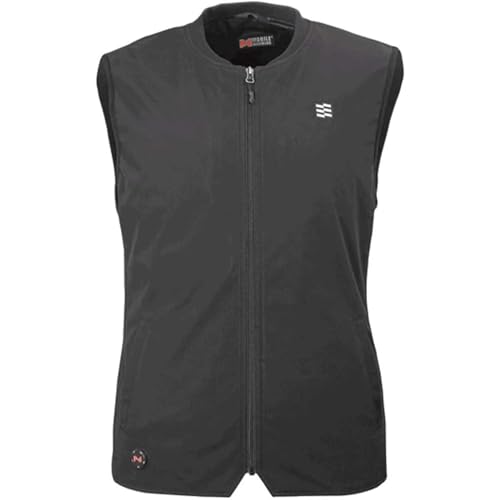 Fieldsheer Peak Unisex Bluetooth Heated VestThree zones, four settings with temperatures, nine-plus hours on low and full MW Connect app control — at the lowest p… | The cheapest way into Fieldsheer's app control | 16.7 Wh | $139.99View on Amazon |
| 4 |  Fieldsheer Primer Men's Heated Base Layer ShirtA midweight thermal shirt with three zones and the same four-setting control as Fieldsheer's jackets — the answer if e… | Heat with sleeves you can wear under anything | 16.7 Wh | $159.99View on Amazon |
#ad — buy links are tagged and earn us a commission at no extra cost to you. Prices come from a live feed; where none is available the button reads “Check price” rather than showing a number we cannot stand behind. How we are funded.
Fieldsheer Mobile Warming Tundra Men's Heated Jacket
The most granular spec sheet of any garment on this site: five zones, four settings from 90°F to 135°F, a runtime for each of them, and the battery's model number printed on the page.
#ad Price as of October 17, 2026. How we are funded.
The numbers
- Energy
- 29.6 Wh
- Maker's stated energy
- 7.4 V, 4,000 mAh — 29.6 Wh by our arithmetic
- Settings
- Four, with temperatures: 90°F to 135°F
- Claims
- A runtime for every one of the four settings
- Heated sleeves
- Yes — two of the five zones
- Heat zones
- Two chest, one back and two arms, per Fieldsheer
- Settings
- Four adjustable settings, published as 90° up to 135°F
- Care
- Machine wash cold on gentle only, tumble dry low, per Fieldsheer
On wattage: No wattage published, but Fieldsheer's own numbers invert cleanly: 29.6 Wh over the stated 2+ hours on high is up to about 14.8 W, and over 8+ hours on low about 3.7 W. Across five zones that is roughly 3.0 W per zone on high — and the three-zone Peak vest works out at about 2.8 W per zone from its own separate figures. Fieldsheer's runtimes scale with zone count instead of being copied across the line, which is the opposite of what most makers here do.
On the pack: 7.4 V and 4,000 mAh, which multiplies to 29.6 Wh — our figure, because Fieldsheer publishes watt-hours for none of its eight packs. Note the naming collision: the Tundra page calls this the "Powersheer XL", while Fieldsheer's battery catalog gives that name to a 6,000 mAh pack. Buy spares by model number (MWCB74V04021), not by name.
What we like
- Four settings with both a temperature range and a runtime for each — the most complete garment disclosure here
- Heated sleeves, which most jackets in this price band skip entirely
- The implied per-zone draw matches Fieldsheer's own vest figures, so the numbers were calculated rather than copied
- Bluetooth app control with battery level and per-zone settings
What we do not
- Fieldsheer publishes watt-hours for none of its packs, so the 29.6 Wh here is our multiplication rather than their number
- The same pack name is used for two different capacities depending on which page you read
- 2+ hours on high from a 29.6 Wh pack is short, and that is Fieldsheer's own claim
- Softshell construction — wind and water resistant, not an insulated winter coat
Who this suits
Someone who wants heated arms and wants to see exactly what each setting costs them in hours before they buy.
Who should skip it
You need insulation as well as heat. This is a stretch softshell and the warmth budget is 29.6 Wh.
Spec sources: Fieldsheer — Tundra Jacket Men's ("5-Zone Heating System - 2x Chest, 1x Back, 2x Arms"; "4 Adjustable Heat Settings (90° up to 135°)"; "2+ High, 3+ MedHigh, 4+ MedLow, 8+ Low"; Powersheer XL Lithium-Ion 7.4V 4000mAh, model MWCB74V04021; MW Connect app; machine wash cold gentle; 1 year warranty) · Fieldsheer — Battery Technologies (lists eight packs across three voltages: Powersheer 12V, 7.4V+ Plus, 7.4V Standard Li-Ion, Soft Touch 7.4V, 7.4V Heated Glove Battery, 3.7V Premium Sock Battery, 3.7V Standard Sock Battery, 3.7V Thawdaddy — with no mAh, Wh or runtime figure for any of them)
Fieldsheer Mobile Warming Women's Ventani Hybrid Heated Jacket
PrimaLoft ThermoPlume fill means this one keeps working when the battery dies — but it ships with Fieldsheer's SMALLEST pack, 2,250 mAh, and that is the number to look at.
#ad Price as of October 17, 2026. How we are funded.
The numbers
- Energy
- 16.7 Wh
- Maker's stated energy
- 7.4 V, 2,250 mAh — about 16.7 Wh by our arithmetic
- Insulation
- PrimaLoft ThermoPlume synthetic down fill
- Shell
- 100% nylon, water resistant, PFC/PFAS-free DWR
- Claims
- All four settings, with temperatures
- Heat zones
- Two chest and one back, per Fieldsheer
- Settings
- Four adjustable settings, published as 90° up to 135°F
- Care
- Machine wash cold on gentle only, tumble dry low, per Fieldsheer
On wattage: Not published. 16.7 Wh over the claimed 2+ hours on high implies about 8.3 W across three zones, or roughly 2.8 W per zone — consistent with Fieldsheer's other three-zone garments. The claim is internally sound; the pack is simply small.
On the pack: The Powersheer Mini: 7.4 V, 2,250 mAh, about 16.7 Wh by our arithmetic. That is the smallest pack Fieldsheer lists and it is what comes in the box with a full-price insulated jacket. The 4,000 mAh pack from the Tundra uses the same 7.4 V system.
What we like
- Actual synthetic down insulation, so it is a warm jacket before you switch anything on
- Four settings with temperatures and a runtime for each
- PFC/PFAS-free DWR finish, which is still uncommon in this category
- Takes the larger 7.4 V packs, so the small battery is fixable
What we do not
- Ships with Fieldsheer's smallest pack — 2,250 mAh, roughly 16.7 Wh
- About half the energy of the men's Tundra for a higher list price
- No watt-hours published by Fieldsheer on any pack, so every energy figure here is ours
- Three zones, no heated sleeves
Who this suits
A woman who wants a genuinely insulated jacket first and a heated one second, and who is willing to buy a bigger pack.
Who should skip it
You expect a long day on the battery in the box. 16.7 Wh is the smallest energy budget of any full-price jacket on this site.
Spec sources: Fieldsheer — Ventani Hybrid Heated Jacket Women's ("3-Zone Heating System - 2x Chest & 1x Back"; "4 Adjustable Heat Settings (90° up to 135°)"; "2+ High, 3+ MedHigh, 4+ MedLow, 9+ Low"; Powersheer Mini 7.4V 2250 mAh, model MWCB74V02221; 100% nylon water-resistant shell, PrimaLoft ThermoPlume fill; machine wash cold gentle; 1 year warranty) · Fieldsheer — Battery Technologies (lists eight packs across three voltages: Powersheer 12V, 7.4V+ Plus, 7.4V Standard Li-Ion, Soft Touch 7.4V, 7.4V Heated Glove Battery, 3.7V Premium Sock Battery, 3.7V Standard Sock Battery, 3.7V Thawdaddy — with no mAh, Wh or runtime figure for any of them)
Fieldsheer Peak Unisex Bluetooth Heated Vest
Three zones, four settings with temperatures, nine-plus hours on low and full MW Connect app control — at the lowest price Fieldsheer charges for any of it.
#ad Price as of October 17, 2026. How we are funded.
The numbers
- Energy
- 16.7 Wh
- Maker's stated energy
- 7.4 V, 2,250 mAh — about 16.7 Wh by our arithmetic
- Settings
- Four, 90°F to 135°F, with a runtime for each
- Charging
- USB-C input
- Shell
- Lightweight polyester with breathable mesh lining
- Heat zones
- Two front and one back, per Fieldsheer
- Settings
- Four adjustable settings, published as 90° up to 135°F
- Care
- Machine wash cold on gentle with the battery removed, per Fieldsheer
On wattage: Not published. 16.7 Wh over the claimed 2+ hours on high is about 8.3 W, or roughly 2.8 W per zone — the same per-zone figure the five-zone Tundra implies from completely separate numbers. That consistency is the strongest evidence we have that Fieldsheer's runtime claims are calculated rather than decorative.
On the pack: The 7.4 V, 2,250 mAh Powersheer pack, about 16.7 Wh by our arithmetic, charging over USB-C. A small pack, but this is also the lightest garment Fieldsheer asks it to run.
What we like
- Four settings with temperatures and runtimes at the least expensive point in the line
- USB-C charging rather than the micro-USB still found on some Fieldsheer packs
- Bluetooth app control, including battery level, at this price
- Light enough to layer under a shell without bulk
What we do not
- 16.7 Wh is a small energy budget however well the claims are calculated
- 2+ hours on high is the honest ceiling
- Mesh-lined polyester offers little warmth of its own with the heat off
- Fieldsheer publishes no watt-hours for this or any other pack
Who this suits
Someone who wants app-controlled heat under their own coat and does not want to pay jacket money for it.
Who should skip it
This is your outer layer. It is a liner-weight vest and the shell contributes almost nothing.
Spec sources: Fieldsheer — Peak Bluetooth Heated Vest (3-zone heating system, 2 front and 1 back; 4 adjustable heat settings 90° up to 135°; 2+ high, 3+ med-high, 4+ med-low, 9+ low; 7.4V Powersheer 2250 mAh; USB-C charging input; MW Connect app) · Fieldsheer — Battery Technologies (lists eight packs across three voltages: Powersheer 12V, 7.4V+ Plus, 7.4V Standard Li-Ion, Soft Touch 7.4V, 7.4V Heated Glove Battery, 3.7V Premium Sock Battery, 3.7V Standard Sock Battery, 3.7V Thawdaddy — with no mAh, Wh or runtime figure for any of them)
Fieldsheer Primer Men's Heated Base Layer Shirt
A midweight thermal shirt with three zones and the same four-setting control as Fieldsheer's jackets — the answer if every heated garment you have tried was too bulky to layer.
#ad Price as of October 17, 2026. How we are funded.
The numbers
- Energy
- 16.7 Wh
- Maker's stated energy
- 7.4 V, 2,250 mAh — about 16.7 Wh by our arithmetic
- Fit
- Midweight thermal base layer with sleeves
- Settings
- Four, 90°F to 135°F
- Control
- Waterproof touch button plus MW Connect app
- Heat zones
- Two chest and one back, per Fieldsheer
- Settings
- Four adjustable settings, published as 90° up to 135°F
- Care
- Machine wash cold on gentle with the battery removed, per Fieldsheer
On wattage: Not published. Fieldsheer states 9+ hours on low for this shirt, the same as its three-zone vest and jacket on the same pack, which puts the low-setting draw near 1.9 W and the high-setting figure around 8.3 W. We have listed only the two settings Fieldsheer states for this specific garment rather than assuming the middle two match the vest.
On the pack: 7.4 V, 2,250 mAh, about 16.7 Wh by our arithmetic. Fieldsheer claims up to 9+ hours per charge, which is the low-setting figure and matches its other three-zone garments.
What we like
- Layers under a normal coat, which no heated jacket can do
- Full sleeves, unlike every heated vest here
- Same four-setting app control as Fieldsheer's far more expensive jackets
- Waterproof control button, which matters on a garment worn next to the skin
What we do not
- 16.7 Wh, the smallest pack in Fieldsheer's range
- Only two of the four settings have runtimes published for this specific garment
- A base layer with a battery pocket is still a battery on your torso, under everything else
- No warmth of its own beyond a midweight thermal
Who this suits
Someone who already owns the coat they want to wear and needs the heat to disappear underneath it.
Who should skip it
You want to take the heat off without undressing. A base layer is the hardest garment in this category to remove.
Spec sources: Fieldsheer — Primer Heated Base Layer Shirt Men's (3-zone heating system, 2 chest and 1 back; 4 adjustable heat settings 90° up to 135°; 7.4V Powersheer 2250 mAh; up to 9+ hours per charge; waterproof touch control button; MW Connect app) · Fieldsheer — Battery Technologies (lists eight packs across three voltages: Powersheer 12V, 7.4V+ Plus, 7.4V Standard Li-Ion, Soft Touch 7.4V, 7.4V Heated Glove Battery, 3.7V Premium Sock Battery, 3.7V Standard Sock Battery, 3.7V Thawdaddy — with no mAh, Wh or runtime figure for any of them)
We checked whether the runtimes were calculated or copied
The failure mode we keep finding — at Gobi, at ororo, at SNOW DEER — is one runtime figure pasted onto every product page regardless of what the garment does. So we inverted Fieldsheer's numbers into implied draws and divided by zone count.
| Garment | Zones | Pack | Energy (ours) | High claim | Implied W | W per zone |
|---|---|---|---|---|---|---|
| Tundra men's jacket | 5 | 7.4 V 4,000 mAh | 29.6 Wh | 2+ h | ~14.8 W | ~3.0 W |
| Peak unisex vest | 3 | 7.4 V 2,250 mAh | 16.7 Wh | 2+ h | ~8.3 W | ~2.8 W |
| Ventani women's jacket | 3 | 7.4 V 2,250 mAh | 16.7 Wh | 2+ h | ~8.3 W | ~2.8 W |
Three garments, two pack sizes, two zone counts — and the per-zone draw lands within 0.2 W across all of them. These numbers were calculated from a real per-element wattage, not copied down a spreadsheet.
The low-setting figures behave too: the Tundra's 8+ hours over 29.6 Wh is about 3.7 W, and the vest's 9+ hours over 16.7 Wh is about 1.9 W — again roughly proportional to zone count. The ladder holds at both ends.
The energy, converted
Watt-hours, and what they buy
Energy is capacity times nominal voltage. The ceiling draw is the pack’s own published output current times its voltage. The implied draw runs the maker’s advertised hours backwards. Nothing here is measured — check our working.
| Product | Capacity | Volts | Energy | Ceiling draw | Shortest runtime | Implied draw at the claim |
|---|---|---|---|---|---|---|
| Fieldsheer Mobile Warming Tundra Men's Heated Jacket | 4,000 mAh | 7.4 V | 29.6 Wh | Not published | Not derivable | 14.8 Wat 2 h high (up to 135°f) |
| Fieldsheer Mobile Warming Women's Ventani Hybrid Heated Jacket | 2,250 mAh | 7.4 V | 16.7 Wh | Not published | Not derivable | 8.3 Wat 2 h high (up to 135°f) |
| Fieldsheer Peak Unisex Bluetooth Heated Vest | 2,250 mAh | 7.4 V | 16.7 Wh | Not published | Not derivable | 8.3 Wat 2 h high (up to 135°f) |
| Fieldsheer Primer Men's Heated Base Layer Shirt | 2,250 mAh | 7.4 V | 16.7 Wh | Not published | Not derivable | 8.3 Wat 2 h high (up to 135°f) |
“Not derivable” means the manufacturer does not publish the figure the sum needs. We leave it blank rather than estimating it, borrowing a number from a similar model, or rounding one into existence. These are ceilings, not promises: cold, wind, movement and pack age all push real runtime below them. Run your own numbers.
Fieldsheer Mobile Warming Tundra Men's Heated Jacket
- Energy in the pack
- (4,000 mAh ÷ 1000) × 7.4 V = 29.6 Wh
- Most the pack can deliver
- Not published — no output current stated, so the ceiling cannot be computed.
- And the draw the maker’s own claim assumes
- 29.6 Wh ÷ 8 h = 3.7 W — which is the low (from 90°f) figure.
The battery page, and why we had to do this ourselves
Fieldsheer maintains a page called Battery Technologies. It lists eight packs: the Powersheer 12V, the 7.4V+ Plus, a 7.4V Standard Li-Ion, a Soft Touch 7.4V, a 7.4V two-in-one glove battery, a 3.7V Premium Sock Battery, a 3.7V Standard Sock Battery and a 3.7V Thawdaddy.
It gives a milliamp-hour figure for none of them, a watt-hour figure for none of them, and a runtime for none of them. The one comparative claim on the page is that the 7.4V+ Plus has "a larger milliamp hour capacity" — larger than what is left to you.
So here is the lineup with the numbers filled in from the individual product pages, converted at nominal voltage:
| Pack | Published rating | Energy (our arithmetic) | Notes |
|---|---|---|---|
| 12v Powersheer XXL | "11.1v, 5200mAh" | 57.7 Wh | Largest apparel pack on this site; DC out 9-12.6 V at 3 A max |
| 7.4v Powersheer XL | 7.4 V, 6,000 mAh | 44.4 Wh | Name also used for the 4,000 mAh pack on garment pages |
| 7.4V+ Plus | 7.4 V, 4,000 mAh | 29.6 Wh | Model MWCB74V04021; ships with the Tundra |
| 7.4v Powersheer Mini | 7.4 V, 2,250 mAh | 16.7 Wh | Model MWCB74V02221; ships with the Ventani, Peak and Primer |
| 7.4V Standard Li-Ion | 7.4 V, 2,200 mAh | 16.3 Wh | The base pack |
Every figure in the third column is our multiplication of Fieldsheer's own two numbers. Fieldsheer publishes no watt-hour figure for any pack in its range.
The top line is worth sitting with. 57.7 watt-hours makes the 12v XXL the largest apparel battery on this entire site — bigger than Gobi's 48.1 Wh upgrade pack, bigger than a standard 7.4 V 5,200 mAh pack at 38.5 Wh, and bigger than a DEWALT 20V MAX 2.0 Ah at 36 Wh. Only DEWALT's 5.0 Ah pack at 90 Wh beats it, and that is a power-tool battery.
Which Fieldsheer
You want heated sleeves
The Tundra, and it is not close. Two of its five zones are in the arms, which almost nothing else in this price band offers, and it ships with the 29.6 Wh pack rather than the 16.7 Wh one. Best specs-per-dollar in the line.
You want insulation as well as heat
The Ventani, with PrimaLoft ThermoPlume fill and a PFC/PFAS-free DWR finish. It is a warm jacket before you switch it on, which matters more than any runtime figure when the battery dies. Budget for a bigger pack.
You want the app control, cheaply
The Peak vest. Same four settings, same temperature range, same MW Connect Bluetooth control as the jackets, USB-C charging, at the lowest price Fieldsheer charges for any of it.
You already own the coat
The Primer base layer. It has sleeves, it goes under everything, and no heated jacket can do that. The trade-off is that a base layer is the hardest garment in this category to take off when you overheat.
Mobile Warming or Fieldsheer?
Both names appear on the same products, sometimes in the same listing title. Mobile Warming is the heated-apparel line; Fieldsheer is the parent brand, which also sells cooling gear and motorcycle apparel. For buying purposes they are one company and one battery ecosystem — but check the voltage before you assume a pack fits, because that ecosystem has three of them.
What we would skip, and why
- Buying a spare pack by its name
- The Tundra's product page calls the battery in the box a "Powersheer XL" and specifies it as 7.4V 4000mAh. Fieldsheer's own battery catalog gives the name Powersheer XL to a 6,000 mAh pack and calls the 4,000 mAh one the 7.4V+ Plus. Same name, two capacities, depending on which page you read. Order spares by model number — the Tundra's is MWCB74V04021.
- Assuming "12V" means 12 volts
- Fieldsheer's largest pack is sold as the 12v Powersheer XXL and rated on its own page as "11.1v, 5200mAh". The 12 is the charged-up figure, not the nominal one — the same convention that makes DEWALT's 20V MAX an 18 V pack. Use 11.1 V and you get 57.7 Wh; use 12 and you overstate it by 8%.
- Fieldsheer's sock batteries, if you were expecting the jacket system
- The socks run on 3.7 V packs — a completely different voltage from the 7.4 V garments and the 11.1 V XXL. Three voltages in one brand means "a Fieldsheer battery" is not a thing you can buy; you buy a battery for one specific garment.
- The Ventani if the pack in the box has to last
- It is a genuinely insulated jacket with PrimaLoft fill at a jacket price, and it ships with the Powersheer Mini — 2,250 mAh, roughly 16.7 Wh, the smallest pack Fieldsheer makes. That is about half the energy in the cheaper men's Tundra. The jacket is good; the battery in the box is not the one it deserves.
Our criteria, and what we did not do
- Every watt-hour figure on this page is ours, not Fieldsheer's — they publish none, so we multiplied their stated voltage by their stated milliamp-hours and say so each time.
- Nominal voltage used, not the marketing voltage. The 12v XXL is converted at the 11.1 V Fieldsheer prints on the product page.
- Runtime claims inverted into implied draws, then divided by zone count and cross-checked between models.
- Battery model numbers recorded wherever Fieldsheer publishes them, because the names are not reliable.
- We have not worn any of these. How we work.
We have not worn, tested or owned any of these products, and we say so on every page rather than in a footer. What we do instead is compile the published specifications and do the arithmetic. The full method.
Frequently asked
- How many watt-hours is a Fieldsheer battery?
- Fieldsheer publishes none, so these are our conversions from its own voltage and milliamp-hour figures: the 12v Powersheer XXL is 57.7 Wh (rated 11.1 V, 5,200 mAh), the 7.4 V 6,000 mAh pack is 44.4 Wh, the 4,000 mAh is 29.6 Wh, and the 2,250 mAh Mini is about 16.7 Wh.
- Is the Fieldsheer 12V battery really 12 volts?
- No. Its own product page rates it "11.1v, 5200mAh" — 12 is the fully charged figure, not the nominal one. Converting at 11.1 V gives 57.7 Wh; converting at 12 would overstate it by about 8%. It is the same naming convention as DEWALT's 20V MAX, which is an 18 V pack.
- How long does a Fieldsheer heated jacket last?
- Fieldsheer publishes a figure for each of its four settings. The men's Tundra is 2+ hours on high, 3+ on medium-high, 4+ on medium-low and 8+ on low from its 4,000 mAh pack. Garments shipping the 2,250 mAh Mini claim 2+ / 3+ / 4+ / 9+.
- Are Fieldsheer's runtime claims trustworthy?
- They hold up better than most. Inverting them gives about 3.0 watts per heating zone on the five-zone Tundra and about 2.8 watts per zone on the three-zone vest and jacket - three garments, two pack sizes, effectively the same per-element figure. That consistency is hard to fake and suggests the numbers were calculated rather than copied.
- What is the MW Connect app?
- Fieldsheer's free Bluetooth app for phone and smartwatch. On Bluetooth-enabled garments it controls heat level and zones and reports battery level. Not every Fieldsheer product is Bluetooth-enabled, so check the specific model.
- Will a Fieldsheer sock battery work in a Fieldsheer jacket?
- No. The socks run on 3.7 V packs and the garments on 7.4 V or 11.1 V. Fieldsheer sells eight packs across three voltages, so batteries are tied to specific products rather than to the brand.
Sources
- Fieldsheer — Battery Technologies (lists eight packs across three voltages — Powersheer 12V, 7.4V+ Plus, 7.4V Standard Li-Ion, Soft Touch 7.4V, 7.4V Glove Battery, 3.7V Premium Sock, 3.7V Standard Sock, 3.7V Thawdaddy — with no mAh, Wh or runtime figure for any)
- Fieldsheer — 12v Powersheer XXL Battery and Charger (rated "11.1v, 5200mAh"; DC port output 9v-12.6v at 3A max; USB output 5v at 2A max; input DC 12.6 V 1.6A; 4-5 hour charge)
- Fieldsheer — Tundra Jacket Men's ("5-Zone Heating System - 2x Chest, 1x Back, 2x Arms"; "4 Adjustable Heat Settings (90° up to 135°)"; "2+ High, 3+ MedHigh, 4+ MedLow, 8+ Low"; Powersheer XL 7.4V 4000mAh model MWCB74V04021; 1 year warranty)
- Fieldsheer — Ventani Hybrid Heated Jacket Women's ("3-Zone Heating System - 2x Chest & 1x Back"; four settings 90° to 135°; "2+ High, 3+ MedHigh, 4+ MedLow, 9+ Low"; Powersheer Mini 7.4V 2250 mAh model MWCB74V02221; PrimaLoft ThermoPlume fill; PFC/PFAS-free DWR)
- Fieldsheer — Peak Bluetooth Heated Vest (3 zones, 2 front and 1 back; four settings 90° to 135°; 2+ / 3+ / 4+ / 9+ hours; 7.4V 2250 mAh; USB-C charging)
- Fieldsheer — Primer Heated Base Layer Shirt Men's (3 zones, 2 chest and 1 back; four settings 90° to 135°; 7.4V 2250 mAh; up to 9+ hours; waterproof touch control button)
- Fieldsheer — 7.4v Powersheer XL 6000 mAh Battery & Cable (the 6,000 mAh pack that shares the Powersheer XL name used on the Tundra's 4,000 mAh pack)
Related

Heated Jackets
The biggest category and the noisiest claims. We convert capacity and voltage into watt-hours, then into hours at each setting.

Heated jackets for men, ranked by what the battery can actually do
Five men's jackets with the packs converted into watt-hours, plus the two kinds we would not buy.

Heated jackets for women, judged on the battery and the cut
Women's cuts judged on the pack and on element placement, plus the collar-heat question the category mostly ignores.

Gobi Heat: the only brand here that publishes watt-hours — and the one runtime figure it repeats too often
The only apparel brand here that prints the watt-hours on its own battery pages - and the one whose 3-zone and 5-zone garments claim identical runtimes off an identical pack.

ActionHeat heated jackets: a 5V platform, and numbers that add up
A 5V USB platform where any phone bank is a spare — and the only brand we have converted whose published temperature, runtime and output ceiling all agree with each other.

Watts, volts and the number on the label that is not quite true
Volts, amps, watt-hours and the labeling convention that overstates every tool-battery jacket by 11%.
Spare and replacement batteries, converted before you buy
A second pack is the cheapest real upgrade here. Every capacity claim converted to watt-hours, with the airline band attached — including the class that quietly stops being carry-on legal.

Fieldsheer Mobile Warming Tundra review: the spec sheet everyone else should copy
Four settings with a temperature AND a runtime for each, heated sleeves, and claims that survive inversion across three garments. The documentation is the best here; the 29.6 Wh pack is the limit.