Heated vests for skiing, and why the jacket is the wrong garment
Your ski shell is waterproof, vented and already paid for. A heated jacket replaces none of that and duplicates all of it. The vest slots underneath - and because you only need heat on the lift, a small pack goes further than the runtime label suggests.
By Scooter M. · Published October 15, 2026
How this is funded: buy links here are tagged and earn us a commission at no extra cost to you. It does not affect what we recommend, and we take no free product and no sponsorship. Read the disclosure.

Buy a vest, not a jacket, and plan to run it only on the lift. Your ski shell is already waterproof and vented and a heated jacket replaces none of that - the vest is the one heated layer that fits underneath. And because you are generating plenty of heat on the way down, a 35-to-37 watt-hour pack that reads as three hours on high covers a full day once you stop leaving it on.
The shell is not the layer you are replacing
Start here, because it decides the product category before any specification does. A ski shell does several jobs at once: it keeps out snow, it lets sweat out, it has pit zips for when you overheat, a powder skirt for when you do not stay upright, and a pocket for the pass. It is a technical garment and you already own one.
A heated jacket is not that. It is an insulated casual coat with a battery and a controller, and almost none of them claim a waterproof rating or a vent. So if you buy one for the hill you get two choices and both are bad: ski in it and give up the shell's entire function, or wear it underneath and carry two jackets where you wanted one layer.
A vest sidesteps the whole problem. It is thin, it is core-only, it has no sleeves to fight with your jacket's, and it slots between your base layer and the shell exactly where a mid-layer belongs. Our own heated vests hub makes this argument generally - *wear it under your coat and both problems go away* - and skiing is the case where it is least arguable, because the coat in question is the most specialized one you own.
You do not need heat while you are skiing
The second thing that makes skiing different, and the one that changes the arithmetic. On the way down you are working: edging, absorbing, holding a position. You are generating heat and frequently shedding it. The cold arrives when you stop - on the chair, exposed, usually with a breeze, not moving a muscle.
That is the opposite of the two use cases we have already worked through on this site. Hunting is continuous stationary cold: the element has to run all day and almost nothing carries enough energy. Motorcycling is continuous forced airflow: the draw is so high that only the bike can supply it. Skiing is intermittent, and intermittent is the one pattern a small battery handles well.
Quick picks
Tap any row to jump to the full write-up below. The energy column is the pack’s capacity times its voltage — the number this category does not print.
| # | Product | Best for | Energy | Price |
|---|---|---|---|---|
| 1 |  ororo Men's Heated Fleece Vest, 4-ZoneFour zones instead of three and a fleece face instead of a shell, trading wind resistance for something you can wear a… | A heated mid-layer for indoors | 35.5 Wh | $139.99View on Amazon |
| 2 |  TIDEWE Men's Heated Vest with Battery PackFour zones including the collar, the same pack as the rest of the line, and the only garment on this site whose maker … | The wash rating nobody else publishes | 37.0 Wh | $80.99View on Amazon |
| 3 |  Gobi Heat Dune Women's Heated VestThree zones on a 36.5 Wh pack is a combination that actually works out — about 2.4 W per zone on high, which is a beli… | The most honest energy budget in Gobi's women's line | 36.5 Wh | $189.00View on Amazon |
| 4 | 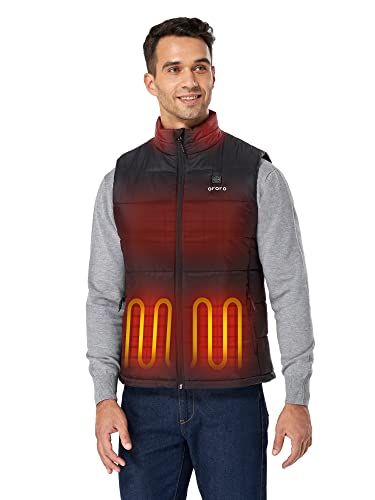 ororo Men's 4-Zone USB-C Heated Puffer VestUSB-C matters more than it sounds: the pack recharges from the same brick as your phone and your laptop, which removes… | Charging off one cable | 37.6 Wh | $149.99View on Amazon |
#ad — buy links are tagged and earn us a commission at no extra cost to you. Prices come from a live feed; where none is available the button reads “Check price” rather than showing a number we cannot stand behind. How we are funded.
ororo Men's Heated Fleece Vest, 4-Zone
Four zones instead of three and a fleece face instead of a shell, trading wind resistance for something you can wear at a desk without rustling.
#ad Price as of October 17, 2026. How we are funded.
The numbers
- Energy
- 35.5 Wh
- Pack
- ororo Mini 5K, 4,800 mAh at 7.4 V
- Heat zones
- 4, including the collar
- Face fabric
- Fleece
- Heat zones
- Left and right chest, mid-back, collar
- Settings
- Three
- Care
- Machine washable with the battery removed
On wattage: No published wattage. The pack pairing is the interesting number here: fewer watt-hours than the B19G, spread across one more zone.
What we like
- Collar heat is the zone people miss most and almost nobody includes
- Fleece is quieter and softer than a shell against a shirt
- The Mini 5K pack is genuinely pocketable
What we do not
- Smaller pack than the shell vest — fewer watt-hours, one more zone to feed
- No wind resistance
- Fleece picks up sawdust and pet hair like a magnet
Who this suits
Someone cold in a cool building or a cold cab, not on a ridge.
Who should skip it
You are buying for outdoor wind. Wrong fabric, and the smaller of the two packs.
Spec sources: ororo — Heated Apparel Battery Guide (capacity, voltage and output for every pack) · ororo — Mini 5K rechargeable battery, 4,800 mAh
TIDEWE Men's Heated Vest with Battery Pack
Four zones including the collar, the same pack as the rest of the line, and the only garment on this site whose maker states how many machine washes it is built to survive.
The numbers
- Energy
- 37.0 Wh
- Zones
- Four, including the collar
- Pack
- 10,000 mAh USB bank, about 37 Wh
- Claims
- 10 h low / 6 h medium / 3 h high
- Wash rating
- 50+ machine washes, published
- Heat zones
- Collar, mid-back and underneath both hand pockets, per TIDEWE
- Settings
- Three — blue low, white medium, red high
- Care
- Machine washable, rated by TIDEWE for more than 50 washes; air-dry recommended and the pack comes out first
On wattage: No wattage published. Against 37 Wh the claims imply about 3.7 W low, 6.2 W medium and 12.3 W high. The high figure is identical to the jacket's despite the jacket covering far more of you, which is the clearest sign these are line-wide numbers rather than measurements.
On the pack: The same 10,000 mAh USB power bank TIDEWE ships with its jacket and pants — about 37 Wh at the cell rating its 5 V output implies.
What we like
- A published wash rating — more than 50 cycles — which no other maker on this site states at all
- A collar zone, which is the most commonly cold uncovered area and the one most often left out
- A runtime published for all three settings
- Layers under a coat, which is the most efficient way to spend a small pack
What we do not
- No wattage published
- Its high-setting figure matches the far larger jacket's, which undercuts both
- The pack is a 5 V USB bank, so it cannot be swapped with 7.4 V apparel packs
- Lightweight shell with little wind resistance of its own
Who this suits
Someone who wants a heated vest that will survive being washed as often as work clothing actually is.
Who should skip it
You need the heat to be the insulation. This is a thin mid-layer and expects a coat over it.
Spec sources: TIDEWE — Men's Heated Vest with Battery Pack (four carbon-fiber zones at the collar, mid-back and under both pockets; 10 h low / 6 h medium / 3 h high; rated for 50+ machine washes) · TIDEWE — 10,000 mAh power bank for heated apparel (5 V / 2.4 A dual-USB output, 6.7 oz, UL/FCC/RoHS/CE, one-year warranty)
Gobi Heat Dune Women's Heated Vest
Three zones on a 36.5 Wh pack is a combination that actually works out — about 2.4 W per zone on high, which is a believable number rather than a marketing one.
#ad Price as of October 17, 2026. How we are funded.
The numbers
- Energy
- 36.5 Wh
- Maker's stated energy
- 5,000 mAh, published by Gobi as 36.5 Wh
- Shell
- Wind and water resistant nylon
- Implied draw
- About 7.3 W on high, our arithmetic from Gobi's figures
- Charge time
- 2-3 hours on the PD pack
- Heat zones
- Chest and back, per Gobi
- Settings
- Three — low, medium and high
- Care
- Machine washable: remove the battery, tuck the charging cable back into its pocket, then wash and dry on gentle cycles, per Gobi
On wattage: Not published. Inverting Gobi's own numbers gives about 7.3 W on high across three zones — roughly 2.4 W per zone, which is in the right range for a garment that claims to reach the low 140s Fahrenheit. This is the Gobi garment whose arithmetic we trust most.
On the pack: The same 5,000 mAh / 36.5 Wh PD pack that powers the rest of the Gobi line, with USB-C PD fast charging and a 2-3 hour charge time. The 6,500 mAh hard-shell pack fits too.
What we like
- Three zones over 36.5 Wh is an energy budget that adds up rather than one that has to be excused
- Gobi publishes the watt-hours, so no guesswork is needed to compare it with anything else here
- Nylon shell is lighter and faster-drying than the duck cotton on the workwear models
- Washing instructions are specific rather than a vague "machine washable"
What we do not
- The 10/8/5 hour claim is identical across Gobi's whole garment line regardless of zone count
- No temperature figures on this model's page, though Gobi publishes them for the Sahara II
- Three zones means no abdominal coverage
- 36.5 Wh is below the 48.1 Wh pack Gobi sells separately — the better battery costs extra
Who this suits
A woman who wants a vest whose published numbers survive being multiplied out, and a light shell rather than a work jacket.
Who should skip it
You want heat on your stomach or lower back. Three zones here means chest and back only.
Spec sources: Gobi Heat — Dune Women's Heated Vest (3 heating zones: chest, back; low up to 10 hrs / medium up to 8 hrs / high up to 5 hrs; 5,000 mAh battery; wind and water resistant nylon; 1-year warranty, full coverage) · Gobi Heat — 5,000 mAh PD Fast-Charge Battery ("5V-20V", "12V, 9V, and 7.4V compatible"; published as "36.5 Wh"; USB-C PD, USB-C, USB-A and barrel ports; 2-3 hour charge; fits heated vests, jackets, parkas and base layers, excluding hats, socks and gloves)
ororo Men's 4-Zone USB-C Heated Puffer Vest
USB-C matters more than it sounds: the pack recharges from the same brick as your phone and your laptop, which removes the proprietary-charger failure mode entirely.
The numbers
- Energy
- 37.6 Wh
- Pack
- ororo PD 5K, 5,075 mAh at 7.4 V
- Published output
- 2.5 A
- Recharge
- USB-C
- Heat zones
- 4
- Heat zones
- Left and right chest, mid-back, collar
- Settings
- Three
- Care
- Machine washable with the battery removed
On wattage: No published wattage. ororo does publish the pack's capacity, voltage and output current, which is three more useful numbers than most of this category prints.
What we like
- USB-C recharge kills the proprietary-brick problem, which is the most common way these packs get abandoned in a drawer
- Puffer insulation means the vest is warm before you switch anything on
- Published capacity, voltage and output amps — unusually complete for this category
What we do not
- Puffer bulk is real under a fitted coat
- Four zones on a 37.6 Wh pack is a thinner spread than three zones on the same energy
- Still no wattage figure
Who this suits
Someone who travels with the vest and does not want a second charger in the bag.
Who should skip it
You need it to disappear under a slim shell. It will not.
Spec sources: ororo — Heated Apparel Battery Guide (capacity, voltage and output for every pack)
The duty-cycle arithmetic
Here is the sum, using the makers' own published per-setting hours. Take the TIDEWE vest, which publishes three settings against a 10,000 mAh pack we convert to about 37.0 watt-hours:
| Setting | Published runtime | Implied draw | Covers a 6 h day at 40% duty? |
|---|---|---|---|
| High | 3 h | about 12.3 W | Yes - 3 h of element time against 2.4 h needed |
| Medium | 6 h | about 6.2 W | Yes, comfortably |
| Low | 10 h | about 3.7 W | Yes, with most of the pack unused |
Our arithmetic from TIDEWE's published capacity and its own runtime claims. The 40% figure is an assumption about YOUR day, not a measurement - count your own lift time and redo the sum. The point is the shape: at any realistic duty cycle, every setting clears.
Now read that against the continuous case. Run the same vest on high from first chair and you get three hours - you are flat before the afternoon. Run it only when you are stationary and the same battery covers the whole day on its hottest setting. Same pack, same garment, same published numbers. The only variable is whether you switch it off.
Which is why the thing to buy is not the biggest pack. It is the vest whose button you can find through a mitten.
The control argument, inverted
This site already has a page arguing that app control is the deciding feature for skiing. That page is about heated ski socks, and its argument is specific and correct: once a hard shell boot is buckled over three buckles, the sock's cuff button is genuinely unreachable, so a phone is the only way to change the setting without taking a boot off on a chairlift.
For a vest the same reasoning runs the other way. The button is on your chest, over a base layer, under a jacket you can unzip one-handed on the chair. You can reach it with a mitten on, in a few seconds, without taking anything off. So the premium you would rightly pay for Bluetooth on a sock buys you much less on a torso garment, and the money is better spent on wool, fit or a spare pack.
What you should check instead is cruder and more useful: is the control a single obvious button, is it on the chest rather than buried in a hem pocket, and does it cycle through settings in one direction so you can count clicks without looking? ororo's fleece vest and the TIDEWE both use a single chest button, which is the right answer here even though it would be the wrong answer on a sock.
The energy, converted
Watt-hours, and what they buy
Energy is capacity times nominal voltage. The ceiling draw is the pack’s own published output current times its voltage. The implied draw runs the maker’s advertised hours backwards. Nothing here is measured — check our working.
| Product | Capacity | Volts | Energy | Ceiling draw | Shortest runtime | Implied draw at the claim |
|---|---|---|---|---|---|---|
| ororo Men's Heated Fleece Vest, 4-Zone | 4,800 mAh | 7.4 V | 35.5 Wh | 18.5 W | 1h 55m | 3.6 Wat 10 h maker's headline claim |
| TIDEWE Men's Heated Vest with Battery Pack | 10,000 mAh | 3.7 V | 37.0 Wh | Not published | Not derivable | 12.3 Wat 3 h high |
| Gobi Heat Dune Women's Heated Vest | 5,000 mAh | 7.3 V | 36.5 Wh | Not published | Not derivable | 7.3 Wat 5 h high |
| ororo Men's 4-Zone USB-C Heated Puffer Vest | 5,075 mAh | 7.4 V | 37.6 Wh | 18.5 W | 2h 02m | 3.8 Wat 10 h maker's headline claim |
“Not derivable” means the manufacturer does not publish the figure the sum needs. We leave it blank rather than estimating it, borrowing a number from a similar model, or rounding one into existence. These are ceilings, not promises: cold, wind, movement and pack age all push real runtime below them. Run your own numbers.
TIDEWE Men's Heated Vest with Battery Pack
- Energy in the pack
- (10,000 mAh ÷ 1000) × 3.7 V = 37.0 Wh
- Most the pack can deliver
- Not published — no output current stated, so the ceiling cannot be computed.
- And the draw the maker’s own claim assumes
- 37.0 Wh ÷ 10 h = 3.7 W — which is the low figure.
Source for the pack figures: TIDEWE — 10,000 mAh power bank for heated apparel (5 V / 2.4 A dual-USB output, 6.7 oz, UL/FCC/RoHS/CE, one-year warranty).
Three of the four picks land between 35 and 37.6 watt-hours, which is a narrow enough band that energy is not what separates them. What separates them is thickness under a shell, whether the maker publishes a runtime for each setting or just a headline, and where the pack sits. Only two of the four - TIDEWE and Gobi Heat - give you hours for every setting; ororo publishes a single figure for both of its vests, which is the one place its disclosure falls behind.
Overheating is the failure mode, not cold
Worth stating plainly because it reverses the instinct you bring to a heated garment. In a ski layering system the dangerous direction is usually too warm, not too cold. Sweat into a base layer on a hot run and it stops insulating; then you sit on an exposed chair for ten minutes with damp fabric against your skin and get colder than you would have been with no vest at all.
So the vest's job on the hill is narrow and specific: replace the heat you stop generating when you stop moving. It is not there to add warmth to a working body. Set it low, run it on the lift, turn it off at the top. That is also, conveniently, the usage pattern the arithmetic above says the battery can sustain all day.
The corollary is that machine washability matters more here than on a page about standing around in the cold, because this garment will get damp. Both ororo vests and the TIDEWE wash with the battery out; TIDEWE is the only one of the four that publishes an actual wash count - it rates the vest for more than 50 washes - rather than a general instruction.
Which one
Most skiers, and the one we would buy
The ororo fleece vest. It is the thinnest thing here and the only one cut as a sweater-fleece mid-layer rather than an outer garment, which is exactly what you want between a base layer and a shell. Four zones including a collar panel, one chest button you can work with a mitten, about 35.5 watt-hours, and it machine washes with the battery out. The honest cost is disclosure: ororo publishes a single headline runtime for it rather than hours per setting, so you cannot derive the draw at each step the way you can with the TIDEWE.
You want the numbers, and the lowest price
The TIDEWE. It is the cheapest vest on this page by a clear margin, it publishes a runtime for all three settings so every figure in the table above is checkable, it has four zones, and it is the only one here that publishes a wash rating - more than 50 washes - rather than a vague instruction. It is a lightweight shell vest rather than a fleece, so it layers slightly less neatly than the ororo and brings less passive insulation of its own.
You want a women's cut
The Gobi Heat Dune. Per-setting runtimes published - 10 hours low, 8 medium, 5 high - on a 36.5 watt-hour pack that Gobi states directly in watt-hours rather than leaving you to convert, which almost nobody else does. It is the most expensive pick here, and at 5 hours on high it has the shortest top-setting runtime of the three vests that publish one, though on the duty cycle above that is still a comfortable day.
Your lifts are long and exposed
The ororo USB-C puffer vest, which carries real insulation rather than relying entirely on the element, and the largest pack of the four at about 37.6 watt-hours. On a mountain where the chair is fifteen minutes and the wind is constant, passive insulation is doing work the battery would otherwise pay for. The trade is bulk: a puffer is the least elegant of these under a fitted shell, and like the fleece it gets only a headline runtime figure.
What we would skip, and why
- A heated jacket, for skiing specifically
- This is the main thing the page exists to say. A ski shell is a technical garment - waterproof, taped, vented, with a powder skirt and a pass pocket. A heated jacket is an insulated casual coat with a battery in it, and it is none of those things. So buying one for the hill leaves you two bad options: ski in it and lose your waterproofing and your pit zips, or wear it under the shell and carry two jackets' worth of bulk. The vest is the only heated form factor that fits the layering system you already own. Heated jacket or heated vest works through the general case; skiing is where it is least close.
- A tool-platform vest on the hill
- The Milwaukee M12 AXIS vest is a genuinely good garment and the hottest thing in that line, but it is built for a job site. Its pack is a rigid tool battery rather than a flat pouch, and on Milwaukee's own figures the M12 2.0 Ah carries about 21.6 watt-hours - the smallest budget of any vest we would consider here, against roughly 10.8 watts implied on high. Two hours. Milwaukee also does not state which pack its 8/4/2-hour claim assumes. Save it for the yard.
- Leaving it running all day
- Published runtimes assume the element is on continuously, and skiing is the use case where that assumption is furthest from the truth. Run it on the descent and you will sweat into your base layer, which then chills you on the next lift - the exact problem you bought it to solve. The whole duty-cycle argument below depends on turning it off, and a vest you never switch off is a vest that dies at two in the afternoon.
- Buying on capacity alone
- Watt-hours decide how long the element can run; they do not decide how long your day is. Because you are cycling the thing on and off, what matters nearly as much is how easily you can do that with a mitten on, and how fine the steps are between settings. A 37 watt-hour vest with one button you can find through a glove will outlast a bigger pack you leave on because the control is fiddly.
- Wearing it over the shell
- People do this with a puffer vest out of habit. A heating element warms by conduction into what it touches, so over a hard shell it is warming the outside of your jacket and radiating the rest into the wind. It belongs against a base layer, under the shell, where the heat has somewhere to go but into you.
Our criteria, and what we did not do
- Form factor judged against the layering system you already have, not against other heated garments - because on the hill the outer shell is not up for replacement.
- Every pack converted to watt-hours and divided into the maker's own per-setting runtime claim to get an implied draw.
- Runtime measured as duty cycle rather than continuous hours, because skiing is intermittent and a continuous figure answers the wrong question.
- Control treated as a specification, since a vest you cannot switch off with a mitten on is a vest that runs flat.
- Availability verified before featuring. One vest that would otherwise have led on control granularity is left out because the retailer showed a single unit remaining - too thin to recommend on a page that will outlive the stock.
- We have not skied in any of these. Every figure is read off the makers' own published pages. How we work.
We have not worn, tested or owned any of these products, and we say so on every page rather than in a footer. What we do instead is compile the published specifications and do the arithmetic. The full method.
Frequently asked
- Should I buy a heated jacket or a heated vest for skiing?
- A vest, in almost every case. Your ski shell is a technical waterproof garment with venting and a powder skirt, and a heated jacket is an insulated casual coat that replaces none of that - so you would either ski in it and lose the shell's function, or wear it underneath and carry two jackets. A vest is thin, core-only and has no sleeves to fight your shell's, so it slots in as a mid-layer where it belongs.
- Will a heated vest battery last a full day of skiing?
- Easily, if you switch it off on the way down. Published runtimes assume the element runs continuously, and skiing is intermittent - you generate plenty of heat on the descent and get cold on the lift. TIDEWE publishes 3 hours on high from about 37 watt-hours; used only while you are stationary, that covers a normal day on the hottest setting. Left running all day it does not, and you will be flat by mid-afternoon.
- Do I need app control on a heated vest for skiing?
- No, and this is where a vest differs from a heated sock. Our ski socks page argues app control is the deciding feature there, because a buckled boot puts three buckles between you and the cuff button. A vest's button is on your chest under a jacket you can unzip one-handed on the chair, so you can reach it with a mitten in seconds. Spend the money on fit or a spare pack instead.
- Where should the heated vest go in my layering system?
- Against a base layer, under the shell. A heating element warms by conduction into whatever it is touching, so worn over a hard shell it heats the outside of your jacket and radiates the rest into the wind. Under the shell the heat has nowhere to go but into you, and the shell traps it.
- What heat setting should I use on the mountain?
- The lowest one that keeps you comfortable while stationary, and off while you are moving. Overheating is the real failure mode in a ski layering system: sweat into a base layer on a warm run and it stops insulating, then you sit on an exposed chair with damp fabric against your skin. The vest's job is to replace the heat you stop generating when you stop, not to add heat to a working body.
- Can I use a work or tool-battery heated vest for skiing?
- You can, but we would not. A Milwaukee M12 vest is a good garment built for a job site, and its pack is a rigid tool battery rather than a flat pouch. The M12 2.0 Ah also carries only about 21.6 watt-hours, the smallest budget of any vest we would consider for this, which works out at roughly two hours on high from Milwaukee's own published figures.
Sources
- TIDEWE - Men's Heated Vest with Battery Pack (four heating zones, three heat settings; 10,000 mAh power bank, about 37.0 Wh by our arithmetic; published runtimes of 10+ hours low, 6 medium and 3 high; rated by TIDEWE for more than 50 washes, which is the only actual wash count any maker on this page publishes)
- ororo - Heated Apparel Battery Guide (the Mini 5K published at 4,800 mAh and 7.4 V, about 35.5 Wh, and the PD 5K at 5,075 mAh, about 37.6 Wh)
- Gobi Heat - Dune Women's Heated Vest (3 heat settings with runtimes published as 10 hours low, 8 medium and 5 high; the 5,000 mAh fast-charge pack stated directly as 36.5 Wh rather than left to conversion)
- Milwaukee Tool - M12 Heated Gear line (per-setting run-times of 8 hours low, 4 medium and 2 high, with no statement of which pack those hours assume; the M12 REDLITHIUM CP2.0 at 2.0 Ah works out at about 21.6 Wh)
Related

Heated Vests
Same core zones as a jacket, less fabric to heat, and it layers under the coat you already own. Usually the smarter first purchase.
Heated ski socks, and the button you cannot reach
Once the boot is buckled the cuff button is gone. That decides the purchase — plus the boot-fit trap.
Heated ski gloves, where geometry beats battery
Why mitten geometry beats a bigger battery on the hill, and how cold quietly shrinks your pack.
Heated jacket or heated vest? Three questions decide it
Same pack, same elements, different amount of fabric. Three questions that settle which one you should buy.
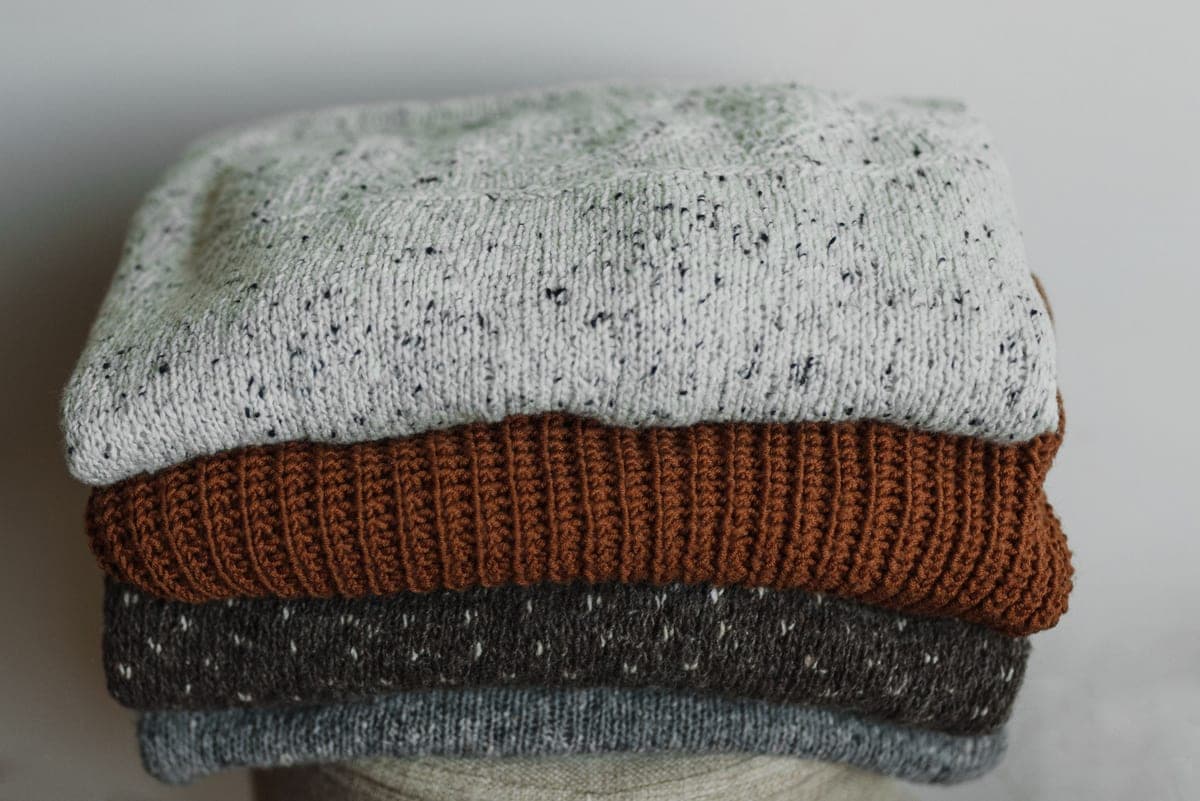
Layering heated clothing: the free upgrade almost nobody uses
Heat source inside the insulation, weather protection outside. The ordering is free and almost everyone gets it backwards.
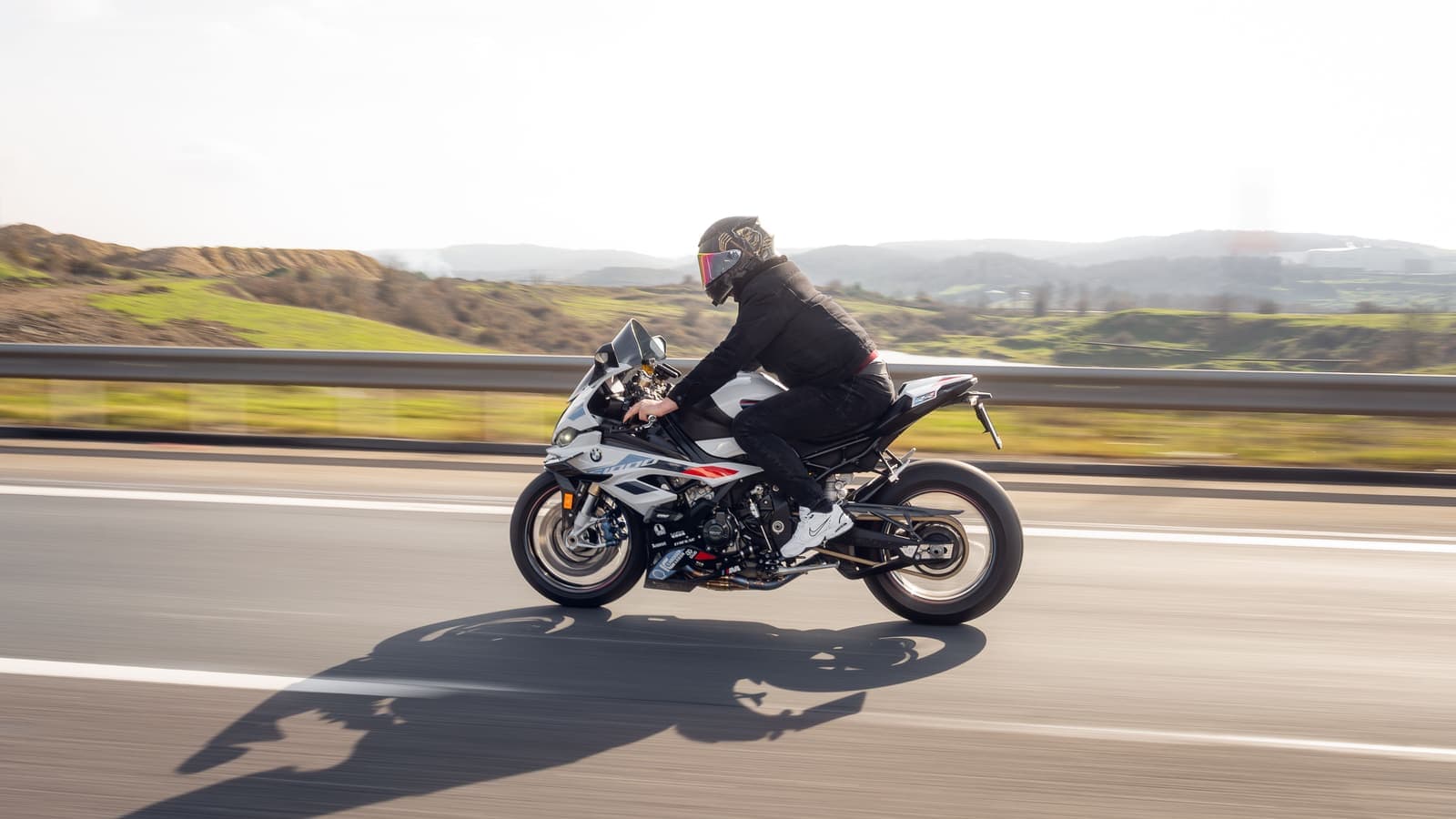
Heated jackets for motorcycling, and the one corner of this category that tells you its wattage
Only four garments on this site publish a wattage and the top two are 12V motorcycle liners - because a wired system cannot hide its draw. Plus why 77 watts is unbuyable on batteries.

Watts, volts and the number on the label that is not quite true
Volts, amps, watt-hours and the labeling convention that overstates every tool-battery jacket by 11%.