Heated jackets for motorcycling, and the one corner of this category that tells you its wattage
Every other maker hides the draw. A liner wired to your bike cannot, because you have to know whether the alternator can carry it. That honesty comes with a cable, and the arithmetic explains why.
By Scooter M. · Published October 13, 2026
How this is funded: buy links here are tagged and earn us a commission at no extra cost to you. It does not affect what we recommend, and we take no free product and no sponsorship. Read the disclosure.
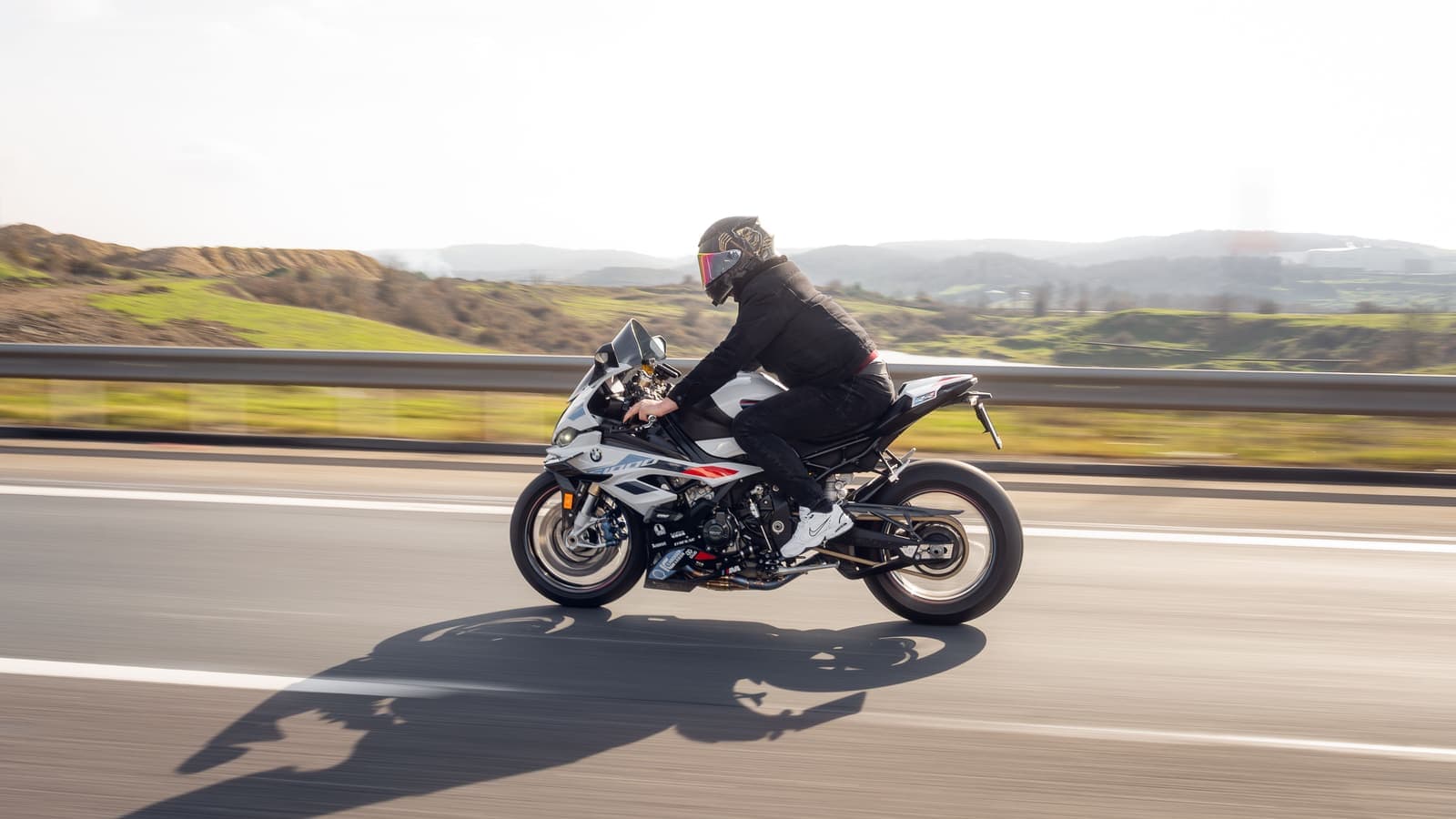
Decide first whether you will wire to the bike. A 12V liner draws 77 watts and runs as long as the engine does; a 7.4V battery jacket draws roughly 15 watts on high and lasts a couple of hours. That is five times the heat, available only because the motorcycle is the power source - the largest apparel pack we track would run a 77-watt liner for one hour flat.
Four garments on this site publish a wattage. Two of them are motorcycle liners.
This site exists because heated apparel makers publish a battery capacity and almost never publish the draw, which is the half of the equation you need. Out of every product in our registry, four state what the garment actually consumes. The top two are both 12V motorcycle liners:
| Garment | Published draw | Power source |
|---|---|---|
| Gerbing 12V Heated Jacket Liner 2.0 | 77 W | The motorcycle |
| Gerbing 12V Heated Pant Liner | 44 W | The motorcycle |
| THE HEAT COMPANY insole warmers | 13 W | Chemical, not electrical |
| Fieldsheer Primer base layer | 7 W | Battery pack |
Four products out of our whole registry. Every other garment we cover leaves the draw unpublished, which is the finding this site was built on.
That is not a coincidence, and it is the most useful thing on this page. A 12V system cannot hide its draw. You are wiring it into a vehicle with a finite charging budget and a fuse that has to be rated for it, so the number has to be right and it has to be printed. A battery-powered maker is under no such pressure: it can publish a capacity, advertise the low setting's hours, and never state the watts at all.
Quick picks
Tap any row to jump to the full write-up below. The energy column is the pack’s capacity times its voltage — the number this category does not print.
| # | Product | Best for | Energy | Price |
|---|---|---|---|---|
| 1 | 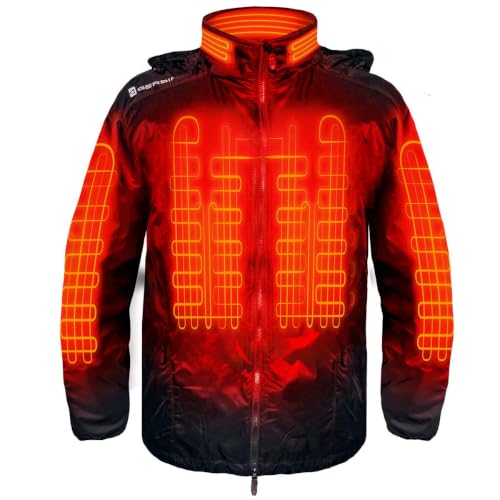 Gerbing 12V Heated Jacket Liner 2.0 (3XL)Seven zones, sizes to 4XL, and the only garment on this site whose maker prints an actual wattage — 77 W — which is al… | The one garment that publishes its wattage | — | $274.45View on Amazon |
| 2 |  ororo Men's Soft Shell Heated JacketThe clearest power story in the category: ororo publishes capacity and voltage for every pack it sells, so you can wor… | A first heated jacket | 38.5 Wh | $159.99View on Amazon |
| 3 | 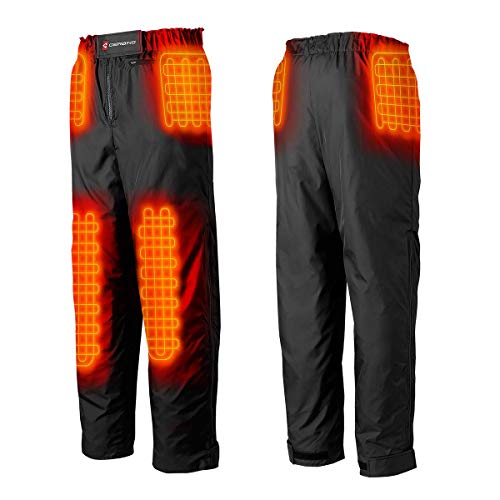 Gerbing 12V Heated Pant LinerFour zones, sizes to 4XL, and a published 44 watts — the only garment on this page whose maker states what it actually… | The only pair that publishes an actual draw | — | $194.84View on Amazon |
| 4 |  Fieldsheer Mobile Warming Tundra Men's Heated JacketThe most granular spec sheet of any garment on this site: five zones, four settings from 90°F to 135°F, a runtime for … | Four settings, each with its own temperature AND its own runtime | 29.6 Wh | $199.99View on Amazon |
| 5 |  Gobi Heat Sahara II Men's Heated JacketGobi publishes 113°F, 131°F and 140°F for this jacket and for no other model we checked, which makes it the one place … | The only Gobi garment with published temperatures | 36.5 Wh | $199.00View on Amazon |
#ad — buy links are tagged and earn us a commission at no extra cost to you. Prices come from a live feed; where none is available the button reads “Check price” rather than showing a number we cannot stand behind. How we are funded.
Gerbing 12V Heated Jacket Liner 2.0 (3XL)
Seven zones, sizes to 4XL, and the only garment on this site whose maker prints an actual wattage — 77 W — which is also the reason it needs a motorcycle rather than a pocket battery.
#ad Price as of October 17, 2026. How we are funded.
The numbers
- Sizes
- XS to 4XL, including 3XL, per Gerbing
- Draw
- 77 W at 12 V DC, 6.4 A
- Maximum temperature
- 135°F
- Power source
- Vehicle 12 V — harness sold separately
- Heat zones
- Collar (1), chest (2), sleeves (2), back (2), per Gerbing
- Settings
- Continuously variable via the separate temperature controller
- Care
- Not stated by Gerbing on the product page
On wattage: 77 W is roughly eight times what a 7.4 V consumer jacket draws on high. That is not Gerbing being wasteful — it is what heat at highway speed actually costs, and it is exactly why the garment is wired to an engine instead of a battery you carry.
On the pack: There is no pack. This liner draws 6.4 A from a vehicle's 12 V system, and Gerbing states plainly that every installation also needs a battery harness and a temperature controller, both sold separately. Budget for all three.
What we like
- Publishes a real wattage, which almost nothing in heated apparel does
- Seven zones, including two in the sleeves and two in the back
- Sizes run to 4XL with the full range documented on Gerbing's own page
- Lifetime warranty on the heating elements
What we do not
- Needs a vehicle. There is no portable-battery option at 6.4 A
- The harness and the controller are both separate purchases
- Gerbing publishes no care instructions on the product page
- Costs more than a complete consumer jacket before you have bought the parts that make it work
Who this suits
A rider in an extended size who wants heat that does not run out, and who accepts that the tether is the price of it.
Who should skip it
You are not on a motorcycle, a snowmobile or an ATV. Off the bike this garment does nothing at all.
Spec sources: Gerbing — 12V Heated Jacket Liner 2.0 (seven zones; 135°F at 77 W; 12 V DC, 6.4 A; XS through 4XL)
ororo Men's Soft Shell Heated Jacket
The clearest power story in the category: ororo publishes capacity and voltage for every pack it sells, so you can work out what you are getting instead of taking a marketing number on faith.
The numbers
- Energy
- 38.5 Wh
- Pack
- 7.4 V, 5,200 mAh (ororo B19G)
- Published output
- 2.5 A
- Heat zones
- 3
- Maker's runtime claim
- 8-10 h low / 5-6 h medium / 2-3 h high
- Heat zones
- Left and right chest, mid-back
- Settings
- Three, cycled from a single chest button
- Care
- Machine washable with the battery removed
On wattage: ororo publishes no wattage for the garment. It does publish hours for each of the three settings, which states the draw whether it meant to or not.
What we like
- ororo publishes capacity AND voltage for every pack, which almost nobody else in this category does
- Per-setting runtime claims rather than one 'up to' number, so the low-to-high spread is visible before you buy
- Soft-shell cut layers under a work coat without bulk
What we do not
- No published wattage for the garment itself
- Three zones only — nothing at the arms or the kidneys
- The headline runtime figure is the low setting, as it is everywhere
Who this suits
Someone standing still outdoors for two to four hours at a stretch who wants the power figures on the table before buying.
Who should skip it
You need heat for a full eight-hour shift on high. No 38 Wh pack does that, and this one does not claim to.
Spec sources: ororo — Heated Apparel Battery Guide (capacity, voltage and output for every pack) · Amazon — ororo 7.4V 5200mAh battery listing (per-setting runtime claim)
Gerbing 12V Heated Pant Liner
Four zones, sizes to 4XL, and a published 44 watts — the only garment on this page whose maker states what it actually consumes, which is also why it needs a motorcycle rather than a pocket.
#ad Price as of October 17, 2026. How we are funded.
The numbers
- Draw
- 44 W at 12 V, 3.6 A
- Zones
- Four — legs and hips
- Maximum temperature
- 135°F
- Sizes
- S to 4XL, with tall cuts, per Gerbing
- Heat zones
- Two in the legs and two at the hips, per Gerbing
- Settings
- Continuously variable via the separate temperature controller
- Care
- Not stated by Gerbing on the product page
On wattage: 44 W at 3.6 A on a 12 V system, which reconciles: 12 x 3.6 = 43.2. Worth knowing that Gerbing's own product page currently shows a wattage that does not reconcile with the amperage printed beside it, so we have used the figure that does and cited the retailer publishing it. For scale, 44 W is roughly four times what a 7.4 V heated trouser draws on high — which is the honest reason this one is wired to an engine.
On the pack: There is no pack. This liner draws 3.6 A from a vehicle's 12 V system, and Gerbing states that a battery harness and a temperature controller are both required for stand-alone operation and both sold separately. Budget for all three.
What we like
- Publishes a real wattage, which nothing else in heated legwear does
- Four zones including the hips, where a rider is in contact with the seat
- Sizes to 4XL with tall cuts, which is unusually broad
- Pre-wired connections at the ankle for heated socks or insoles
What we do not
- Needs a vehicle. There is no portable-battery option at 3.6 A
- Harness and controller are both separate purchases on top of the price
- Off the bike it does nothing at all
- Gerbing publishes no care instructions on the product page
Who this suits
A rider who wants heat that never runs out and accepts being tethered to the bike for it.
Who should skip it
You are walking, standing or sitting anywhere without a 12 V supply. Every other pick on this page is a better buy for you.
Spec sources: Gerbing — 12V Heated Pant Liner (four Microwire zones in the legs and hips, 135°F, harness and controller sold separately) · RevZilla — Gerbing 12V Heated Pant Liner, published draw: 44 Watts (3.6 Amps)
Fieldsheer Mobile Warming Tundra Men's Heated Jacket
The most granular spec sheet of any garment on this site: five zones, four settings from 90°F to 135°F, a runtime for each of them, and the battery's model number printed on the page.
#ad Price as of October 17, 2026. How we are funded.
The numbers
- Energy
- 29.6 Wh
- Maker's stated energy
- 7.4 V, 4,000 mAh — 29.6 Wh by our arithmetic
- Settings
- Four, with temperatures: 90°F to 135°F
- Claims
- A runtime for every one of the four settings
- Heated sleeves
- Yes — two of the five zones
- Heat zones
- Two chest, one back and two arms, per Fieldsheer
- Settings
- Four adjustable settings, published as 90° up to 135°F
- Care
- Machine wash cold on gentle only, tumble dry low, per Fieldsheer
On wattage: No wattage published, but Fieldsheer's own numbers invert cleanly: 29.6 Wh over the stated 2+ hours on high is up to about 14.8 W, and over 8+ hours on low about 3.7 W. Across five zones that is roughly 3.0 W per zone on high — and the three-zone Peak vest works out at about 2.8 W per zone from its own separate figures. Fieldsheer's runtimes scale with zone count instead of being copied across the line, which is the opposite of what most makers here do.
On the pack: 7.4 V and 4,000 mAh, which multiplies to 29.6 Wh — our figure, because Fieldsheer publishes watt-hours for none of its eight packs. Note the naming collision: the Tundra page calls this the "Powersheer XL", while Fieldsheer's battery catalog gives that name to a 6,000 mAh pack. Buy spares by model number (MWCB74V04021), not by name.
What we like
- Four settings with both a temperature range and a runtime for each — the most complete garment disclosure here
- Heated sleeves, which most jackets in this price band skip entirely
- The implied per-zone draw matches Fieldsheer's own vest figures, so the numbers were calculated rather than copied
- Bluetooth app control with battery level and per-zone settings
What we do not
- Fieldsheer publishes watt-hours for none of its packs, so the 29.6 Wh here is our multiplication rather than their number
- The same pack name is used for two different capacities depending on which page you read
- 2+ hours on high from a 29.6 Wh pack is short, and that is Fieldsheer's own claim
- Softshell construction — wind and water resistant, not an insulated winter coat
Who this suits
Someone who wants heated arms and wants to see exactly what each setting costs them in hours before they buy.
Who should skip it
You need insulation as well as heat. This is a stretch softshell and the warmth budget is 29.6 Wh.
Spec sources: Fieldsheer — Tundra Jacket Men's ("5-Zone Heating System - 2x Chest, 1x Back, 2x Arms"; "4 Adjustable Heat Settings (90° up to 135°)"; "2+ High, 3+ MedHigh, 4+ MedLow, 8+ Low"; Powersheer XL Lithium-Ion 7.4V 4000mAh, model MWCB74V04021; MW Connect app; machine wash cold gentle; 1 year warranty) · Fieldsheer — Battery Technologies (lists eight packs across three voltages: Powersheer 12V, 7.4V+ Plus, 7.4V Standard Li-Ion, Soft Touch 7.4V, 7.4V Heated Glove Battery, 3.7V Premium Sock Battery, 3.7V Standard Sock Battery, 3.7V Thawdaddy — with no mAh, Wh or runtime figure for any of them)
Gobi Heat Sahara II Men's Heated Jacket
Gobi publishes 113°F, 131°F and 140°F for this jacket and for no other model we checked, which makes it the one place in the line where you can see what the settings actually mean.
#ad Price as of October 17, 2026. How we are funded.
The numbers
- Energy
- 36.5 Wh
- Maker's stated energy
- 5,000 mAh, published by Gobi as 36.5 Wh
- Temperatures
- 113°F / 131°F / 140°F — published
- Shell
- Polyester and spandex blend, wind and water resistant
- Upgrade pack
- 6,500 mAh / 48.1 Wh, about 32% more time
- Heat zones
- Chest and back, per Gobi
- Settings
- Three, with temperatures published: 113°F, 131°F and 140°F
- Care
- Machine washable with the battery removed, per Gobi
On wattage: Not published. 36.5 Wh over the claimed 5 hours on high is about 7.3 W — the same implied draw as every other Gobi garment, because every other Gobi garment claims the same hours. The temperatures are the part of this spec sheet that is specific to the jacket.
On the pack: 5,000 mAh with USB-C PD fast charging, published by Gobi as 36.5 Wh and charging in 2-3 hours. The 6,500 mAh / 48.1 Wh hard-shell pack fits this jacket and buys about 32% more time at the same power.
What we like
- A temperature for every setting, which no other Gobi model page we read provides
- Watt-hours published on the battery side, so the whole energy picture is Gobi's own arithmetic rather than ours
- USB-C PD charging in 2-3 hours is genuinely fast for this category
- Stretch blend shell moves better than the duck cotton workwear models
What we do not
- The 10/8/5 hour runtime is the line-wide figure again, not specific to this jacket
- 140°F on high is warm but not the hottest claim in the category
- A polyester and spandex shell is a layering piece, not a winter coat
- 36.5 Wh means five hours on high is the honest ceiling, and that is a short day
Who this suits
Someone who wants to know what "high" means in degrees before buying, and to layer the heat under or over something else.
Who should skip it
You need the jacket to be your outer shell in real winter. This is a mid-weight stretch softshell.
Spec sources: Gobi Heat — Sahara II Men's Heated Jacket (3 zones, chest and back; Low 113°F / Medium 131°F / High 140°F; low up to 10 hrs / medium up to 8 hrs / high up to 5 hrs; 5,000 mAh USB-C PD battery; polyester/spandex blend; 1 year warranty) · Gobi Heat — 5,000 mAh PD Fast-Charge Battery ("5V-20V", "12V, 9V, and 7.4V compatible"; published as "36.5 Wh"; USB-C PD, USB-C, USB-A and barrel ports; 2-3 hour charge; fits heated vests, jackets, parkas and base layers, excluding hats, socks and gloves) · Gobi Heat — Replacement Jacket/Chair Battery, 6,500 mAh, 7.4v, Hard Shell (published as "48.1 Wh"; USB-C, barrel plug and USB-A; 5-6 hour charge; works with all Gobi Heat jackets, hoodies and vests)
Why 77 watts is not available from a battery
Here is the sum, and it is the reason this page splits into two routes rather than one ranking. Runtime is energy divided by power. Hold Gerbing's published 77 watts against every pack we track:
| Pack | Energy | Runtime at 77 W |
|---|---|---|
| KEMIMOTO 12 V, published as 77 Wh | 77.0 Wh | 1.00 h |
| ororo PD 10K (10,150 mAh, 7.4 V) | 75.1 Wh | 0.98 h |
| Venustas 7.4 V hunting pack, published as 74 Wh | 74.0 Wh | 0.96 h |
| ororo B19G (5,200 mAh, 7.4 V) | 38.5 Wh | 0.50 h |
| Gobi Heat 5,000 mAh PD | 36.5 Wh | 0.47 h |
| Fieldsheer Powersheer (4,000 mAh, 7.4 V) | 29.6 Wh | 0.38 h |
| ActionHeat 5 V power bank | 22.2 Wh | 0.29 h |
Our arithmetic, from each maker's published capacity and Gerbing's published draw. The voltages differ between packs and liner, so treat these as energy budgets rather than a wiring proposal - the point is the scale, and the scale is not close.
The largest pack in this category runs that liner for exactly one hour. Not a shortened ride - one hour, from the biggest battery we have found, with nothing left for a second one. There is no pack coming that fixes this: you would need something in the hundreds of watt-hours, which is laptop-battery territory and well past what you can legally fly with or sensibly wear.
Which is why the wired liner is not a more powerful version of a battery jacket. It is a different category of thing, and the cable is not a drawback bolted onto it - the cable is what makes 77 watts possible at all.
What a battery jacket actually draws, for comparison
The 7.4V jackets most riders buy do not publish a wattage, so we invert their runtime claims. ororo states 9 hours on low, 5.5 on medium and 2.5 on high for its softshell, on a pack we can convert to 38.5 watt-hours:
- Low: 38.5 Wh over 9 h is about 4.3 W.
- Medium: 38.5 Wh over 5.5 h is about 7.0 W.
- High: 38.5 Wh over 2.5 h is about 15.4 W.
So the honest comparison is 15 watts against 77 - the wired liner delivers almost exactly five times the power at the top of its range. That ratio, not the cable, is what you are deciding about.
And at road speed you will be on high. A rider sits in continuous forced airflow, which strips heat by convection far faster than still air of the same temperature; that is the argument our heated motorcycle gloves page makes at length and it applies to a torso too. Plan on 2.5 hours from a 38.5 Wh pack, not nine. If you stay on batteries, ororo's own PD 10K pack nearly doubles the energy to 75.1 Wh and is the single most useful upgrade on that route.
The energy, converted
Watt-hours, and what they buy
Energy is capacity times nominal voltage. The ceiling draw is the pack’s own published output current times its voltage. The implied draw runs the maker’s advertised hours backwards. Nothing here is measured — check our working.
| Product | Capacity | Volts | Energy | Ceiling draw | Shortest runtime | Implied draw at the claim |
|---|---|---|---|---|---|---|
| ororo Men's Soft Shell Heated Jacket | 5,200 mAh | 7.4 V | 38.5 Wh | 18.5 W | 2h 05m | 15.4 Wat 2.5 h high |
| Fieldsheer Mobile Warming Tundra Men's Heated Jacket | 4,000 mAh | 7.4 V | 29.6 Wh | Not published | Not derivable | 14.8 Wat 2 h high (up to 135°f) |
| Gobi Heat Sahara II Men's Heated Jacket | 5,000 mAh | 7.3 V | 36.5 Wh | Not published | Not derivable | 7.3 Wat 5 h high, 140°f |
“Not derivable” means the manufacturer does not publish the figure the sum needs. We leave it blank rather than estimating it, borrowing a number from a similar model, or rounding one into existence. These are ceilings, not promises: cold, wind, movement and pack age all push real runtime below them. Run your own numbers.
ororo Men's Soft Shell Heated Jacket
- Energy in the pack
- (5,200 mAh ÷ 1000) × 7.4 V = 38.5 Wh
- Most the pack can deliver
- 7.4 V × 2.5 A = 18.5 W
- So the shortest possible runtime
- 38.5 Wh ÷ 18.5 W = 2h 05m
- And the draw the maker’s own claim assumes
- 38.5 Wh ÷ 9 h = 4.3 W — which is the low figure.
Source for the pack figures: ororo — Heated Apparel Battery Guide (capacity, voltage and output for every pack).
The two Gerbing rows read "Not derivable", which is the inverse of the usual complaint on this site. Gerbing publishes the draw and not a capacity, because there is no pack to describe - the energy is whatever your bike supplies. Everywhere else we have a capacity and no draw. Between them the two halves of the equation exist; no single maker gives you both.
Two routes, and how to choose
Not a ranking. These are different purchases and the right one follows from how you ride.
| 12V wired liner | 7.4V battery jacket | |
|---|---|---|
| Power available | 77 W published | About 15 W on high, derived |
| Runtime | As long as the engine runs | Roughly 2.5 h on high |
| Draw published? | Yes | No, on every one we cover |
| Install | Lead from the battery, fused | None |
| Off the bike | Does not work | Works anywhere |
| Tether | Connected to the machine | None |
| Cost of the system | Liner plus wiring | Jacket plus spare packs |
A quick-disconnect at the lead is standard on these systems for the obvious reason, and is the first thing to confirm on any wiring kit you buy.
The practical split: commuting and touring go wired, because the rides are long, the bike is running the whole time and the install is a one-off. Short rides, mixed use and anyone who also wants the jacket off the bike go battery, and should buy the biggest pack in that brand's range rather than the jacket's bundled one.
Which one
You ride long and cold, and you will wire it
The Gerbing 12V jacket liner. Seventy-seven published watts across seven zones - collar, both chest panels, both sleeves and two in the back - running as long as the engine does, from the only maker on this page that tells you what its garment consumes. The costs are honest ones: it does nothing off the bike, you are physically tethered to the machine, the Amazon listings are per-size so you have to check the title matches your size, and the install is on you.
You want heat you can also wear off the bike
The ororo softshell. A genuinely windproof shell rather than a quilted jacket, a published runtime for all three settings so the draws can be derived, and the broadest pack ecosystem of any brand we cover - the PD 10K upgrade takes it from 38.5 to 75.1 watt-hours, which matters more for riding than for anything else. Accept about 15 watts on high and 2.5 hours of it, and that its three zones leave your sleeves unheated.
You are already wiring the jacket
Add the Gerbing 12V pant liner, which publishes 44 watts across four zones, two in the legs and two at the hips. Do the load sum first: 77 plus 44 is 121 watts, around 10 amps, and that is a real question on a small bike rather than a formality. Legs matter less than a torso for core temperature but more than most riders expect in a long cold session, because a fairing protects your chest and not your thighs.
You want a powersports-bred battery jacket
The Fieldsheer Tundra. Mobile Warming's roots are in powersports rather than workwear, the shell is windproof, and it publishes a per-setting runtime. Its pack is the smallest of the three battery jackets here at 29.6 watt-hours, so it is the one most in need of a spare, and the one we would least want to run on high for a long stretch.
You want more zones for the money
The Gobi Heat Sahara II, a windproof shell on a 36.5 watt-hour fast-charge pack. Gobi publishes its pack energy directly in watt-hours, which we wish everyone did, and the jacket sits between the ororo and the Fieldsheer on both energy and price. The caveat is the same as every battery option on this page: the number you need is the draw, and Gobi does not print it either.
What we would skip, and why
- Assuming a 12V liner will run off a battery pack
- This is the mistake the arithmetic below exists to prevent. Gerbing publishes 77 watts for its 12V jacket liner. The largest apparel pack anywhere on this site holds 77 watt-hours. One watt-hour per watt is one hour - and that is the best case, from the biggest pack we track. A 12V liner is not a battery garment that happens to accept a bike lead. It is a bike garment, and without the bike it is an expensive fleece.
- Buying a Gerbing liner without checking the size on the listing
- Gerbing's liners are sold on Amazon as size-specific listings, not one listing with a size picker, and availability moves size by size from week to week. The listing we link is one size; it may not be yours. Read the size in the title before you buy, and if it is wrong, use the search fallback rather than ordering whichever size happens to be in stock.
- Wiring a jacket and pant liner to a small bike without doing the load sum
- The jacket liner is 77 watts and the matching pant liner is 44. Run both and you are asking the bike for 121 watts, about 10 amps at 12 volts, before heated grips or anything else. On a large tourer that is routine. On a small or older bike it may be most of the surplus the charging system has once ignition, lights and fuel pump are fed. We are not going to quote a number for your bike - that is an electrical job and it depends on your machine - but the question to answer before you buy two liners is what spare capacity you actually have.
- Treating a heated layer as protective gear
- A heated liner is warmth. It is not armor and not abrasion-rated unless the listing names a standard, and a liner worn under a riding jacket does nothing for impact or abrasion either way. Buy the protection separately and do not let a warm layer talk you into a thinner outer. Our heated motorcycle gloves page makes the same point about gloves, where the temptation is stronger.
- A 5V USB-powered jacket, for this use case specifically
- There are good 5V jackets and this site covers them, but a 5V power bank on a bike is the weakest version of the weakest option. The pack holds about 22 watt-hours, and the 5 V at 2 amps output is a hard 10-watt ceiling whatever the garment asks for - against roughly 15 watts from a 7.4V jacket on high, and 77 from the wired liner. At road speed you will want all of it. Save 5V for walking around.
Our criteria, and what we did not do
- Published wattage treated as the headline specification, because for a wired garment it is the number the bike has to satisfy rather than a figure a marketing team can round.
- Every pack converted to watt-hours, then divided by the published draw to get the honest runtime - the sum almost nobody selling heated gear will do in front of you.
- Battery jackets' draws derived by inverting their own runtime claims, so the wired and unwired routes can be compared on one axis.
- The two routes kept separate on purpose. A wired liner and a battery jacket are different products with different failure modes, and a single ranking across both would mislead.
- Availability verified before featuring, including the size on every Gerbing listing, because these are sold per size.
- We have not ridden in any of these. Every figure is read off the makers' own published pages. How we work.
We have not worn, tested or owned any of these products, and we say so on every page rather than in a footer. What we do instead is compile the published specifications and do the arithmetic. The full method.
Frequently asked
- Can I run a 12V heated jacket liner off a battery pack?
- Not usefully. Gerbing publishes 77 watts for its 12V liner, and the largest apparel battery we track holds 77 watt-hours - which is one hour, from the biggest pack in the category, with nothing in reserve. Most packs are between 22 and 40 watt-hours, so under half an hour. A 12V liner is a bike garment; the cable is what makes that much power possible rather than a limitation attached to it.
- How many watts does a heated motorcycle jacket use?
- Gerbing's 12V jacket liner publishes 77 watts and its matching pant liner 44. Battery-powered 7.4V jackets do not publish a figure at all, but their own runtime claims imply it: ororo's softshell states 2.5 hours on high from a 38.5 watt-hour pack, which works out at roughly 15 watts. So the wired route offers about five times the power at the top of its range.
- Why do 12V motorcycle liners publish a wattage when nothing else does?
- Because they have to. Wiring a garment into a vehicle means somebody must fuse the circuit and check the charging system has the surplus to carry it, and neither is possible without the current. A battery-powered maker faces no such constraint, so it can publish a capacity, advertise the lowest setting's hours and never mention the draw. Only four garments in our whole registry state a wattage, and the two highest are both 12V liners.
- Will a heated jacket liner and pant liner overload my motorcycle?
- It depends entirely on your bike and it is worth working out before you buy both. The published draws are 77 watts for the jacket and 44 for the pants, so together about 121 watts or roughly 10 amps at 12 volts, before heated grips or auxiliary lights. A large tourer generally has that surplus; a small or older machine may not once ignition, lights and fuel pump are fed. The figure to find is your charging system's spare capacity, and the wiring is an electrical job rather than a clothing decision.
- Is a heated liner or a battery heated jacket better for riding?
- Wired if your rides are long and the bike is running throughout - commuting and touring - because runtime stops being something you plan around and you get roughly five times the power. Battery if your rides are short, mixed with walking around, or you want the jacket to work away from the machine. If you go battery, buy the largest pack in that brand's range rather than the one bundled with the jacket, and expect to run it on high at road speed.
- Do heated jackets count as motorcycle protective gear?
- No. A heated liner is warmth, not armor, and it is not abrasion-rated unless the listing names a standard - a liner worn under a riding jacket does nothing for impact or abrasion in either direction. Treat the two as separate purchases, and do not let a warm layer persuade you into a lighter outer shell.
Sources
- Gerbing - 12V Heated Jacket Liner 2.0 (seven heating zones; "135°F at 77 W"; "12 V DC, 6.4 A"; XS through 4XL)
- RevZilla - Gerbing 12V Heated Pant Liner (44 watts published; four heating zones, two in the legs and two at the hips; sizes to 4XL)
- ororo - Heated Apparel Battery Guide (the B19G published at 5,200 mAh and 7.4 V, which is about 38.5 Wh, and the PD 10K at 10,150 mAh, about 75.1 Wh)
- Amazon - ororo 7.4V 5200mAh battery listing (the per-setting runtime claim this page inverts: 9 hours low, 5.5 medium, 2.5 high)
- Venustas - Battery & Charger collection (every pack carries its watt-hour figure in the product name, including the "7.4V/12V Battery (74Wh), 10K")
Related
Heated Jackets
The biggest category and the noisiest claims. We convert capacity and voltage into watt-hours, then into hours at each setting.
Heated gloves for motorcycling, where the wind never stops
Riding is a forced-convection problem, not a cold one. Why that demands full-finger elements, and what it does to runtime.
Gerbing heated gear, and the 12V trap sitting next to the 7V one
Two platforms under one brand: 7V ships a battery and the most checkable runtime table we have tested, 12V ships a plug and expects a motorcycle.

Watts, volts and the number on the label that is not quite true
Volts, amps, watt-hours and the labeling convention that overstates every tool-battery jacket by 11%.
Heated pants, and how little most of them tell you
Three formats, five products, and five different levels of honesty about the battery. The arithmetic catches one specification that does not add up.
Running heated clothing off a tool battery
What M12 and 20V MAX packs really hold, and the adapter question we will not pretend to have an answer to.
What it costs to run heated clothing
0.71 cents a charge at the EIA average rate. The full table, the space-heater comparison, and the cost that does add up.