Heated pants, and how little most of them tell you
Legs are the last part of this category anyone covers properly. Here is what exists, which format suits which problem, and the uncomfortable finding: of five products we could verify, only one publishes everything you need to check its own claim.
By Scooter M. · Published September 14, 2026 · Updated September 19, 2026
How this is funded: buy links here are tagged and earn us a commission at no extra cost to you. It does not affect what we recommend, and we take no free product and no sponsorship. Read the disclosure.
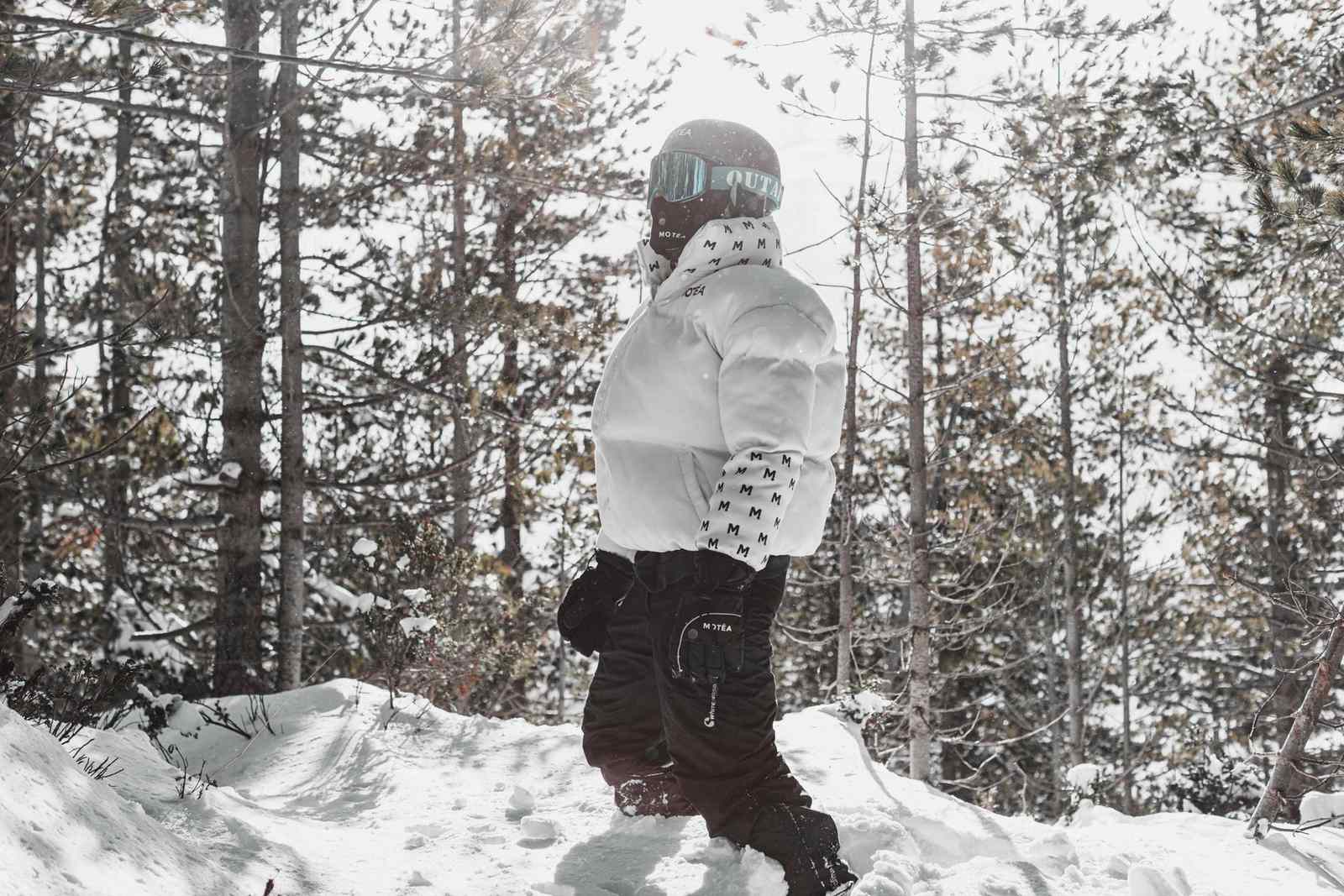
Three formats exist: heated outer trousers with their own pack, heated base layers worn under trousers you already own, and 12 V liners wired to a motorcycle. For most people the outer trouser is right, and ororo's is the one to start with — not because it is the warmest, but because it is the only one that publishes capacity, voltage, watt-hours and a runtime for every setting.
Why legs are the last thing this category got to
There is a reason heated jackets outnumber heated pants by an order of magnitude, and it is not that nobody's legs get cold.
Legs are a harder engineering problem. They bend constantly at two joints, they carry your weight, and the fabric over them abrades against itself with every step — all of which is unkind to a wiring harness. A jacket's elements sit on a torso that mostly holds still. A trouser's elements have to survive a hinge that cycles thousands of times a day.
There is also a physiological reason legs need less help. Your thighs contain the largest muscles in your body, and working muscles produce heat. Walk uphill in the cold and your legs will be the warmest part of you. The people for whom heated legwear genuinely solves something are the people who are not moving: sitting in a stand, standing on a touchline, riding a motorcycle, kneeling on a cold floor.
The three formats, and who each one is for
| Format | How it works | Best for | The trade |
|---|---|---|---|
| Heated outer trousers | A complete trouser with elements and its own 7.4 V or 12 V pack | Most people — spectating, walking, hunting, working outdoors | You are committed to that trouser's cut, shell and fit |
| Heated base layer | A thin heated legging worn under trousers you already own | Skiers and workers whose outer trousers are already right | Adds a layer inside a garment that may have no room for one |
| 12 V liner | Wired to a motorcycle's electrical system, no pack at all | Riders, and only riders | Useless off the bike, and the harness and controller cost extra |
The base-layer format is the one most people have not considered and is frequently the right answer for anyone who already owns ski or work trousers they like.
Quick picks
Tap any row to jump to the full write-up below. The energy column is the pack’s capacity times its voltage — the number this category does not print.
| # | Product | Best for | Energy | Price |
|---|---|---|---|---|
| 1 |  ororo Men's 3-Zone Heated Casual PantsThe one pair on this page where every figure you need is published: capacity, voltage, watt-hours and a runtime for al… | The only pair you can check end to end | 35.5 Wh | $149.99View on Amazon |
| 2 |  KEMIMOTO Heated Pants with 12V 77Wh PackTwice the energy of anything else here that runs off a pack you carry, stated in watt-hours on the listing itself — an… | The biggest honest energy budget | 77.0 Wh | $119.99View on Amazon |
| 3 |  TIDEWE Heated Hunting Pants with Power BankThree zones over the thighs and seat, three published runtimes, and a pack that doubles as a phone charger — plus an a… | Hunting, with a runtime you can cross-check | 37.0 Wh | $107.99View on Amazon |
| 4 |  Gobi Heat FlexCore Heated Base Layer Pants (Women's)The base-layer answer: four zones including the knees, worn under your own ski or work trousers so nothing about your … | Heat under the trousers you already own | — | $199.00View on Amazon |
| 5 | 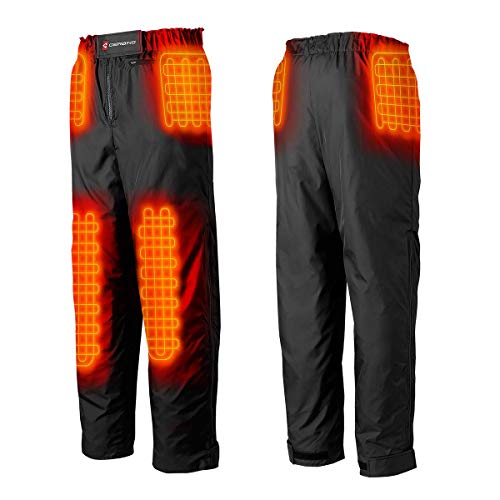 Gerbing 12V Heated Pant LinerFour zones, sizes to 4XL, and a published 44 watts — the only garment on this page whose maker states what it actually… | The only pair that publishes an actual draw | — | $194.84View on Amazon |
#ad — buy links are tagged and earn us a commission at no extra cost to you. Prices come from a live feed; where none is available the button reads “Check price” rather than showing a number we cannot stand behind. How we are funded.
ororo Men's 3-Zone Heated Casual Pants
The one pair on this page where every figure you need is published: capacity, voltage, watt-hours and a runtime for all three settings — which means the claim can be inverted instead of believed.
#ad Price as of October 17, 2026. How we are funded.
The numbers
- Energy
- 35.5 Wh
- Maker's stated energy
- 35.4 Wh per pack
- Zones
- Three — both thighs and the back waist
- Packs
- Takes one or two
- Runtime on low
- 8 h on one pack, 16 h on two, per ororo
- Heat zones
- Left thigh, right thigh and back waist, per ororo
- Settings
- Three — high, medium, low
- Care
- Machine wash cold on a gentle cycle in a mesh bag, line dry, no iron or dry clean, per ororo
On wattage: No wattage published, but with 35.4 Wh and three runtimes the draw can be inverted three ways: about 4.4 W on low, 7.9 W on medium and 11.8 W on high. Those are believable figures for three zones, which is itself a useful signal — a claim that inverts to something plausible is a claim worth more than one that does not.
On the pack: ororo publishes the pack as 4,800 mAh / 7.4 V / 35.4 Wh — capacity, voltage AND energy, which almost nothing in heated apparel does. The pants take one or two packs; the second one roughly doubles every runtime figure below.
What we like
- Publishes capacity, voltage AND watt-hours, which puts it alone on this page
- A runtime for every setting, so all three can be checked against the energy
- Takes a second pack, which is the only real answer to a short day
- Machine washable with published instructions, unlike most of this category
What we do not
- No wattage published, so the draw is still inferred rather than read
- Three zones is the fewest here — nothing at the knee, which is where a lot of people feel cold first
- Casual cut, not a work or snow pant; the shell is nylon and spandex, not armor
- The second pack is a separate purchase and the runtime story depends on it
Who this suits
Anyone who wants heated legs for ordinary cold — walking, spectating, commuting — and wants to know what they are buying.
Who should skip it
You need abrasion resistance or waterproofing. This is a casual trouser with elements in it, not outerwear.
Spec sources: ororo — Men's 3-Zone Heated Casual Pants (4,800 mAh / 7.4 V / 35.4 Wh pack, runtime for all three settings, wash instructions, warranty) · ororo — Heated Apparel Battery Guide (capacity, voltage and output for every pack)
KEMIMOTO Heated Pants with 12V 77Wh Pack
Twice the energy of anything else here that runs off a pack you carry, stated in watt-hours on the listing itself — and padded knees, which is the detail that separates a hunting pant from a warm trouser.
The numbers
- Energy
- 77.0 Wh
- Maker's stated energy
- 77 Wh at 12 V
- Knees
- Padded
- Shell
- Waterproof softshell
- Flying with it
- Inside the 100 Wh carry-on threshold
- Heat zones
- Not specified for this SKU beyond the heated panels and padded knees
- Settings
- Three
- Care
- Not stated
On wattage: No wattage published and no per-setting runtime we could source for this SKU, so nothing here can be inverted. The energy figure is the one thing KEMIMOTO does publish, and on this product it is the one that matters most.
On the pack: The listing states 77 Wh at 12 V, which is the honest way round: watt-hours is the figure that compares across voltages. Sibling listings in this line quote the same pack as 20,000 mAh, and it is worth understanding why those are the same number — 20,000 mAh measured at the cell level is roughly 77 Wh. Multiply 20,000 mAh by 12 V instead and you get 240 Wh, which would be a pack no airline would let you board with.
What we like
- Publishes energy in watt-hours rather than a capacity you have to interpret
- 77 Wh is more than double a standard 35 Wh apparel pack
- Padded knees, which matters if you kneel, ride or crawl in them
- Still under the FAA's 100 Wh carry-on threshold, so it travels without a conversation
What we do not
- No per-setting runtime published for this SKU, so the energy cannot be turned into hours
- No wattage either
- No stated care instructions
- A 12 V pack is bulkier than the 7.4 V packs the rest of this page uses
Who this suits
A hunter or a rider who wants the longest run from a pack they carry, and who would rather have a stated watt-hour figure than a large milliamp-hour one.
Who should skip it
You want to know how many hours you are buying. KEMIMOTO publishes the energy and not the draw, so the hours are yours to find out.
Spec sources: Amazon — KEMIMOTO heated pants with 12V 77Wh battery pack, padded knees
TIDEWE Heated Hunting Pants with Power Bank
Three zones over the thighs and seat, three published runtimes, and a pack that doubles as a phone charger — plus an ambiguity in the specification that the arithmetic on this page can actually resolve.
The numbers
- Energy
- 37.0 Wh
- Claimed pack
- 10,000 mAh at 7.4 V
- Zones
- Three — upper thighs and seat
- Claims
- All three settings
- Extra
- Two USB ports for devices
- Heat zones
- Upper thighs and seat, per TIDEWE
- Settings
- Three, color-coded on the controller
- Care
- Not stated
On wattage: No wattage published. Against the pack's real 37 Wh, the 3-hour high-setting claim implies about 12.3 W across three zones — which lands almost exactly on ororo's 11.8 W for its own three-zone trouser. Converting the same pack at 7.4 V would imply 24.7 W, roughly double any comparable garment, which is how we spotted the voltage problem before TIDEWE's pack page confirmed it.
On the pack: These run off TIDEWE's 10,000 mAh power bank, and TIDEWE's own page for that pack settles what its garment pages leave open: the output is 5 V / 2.4 A over dual USB, not 7.4 V. A USB bank's milliamp-hour rating is the cell-level figure, so 10,000 mAh is about 37 Wh — not the 74 Wh you get by converting at 7.4 V.
What we like
- A runtime published for all three settings, so the claim can be checked
- Waterproof shell in a hunting pattern, which narrows the field considerably
- The pack charges a phone as well as the pants
- Heat over the seat, which is the zone that matters most sitting still
What we do not
- The capacity figure is ambiguous about its voltage basis, which is a factor-of-two difference
- No wattage published
- No stated care instructions
- Nothing at the knee
Who this suits
Someone sitting still outdoors in the wet who wants heat where they are in contact with the ground.
Who should skip it
You need the energy figure to be unambiguous. [Spare and replacement batteries](/battery/spare-and-replacement-batteries) explains why this particular ambiguity keeps recurring.
Spec sources: Amazon — TIDEWE heated hunting pants with power bank (7.4 V, 10,000 mAh, runtime for all three settings)
Gobi Heat FlexCore Heated Base Layer Pants (Women's)
The base-layer answer: four zones including the knees, worn under your own ski or work trousers so nothing about your outer layer has to change — sold at a price that assumes you know why that matters.
#ad Price as of October 17, 2026. How we are funded.
The numbers
- Zones
- Four, including the knees
- Capacity
- 10,000 mAh — voltage not published
- Energy
- Not derivable
- Control
- Front and back independently
- Heat zones
- Knees, both thighs and lower back, per Gobi Heat
- Settings
- Three per zone, with the front and back controllable independently
- Care
- Machine washable once the battery is removed, per Gobi Heat
On wattage: Neither a wattage nor a convertible capacity, so the eight-hour claim has nothing behind it that can be checked. That is not an accusation — it may well be accurate — but it is a claim rather than a figure.
On the pack: Gobi publishes a 10,000 mAh battery and does not publish its voltage anywhere we could find. Capacity without voltage is not energy, so there is no watt-hour figure for this garment and we will not invent one by assuming a voltage. This is the clearest example on the page of a specification that looks complete and is not.
What we like
- Heats the knees, which nothing else on this page does
- Goes under trousers you already own, so your outer layer keeps its shell and fit
- Front and back zones controlled independently, which is genuinely rare
- Machine washable with the battery out
What we do not
- No voltage published, so the capacity cannot be converted into energy at all
- The most expensive item on this page and the least checkable
- A base layer adds bulk under trousers that may already fit closely
- This listing is the women's cut; the men's is a separate product
Who this suits
Someone who wants heated legs without replacing the ski or work trousers they already trust.
Who should skip it
You want to compare energy against anything else here. Without a voltage there is nothing to compare.
Spec sources: Gobi Heat — FlexCore women's heated base layer pants (four zones, 10,000 mAh, up to 8 hours, dual control)
Gerbing 12V Heated Pant Liner
Four zones, sizes to 4XL, and a published 44 watts — the only garment on this page whose maker states what it actually consumes, which is also why it needs a motorcycle rather than a pocket.
#ad Price as of October 17, 2026. How we are funded.
The numbers
- Draw
- 44 W at 12 V, 3.6 A
- Zones
- Four — legs and hips
- Maximum temperature
- 135°F
- Sizes
- S to 4XL, with tall cuts, per Gerbing
- Heat zones
- Two in the legs and two at the hips, per Gerbing
- Settings
- Continuously variable via the separate temperature controller
- Care
- Not stated by Gerbing on the product page
On wattage: 44 W at 3.6 A on a 12 V system, which reconciles: 12 x 3.6 = 43.2. Worth knowing that Gerbing's own product page currently shows a wattage that does not reconcile with the amperage printed beside it, so we have used the figure that does and cited the retailer publishing it. For scale, 44 W is roughly four times what a 7.4 V heated trouser draws on high — which is the honest reason this one is wired to an engine.
On the pack: There is no pack. This liner draws 3.6 A from a vehicle's 12 V system, and Gerbing states that a battery harness and a temperature controller are both required for stand-alone operation and both sold separately. Budget for all three.
What we like
- Publishes a real wattage, which nothing else in heated legwear does
- Four zones including the hips, where a rider is in contact with the seat
- Sizes to 4XL with tall cuts, which is unusually broad
- Pre-wired connections at the ankle for heated socks or insoles
What we do not
- Needs a vehicle. There is no portable-battery option at 3.6 A
- Harness and controller are both separate purchases on top of the price
- Off the bike it does nothing at all
- Gerbing publishes no care instructions on the product page
Who this suits
A rider who wants heat that never runs out and accepts being tethered to the bike for it.
Who should skip it
You are walking, standing or sitting anywhere without a 12 V supply. Every other pick on this page is a better buy for you.
Spec sources: Gerbing — 12V Heated Pant Liner (four Microwire zones in the legs and hips, 135°F, harness and controller sold separately) · RevZilla — Gerbing 12V Heated Pant Liner, published draw: 44 Watts (3.6 Amps)
The energy, converted
Watt-hours, and what they buy
Energy is capacity times nominal voltage. The ceiling draw is the pack’s own published output current times its voltage. The implied draw runs the maker’s advertised hours backwards. Nothing here is measured — check our working.
| Product | Capacity | Volts | Energy | Ceiling draw | Shortest runtime | Implied draw at the claim |
|---|---|---|---|---|---|---|
| ororo Men's 3-Zone Heated Casual Pants | 4,800 mAh | 7.4 V | 35.5 Wh | 18.5 W | 1h 55m | 11.8 Wat 3 h high, one pack |
| KEMIMOTO Heated Pants with 12V 77Wh Pack | 6,417 mAh | 12 V | 77.0 Wh | Not published | Not derivable | No claim published |
| TIDEWE Heated Hunting Pants with Power Bank | 10,000 mAh | 3.7 V | 37.0 Wh | Not published | Not derivable | 12.3 Wat 3 h high |
“Not derivable” means the manufacturer does not publish the figure the sum needs. We leave it blank rather than estimating it, borrowing a number from a similar model, or rounding one into existence. These are ceilings, not promises: cold, wind, movement and pack age all push real runtime below them. Run your own numbers.
ororo Men's 3-Zone Heated Casual Pants
- Energy in the pack
- (4,800 mAh ÷ 1000) × 7.4 V = 35.5 Wh
- Most the pack can deliver
- 7.4 V × 2.5 A = 18.5 W
- So the shortest possible runtime
- 35.5 Wh ÷ 18.5 W = 1h 55m
- And the draw the maker’s own claim assumes
- 35.5 Wh ÷ 8 h = 4.4 W — which is the low, one pack figure.
Source for the pack figures: ororo — Heated Apparel Battery Guide (capacity, voltage and output for every pack).
That worked example is the reason ororo leads this page despite not being the warmest or the toughest garment on it. Because the capacity, the voltage AND a runtime for all three settings are published, the claim can be turned around and checked: 35.4 watt-hours against an 8-hour low-setting claim implies about 4.4 W, against 4.5 hours on medium about 7.9 W, and against 3 hours on high about 11.8 W. Those are believable numbers for three heated zones. A claim that inverts to something plausible is worth considerably more than one that inverts to nonsense — and on the next section, one of them does.
The arithmetic catches a specification problem
TIDEWE publishes more than most: a 10,000 mAh pack and a runtime for all three settings. The garment page does not say what voltage that capacity is measured at. Take the 7.4 V that heated apparel usually runs on and you get 74 watt-hours, which against the 3-hour high-setting claim would have the pants drawing about 24.7 W across three zones.
That figure is roughly double what ororo's three-zone trouser implies, for a garment with the same number of zones covering about the same area. It is not impossible, but it is the kind of outlier worth pausing on.
TIDEWE's own page for that pack settles it. The battery is a power bank with two USB ports and a published output of 5 V at 2.4 A — not a 7.4 V apparel pack at all. A USB bank's milliamp-hour rating is the cell-level figure, so 10,000 mAh is about 37 watt-hours, and 37 divided by 3 hours is 12.3 W: almost exactly ororo's 11.8 W. The arithmetic pointed at the answer before we found the spec, and the spec confirmed it.
Five products, five different levels of disclosure
Set the garments aside for a moment and look only at what each maker is willing to tell you. It is the clearest picture of this category's state we have assembled.
| Product | Capacity | Voltage | Energy | Runtime | Draw |
|---|---|---|---|---|---|
| ororo 3-Zone Casual | Yes | Yes | Yes | All 3 settings | No |
| KEMIMOTO 77Wh | — | Yes | Yes | No | No |
| TIDEWE Hunting | Yes | On the pack's page, not the garment's | Yes — about 37 Wh | All 3 settings | No |
| Gobi Heat FlexCore | Yes | No | Not derivable | One figure | No |
| Gerbing 12V Liner | No pack | Yes | N/A — no pack | N/A | Yes, 44 W |
One product publishes an actual draw and it is the one that needs a motorcycle. One publishes a capacity with no voltage anywhere, which makes the number decorative. Nobody running off a portable pack publishes what the garment consumes.
The Gobi Heat row is the one worth dwelling on, because it is the trap that looks least like one. A 10,000 mAh figure and an eight-hour claim feel like a complete specification. They are not: without a voltage, that capacity cannot be converted into energy at all, which means the eight hours has nothing behind it that anyone outside the company can check. We have not assumed a voltage to fill the gap, and the energy column for that garment is empty as a result.
The one pair that publishes a wattage
Gerbing's 12 V pant liner states 44 watts at 3.6 amps, and the two figures reconcile — 12 times 3.6 is 43.2. It is the only garment in our entire registry of legwear with a real, citable draw.
Two things follow from it. The first is scale: 44 W is roughly four times what ororo's trouser implies on its highest setting. That is not Gerbing being wasteful, it is what heat costs at highway speed with cold air moving past you at 60 mph, and it is exactly why the garment is wired to an engine instead of a battery in your pocket. A portable pack that could sustain 44 W for a useful length of time would be too heavy to wear.
The second is a caution we would rather state than hide. Gerbing's own product page currently shows a wattage that does not reconcile with the amperage printed beside it — the number appears to be the jacket liner's, not the pant liner's. We have used the figure that is internally consistent and is published identically by the retailers carrying the product, and cited the retailer rather than the brand page for that specific number. If Gerbing corrects the page we will follow it.
Where the zones go, and why knees matter
Zone placement varies more in legwear than in any other heated garment, and there is no convention to fall back on.
- Thighs are on every product here. They are the largest surface area and the easiest place to route an element through a garment that bends.
- Seat and lower back appear on most. This is the zone that matters if you are sitting on something cold — a stand, a bleacher, a bike — because conduction pulls heat out far faster than air does.
- Hips appear on the Gerbing liner, which is a riding-specific choice: it is where a rider is in contact with the seat for hours.
- Knees appear on almost nothing. Gobi Heat's base layer is the only product on this page that heats them, and knees are a genuine cold spot — thin tissue, little muscle, and the joint people notice first when kneeling on frozen ground.
- Calves and feet are heated by nothing here. If your feet are the problem, that is a different purchase — see cold feet, and note that the Gerbing liner has pre-wired connections at the ankle for exactly that reason.
What to check before you buy
- Is a battery included? Several heated trousers are sold without one and say so at the end of the title. Which garments include a battery covers how that wording works.
- Is there a voltage as well as a capacity? If not, you cannot convert it and you are buying a number rather than an amount of energy.
- Where does the pack sit? A hard rectangle in a trouser pocket is more intrusive than one in a jacket. Side pockets at the thigh work; back pockets do not if you are sitting.
- Does it bend where you bend? Element routing across the knee is the hardest thing to get right in this format and the most common failure point.
- Can you wash it? Legwear gets dirtier than a jacket. ororo publishes full instructions; most listings here publish none. Washing heated clothing has what the ratings mean.
- Have you sorted your core first? Genuinely — see the callout above. This is the one category where the obvious purchase is most often the second-best one.
What we would skip, and why
- Anything sold as heated pants with the words 'No Battery' in the title
- They exist, they are cheap, and they are the single most common disappointment in this corner of the category. A heated trouser with no pack is not a bargain — it is a garment you cannot switch on until you have worked out which proprietary connector it uses and found a pack that matches. Connector shapes here are not standardized and a near-fit is not a fit.
- Any listing that gives a capacity in milliamp-hours and no voltage
- Milliamp-hours is not energy. The same 10,000 mAh number means about 37 watt-hours at a 3.7 V cell rating and about 74 at a 7.4 V pack rating — a factor of two, on the figure that decides both your runtime and whether you can fly with it. One of the five products below publishes a capacity with no voltage anywhere, which makes its runtime claim uncheckable.
- Heated pants as your first heated purchase
- Legs are rarely the limiting factor. Large muscle groups generate heat when you move and your core drives the circulation to them, so most people who feel cold in the legs are actually cold in the torso first. A heated vest is cheaper, and frequently the legs stop being a problem once the core is warm. Buy pants when the legs are still cold and everything else is fine.
- A heated base layer under trousers that already fit closely
- The base-layer format is genuinely clever — heat under the trousers you already own, nothing about your outer layer has to change. But it adds a layer inside a garment that may have no room for one, and compression is the enemy of warm legs for exactly the same reason it is the enemy of warm feet. Try the combination before you commit to it.
Our criteria, and what we did not do
- Availability verified before anything was written. Every product here was confirmed purchasable with a live price at the time of publication.
- Judged first on what the maker publishes, because in a category this young the willingness to state a figure is the most reliable quality signal available.
- Every capacity converted at the stated voltage into watt-hours, and where the voltage is not stated we say the energy is not derivable rather than assuming one.
- Runtime claims inverted into implied draws wherever there is enough published to do it, and used as a cross-check on the capacity itself.
- Formats kept separate. Outer pants, base layers and vehicle-powered liners solve different problems and ranking them against each other on warmth alone would mislead.
- We have not worn any of these. How we work.
We have not worn, tested or owned any of these products, and we say so on every page rather than in a footer. What we do instead is compile the published specifications and do the arithmetic. The full method.
TIDEWE's pants share their power bank with the rest of its range, and that pack is where the voltage question above finally gets answered. TIDEWE heated gear, converted puts the whole line on one page and works through why three garments with different zone counts all quote the same runtime.
Frequently asked
- Do heated pants actually work?
- Yes, in the situation they are designed for: standing or sitting still outdoors. They are much less useful when you are moving, because your thigh muscles are the largest heat producers in your body and will warm your legs on their own. Buy them for stillness, not for activity.
- How long do heated pants last on a charge?
- It depends entirely on the pack, and most makers do not publish enough for you to know. ororo publishes 35.4 watt-hours and claims 8 hours on low, 4.5 on medium and 3 on high from one pack. KEMIMOTO publishes a 77 watt-hour pack but no runtime. Gobi Heat publishes 8 hours but no voltage, so the claim cannot be checked at all.
- Are heated pants or a heated base layer better?
- Base layers if you already own ski or work trousers you like, because nothing about your outer layer has to change and you can swap the outer for the occasion. Outer heated trousers if you do not, or if your existing trousers fit too closely to take another layer — compression restricts circulation, which makes legs colder rather than warmer.
- Can you wash heated pants?
- Usually, with the battery removed, but check before you buy because most listings in this category do not say. ororo publishes full instructions — cold gentle cycle in a mesh bag, line dry, no iron or dry clean. Gobi Heat states machine washable with the battery out. Several others state nothing at all.
- Do heated pants have knee heating?
- Almost none do. Of the five products here, only Gobi Heat's FlexCore base layer heats the knees. Most concentrate on the thighs and the seat, because those are the largest areas and the easiest to route an element through. If knees are your specific complaint, that narrows the field to one.
- Can I take heated pants on a plane?
- The garment is fine; the pack is what the rules cover. Under 100 watt-hours it goes in carry-on without asking anyone. The KEMIMOTO pack at 77 Wh is comfortably inside that, and so is every 7.4 V pack on this page. Travel and airlines has the thresholds.
- Are heated pants worth it compared to just wearing thermals?
- If you are moving, thermals win easily and cost a fraction as much. If you are stationary in real cold, a battery adds warmth that insulation cannot, because insulation only slows the loss of heat you are already producing — and when you are still, you are not producing much. Are heated jackets worth it works through the same trade for the torso.
Sources
- ororo — Men's 3-Zone Heated Casual Pants (pack capacity, voltage, watt-hours, per-setting runtime, care and warranty)
- TIDEWE — 10,000 mAh power bank for heated apparel (5 V / 2.4 A dual-USB output), the page that fixes the voltage its garment pages omit
- Gobi Heat — FlexCore women's heated base layer pants (four zones, dual control)
- Gerbing — 12V Heated Pant Liner (four Microwire zones, 135°F, harness and controller sold separately)
- RevZilla — Gerbing 12V Heated Pant Liner, published draw: 44 Watts (3.6 Amps)
- FAA — lithium battery guidance for passengers (100 Wh and 160 Wh thresholds)
Related

Guides
The questions the product pages do not answer: sizing, zones, safety, washing, cost.
Layering heated clothing: the free upgrade almost nobody uses
Heat source inside the insulation, weather protection outside. The ordering is free and almost everyone gets it backwards.

Heated Vests
Same core zones as a jacket, less fabric to heat, and it layers under the coat you already own. Usually the smarter first purchase.
Cold feet, and whether electricity is the right answer
Four causes of cold feet, and heated socks properly address one of them. Sort the cause first — the tight-boot case is the most common and a battery makes it worse.
Does it come with a battery, or is that a second purchase?
We read the live listing title for every garment on this site and sorted them: says it includes a pack, says it does not, does not say. Two popular picks are bare.
Spare and replacement batteries, converted before you buy
A second pack is the cheapest real upgrade here. Every capacity claim converted to watt-hours, with the airline band attached — including the class that quietly stops being carry-on legal.
Heated gloves for motorcycling, where the wind never stops
Riding is a forced-convection problem, not a cold one. Why that demands full-finger elements, and what it does to runtime.
TIDEWE heated gear: the whole line, run through the arithmetic
One brand that publishes watt-hours on its gloves and no voltage at all on its jackets. The whole line converted — including the 5 V spec hiding on the pack's own page.
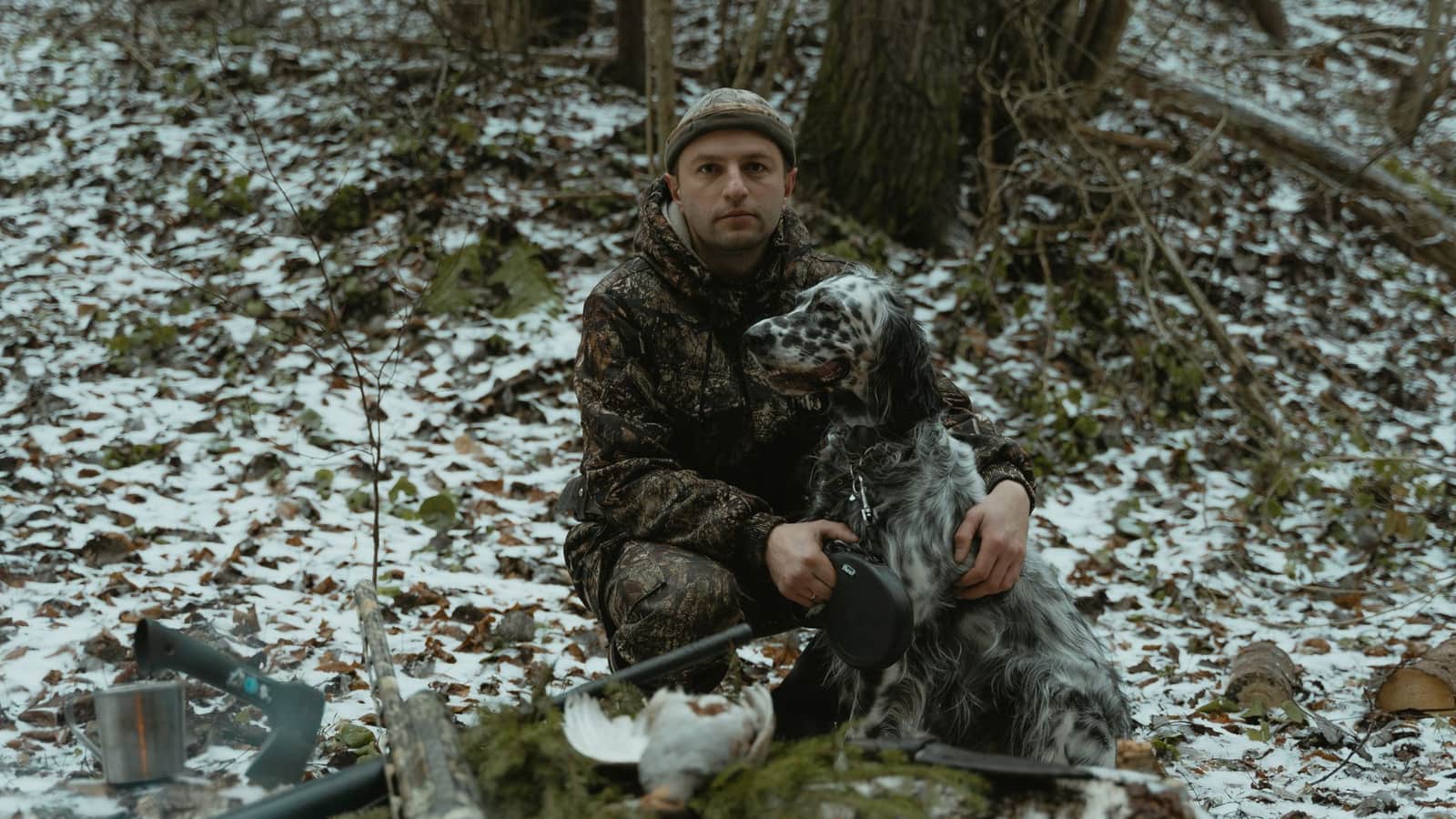
Heated jackets for hunting, and the arms question nobody asks
One brand sells the same hunting garment as a jacket and a vest - same battery, same five zones. Only the placement changes, and for a long sit that is the whole decision.
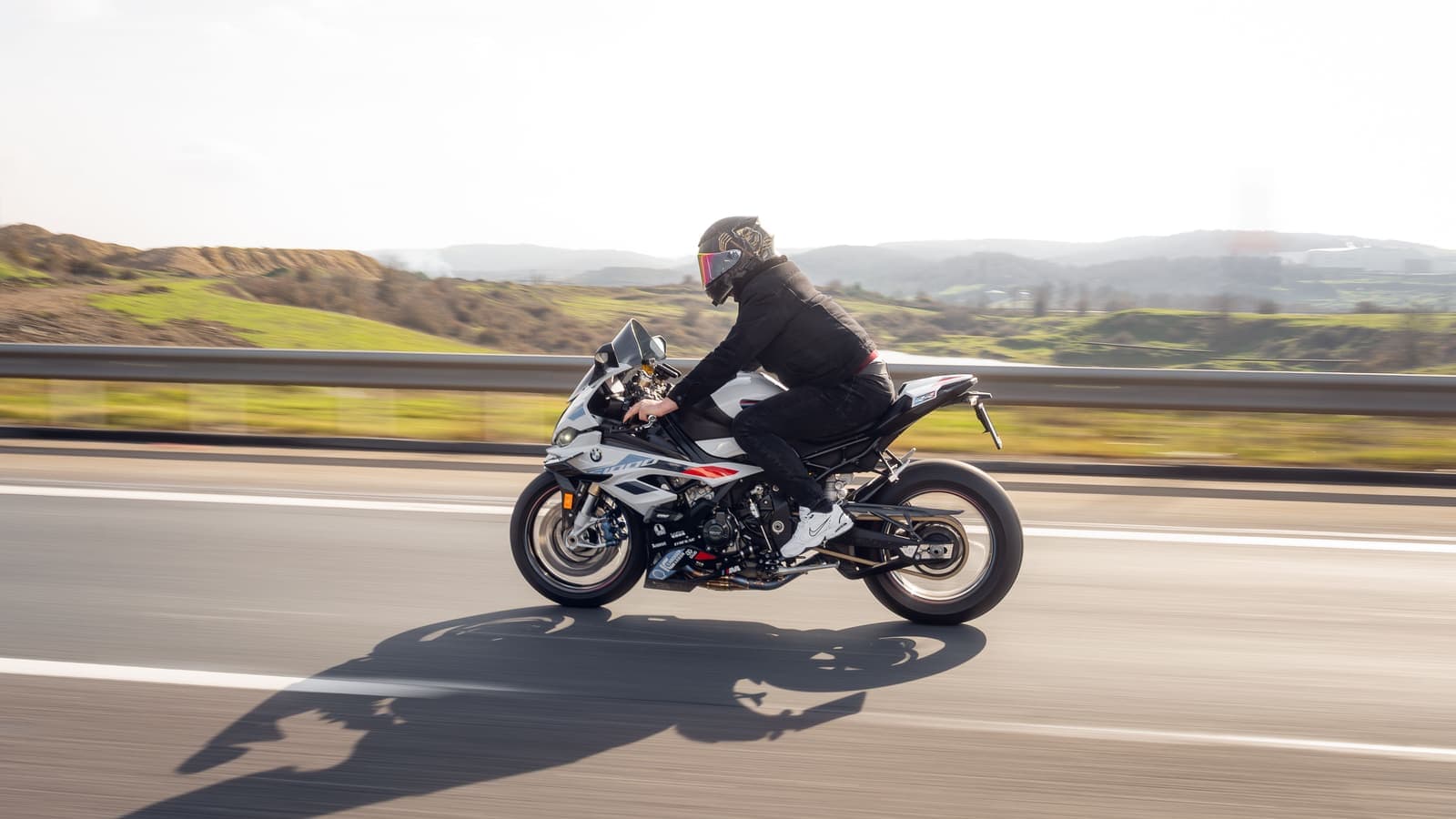
Heated jackets for motorcycling, and the one corner of this category that tells you its wattage
Only four garments on this site publish a wattage and the top two are 12V motorcycle liners - because a wired system cannot hide its draw. Plus why 77 watts is unbuyable on batteries.