Cold feet, and whether electricity is the right answer
This is the most searched problem in the category and the one most often solved with the wrong purchase. Before the picks: four causes, how to tell them apart, and which ones a battery genuinely helps.
By Scooter M. · Published September 13, 2026
How this is funded: buy links here are tagged and earn us a commission at no extra cost to you. It does not affect what we recommend, and we take no free product and no sponsorship. Read the disclosure.
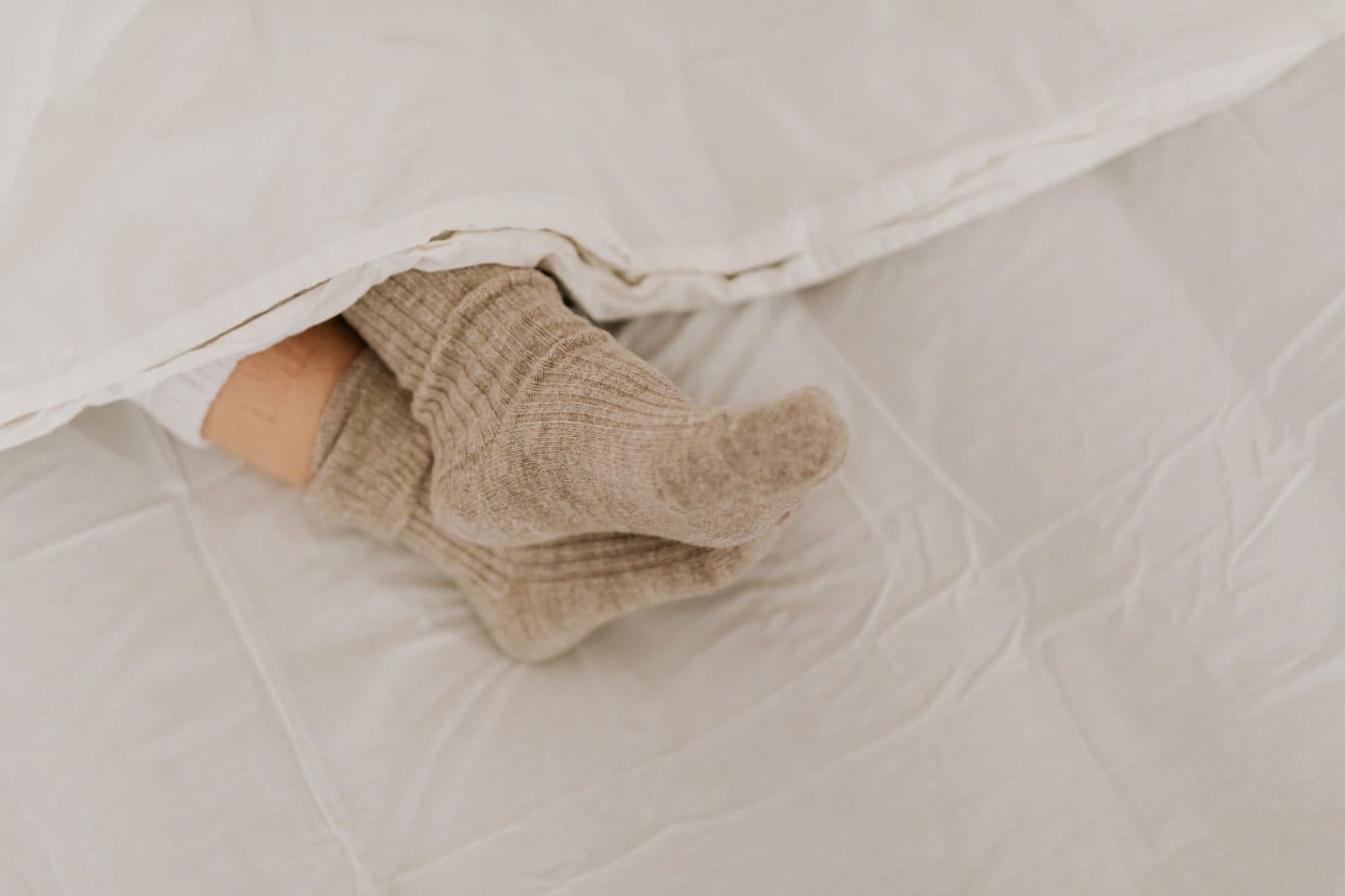
Heated socks fix cold feet when the cause is not enough heat reaching them — a long stationary spell outdoors, or a boot that fits well but is not warm enough. They do not fix cold feet caused by a tight boot, by a cold core, or by a circulatory condition. Those three are more common than people expect, and a battery makes the first one worse.
Four causes, and how to tell which is yours
Almost every cold-feet purchase that disappoints was aimed at the wrong cause. It is worth two minutes to work out which of these describes you, because the right answer changes completely.
| If this sounds like you | The likely cause | What actually helps |
|---|---|---|
| Feet fine walking, cold within twenty minutes of stopping | Not enough heat production while stationary | Heated socks. This is the case they are for |
| Toes numb, and your boots feel snug with a thick sock | Compression restricting circulation | A roomier boot or a thinner sock. Heat will not beat a tight fit |
| Feet go cold at the same time as your hands, and you feel cold overall | Core temperature — your body is restricting blood to the extremities on purpose | A heated vest. Fix the cause, the feet follow |
| Feet cold indoors, in warm rooms, most of the year | Possibly circulatory, thyroid, anemia or medication | A doctor. This is not a clothing problem |
| One foot markedly colder than the other | Worth investigating rather than insulating | A doctor first. If it is benign, app-controlled socks let you heat one side harder |
We are an apparel site and not a medical one. The two rows that point at a doctor are pointing there deliberately — heated socks are consumer clothing and no maker on this page claims otherwise.
Why the tight-boot case matters so much
It is worth spending a paragraph on this because it is the one that quietly wastes the most money.
Your feet are kept warm by blood arriving from your core. Anything that restricts that flow makes them colder, and the most common restriction in winter is a boot packed too full. A thick sock, a second sock, or an insole added on top of an existing one all reduce the space your foot sits in, and a foot under pressure gets less blood.
A heated sock is thicker than an ordinary one, and it also has a pack at the calf and a wire running down. Put that into a boot that was already snug and you have added compression to solve a problem that compression caused. The element will fight it — it will produce heat and some of that heat will reach you — but you are spending watt-hours to partially offset a fit problem you could have fixed for nothing by wearing a thinner sock.
Quick picks
Tap any row to jump to the full write-up below. The energy column is the pack’s capacity times its voltage — the number this category does not print.
| # | Product | Best for | Energy | Price |
|---|---|---|---|---|
| 1 |  SNOW DEER Upgraded Heated SocksThe plain button version of the same sock, and for most buyers the right one: the app adds convenience, not warmth, an… | The cheapest sock worth owning | 16.3 Wh | $79.99View on Amazon |
| 2 |  SAVIOR HEAT Heated Socks with App ControlApp control sounds like a gimmick until you are laced into a ski boot and the only alternative is undoing everything t… | Adjusting heat without taking your boot off | 16.3 Wh | Check price on Amazon |
| 3 |  SNOW DEER Heated Socks, 7.4VThe reference point for the category, and the rare heated product whose pack capacity is actually published — on the r… | The default heated sock | 16.3 Wh | $79.99View on Amazon |
| 4 |  SNOW DEER Heated Socks with App ControlSNOW DEER's answer to the app-controlled sock, on the same 7.4 V pack family — which means the same energy budget and … | App control on the cheaper platform | 16.3 Wh | $95.99View on Amazon |
| 5 |  ororo Men's Heated Fleece Vest, 4-ZoneFour zones instead of three and a fleece face instead of a shell, trading wind resistance for something you can wear a… | A heated mid-layer for indoors | 35.5 Wh | $139.99View on Amazon |
#ad — buy links are tagged and earn us a commission at no extra cost to you. Prices come from a live feed; where none is available the button reads “Check price” rather than showing a number we cannot stand behind. How we are funded.
SNOW DEER Upgraded Heated Socks
The plain button version of the same sock, and for most buyers the right one: the app adds convenience, not warmth, and the energy budget is identical either way.
#ad Price as of October 17, 2026. How we are funded.
The numbers
- Energy
- 16.3 Wh
- Pack
- 7.4 V, 2,200 mAh per sock
- Control
- Button
- Sizes
- S through XL
- Heat zones
- Toe box
- Settings
- Three
- Care
- Machine washable with the battery out
On wattage: No published wattage.
What we like
- Same element and same pack as the app version at a lower price
- One less thing to pair, charge and troubleshoot
- Replacement packs are inexpensive
What we do not
- The button is unreachable inside a laced boot
- Three fixed settings only
- No wattage published
Who this suits
Anyone in loose boots or waders who can reach their own cuffs.
Who should skip it
You ski. You will not be able to reach the button.
Spec sources: Amazon — SNOW DEER 7.4V 2200mAh replacement pack
SAVIOR HEAT Heated Socks with App Control
App control sounds like a gimmick until you are laced into a ski boot and the only alternative is undoing everything to press a button you cannot reach.
#ad No live price available, so we show none. How we are funded.
The numbers
- Energy
- 16.3 Wh
- Pack
- 7.4 V per sock
- Control
- Bluetooth app plus cuff button
- Fabric
- Carbon-fiber element in a knit sock
- Heat zones
- Toe box
- Settings
- Three, with temperatures published: 104-113°F, 122-131°F and 131-149°F
- Care
- Machine washable with the battery removed
On wattage: Not published, but derivable — which is the whole reason this sock leads the page. 16.3 Wh across the published 2.5-3 h on high is about 5.4-6.5 W, across 5-6 h on medium about 2.7-3.3 W, and across 9-10 h on low about 1.6-1.8 W. The hours in the table are the low end of each published range, so the implied draws are the upper bound. A smooth descending ladder from one pack size is what a calculated spec sheet looks like rather than an invented one.
On the pack: 7.4 V, 2,200 mAh per foot — about 16.3 Wh. SAVIOR publishes both numbers, which is more than Lenz does for a sock costing four times as much.
What we like
- Adjusting from your pocket is the single most useful feature on a heated sock
- Finer control than three fixed settings, which stretches the runtime
- Still works as a normal button sock if the phone dies
What we do not
- Bluetooth is one more thing to fail in the cold
- Phone batteries drain faster in the cold too
- No wattage published
Who this suits
Skiers, and anyone whose boots make the cuff button unreachable.
Who should skip it
You do not want an app on your phone for a pair of socks. That is a reasonable position.
Spec sources: Savior Heat — App-controlled heated socks product page ("7.4V 2200mAh battery"; High "2.5-3 hours" at "131-149°F", Medium "5-6 hours" at "122-131°F", Low "9-10 hours" at "104-113°F"; "One-Tap App Connection", "Live Battery Status Tracking", "Control Gloves, Socks & Apparel"; "the sock button for quick outdoor control"; "Heats up within 3 seconds"; COOLMAX fabric, carbon fiber elements; "Free 1-Year Extended Warranty"; the app itself is never named) · Amazon — SNOW DEER 7.4V 2200mAh replacement pack
SNOW DEER Heated Socks, 7.4V
The reference point for the category, and the rare heated product whose pack capacity is actually published — on the replacement-battery listing, if not on the sock's own page.
#ad Price as of October 17, 2026. How we are funded.
The numbers
- Energy
- 16.3 Wh
- Pack
- 7.4 V, 2,200 mAh per sock
- Element
- Toe box
- Wash
- Machine, battery out
- Heat zones
- Toe box only
- Settings
- Three
- Care
- Machine washable with the battery removed
On wattage: No published wattage. The pack capacity is published on SNOW DEER's own replacement-battery listing, which gives you the energy figure even though the sock page does not.
What we like
- The element sits over the toes, which is the only place foot heat actually matters
- Replacement packs are cheap and easy to find, which extends the useful life a long way
- Machine washable, unlike most heated gloves
What we do not
- Cuff packs are visible above a low boot
- About 16 Wh a foot is not much energy
- No wattage published
Who this suits
Hunters, ice anglers, spectators — anyone standing still on frozen ground.
Who should skip it
Your boots are already tight. A sock with an element and a cuff pack needs room you may not have.
Spec sources: Amazon — SNOW DEER 7.4V 2200mAh replacement pack
SNOW DEER Heated Socks with App Control
SNOW DEER's answer to the app-controlled sock, on the same 7.4 V pack family — which means the same energy budget and the same silence about wattage.
#ad Price as of October 17, 2026. How we are funded.
The numbers
- Energy
- 16.3 Wh
- Pack
- 7.4 V, 2,200 mAh per sock
- Control
- App plus button
- Use
- Motorcycling, hunting, skiing
- Heat zones
- Toe box
- Settings
- App-variable plus button presets
- Care
- Machine washable with the battery out
On wattage: No published wattage.
What we like
- Same replacement-pack ecosystem as the standard SNOW DEER sock
- App control at a lower price than most
- Machine washable
What we do not
- No wattage published
- App polish is not its strength
- The cuff pack is bulky under a tight boot
Who this suits
Someone who wants app control without paying for the premium sock.
Who should skip it
You want the best-executed app. This is the cheaper implementation and it feels like it.
Spec sources: SNOW DEER — App-control heated socks product page ("effortlessly adjust both socks at once, or customize each sock individually"; timer "set the timing between 0-3 hours" with auto power-off; "3 temperature settings"; "can last up to 11 hours on a single charge"; "designed to be washable for easy maintenance"; no voltage, capacity, per-setting temperatures, per-setting runtimes, app name or warranty published) · Amazon — SNOW DEER 7.4V 2200mAh replacement pack
ororo Men's Heated Fleece Vest, 4-Zone
Four zones instead of three and a fleece face instead of a shell, trading wind resistance for something you can wear at a desk without rustling.
#ad Price as of October 17, 2026. How we are funded.
The numbers
- Energy
- 35.5 Wh
- Pack
- ororo Mini 5K, 4,800 mAh at 7.4 V
- Heat zones
- 4, including the collar
- Face fabric
- Fleece
- Heat zones
- Left and right chest, mid-back, collar
- Settings
- Three
- Care
- Machine washable with the battery removed
On wattage: No published wattage. The pack pairing is the interesting number here: fewer watt-hours than the B19G, spread across one more zone.
What we like
- Collar heat is the zone people miss most and almost nobody includes
- Fleece is quieter and softer than a shell against a shirt
- The Mini 5K pack is genuinely pocketable
What we do not
- Smaller pack than the shell vest — fewer watt-hours, one more zone to feed
- No wind resistance
- Fleece picks up sawdust and pet hair like a magnet
Who this suits
Someone cold in a cool building or a cold cab, not on a ridge.
Who should skip it
You are buying for outdoor wind. Wrong fabric, and the smaller of the two packs.
Spec sources: ororo — Heated Apparel Battery Guide (capacity, voltage and output for every pack) · ororo — Mini 5K rechargeable battery, 4,800 mAh
The energy, and what a day actually costs
Watt-hours, and what they buy
Energy is capacity times nominal voltage. The ceiling draw is the pack’s own published output current times its voltage. The implied draw runs the maker’s advertised hours backwards. Nothing here is measured — check our working.
| Product | Capacity | Volts | Energy | Ceiling draw | Shortest runtime | Implied draw at the claim |
|---|---|---|---|---|---|---|
| SNOW DEER Upgraded Heated Socks | 2,200 mAh | 7.4 V | 16.3 Wh | Not published | Not derivable | No claim published |
| SAVIOR HEAT Heated Socks with App Control | 2,200 mAh | 7.4 V | 16.3 Wh | Not published | Not derivable | 6.5 Wat 2.5 h high (131-149°f) |
| SNOW DEER Heated Socks, 7.4V | 2,200 mAh | 7.4 V | 16.3 Wh | Not published | Not derivable | No claim published |
| SNOW DEER Heated Socks with App Control | 2,200 mAh | 7.4 V | 16.3 Wh | Not published | Not derivable | No claim published |
| ororo Men's Heated Fleece Vest, 4-Zone | 4,800 mAh | 7.4 V | 35.5 Wh | 18.5 W | 1h 55m | 3.6 Wat 10 h maker's headline claim |
“Not derivable” means the manufacturer does not publish the figure the sum needs. We leave it blank rather than estimating it, borrowing a number from a similar model, or rounding one into existence. These are ceilings, not promises: cold, wind, movement and pack age all push real runtime below them. Run your own numbers.
The numbers here are small and that is the format's honest limit. A 7.4 V, 2,200 mAh pack is about 16.3 watt-hours per foot, because a pack has to sit at your calf and there is only so much weight anyone will strap there. That is under half of what a standard 5,200 mAh jacket pack carries, and less than a quarter of a large one.
The practical consequence is that heated socks are a supplement, not a heating system. They work beautifully as a top-up inside a boot that is already doing most of the insulating, and they disappoint badly when asked to be the insulation. Anyone expecting a thin heated sock in a thin boot to beat a thick sock in a warm boot is going to be unhappy, and no amount of shopping changes the watt-hours.
Toe coverage is the specification that matters
Your toes go numb before the rest of your foot does. They are the furthest point from your heart, they have the highest surface-area-to-volume ratio on your body, and they are pressed against the coldest part of the boot.
So the question that separates a good heated sock from a mediocre one is simple: how far forward does the element reach? Socks that heat the instep and stop are heating the part that was least bothered. Socks whose element wraps the toe box are addressing the actual complaint. This is worth checking on the diagram in every listing, and it is a more useful comparison than the maximum temperature.
It is also the clearest argument against heated insoles for this particular problem — an insole element sits under the foot, behind the toes, by construction. The full comparison covers where insoles do win, which is boot fit.
If the cause is your core, buy for your core
The third row of the table deserves its own section because it is genuinely counterintuitive and it is genuinely common.
When your core temperature starts to drop, your body constricts the blood vessels feeding your hands and feet. This is deliberate — it is protecting your organs by reducing heat loss through your extremities, and it will keep doing it regardless of how warm the outside of your sock is. Heating the foot in that state is working against a decision your circulatory system has already made.
Warm the torso and the constriction relaxes, and your feet get warm blood again from the inside. Readers are often surprised how effective this is, and a heated vest is frequently the cheaper purchase as well as the more effective one. That is why there is a vest among the picks on a page about socks. Heated vests covers the category, and heated jacket versus heated vest covers which shape.
What to check before you buy
- Does the element reach the toes? Check the diagram. This is the single most important specification on the page.
- Will it fit your boot without compressing your foot? Try the boot with a sock of similar thickness before you commit.
- Is the capacity published? Hours without a capacity cannot be checked against anything. See wattage explained.
- Where does the pack sit, and does your boot cuff hit it? A calf pack under a tall ski or work boot is a real fit question.
- Is it machine washable, and at what temperature? Socks get washed far more often than jackets do. Washing heated clothing has the detail.
- Do you need per-foot control? If one foot genuinely runs colder, the app versions can heat them differently and the button versions cannot.
What we would skip, and why
- Heated socks inside a boot that is already too tight
- This is the single most common way people make cold feet worse while spending money on the problem. A heated sock is thicker than a normal sock, and a boot that was snug becomes a boot that compresses. Compression restricts circulation, restricted circulation is what made your feet cold in the first place, and now the element is fighting a problem it helped create. If your boots are tight, fix the boots.
- Two pairs of socks
- The instinct is sound and the execution usually is not, for exactly the reason above. Doubling up fills the air space in the boot and squeezes the foot. One good sock with room around it beats two socks compressed, and it is free to find out.
- Heated socks for feet that are cold indoors, all year
- Feet that are cold in a warm room are telling you something that is not about insulation, and a heated sock is treating a symptom at the far end of the problem. That pattern is worth a conversation with a doctor rather than a purchase — it can be thyroid, circulatory, anemia or medication, and none of those are fixed by a battery.
- Heated insoles as a like-for-like substitute
- They heat the sole and nothing else. Your toes are the part that goes numb and they sit forward of where an insole element reaches. Heated socks versus heated insoles covers the trade honestly — insoles win on boot fit, socks win on where the heat lands.
Our criteria, and what we did not do
- Cause before product. We sort the problem first, because three of the four common causes are not best addressed by a heated sock at all.
- Published capacity converted at nominal voltage into watt-hours, as everywhere on this site.
- Toe coverage weighted heavily — an element that stops short of the toes is missing the part that actually goes numb.
- Boot-fit impact treated as a specification, because a sock that makes the boot tight is a sock that makes you colder.
- We have not worn any of these and we are not clinicians. How we work.
We have not worn, tested or owned any of these products, and we say so on every page rather than in a footer. What we do instead is compile the published specifications and do the arithmetic. The full method.
One cause this page does not cover is cold arriving from further up. If your legs are cold as well as your feet, warming the feet alone is treating the end of the problem. Heated pants works through what exists for legs, including why almost nothing heats the knees.
Frequently asked
- Do heated socks help with cold feet?
- They help when the cause is not enough heat reaching feet that are otherwise well fitted — long stationary spells outdoors, or a boot that fits but is not warm enough. They do not help when the cause is a tight boot, a cold core, or a circulatory condition, and in the tight-boot case they make it slightly worse.
- Why are my feet always cold even with thick socks?
- Frequently because the thick socks are the problem. A boot packed too full compresses the foot, compression restricts blood flow, and restricted blood flow is what makes feet cold. Try one fewer layer in the same boots before buying anything — if your feet get warmer, that was the answer.
- Are heated socks or heated insoles better for cold toes?
- Socks, for toes specifically. An insole element sits under the foot and behind the toes by construction, and the toes are the part that actually goes numb. Insoles win on boot fit, because they do not add thickness around the foot. The full comparison covers both sides.
- How long do heated socks last on a charge?
- The packs are small — about 16.3 watt-hours per foot in the common 7.4 V, 2,200 mAh class — because they have to sit at your calf. Makers' claims on low run considerably longer than on high. Treat them as a top-up inside a boot that is already insulating, not as the insulation itself.
- Can cold feet be a sign of something serious?
- They can be. Feet that are cold indoors in warm rooms, year-round, or one foot markedly colder than the other, are patterns worth raising with a doctor rather than solving with clothing. We are an apparel site and heated socks are consumer clothing, not a treatment.
- Why does a heated vest help cold feet?
- Because when your core cools, your body deliberately constricts the blood vessels feeding your hands and feet to protect your organs. Warming the torso relaxes that constriction and your feet get warm blood from the inside. If your feet and hands go cold together and you feel cold overall, the vest is the more effective purchase.
Sources
Related

Heated Socks
One toe element, one 7.4V pack, roughly 16 watt-hours a foot. The simplest arithmetic on the site.

Heated socks and reduced sensation: what we can and cannot tell you
Control granularity, fit and element position, described plainly. The medical question stays with your doctor.

Heated socks for work, and why the floor is the problem
Cold concrete conducts heat out faster than air ever will. The boot-fit trap, and why the cheap button sock is the right work buy.

Heated socks or heated insoles?
One adds bulk around your foot, the other replaces something already in the boot. Boot room decides it.
Heated socks or disposable toe warmers?
Control is the real difference: one you can turn down, one runs until it is spent. Plus where the cost crosses over.

Heated Vests
Same core zones as a jacket, less fabric to heat, and it layers under the coat you already own. Usually the smarter first purchase.

Heated pants, and how little most of them tell you
Three formats, five products, and five different levels of honesty about the battery. The arithmetic catches one specification that does not add up.

Lenz heated socks: the only honest runtime table in this category, and the one number they will not give you
A runtime matrix of ranges across four pack sizes and two garment classes - the best disclosure in the category - from the one brand that will not publish a voltage.

Heated insoles: the worst-documented corner of this whole category
The same "5000mAh, 4 levels, app control" specification appears under seven brand names and not one publishes a voltage. Three products survived the check.

Heated socks for snowboarding, and the three things a soft boot changes
A soft boot means you can reach the button - so buy on thinness and wool instead. The liner packs out mid-season, and the highback runs right where the battery sits.

Heated socks for men, and the two measurements nobody gives you
Savior's own chart puts US men's 10.5 through 15 into a single XL - and no maker publishes the calf measurement that decides whether the cuff restricts the foot it is heating.