Heated socks for snowboarding, and the three things a soft boot changes
The hard part of a heated sock in a ski boot is reaching the button. In a snowboard boot you can reach it. What you cannot do is add thickness, stop the liner packing out, or move the highback.
By Scooter M. · Published September 26, 2026
How this is funded: buy links here are tagged and earn us a commission at no extra cost to you. It does not affect what we recommend, and we take no free product and no sponsorship. Read the disclosure.

Buy the thinnest heated sock with the highest wool content you can find, and stop worrying about app control. A snowboard boot's soft cuff means you can usually reach a button or use a remote, which is the constraint that dominates heated socks for skiing. What a snowboard boot gives you instead are three problems a ski boot does not: board feel punishes thickness, the liner packs out over the season, and the binding highback runs exactly where the battery sits.
The control problem mostly goes away
Our ski page argues that once a hard shell and three buckles are closed, the sock cuff is unreachable, so app control stops being a gimmick and becomes the deciding feature. That argument is specific to a rigid boot.
A snowboard boot is a soft boot. The cuff flexes, the liner can be loosened, and on most boots you can get a gloved hand to the top of the sock without taking anything off. So the premium you would pay for Bluetooth in a ski boot buys you less here, and the money is better spent on the things you genuinely cannot fix on the hill.
Quick picks
Tap any row to jump to the full write-up below. The energy column is the pack’s capacity times its voltage — the number this category does not print.
| # | Product | Best for | Energy | Price |
|---|---|---|---|---|
| 1 |  Fieldsheer Mobile Warming Merino 2.0 Heated Socks54% merino, a runtime published for all three settings, and a wireless remote rather than a button buried in your boot… | A thin merino sock with a remote you can actually reach | 14.8 Wh | $79.99View on Amazon |
| 2 |  Lenz Heat Sock 5.1 Toe Cap Slim Fit with rcB 1400 BatteriesA thin merino-and-silk sock built for a tight boot, sold with the packs, and backed by the only runtime table in this … | Ski boots, and the best runtime disclosure in the category | — | $449.95View on Amazon |
| 3 |  SAVIOR HEAT Heated Socks with App ControlApp control sounds like a gimmick until you are laced into a ski boot and the only alternative is undoing everything t… | Adjusting heat without taking your boot off | 16.3 Wh | Check price on Amazon |
| 4 |  Muddy Outdoors Nucleus Heated SocksA 40% merino blend with 3,500 mAh a foot and eight hours claimed on low — from a brand that publishes no voltage, no w… | The longest low-setting claim from a named outdoor brand | — | $91.62View on Amazon |
| 5 |  SNOW DEER Upgraded Heated SocksThe plain button version of the same sock, and for most buyers the right one: the app adds convenience, not warmth, an… | The cheapest sock worth owning | 16.3 Wh | $79.99View on Amazon |
#ad — buy links are tagged and earn us a commission at no extra cost to you. Prices come from a live feed; where none is available the button reads “Check price” rather than showing a number we cannot stand behind. How we are funded.
Fieldsheer Mobile Warming Merino 2.0 Heated Socks
54% merino, a runtime published for all three settings, and a wireless remote rather than a button buried in your boot — the most complete sock spec sheet on this site, at the friendliest price on this page.
#ad Price as of October 17, 2026. How we are funded.
The numbers
- Energy
- 14.8 Wh
- Maker's stated energy
- 4,000 mAh at 3.7 V — 14.8 Wh by our arithmetic
- Composition
- 54% merino wool, 37% nylon, 6.6% polyester, 2.4% Lycra
- Claims
- A runtime for all three settings, with temperatures
- Battery sits
- In a zippered pocket at the calf
- Heat zones
- Toe heating, per Fieldsheer
- Settings
- Three, published across a range of 90° up to 135°F
- Care
- Machine wash on cold with the gentle cycle only, tumble dry on low heat, per Fieldsheer
On wattage: Not published, but the figures invert cleanly. 14.8 Wh across the stated 5+ hours on high is about 3.0 W, over 8+ hours about 1.9 W, and over 16+ hours about 0.9 W — a smooth ladder from one pack size, which is what a calculated spec sheet looks like rather than an invented one. It also lines up with what the rest of this category implies: heating a foot is roughly a fifth the electrical load of heating a torso.
On the pack: 4,000 mAh in a "Zippered Battery Pocket at Calf", which is Fieldsheer's own phrasing and matters more on a snowboard than anywhere else: a binding highback is a vertical plate running from the heel cup to the lower calf, so anything bulky at that height is between you and the plate you lean on through every heelside turn. The zip pocket is flatter than a strap-on pack, which is the right answer to that problem.
What we like
- A runtime for every setting AND a temperature range — better disclosure than most heated jackets manage
- 54% merino is a high wool content for a sock carrying an element and wiring
- A wireless remote means you never have to reach the sock cuff, which is the whole problem inside a boot
- The battery sits in a flat zip pocket rather than strapped to the outside of the cuff
- Stated washing instructions and a 1-year warranty, both of which several rivals omit entirely
What we do not
- Fieldsheer's own page says 3.4 V while the model number beside it encodes 3.7 V — a small contradiction on the one figure that sets the energy
- No watt-hour figure published, here or on any Fieldsheer pack
- 14.8 Wh is slightly less energy than the 7.4 V, 2,200 mAh packs most rivals use
- Only three sizes — MD, LG and XL — with no published measurements behind them
- A remote is one more object to lose, and it does not report battery level the way an app does
Who this suits
A rider or skier who wants a thin wool sock, honest published numbers, and a control they can reach with gloves on.
Who should skip it
You want to see battery level as well as change the setting. A one-way remote tells you nothing about how much is left.
Lenz Heat Sock 5.1 Toe Cap Slim Fit with rcB 1400 Batteries
A thin merino-and-silk sock built for a tight boot, sold with the packs, and backed by the only runtime table in this category that gives you a range instead of a single flattering number.
#ad Price as of October 17, 2026. How we are funded.
The numbers
- Energy
- Not derivable — Lenz publishes no voltage or Wh
- Composition
- 30% polyester, 25% merino, 20% polyamide, 15% polyacrylic, 5% silk, 5% elastane
- Runtime given as
- A range at every level — 4.5-5.5 h at level 3
- Sizing
- EU 31-34 through 45-47
- Heat zones
- Toe Cap element heating the toes from above and below, per Lenz
- Settings
- Three levels on the pack itself, or stepless adjustment over Bluetooth in the free Lenz Heat app
- Care
- Washable at 30°C in the washing machine using the included laundry bag; air dry, no fabric softener, no tumble drying, per Lenz
On wattage: Not published, and unlike every other product here we cannot derive it either — that takes watt-hours, and Lenz publishes none. The hours above are the CONSERVATIVE end of Lenz's published ranges (level 3 is stated as 4.5-5.5 h, level 2 as 6.5-8.5 h, level 1 as 12.5-16.5 h). We quote the low end deliberately; the high end is theirs to claim.
On the pack: Lenz publishes NO voltage, milliamp-hour or watt-hour figure for the rcB packs — the pack name is the only capacity hint you get, and a name is not a specification. This is the one garment family on the site where we cannot do the watt-hour conversion, because the maker withholds the one number it needs. What Lenz gives instead is far better than most: a runtime matrix covering four pack sizes, two garment classes and three heat levels, every entry a range.
What we like
- The only maker on this site that publishes runtime as a RANGE, which is what a runtime actually is
- Runtimes are given separately for socks and for gloves/vests/jackets — a distinction nobody else makes
- Slim fit is genuinely thin enough for a race or performance boot, where most heated socks are not
- Stepless app control rather than three fixed steps, which matters when the setting you want is between two of them
What we do not
- No voltage, no milliamp-hours, no watt-hours anywhere — the conversion this whole site runs on is impossible here
- Among the most expensive heated socks sold, by a wide margin
- The rcB 1400 packs in the box are not the packs Lenz currently sells on its own store, which complicates buying spares
- Only the toes are heated — nothing for the arch or the heel
Who this suits
A skier with a tight boot who has already decided that cold toes are worth solving properly, and who values a maker that publishes an honest range.
Who should skip it
You want to know the watt-hours. Lenz will not tell you, and no amount of arithmetic gets round a missing voltage.
Spec sources: Lenz — Heat Sock 5.1 Toe Cap (30% polyester, 25% merino wool, 20% polyamide, 15% polyacrylic, 5% silk, 5% elastane; Toe Cap heating element heats the toes from above and below; runs on all Body Heat System lithium packs; washable at 30°C with the included laundry bag; EU 31-34 to 45-47) · Lenz — Heat Sock 5.1 Toe Cap Slim Fit · Lenz — Heating time & battery life (full runtime matrix: rcB 2000 / 1800 / 1400 / 1200 and Heat Pack, each given as a RANGE per heat level, listed separately for Heat Socks and for Heat Gloves/Vest/Pants/Jacket/Pads) · Lenz — Lithium Pack rcB 1200 (USB) (85 grams, 8.5 x 5.5 x 1 cm; socks 10.0-14.0 h / 5.5-7.5 h / 3.5-4.5 h, gloves-vest-pants-jacket 5.5-7.5 h / 3.0-4.0 h / 2.0-2.5 h; stepless heat via Bluetooth app or 3 levels on the pack; no voltage, mAh or Wh published) · Lenz — Lenz Heat App FAQ ("'HeatSync' allows you to set the heat level from 1 to 9 or turn off the lithium pack"; "It is also possible to control the left and right lithium packs separately with 'HeatLeft | Right'"; repeating interval function; free on the Apple App Store or Google Play; "Android version from or iOS from 11.0" and "Bluetooth 4.0 (SMART compatible)"; "Most smartphone manufacturers allow a maximum number of 6 to 10 simultaneously paired devices. If you exceed this number, you will not be able to connect the lithium pack.")
SAVIOR HEAT Heated Socks with App Control
App control sounds like a gimmick until you are laced into a ski boot and the only alternative is undoing everything to press a button you cannot reach.
#ad No live price available, so we show none. How we are funded.
The numbers
- Energy
- 16.3 Wh
- Pack
- 7.4 V per sock
- Control
- Bluetooth app plus cuff button
- Fabric
- Carbon-fiber element in a knit sock
- Heat zones
- Toe box
- Settings
- Three, with temperatures published: 104-113°F, 122-131°F and 131-149°F
- Care
- Machine washable with the battery removed
On wattage: Not published, but derivable — which is the whole reason this sock leads the page. 16.3 Wh across the published 2.5-3 h on high is about 5.4-6.5 W, across 5-6 h on medium about 2.7-3.3 W, and across 9-10 h on low about 1.6-1.8 W. The hours in the table are the low end of each published range, so the implied draws are the upper bound. A smooth descending ladder from one pack size is what a calculated spec sheet looks like rather than an invented one.
On the pack: 7.4 V, 2,200 mAh per foot — about 16.3 Wh. SAVIOR publishes both numbers, which is more than Lenz does for a sock costing four times as much.
What we like
- Adjusting from your pocket is the single most useful feature on a heated sock
- Finer control than three fixed settings, which stretches the runtime
- Still works as a normal button sock if the phone dies
What we do not
- Bluetooth is one more thing to fail in the cold
- Phone batteries drain faster in the cold too
- No wattage published
Who this suits
Skiers, and anyone whose boots make the cuff button unreachable.
Who should skip it
You do not want an app on your phone for a pair of socks. That is a reasonable position.
Spec sources: Savior Heat — App-controlled heated socks product page ("7.4V 2200mAh battery"; High "2.5-3 hours" at "131-149°F", Medium "5-6 hours" at "122-131°F", Low "9-10 hours" at "104-113°F"; "One-Tap App Connection", "Live Battery Status Tracking", "Control Gloves, Socks & Apparel"; "the sock button for quick outdoor control"; "Heats up within 3 seconds"; COOLMAX fabric, carbon fiber elements; "Free 1-Year Extended Warranty"; the app itself is never named) · Amazon — SNOW DEER 7.4V 2200mAh replacement pack
Muddy Outdoors Nucleus Heated Socks
A 40% merino blend with 3,500 mAh a foot and eight hours claimed on low — from a brand that publishes no voltage, no washing instructions, no warranty and no sock size chart.
The numbers
- Energy
- Not derivable — 3,500 mAh with no published voltage
- Composition
- 40% merino wool, 24% acrylic, 16% nylon, 17% polyester, 3% spandex
- Claims
- 8 h low / 5 h medium / 3.5 h high
- Charge time
- As little as 3 hours
- Heat zones
- One heating element across the toes, per Muddy
- Settings
- Three — low, medium and high, with no temperatures published
- Care
- Not published by Muddy
On wattage: Not published and not derivable, because the watt-hours are not derivable either. What we can say is that the runtime ladder is internally sensible — 3.5, 5 and 8 hours descend in the right proportions from a single pack — and that the 8-hour low claim is the longest on this page from a named outdoor brand. Whether it is 13 Wh doing that or 26 Wh, Muddy does not say.
On the pack: Muddy publishes "3,500mAh battery for each sock" and no voltage anywhere, which makes the energy genuinely undecidable: at 3.7 V that is about 13.0 Wh, at 7.4 V about 25.9 Wh, and those are different products. We will not pick one and present it as a specification. The packs are said to recharge in as little as 3 hours.
What we like
- Eight hours claimed on low is the longest figure on this page from a named outdoor brand
- A runtime for all three settings, which is more than several better-known rivals publish
- 40% merino in the blend, with acrylic and nylon for durability
- A physical button at the top of the sock, which is reachable inside a soft snowboard boot even if it is not inside a ski boot
What we do not
- No voltage published, so the watt-hours — the only figure that allows a fair comparison — cannot be calculated at all
- No temperatures published for any of the three settings
- No washing instructions published, on a wool-blend sock worn against skin
- No warranty and no sock size chart on Muddy's own product page
- The button sits at the cuff, which is where a binding highback runs
Who this suits
Someone who wants a long low-setting day from an outdoor brand they recognize and is not trying to compare it on energy.
Who should skip it
You want to know what you are buying. A capacity with no voltage is a large number rather than a specification, and everything else on the sheet is missing too.
SNOW DEER Upgraded Heated Socks
The plain button version of the same sock, and for most buyers the right one: the app adds convenience, not warmth, and the energy budget is identical either way.
#ad Price as of October 17, 2026. How we are funded.
The numbers
- Energy
- 16.3 Wh
- Pack
- 7.4 V, 2,200 mAh per sock
- Control
- Button
- Sizes
- S through XL
- Heat zones
- Toe box
- Settings
- Three
- Care
- Machine washable with the battery out
On wattage: No published wattage.
What we like
- Same element and same pack as the app version at a lower price
- One less thing to pair, charge and troubleshoot
- Replacement packs are inexpensive
What we do not
- The button is unreachable inside a laced boot
- Three fixed settings only
- No wattage published
Who this suits
Anyone in loose boots or waders who can reach their own cuffs.
Who should skip it
You ski. You will not be able to reach the button.
Spec sources: Amazon — SNOW DEER 7.4V 2200mAh replacement pack
Problem one: board feel punishes thickness
This is the constraint that should drive the purchase, and it is not our opinion. evo's snowboard boot fit guide states it plainly:
- "Thicker socks and wearing 2 pairs of socks places additional material between you and your board and reduces your feel for the snow."
- "A single thin to medium weight wool or synthetic sock is all you need."
- "Snowboard boots should fit snugly, but not to the point where they cause pain."
A heated sock is already more material than a plain one — there is an element across the toes and wiring running up the leg. If you then buy the thickest, loftiest heated sock on the shelf because it sounds warmest, you have spent money to make your board vaguer and your boot tighter.
Tighter is not a small side effect. Cold feet are a circulation problem before they are a heat problem, and a boot compressed past its fit restricts the blood flow that actually distributes warmth around your foot. The element warms the skin it touches; your blood does the rest. That is the same argument we make about heated insoles and about glove sizing, and it applies here with a snug-fitted boot more than almost anywhere.
Which is why the wool percentage matters more than the loft. Merino gives you warmth per millimeter rather than warmth per centimeter:
| Sock | Wool content | Published composition |
|---|---|---|
| Lenz 5.1 Slim Fit | 25% merino + 5% silk | 30% polyester, 25% merino, 20% polyamide, 15% polyacrylic, 5% silk, 5% elastane |
| Fieldsheer Merino 2.0 | 54% merino | 54% merino wool, 37% nylon, 6.6% polyester, 2.4% Lycra |
| Muddy Nucleus | 40% merino | 40% merino, 24% acrylic, 16% nylon, 17% polyester, 3% spandex |
Lenz has the lowest wool percentage and is nonetheless the thinnest sock here — it is explicitly built for race boots. Wool content and thinness are separate axes, and for snowboarding you want both as high and as low as you can get them respectively.
Problem two: the boot you fit the sock to is temporary
"Most boots need several days of riding for them to pack out and form to their true size, and as a result should be fairly tight when brand new."
Every snowboarder knows this about boots. Almost nobody applies it to a heated sock, and it is the single most snowboard-specific thing on this page.
- A heating element warms what it is in contact with. Contact is the whole mechanism.
- A new boot presses the sock against your foot hard. Contact is excellent, and the sock feels great in November.
- Over several days of riding, the liner packs out and forms to your foot. The boot gets roomier.
- The element is now held less firmly against your skin — at the point in the season when it is actually cold.
Two practical consequences. First, do not judge a heated sock in its first week in a new boot; it is flattered by a liner that has not settled. Second, a sock with some elastane or Lycra in the blend holds its own shape as the boot loosens around it, which is a real argument for the Fieldsheer and Lenz blends over a looser knit.
Problem three: the highback sits where the battery does
A binding highback is, in evo's words, "a vertical plate from the heel cup to the lower calf", and "it controls the heelside edge of your board". You load it on every heelside turn, all day.
Now look at where heated socks put their batteries. Fieldsheer's own spec line reads "Zippered Battery Pocket at Calf". Muddy places its "easy-to-access power buttons" "at the top of each sock". Lenz clips its lithium packs to the sock cuff with snap buttons. That is the same band of leg the highback covers.
This is not a reason to avoid heated socks while snowboarding — it is a reason to prefer a flat, integrated pocket over a hard pack strapped to the outside of the cuff. A zip pocket lies flush. A clip-on brick sits between your calf and a rigid plastic plate, and you will feel it by the third run.
The ankle strap is the other piece of hardware in play — evo describes it as "securely wrapping above the ankle" — but that sits below where the packs go, so it is rarely the pinch point. The highback is.
The energy, per foot
Watt-hours, and what they buy
Energy is capacity times nominal voltage. The ceiling draw is the pack’s own published output current times its voltage. The implied draw runs the maker’s advertised hours backwards. Nothing here is measured — check our working.
| Product | Capacity | Volts | Energy | Ceiling draw | Shortest runtime | Implied draw at the claim |
|---|---|---|---|---|---|---|
| Fieldsheer Mobile Warming Merino 2.0 Heated Socks | 4,000 mAh | 3.7 V | 14.8 Wh | Not published | Not derivable | 3.0 Wat 5 h high (up to 135°f) |
| SAVIOR HEAT Heated Socks with App Control | 2,200 mAh | 7.4 V | 16.3 Wh | Not published | Not derivable | 6.5 Wat 2.5 h high (131-149°f) |
| SNOW DEER Upgraded Heated Socks | 2,200 mAh | 7.4 V | 16.3 Wh | Not published | Not derivable | No claim published |
“Not derivable” means the manufacturer does not publish the figure the sum needs. We leave it blank rather than estimating it, borrowing a number from a similar model, or rounding one into existence. These are ceilings, not promises: cold, wind, movement and pack age all push real runtime below them. Run your own numbers.
Fieldsheer Mobile Warming Merino 2.0 Heated Socks
- Energy in the pack
- (4,000 mAh ÷ 1000) × 3.7 V = 14.8 Wh
- Most the pack can deliver
- Not published — no output current stated, so the ceiling cannot be computed.
- And the draw the maker’s own claim assumes
- 14.8 Wh ÷ 16 h = 0.9 W — which is the low (from 90°f) figure.
Two things to take from that. First, these are small numbers — 13 to 16 watt-hours a foot is a fraction of what a heated jacket carries — and they are enough, because heating a foot is roughly a fifth of the electrical load of heating a torso. Lenz's published runtime matrix shows the same ratio across four different pack sizes.
Second, a full day riding is a long day. Fieldsheer's own claims are 5+ hours on high, 8+ on medium and 16+ on low — that inverts to about 3.0 W, 1.9 W and 0.9 W respectively, a clean ladder from a single pack. Ride on low or medium and one charge covers a lift-served day. Ride on high from first chair and it will not.
The sitting-down problem
One more thing skiing does not have. You sit in the snow to strap in — at the top of every run, in every lift queue with one foot out, and every time you catch an edge. A skier does none of that.
That is conductive heat loss straight out of your backside and the backs of your legs, repeatedly, all day, and it is a whole-body problem that no sock solves. It is a genuinely good argument for pairing heated socks with a heated vest rather than buying a warmer sock: keeping your core temperature up is what stops your body narrowing the vessels in your feet in the first place. Are heated vests and socks worth it? works through that pairing properly.
Which one
Most riders, most days
The Fieldsheer Merino 2.0. Highest published wool content here at 54%, a runtime published for all three settings, a flat zip battery pocket at the calf rather than a strapped-on pack, and a remote you can work with gloves on. It is also the least expensive pick on this page, which is not usually how this goes.
Your boots are properly tight
The Lenz 5.1 Slim Fit. Built for race boots, which means genuinely thin, and backed by the only runtime disclosure in this category given as a range rather than a single number. Expensive, and the packs it ships with are not the ones Lenz currently sells — the Lenz page has that caveat in full.
You also ski, and want one sock for both
The SAVIOR app socks. App control is worth much more inside a buckled ski boot than a soft one, so if the same pair has to do both jobs, buy for the harder job.
You want the longest low-setting day
The Muddy Nucleus, at 8 hours claimed on low, with the caveat that Muddy publishes no voltage — so its watt-hours cannot be calculated and it cannot be compared fairly against anything else here. That is a real cost, and it is why it is fourth rather than first.
You are not sure you will use them
The SNOW DEER upgraded socks, which is the cheapest sock on this site we would actually recommend owning. Find out whether you reach for them before spending Lenz money.
What we would skip, and why
- A thick heated sock, however warm it sounds
- evo's own boot-fit guidance is blunt about this: "Thicker socks and wearing 2 pairs of socks places additional material between you and your board and reduces your feel for the snow", and "A single thin to medium weight wool or synthetic sock is all you need". A heated sock already adds an element and wiring to that single layer. Adding loft on top of it costs you board feel and, in a boot fitted snug, circulation as well.
- Two pairs, with the heated sock as the inner
- Same guidance, sharper consequence. A heated element only warms what it is touching — put another sock over the top and you have inserted an insulating layer between the element and the boot, and compressed your foot inside a boot that was fitted for one sock. You get less heat where you want it and less blood flow carrying it around.
- Sizing your sock to a brand-new boot
- "Most boots need several days of riding for them to pack out and form to their true size, and as a result should be fairly tight when brand new." That is evo quoting the standard fitting rule. Your boot in December is not your boot in March, and a heated sock that was pressed against your skin on day one can be sitting off it by mid-season — see the section on this below.
- Bulky strap-on battery packs, on this one activity
- A binding highback is "a vertical plate from the heel cup to the lower calf" and it is what you load on every heelside turn. Most heated socks put their pack at exactly that height. A flat zippered pocket is fine; a hard pack strapped to the outside of the cuff is a lump between your calf and a plastic plate you lean on all day.
Our criteria, and what we did not do
- Thickness treated as a performance specification, not a comfort preference — because in snowboarding the retailer fit guidance says so explicitly.
- Wool content recorded from published composition figures, not from marketing adjectives.
- Every pack converted to watt-hours per FOOT where a voltage is published, and marked "Not derivable" where it is not.
- Runtime claims inverted into implied draws and checked for a sensible ladder across the three settings.
- We have not ridden in any of these. How we work.
We have not worn, tested or owned any of these products, and we say so on every page rather than in a footer. What we do instead is compile the published specifications and do the arithmetic. The full method.
Frequently asked
- Do heated socks work in snowboard boots?
- Yes, and in one respect better than in ski boots: a snowboard boot's soft cuff means you can usually reach the sock's button or use a remote without taking anything off. The constraints are different instead - a snug snowboard boot punishes thickness, the liner packs out over the season, and the binding highback runs across the same part of your calf where most socks put the battery.
- How thick should a snowboard sock be?
- Thin. evo's boot fit guidance states that "Thicker socks and wearing 2 pairs of socks places additional material between you and your board and reduces your feel for the snow", and that "A single thin to medium weight wool or synthetic sock is all you need". A heated sock already adds an element and wiring, so choose one with high wool content rather than high loft.
- Can I wear a heated sock under my normal snowboard sock?
- You should not. A heating element only warms what it is touching, so a sock over the top insulates the element away from the boot and does nothing useful. It also compresses your foot inside a boot fitted for one sock, which restricts the circulation that carries the heat around your foot.
- Will the battery pack bother me under my bindings?
- It can. A highback is a vertical plate running from the heel cup to the lower calf, and most heated socks carry their battery at exactly that height - Fieldsheer describes a "Zippered Battery Pocket at Calf". A flat integrated pocket lies flush and is fine; a hard pack strapped to the outside of the cuff sits between your calf and the plate you lean on through every heelside turn.
- How long do heated socks last on the mountain?
- Fieldsheer publishes 5+ hours on high, 8+ on medium and 16+ on low from its 4,000 mAh sock pack, which inverts to roughly 3.0, 1.9 and 0.9 watts. Muddy claims 3.5, 5 and 8 hours. On low or medium, one charge covers a lift-served day; on high from first chair, it will not.
- My heated socks felt warmer in December than February. Why?
- Most likely your boots packed out. New snowboard boots are fitted tight and the liner forms to your foot over several days of riding, so a sock that was pressed firmly against your skin early in the season sits less firmly against it later. Since a heated element only warms what it touches, the same sock on the same battery delivers less. A boot fitter adding volume back is the fix, not a thicker sock.
Sources
- evo — How to Choose Snowboard Boots ("Snowboard boots should fit snugly, but not to the point where they cause pain"; "Most boots need several days of riding for them to pack out and form to their true size, and as a result should be fairly tight when brand new"; "Thicker socks and wearing 2 pairs of socks places additional material between you and your board and reduces your feel for the snow"; "A single thin to medium weight wool or synthetic sock is all you need")
- evo — How to Choose Snowboard Bindings ("A highback is a vertical plate from the heel cup to the lower calf"; "It controls the heelside edge of your board"; ankle strap "securely wrapping above the ankle")
- Fieldsheer / Mobile Warming — Merino 2.0 Heated Socks (4,000 mAh, model MW37V040; "5+ High, 8+ Medium, 16+ Low"; "90° up to 135°"; "54% Merino Wool, 37% Nylon, 6.6% Polyester, 2.4% Lycra"; "Zippered Battery Pocket at Calf"; "Wireless Remote Control"; 1 year warranty)
- Muddy Outdoors — Nucleus Heated Socks ("3,500mAh battery for each sock"; 8 h low / 5 h medium / 3.5 h high; "one heating element across the toes"; buttons "at the top of each sock"; 40% merino blend; no voltage, watt-hours, temperatures, washing instructions or warranty published)
- Lenz — Heat Sock 5.1 Toe Cap (30% polyester, 25% merino, 20% polyamide, 15% polyacrylic, 5% silk, 5% elastane; Toe Cap element heats from above and below; packs clip to the cuff with snap buttons)
Related

Heated Socks
One toe element, one 7.4V pack, roughly 16 watt-hours a foot. The simplest arithmetic on the site.
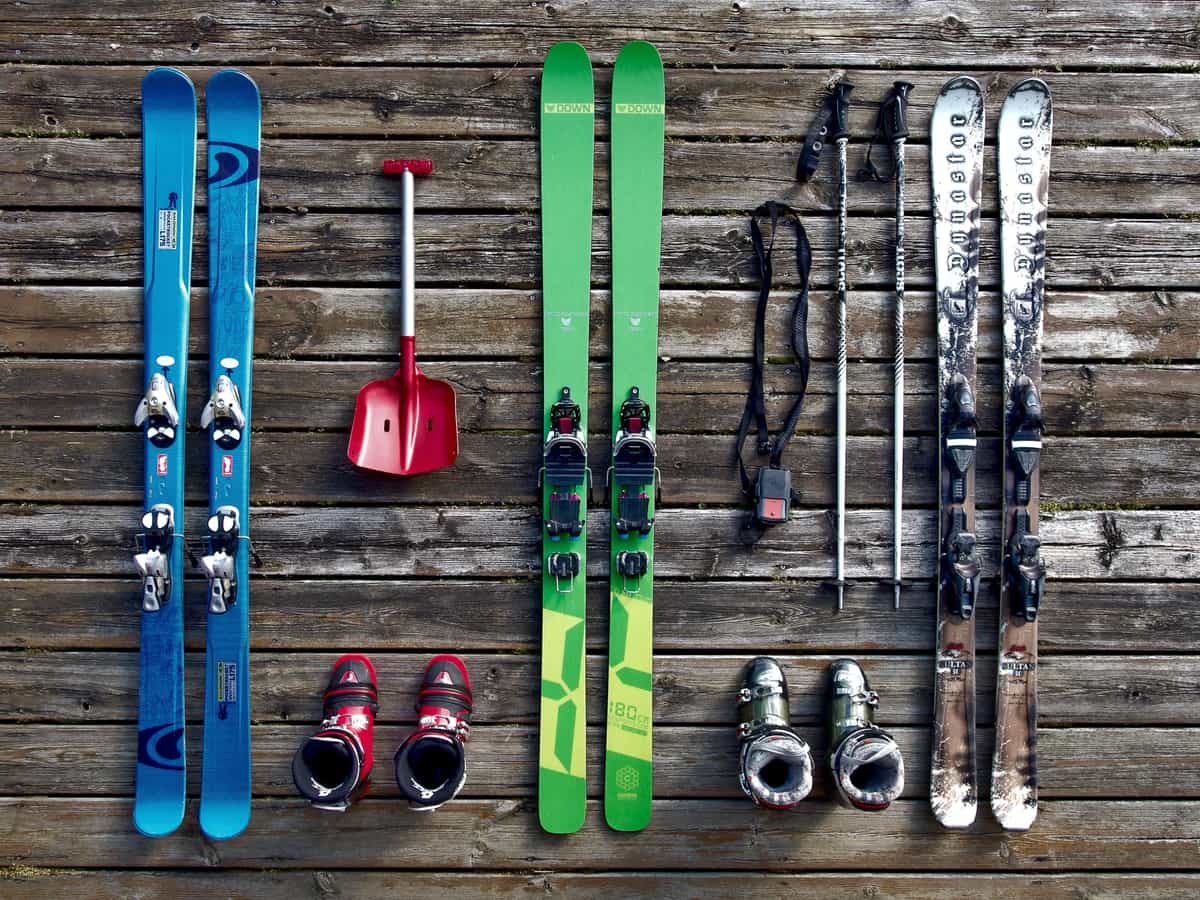
Heated ski socks, and the button you cannot reach
Once the boot is buckled the cuff button is gone. That decides the purchase — plus the boot-fit trap.
Lenz heated socks: the only honest runtime table in this category, and the one number they will not give you
A runtime matrix of ranges across four pack sizes and two garment classes - the best disclosure in the category - from the one brand that will not publish a voltage.
Cold feet, and whether electricity is the right answer
Four causes of cold feet, and heated socks properly address one of them. Sort the cause first — the tight-boot case is the most common and a battery makes it worse.

Heated insoles: the worst-documented corner of this whole category
The same "5000mAh, 4 levels, app control" specification appears under seven brand names and not one publishes a voltage. Three products survived the check.

Heated socks or heated insoles?
One adds bulk around your foot, the other replaces something already in the boot. Boot room decides it.

Are heated vests and heated socks worth it?
Same question, opposite answers. A vest is the best value in heated clothing; socks are the most situational thing we cover. How to tell which you are.

Heated socks with app control, and what the app is actually for
An app cannot add a watt-hour. What it adds is the ability to sit between the three fixed settings - worth about two hours on a 16 watt-hour sock. Which makers publish enough to check it.