How heated clothing actually works
Three components, one of which is doing all the constraining. Understand the chain and every claim in this category becomes easier to read.
By Scooter M. · Published August 31, 2026
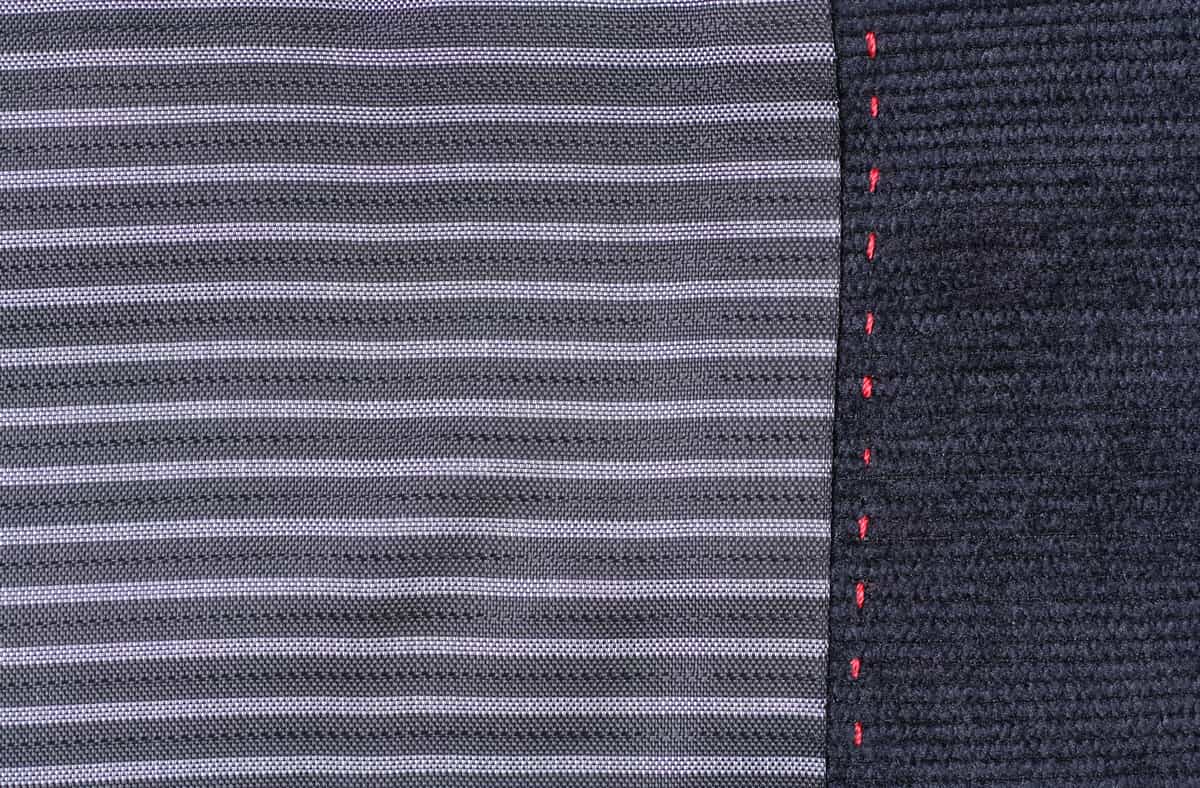
Heated clothing passes current from a lithium battery through carbon fiber elements sewn into the garment. The elements resist the current and turn it into heat; a controller cycles them to hold a target temperature. The battery is always the limiting component — everything else is cheap and mature.
The chain, in order
The element
Modern heated clothing uses carbon fiber heating elements: thin flexible strands woven into a tape and sewn into panels in the garment. Current passes through, the material resists it, and the resistance becomes heat. It is the same physics as a toaster element, scaled down by three orders of magnitude and made bendable.
Carbon fiber replaced metal wire in this application for good reasons: it flexes without work-hardening, it fails gracefully rather than snapping, and it distributes heat over an area rather than at a point. It is also cheap and mature, which is why the element is almost never what distinguishes an expensive heated garment from a cheap one.
The controller
Between pack and element sits a small controller — the button you press. It does two things. It selects a target output level, and it cycles power to hold it, switching the element on and off rather than running it continuously.
That cycling has a consequence people rarely connect. Because the controller is holding a temperature rather than a fixed draw, the amount of power it uses depends on how fast you are losing heat. Standing in wind, the element is on more of the time and the battery drains faster. Sitting still indoors, the same setting draws far less. It is the same reason a thermostat runs your furnace more on a cold day.
The battery
A lithium pack, almost always 7.4 volts nominal in consumer heated apparel, between about 2,200 and 10,150 milliamp-hours. This is the component that constrains everything, and it is the one makers publish least about. The battery hub is where that argument lives.
| Component | Mature? | Differentiates products? | Constrains you? |
|---|---|---|---|
| Carbon fiber element | Yes | Barely — placement matters more than quality | No |
| Controller | Yes | Somewhat — granularity and reachability | Rarely |
| Lithium pack | Yes | Yes — capacity is the whole game | Always |
| Shell fabric and insulation | Yes | Yes — decides how much heat you keep | Indirectly, and heavily |
Quick picks
Tap any row to jump to the full write-up below. The energy column is the pack’s capacity times its voltage — the number this category does not print.
| # | Product | Best for | Energy | Price |
|---|---|---|---|---|
| 1 |  ororo Men's Soft Shell Heated JacketThe clearest power story in the category: ororo publishes capacity and voltage for every pack it sells, so you can wor… | A first heated jacket | 38.5 Wh | $159.99View on Amazon |
| 2 | ororo Men's Lightweight Heated VestA vest puts the same pack energy into the same core zones as a jacket while heating far less fabric, which is why it i… | The best value in heated apparel | 38.5 Wh | Check price on Amazon |
| 3 |  SNOW DEER Heated Socks, 7.4VThe reference point for the category, and the rare heated product whose pack capacity is actually published — on the r… | The default heated sock | 16.3 Wh | $79.99View on Amazon |
#ad — buy links are tagged and earn us a commission at no extra cost to you. Prices come from a live feed; where none is available the button reads “Check price” rather than showing a number we cannot stand behind. How we are funded.
ororo Men's Soft Shell Heated Jacket
The clearest power story in the category: ororo publishes capacity and voltage for every pack it sells, so you can work out what you are getting instead of taking a marketing number on faith.
The numbers
- Energy
- 38.5 Wh
- Pack
- 7.4 V, 5,200 mAh (ororo B19G)
- Published output
- 2.5 A
- Heat zones
- 3
- Maker's runtime claim
- 8-10 h low / 5-6 h medium / 2-3 h high
- Heat zones
- Left and right chest, mid-back
- Settings
- Three, cycled from a single chest button
- Care
- Machine washable with the battery removed
On wattage: ororo publishes no wattage for the garment. It does publish hours for each of the three settings, which states the draw whether it meant to or not.
What we like
- ororo publishes capacity AND voltage for every pack, which almost nobody else in this category does
- Per-setting runtime claims rather than one 'up to' number, so the low-to-high spread is visible before you buy
- Soft-shell cut layers under a work coat without bulk
What we do not
- No published wattage for the garment itself
- Three zones only — nothing at the arms or the kidneys
- The headline runtime figure is the low setting, as it is everywhere
Who this suits
Someone standing still outdoors for two to four hours at a stretch who wants the power figures on the table before buying.
Who should skip it
You need heat for a full eight-hour shift on high. No 38 Wh pack does that, and this one does not claim to.
Spec sources: ororo — Heated Apparel Battery Guide (capacity, voltage and output for every pack) · Amazon — ororo 7.4V 5200mAh battery listing (per-setting runtime claim)
ororo Men's Lightweight Heated Vest
A vest puts the same pack energy into the same core zones as a jacket while heating far less fabric, which is why it is the smarter buy for most people who think they want a jacket.
#ad No live price available, so we show none. How we are funded.
The numbers
- Energy
- 38.5 Wh
- Pack
- 7.4 V, 5,200 mAh
- Published output
- 2.5 A
- Heat zones
- 3
- Maker's runtime claim
- 8-10 h low / 2-3 h high
- Heat zones
- Left and right chest, mid-back
- Settings
- Three
- Care
- Machine washable with the battery removed
On wattage: No published wattage, but ororo's per-setting hours plus the published pack capacity give you the implied draw at each setting.
What we like
- Layers under any coat you already own, which is what most people actually need
- Identical core zones to the jacket at a lower price
- Arms stay free, which matters for anyone working with their hands
What we do not
- No arm or neck heat at all
- Needs an outer layer in wind
- The same unpublished wattage as everything else here
Who this suits
Almost everyone comparing a first heated purchase. Start here, and add gloves before you add sleeves.
Who should skip it
Your cold problem is your arms or your hands. A vest will not touch either, and one bought to fix cold hands is a wasted purchase.
Spec sources: ororo — Heated Apparel Battery Guide (capacity, voltage and output for every pack) · Amazon — ororo 7.4V 5200mAh battery listing (per-setting runtime claim)
SNOW DEER Heated Socks, 7.4V
The reference point for the category, and the rare heated product whose pack capacity is actually published — on the replacement-battery listing, if not on the sock's own page.
#ad Price as of October 17, 2026. How we are funded.
The numbers
- Energy
- 16.3 Wh
- Pack
- 7.4 V, 2,200 mAh per sock
- Element
- Toe box
- Wash
- Machine, battery out
- Heat zones
- Toe box only
- Settings
- Three
- Care
- Machine washable with the battery removed
On wattage: No published wattage. The pack capacity is published on SNOW DEER's own replacement-battery listing, which gives you the energy figure even though the sock page does not.
What we like
- The element sits over the toes, which is the only place foot heat actually matters
- Replacement packs are cheap and easy to find, which extends the useful life a long way
- Machine washable, unlike most heated gloves
What we do not
- Cuff packs are visible above a low boot
- About 16 Wh a foot is not much energy
- No wattage published
Who this suits
Hunters, ice anglers, spectators — anyone standing still on frozen ground.
Who should skip it
Your boots are already tight. A sock with an element and a cuff pack needs room you may not have.
Spec sources: Amazon — SNOW DEER 7.4V 2200mAh replacement pack
Why insulation is half the product
This is the part the marketing never leads with, and it is the most useful thing to understand. A heated garment does not create warmth in isolation — it replaces heat you are losing. Insulation reduces the rate of loss. The two work together, and insulation is free to operate.
So an insulated heated vest gets more out of 38.5 watt-hours than an uninsulated shell does, because more of the heat it makes stays where it was put. And a heated shell worn under a good coat outperforms the same shell worn as an outer layer, for exactly the same reason.
If you take one practical thing from this page: layer the heated garment inside your insulation, not outside it. It is free, it works, and it is the opposite of how most people wear these. How to layer heated clothing sets out the full stack.
Why the runtime claims are what they are
Put the chain together and the shape of the category's advertising becomes obvious. The battery holds a fixed amount of energy. The controller spends it at a rate set by the setting you choose and the conditions you are in. Runtime is the first divided by the second.
Makers publish the energy — sometimes — and never publish the rate. What they publish instead is a runtime figure, which is a rate they have chosen for you: the lowest setting, in benign conditions. The manufacturer Dr. Warm, writing about its own products, describes such claims as a ceiling rather than a promise, and puts the lab-to-field and wind-chill gaps in the tens of percent.
That is why every figure on this site is presented as a ceiling. Wattage explained works through the arithmetic, and the runtime calculator will do it with your own numbers.
What this means when you shop
- Do not pay a premium for the element. It is a commodity. Pay for where the elements are placed and for the pack behind them.
- Read the zone diagram, not the zone count. Three zones covering the right places beats six covering the wrong ones.
- Treat insulation as part of the heating system. It is, and it costs no battery.
- Judge the pack in watt-hours. Milliamp-hours alone is half a number.
- Expect a ceiling, not a promise. Cold, wind, movement and pack age all push real runtime below the arithmetic.
Frequently asked
- How do heated jackets generate heat?
- Current from a lithium battery passes through carbon fiber elements sewn into panels in the garment. The material resists the current and converts it to heat. A controller cycles the elements on and off to hold your chosen setting.
- Are carbon fiber heating elements safe?
- The technology is mature and widely used, and the controller includes protection against overheating. As with any lithium product, the pack is the part to buy carefully — look for a UL, CE or FCC mark you can verify. Our safety guide covers this properly.
- Why does my heated jacket drain faster in the wind?
- Because the controller is holding a temperature rather than a fixed power draw. Wind increases your heat loss, so the element runs a larger share of the time to keep up, and the battery empties faster. Same setting, different conditions, different runtime.
- Should I wear a heated jacket over or under my coat?
- Under, in most cases. Your coat's insulation reduces the heat loss the element is fighting, so the same battery lasts longer and feels warmer. Wearing a heated shell as an outer layer in wind is the least efficient arrangement.
- Do heated clothing elements wear out?
- Rarely before the garment does. The usual failure is a break where the element run crosses a flex point — a seam or a shoulder — and it is a warranty matter, since the elements are sewn into the construction. Washing with the battery connected is the most common cause.
Sources
Related
Battery & Power
The conversion nobody publishes: capacity and voltage into watt-hours, watt-hours into hours. Plus the calculator that does it for you.

Watts, volts and the number on the label that is not quite true
Volts, amps, watt-hours and the labeling convention that overstates every tool-battery jacket by 11%.

Heating zones: which ones are worth the energy they cost
Zone by zone: what each one does, which is the best fourth, and why six is coverage rather than warmth.

Heated Jackets
The biggest category and the noisiest claims. We convert capacity and voltage into watt-hours, then into hours at each setting.
Washing heated clothing without wrecking it
Battery out, cold and gentle, dry flat. Four rules, a garment-by-garment table, and the part that cannot be repaired.