5V USB or 7.4V? The platform decides whether a power bank works
One of these runs off the phone bank already in your bag. The other needs its own proprietary pack and will not take a USB feed at all. Nothing on the outside of the garment tells you which you are looking at.
By Scooter M. · Published October 23, 2026
How this is funded: buy links here are tagged and earn us a commission at no extra cost to you. It does not affect what we recommend, and we take no free product and no sponsorship. Read the disclosure.
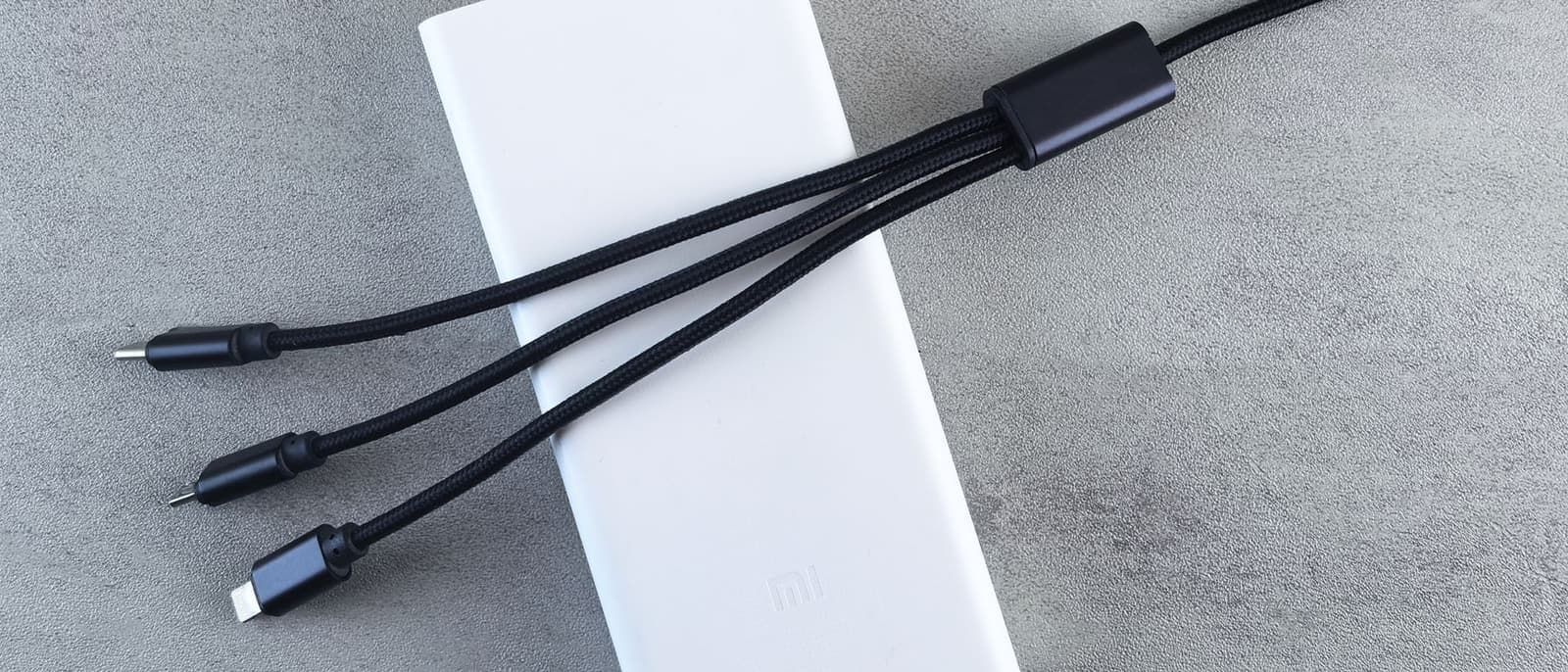
A power bank runs a heated garment only if the garment is a 5 V USB design, and most are not. A 7.4 V garment has a barrel connector and a proprietary pack and will not take a USB feed. If being able to use any power bank matters to you, buy into the 5 V platform deliberately — ActionHeat is the one that documents it best — and accept a hard ceiling of about 10 watts. If maximum heat matters more, buy 7.4 V and buy a spare pack.
Which one you own, in ten seconds
| 5 V USB platform | 7.4 V platform | |
|---|---|---|
| The connector on the wire | A USB-A or USB-C plug. It goes into a power bank. | A coaxial barrel plug, or a proprietary clip. Nothing in your bag fits it. |
| What the pack looks like | A phone power bank. Often literally sold as one. | A flat brick with a barrel socket, sold only for heated apparel. |
| How capacity is quoted | mAh at the 3.7 V cell rating, like every power bank. 10,000 mAh is about 37 Wh. | mAh at 7.4 V. 5,200 mAh is 38.5 Wh. |
| Spares | Any bank you already own. The one in your bag right now probably works. | A specific pack from a specific maker, usually $40-90. |
| Power ceiling | Set by the bank's output. 5 V at 2 A is a hard 10 W. | Set by the pack's output. 7.4 V at 2.5 A is 18.5 W. |
The capacity trap is the one that catches people: a 10,000 mAh USB bank and a 5,200 mAh apparel pack hold about the same energy, because they are rated at different voltages. Converting a USB bank's mAh at 7.4 V doubles it on paper and buys you nothing in the field.
The arithmetic, which is where the difference lives
This is the only question on the site where the voltage is not a detail. Watt-hours are capacity times voltage, and the two platforms quote capacity at different voltages — so the same-looking number means different things.
| Pack | Published | Converts at | Watt-hours |
|---|---|---|---|
| ActionHeat 5 V power bank | 6,000 mAh | 3.7 V | 22.2 Wh |
| TIDEWE 10,000 mAh USB bank | 10,000 mAh, 5 V / 2.4 A out | 3.7 V | 37.0 Wh |
| ororo B19G apparel pack | 5,200 mAh, 7.4 V, 2.5 A out | 7.4 V | 38.5 Wh |
| Venustas Mini pack | 4,800 mAh — published by Venustas as 36 Wh | 7.4 V | 35.5 Wh by multiplication |
So a 10,000 mAh USB bank and a 5,200 mAh 7.4 V pack are within 4% of each other on energy. The USB bank is not twice the battery; it is the same battery quoted the way power banks are quoted. Wattage explained works this through from first principles.
Where they genuinely differ is the ceiling. A pack's published output current times its voltage is the most wattage it can deliver, which sets the shortest runtime physically available from it — and on a 5 V platform that ceiling is low. ActionHeat states 5 V at 2 A, which is a hard 10 watts however cold you are. ororo's apparel pack states 2.5 A at 7.4 V, which is 18.5 watts.
That is the real trade. The 5 V platform cannot be driven as hard, which cuts both ways: it will not get as hot, and the same energy therefore lasts longer. 22.2 Wh at a 10 W ceiling is 2.2 hours at full tilt — and ActionHeat's own "2+ hours" claim for its 150°F setting matches that exactly, which is the only reconciliation of its kind we have found in this category.
Quick picks
Tap any row to jump to the full write-up below. The energy column is the pack’s capacity times its voltage — the number this category does not print.
| # | Product | Best for | Energy | Price |
|---|---|---|---|---|
| 1 |  ororo Men's Soft Shell Heated JacketThe clearest power story in the category: ororo publishes capacity and voltage for every pack it sells, so you can wor… | A first heated jacket | 38.5 Wh | $139.99View on Amazon |
| 2 |  ActionHeat 5V Men's Softshell Heated JacketThree zones, a temperature and a runtime for every setting, and a published output ceiling that the runtime claims act… | The most internally consistent numbers on this site | 22.2 Wh | $195.00View on Amazon |
| 3 |  TIDEWE Heated Jacket with Heated Seat PocketFour zones, a waterproof shell, and a heated cushion that unzips out of the back pocket — which is a genuinely good id… | The only jacket here with a heated seat in it | 37.0 Wh | $139.99View on Amazon |
| 4 | 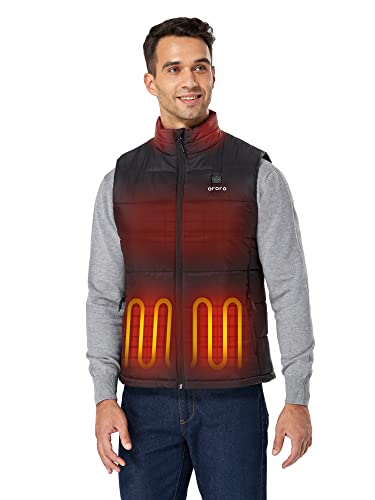 ororo Men's 4-Zone USB-C Heated Puffer VestUSB-C matters more than it sounds: the pack recharges from the same brick as your phone and your laptop, which removes… | Charging off one cable | 37.6 Wh | $149.99View on Amazon |
| 5 | 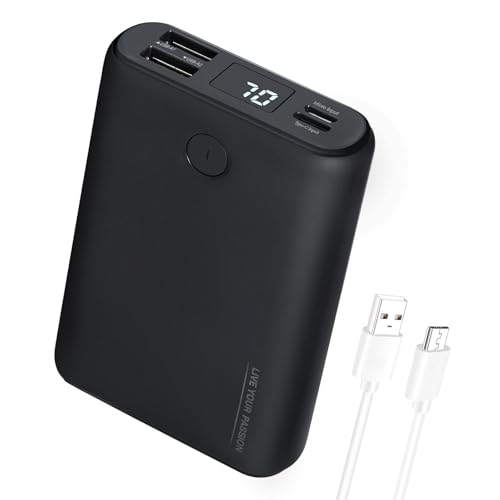 TIDEWE 10,000mAh Power Bank for Heated ApparelThe pack behind every TIDEWE torso garment, and the page that finally answers what those garments leave out: it is a 5… | The spare that runs the whole TIDEWE line | 37.0 Wh | $29.99View on Amazon |
#ad — buy links are tagged and earn us a commission at no extra cost to you. Prices come from a live feed; where none is available the button reads “Check price” rather than showing a number we cannot stand behind. How we are funded.
ororo Men's Soft Shell Heated Jacket
The clearest power story in the category: ororo publishes capacity and voltage for every pack it sells, so you can work out what you are getting instead of taking a marketing number on faith.
The numbers
- Energy
- 38.5 Wh
- Pack
- 7.4 V, 5,200 mAh (ororo B19G)
- Published output
- 2.5 A
- Heat zones
- 3
- Maker's runtime claim
- 8-10 h low / 5-6 h medium / 2-3 h high
- Heat zones
- Left and right chest, mid-back
- Settings
- Three, cycled from a single chest button
- Care
- Machine washable with the battery removed
On wattage: ororo publishes no wattage for the garment. It does publish hours for each of the three settings, which states the draw whether it meant to or not.
What we like
- ororo publishes capacity AND voltage for every pack, which almost nobody else in this category does
- Per-setting runtime claims rather than one 'up to' number, so the low-to-high spread is visible before you buy
- Soft-shell cut layers under a work coat without bulk
What we do not
- No published wattage for the garment itself
- Three zones only — nothing at the arms or the kidneys
- The headline runtime figure is the low setting, as it is everywhere
Who this suits
Someone standing still outdoors for two to four hours at a stretch who wants the power figures on the table before buying.
Who should skip it
You need heat for a full eight-hour shift on high. No 38 Wh pack does that, and this one does not claim to.
Spec sources: ororo — Heated Apparel Battery Guide (capacity, voltage and output for every pack) · Amazon — ororo 7.4V 5200mAh battery listing (per-setting runtime claim)
ActionHeat 5V Men's Softshell Heated Jacket
Three zones, a temperature and a runtime for every setting, and a published output ceiling that the runtime claims actually reconcile against — which almost nothing in this category manages.
#ad Price as of October 23, 2026. How we are funded.
The numbers
- Energy
- 22.2 Wh
- Maker's stated energy
- 6,000 mAh, about 22.2 Wh
- Output ceiling
- 5 V at 2 A — 10 W
- Claims
- All three settings, with temperatures
- Sizes
- S to 4XL per ActionHeat
- Heat zones
- Two across the chest and one in the upper back, per ActionHeat
- Settings
- Three, with a published temperature for each: 150°F, 130°F, 110°F
- Care
- Machine washable on a gentle cycle, per ActionHeat
On wattage: No wattage is published for the garment, but the system's 5 V at 2 A is a stated ceiling of 10 W — and the arithmetic closes: 22.2 Wh at 10 W is 2.2 hours, against a published high-setting claim of 2+ hours. The low setting implies about 4.9 W. A maker whose numbers reconcile with each other is rare enough here to be the headline.
On the pack: A 6,000 mAh USB power bank, about 22.2 Wh at the cell rating a USB bank implies. Because the system is 5 V USB rather than a proprietary 7.4 V pack, an ordinary phone power bank will run this jacket — which makes spares cheap and available anywhere.
What we like
- A temperature AND a runtime for all three settings, which puts it among the best-documented garments here
- The published output ceiling and the runtime claims reconcile — the numbers were not written independently
- 5 V USB means any phone power bank is a spare, at any price you like
- Machine washable on a stated cycle, with a 1-year warranty
What we do not
- 22.2 Wh is a small pack — below a standard 7.4 V apparel pack and well below a tool battery
- 2+ hours on high is genuinely short, and it is ActionHeat's own figure
- The 10 W ceiling caps how hard this can ever run, whatever you plug in
- No wattage published for the garment itself
Who this suits
Someone who wants heat they can power from the same battery bank as their phone, and who values a spec sheet that adds up.
Who should skip it
You need a long day on one charge. A 10 W ceiling over 22.2 Wh is the whole story, and no USB bank changes the ceiling.
TIDEWE Heated Jacket with Heated Seat Pocket
Four zones, a waterproof shell, and a heated cushion that unzips out of the back pocket — which is a genuinely good idea for anyone who sits on cold ground, and the reason this is the pick for a stand hunt.
The numbers
- Energy
- 37.0 Wh
- Zones
- Four, plus the heated seat
- Pack
- 10,000 mAh USB bank, about 37 Wh
- Claims
- 10 h low / 5.5 h medium / 3 h high
- Shell
- Waterproof polyester with 120 g insulation
- Heat zones
- Four target zones, plus a separately heated seat cushion in the back pocket
- Settings
- Three, color-coded on the controller
- Care
- Not stated on this listing
On wattage: No wattage published. Against 37 Wh, the three claims invert to roughly 3.7 W on low, 6.7 W on medium and 12.3 W on high — believable for four zones, and near-identical to what TIDEWE's own vest and pants imply. That is worth noticing: three garments with different zone counts and different areas, all quoting the same runtime triplet.
On the pack: Runs off TIDEWE's 10,000 mAh USB power bank — about 37 Wh once you rate it the way USB banks are rated. The same pack powers TIDEWE's vest, pants and seat cushion, so one spare covers the whole outfit.
What we like
- The heated seat cushion is a real answer to sitting on frozen ground, and nothing else on this site has one
- A runtime published for all three settings, so the claims can be inverted
- Waterproof shell in a hunting pattern, which narrows the field considerably
- Shares one pack with TIDEWE's vest, pants and gloves-adjacent gear
What we do not
- No wattage published, and the pack's capacity has to be read at cell voltage to make sense
- The same 10/5.5/3 triplet appears on garments with different zone counts, which suggests a line-wide figure rather than a per-garment measurement
- No care instructions on the listing
- Camo only in this variant, which is the wrong look away from a hunt
Who this suits
A hunter who sits still on cold ground and wants the seat heated as well as the torso.
Who should skip it
You want a jacket for town. The pattern, the cut and the seat cushion are all built for a hide.
Spec sources: Amazon — TIDEWE heated jacket with zippered back pocket heater, Next Camo G2 (four heating zones, three levels, 10 h low / 5.5 h medium / 3 h high, 10,000 mAh pack) · TIDEWE — 10,000 mAh power bank for heated apparel (5 V / 2.4 A dual-USB output, 6.7 oz, UL/FCC/RoHS/CE, one-year warranty)
ororo Men's 4-Zone USB-C Heated Puffer Vest
USB-C matters more than it sounds: the pack recharges from the same brick as your phone and your laptop, which removes the proprietary-charger failure mode entirely.
The numbers
- Energy
- 37.6 Wh
- Pack
- ororo PD 5K, 5,075 mAh at 7.4 V
- Published output
- 2.5 A
- Recharge
- USB-C
- Heat zones
- 4
- Heat zones
- Left and right chest, mid-back, collar
- Settings
- Three
- Care
- Machine washable with the battery removed
On wattage: No published wattage. ororo does publish the pack's capacity, voltage and output current, which is three more useful numbers than most of this category prints.
What we like
- USB-C recharge kills the proprietary-brick problem, which is the most common way these packs get abandoned in a drawer
- Puffer insulation means the vest is warm before you switch anything on
- Published capacity, voltage and output amps — unusually complete for this category
What we do not
- Puffer bulk is real under a fitted coat
- Four zones on a 37.6 Wh pack is a thinner spread than three zones on the same energy
- Still no wattage figure
Who this suits
Someone who travels with the vest and does not want a second charger in the bag.
Who should skip it
You need it to disappear under a slim shell. It will not.
Spec sources: ororo — Heated Apparel Battery Guide (capacity, voltage and output for every pack)
TIDEWE 10,000mAh Power Bank for Heated Apparel
The pack behind every TIDEWE torso garment, and the page that finally answers what those garments leave out: it is a 5 V USB bank, which settles the watt-hour question for the entire line.
#ad Price as of October 23, 2026. How we are funded.
The numbers
- Energy
- 37.0 Wh
- Capacity
- 10,000 mAh, about 37 Wh at cell voltage
- Published output
- 5 V / 2.4 A, dual USB
- Weight
- 6.7 oz
- Certification
- UL, FCC, RoHS and CE, per TIDEWE
- Heat zones
- Not applicable — this is a pack, not a garment
- Settings
- Not applicable
- Care
- Not washable — remove before laundering the garment
On wattage: Not applicable — this is a pack, not a garment. Its usefulness here is that its published 5 V output fixes the voltage every TIDEWE garment page leaves unstated.
On the pack: TIDEWE publishes the output — 5 V at 2.4 A over two USB ports — and the certifications, which is more than most sellers of apparel packs manage. What it does not publish is a watt-hour figure; 10,000 mAh at the 3.7 V cell rating a USB bank implies is about 37 Wh.
What we like
- Publishes its output voltage and current, which almost no apparel-pack seller does
- Traceable certifications — UL, FCC, RoHS, CE — stated by the maker
- One spare covers TIDEWE's jacket, vest, pants and seat cushion
- Comfortably inside the FAA carry-on threshold at about 37 Wh
What we do not
- No watt-hour figure published, so the conversion is still left to you
- 5 V USB means it will not drive a 7.4 V garment from another brand
- 10,000 mAh reads larger than the energy it actually represents
Who this suits
Anyone running TIDEWE gear who wants a second pack, or a full day out of the first.
Who should skip it
Your garment takes a 7.4 V apparel pack. This is a USB bank and the voltages do not match — see [spare and replacement batteries](/battery/spare-and-replacement-batteries).
Spec sources: TIDEWE — 10,000 mAh power bank for heated apparel (5 V / 2.4 A dual-USB output, 6.7 oz, UL/FCC/RoHS/CE, one-year warranty)
What a USB garment buys you
- Any power bank is a spare. This is the whole argument and it is a good one. No proprietary pack to source, no hunting a discontinued part in three winters' time, and the bank in your bag already works.
- Charging is normal. A USB-C cable and any phone charger, rather than a dedicated wall brick with a barrel plug you will lose.
- Capacity is cheap. Going from 22 Wh to 70 Wh means buying a bigger power bank, which is a commodity item, rather than a maker's premium accessory.
- Flying is simpler. Every bank here is well under the FAA's 100 Wh carry-on threshold and you already know the rules for it. Flying with heated clothing covers the thresholds.
What it costs you
- A hard power ceiling. 5 V at 2 A is 10 watts and no bigger bank changes it. A bigger bank buys more hours at the same heat, not more heat.
- A cable and a plug that can pull out. A barrel connector seats; a USB-A plug in a pocket does not, always.
- Fewer garments. The 5 V platform is a minority of this category. If you want a specific cut, a specific size run or heated sleeves, you may not find it at 5 V.
- Pass-through charging is not guaranteed. Not every bank will deliver output while being charged, and no garment maker here publishes which banks do.
The mistake this question usually hides
Most people asking whether a power bank will run their heated jacket already own a 7.4 V jacket and are trying to avoid buying a second proprietary pack. The honest answer is that it will not work, that forcing the connection will at best underheat and at worst damage something, and that there is no adapter we would recommend.
What there is instead is a much larger 7.4 V pack. Several third-party packs on the same connector hold two to four times what the maker's pack does, which solves the actual problem — the day being longer than the battery — without changing platforms. Spare and replacement batteries converts the ones we can verify, and running heated clothing off a tool battery covers the other way out, which is borrowing a 20V MAX or M12 pack you already own.
The recommendation
If you have not bought yet and you value never hunting a proprietary pack again, buy 5 V deliberately and expect a warm garment rather than a hot one — the ceiling is real and the brands that are honest about it publish figures that reconcile. If you want maximum heat in hard cold, buy 7.4 V and buy a large spare pack at the same time. If you already own a 7.4 V garment, do not go looking for a USB adapter; go looking for a bigger pack on the connector you already have.
Frequently asked
- Can I use a power bank for a heated jacket?
- Only if the jacket is a 5 V USB design, and most are not. A 7.4 V garment uses a barrel connector and a proprietary pack; a 5 V USB bank cannot drive a 7.4 V element properly and forcing the connection will at best underheat. Garments built for USB power say so explicitly on the product page — if yours does not, assume it is 7.4 V.
- What size power bank do I need for a heated vest?
- For a 5 V garment, a 10,000 mAh bank is about 37 watt-hours, which is roughly the same energy as the 5,200 mAh pack a mainstream 7.4 V jacket ships with. Going bigger buys more hours, not more heat, because the output current sets a hard wattage ceiling — 5 V at 2 A is 10 W whatever the bank holds.
- Is 5V or 7.4V better for heated clothing?
- 7.4 V can be driven harder — a typical apparel pack publishes 2.5 A, which is an 18.5 W ceiling against about 10 W for a 5 V / 2 A system. So 7.4 V gets hotter and 5 V runs longer on the same energy. The deciding factor for most buyers is spares: on 5 V any power bank works, on 7.4 V you are buying the maker's part.
- Why does a 10,000 mAh power bank hold less than it sounds like?
- Because power banks quote capacity at the 3.7 V cell rating while heated apparel packs quote it at 7.4 V. 10,000 mAh at 3.7 V is about 37 watt-hours; 5,200 mAh at 7.4 V is 38.5. The bigger-looking number is the same battery described differently, and converting a USB bank's mAh at 7.4 V overstates it by roughly double.
- Can I use a USB-C power bank with a heated jacket?
- If the garment is built for USB-C Power Delivery, yes, and that is the most flexible option available — a connector you already have cables for without the 10 watt ceiling of plain 5 V USB. It has to be stated on the garment's page though. A USB-C cable plugged into a 7.4 V barrel socket is not a thing that works.
Sources
- TIDEWE — 10,000 mAh power bank for heated apparel (5 V / 2.4 A dual-USB output, which is why its capacity converts at 3.7 V and not 7.4 V)
- ororo — Heated Apparel Battery Guide (capacity, voltage and output current published for every pack in the line)
- Amazon — Venustas Battery Pack for 7.4V DC & 9V USB-C Heated Apparel, 36Wh
- FAA — Lithium battery guidance for passengers (the 100 Wh and 160 Wh thresholds)
Related

Compare
Head-to-heads with a decision rule at the end, not a shrug.
Battery & Power
The conversion nobody publishes: capacity and voltage into watt-hours, watt-hours into hours. Plus the calculator that does it for you.

Watts, volts and the number on the label that is not quite true
Volts, amps, watt-hours and the labeling convention that overstates every tool-battery jacket by 11%.
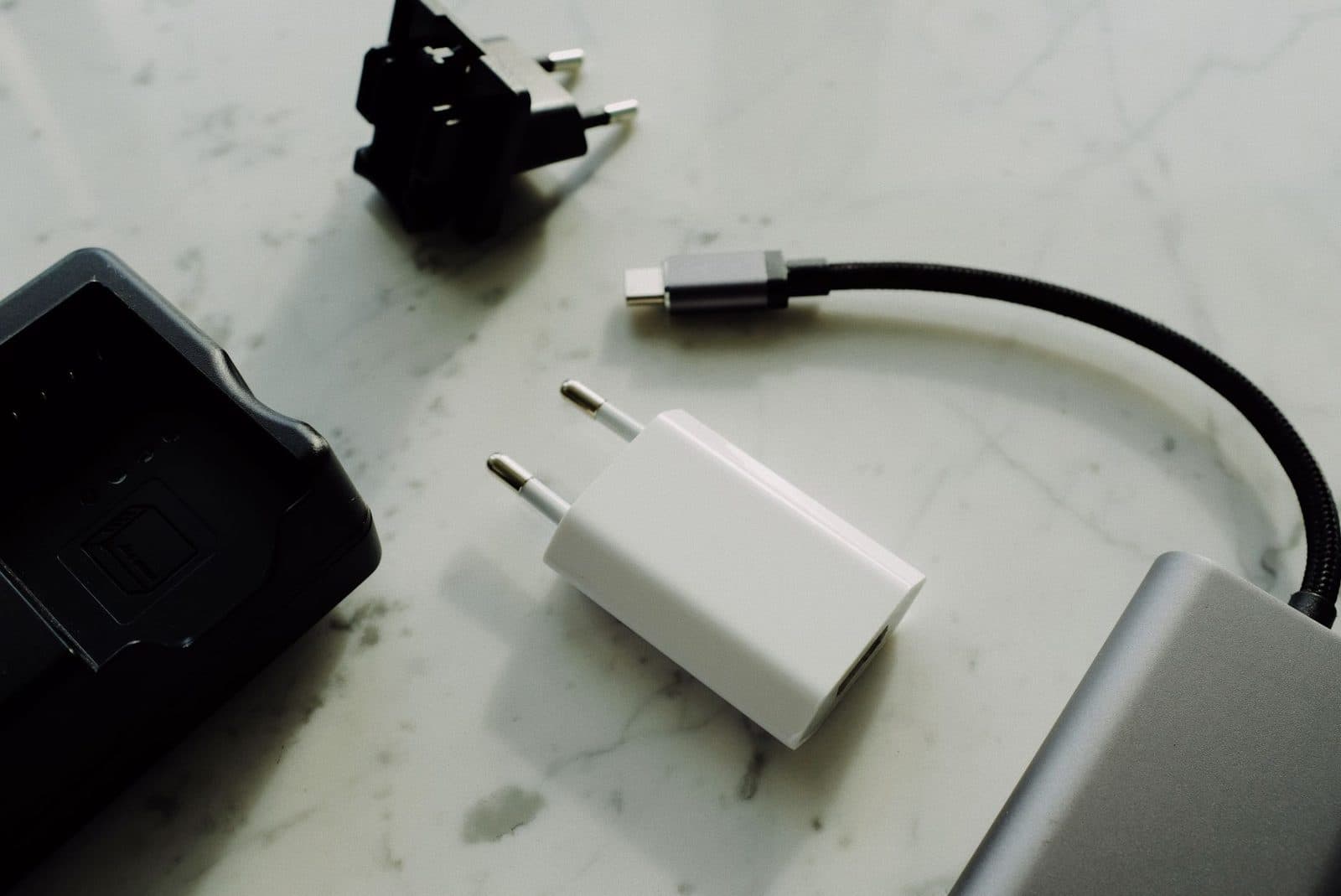
Spare and replacement batteries, converted before you buy
A second pack is the cheapest real upgrade here. Every capacity claim converted to watt-hours, with the airline band attached — including the class that quietly stops being carry-on legal.
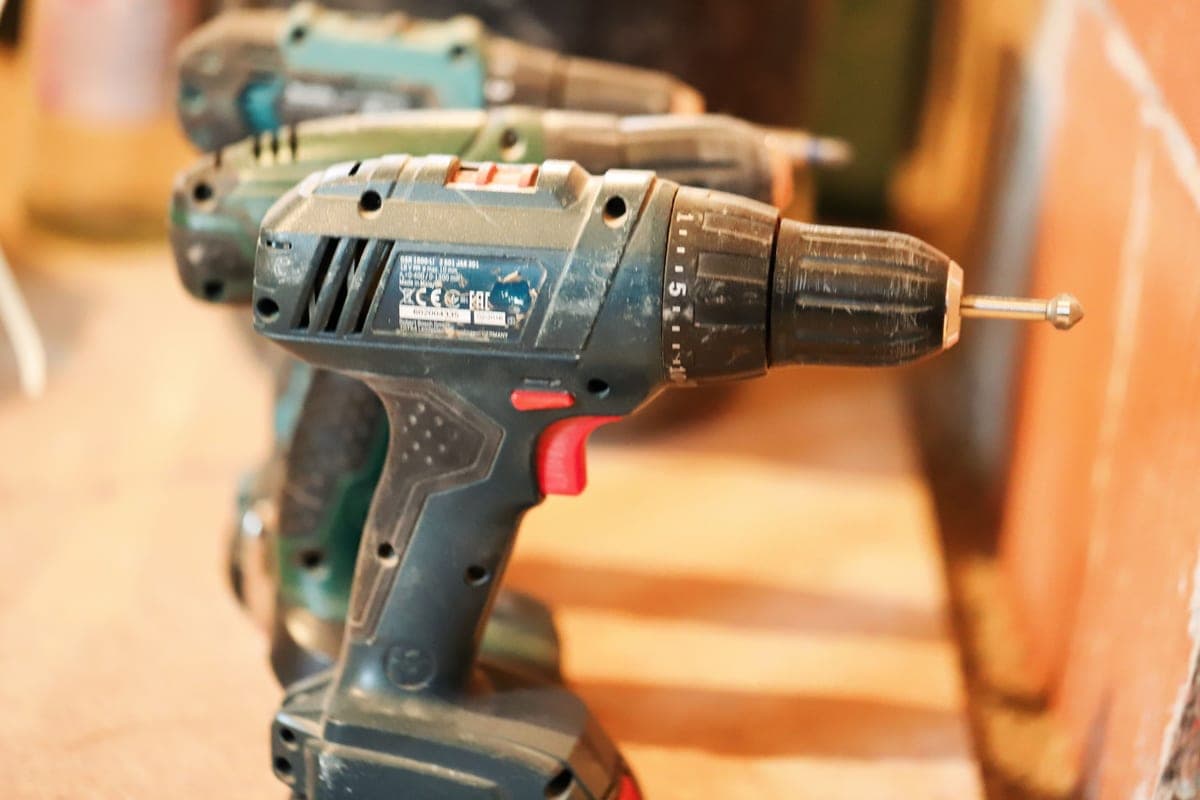
Running heated clothing off a tool battery
What M12 and 20V MAX packs really hold, and the adapter question we will not pretend to have an answer to.

ActionHeat heated jackets: a 5V platform, and numbers that add up
A 5V USB platform where any phone bank is a spare — and the only brand we have converted whose published temperature, runtime and output ceiling all agree with each other.

TIDEWE heated gear: the whole line, run through the arithmetic
One brand that publishes watt-hours on its gloves and no voltage at all on its jackets. The whole line converted — including the 5 V spec hiding on the pack's own page.
Flying with heated clothing, and the unit mismatch that makes it confusing
The FAA writes the rule in watt-hours; makers print milliamp-hours. The conversion table, and where every pack lands.