Heated gloves for snowmobiling, where mittens beat gloves and grips beat neither
A sled gives you two things a motorcycle does not: heated grips as standard, and a thumb throttle instead of four-finger controls. Both change which glove is right.
By Scooter M. · Published October 23, 2026
How this is funded: buy links here are tagged and earn us a commission at no extra cost to you. It does not affect what we recommend, and we take no free product and no sponsorship. Read the disclosure.
Buy a heated mitten on the largest published pack — the WASOTO mitten at 22.2 watt-hours a hand is the best-documented of them, and the SNOW DEER waterproof mitten is the pick if your riding is wet. On a sled a mitten is the right shape, which is the opposite of our advice for a motorcycle, because a thumb throttle does not need four independently moving fingers. If your sled has a 12 V accessory circuit and you ride all day, wire in Gerbing's 12 V liners instead and stop thinking about batteries.
Who each pick is for, in one line
- WASOTO heated mitten — best for the rider who wants the energy figure published rather than implied: 22.2 Wh a hand, printed as arithmetic, with a temperature and a runtime for all three settings.
- SNOW DEER waterproof mitten (3,000 mAh) — best for wet snow and slush. Same 22.2 Wh, a stated waterproof claim, and no other published figures at all.
- Gerbing 12 V heated glove liners — best for the rider with a 12 V accessory circuit and a long day. Runs off the sled, so the pack stops being the limit.
- SAVIOR HEAT heated ski mittens — best for hands that go numb regardless. The warmest shape with palm heating, on the smaller 16.3 Wh pack and the worst spec sheet here.
- Gerbing 7V women's S7 gloves — best for smaller hands that still need five independent fingers. Full-finger element, real documentation, several times the price.
Why a sled is not a motorcycle
This site's heated gloves for motorcycling page tells you not to buy mittens, and that advice is correct for a motorcycle. A rider needs independent control of a clutch lever, a brake lever and a twist throttle, and a mitten takes that away. It is the one use case where the geometry argument loses to ergonomics.
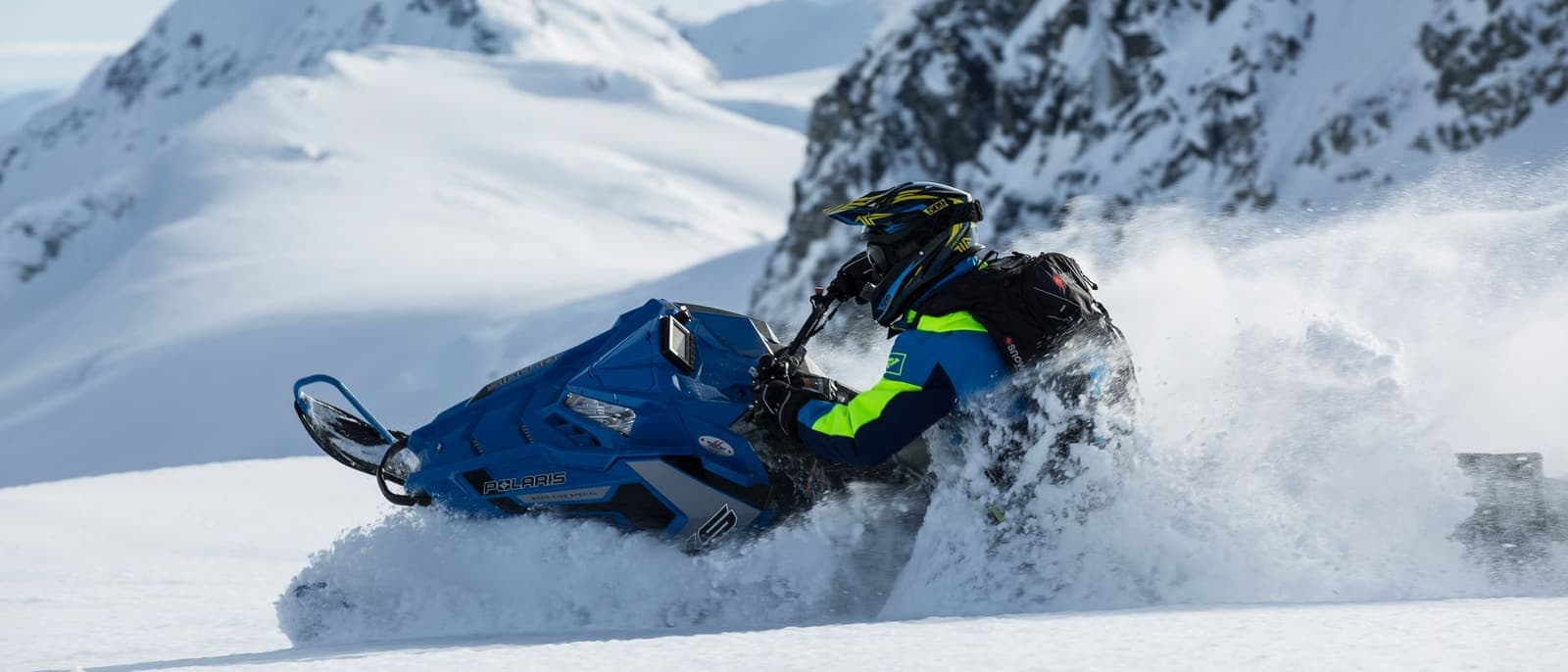
A snowmobile reverses it. The throttle is a thumb lever, the brake is a single lever you squeeze rather than feather, and there is no clutch to operate. Nothing about riding a sled requires four fingers to move independently of each other, which means you can take the free warmth that mitten geometry offers without paying for it in control.
The second difference is electrical. A sled has a charging system and, on most machines, an accessory circuit — so the 12 V garments this category sells for motorcycles work here too, and a wired liner is not limited by a 22 watt-hour pack. That is a different class of answer rather than a better product, and it is why one of the picks above is a liner rather than a glove.
The grips question, answered properly
Almost every modern sled ships with heated grips, which is why "heated gloves versus heated grips" is the question riders actually ask. The two do different jobs and the honest answer is that they are complementary rather than competing.
| Heated grips | Heated gloves or mittens | |
|---|---|---|
| Surface heated | The palm side of your hand, by conduction through the grip. | The back of the hand, and on full-finger designs the fingers themselves. |
| Where the wind hits | Not covered. The airstream works on the back of your hand and your knuckles. | Exactly where the element sits, which is the point. |
| Fingertips | Warmed only where they wrap the grip. The last joint of each finger is outside it. | Covered on full-finger designs; not covered on back-of-hand-only ones. |
| Power source | The sled. Effectively unlimited for the length of a ride. | A 16-22 Wh pack per hand, or the sled if you wire a 12 V liner. |
| What happens off the sled | Nothing. You lose it the moment you let go. | Keeps working while you refuel, dig out or stand around. |
The practical reading: if you have grips and cold hands, the gap is the back of your hand and your fingertips. Buy for that gap, not for the palm you have already solved.
Quick picks
Tap any row to jump to the full write-up below. The energy column is the pack’s capacity times its voltage — the number this category does not print.
| # | Product | Best for | Energy | Price |
|---|---|---|---|---|
| 1 |  WASOTO Heated Mittens (7.4 V, 22.2 Wh published)An unknown brand doing the thing this entire site exists to do for the makers who will not: WASOTO prints "7.4V*3000mA… | The only maker here that shows its own watt-hour arithmetic | 22.2 Wh | $109.99View on Amazon |
| 2 |  SNOW DEER Waterproof Heated Mittens, 7.4V 3000mAhThe same brand's bigger pack in a shell that claims to be waterproof rather than splash-proof — 22.2 Wh a hand instead… | A waterproof mitten on the larger pack | 22.2 Wh | $139.99View on Amazon |
| 3 | 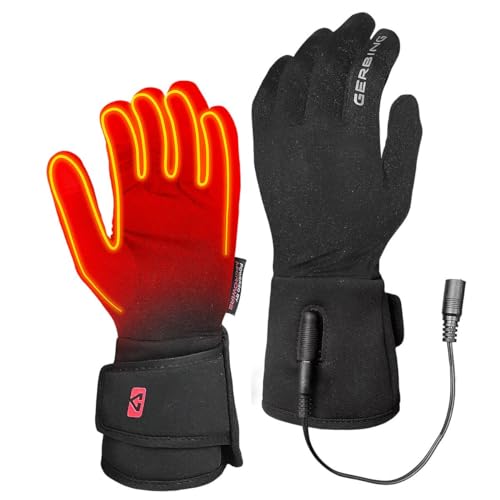 Gerbing 12V Heated Glove LinersSized to a genuine XXL and the only heated glove here that publishes an actual wattage — 13 W each. It gets to 135°F b… | The largest hands, and the only published wattage on this page | — | $99.99View on Amazon |
| 4 |  SAVIOR HEAT Heated Ski MittensPhysics before electronics: fingers sharing one chamber lose less heat than fingers in separate ones, so a mitten gets… | The coldest hands on the list | 16.3 Wh | $129.99View on Amazon |
| 5 |  Gerbing 7V Women's S7 Heated GlovesThe same electronics as the men's S7 on a last cut for narrower hands, which matters more than it sounds: a heated glo… | Smaller hands that still want full-finger heat | 23.8 Wh | $245.09View on Amazon |
#ad — buy links are tagged and earn us a commission at no extra cost to you. Prices come from a live feed; where none is available the button reads “Check price” rather than showing a number we cannot stand behind. How we are funded.
WASOTO Heated Mittens (7.4 V, 22.2 Wh published)
An unknown brand doing the thing this entire site exists to do for the makers who will not: WASOTO prints "7.4V*3000mAh=22.2Wh" on its own product page, then publishes a temperature AND a runtime band for all three settings.
The numbers
- Energy
- 22.2 Wh
- Maker's stated energy
- 22.2 Wh per hand — published as "7.4V*3000mAh=22.2Wh"
- Element coverage
- Back of hand and fingers
- Claims
- A temperature AND a runtime band for all three settings
- In the box
- Two packs plus an 8.4 V dual charger
- Weather
- Twill described as splash-proof and windproof — no waterproof rating
- Heat zones
- A "composite fiber heating pad" across the back of the hand AND the fingers, per WASOTO. The palm is not listed as heated.
- Settings
- Three, published with a temperature range for each
- Care
- Not stated. A laundry bag is in the box, which implies washing is intended, but WASOTO publishes no instructions
On wattage: No wattage published, but with a real watt-hour figure and three runtime bands the draw inverts three ways and the answers agree with each other. Taking the midpoint of each band against 22.2 Wh: about 7.4 W on high (3 h), 5.6 W on medium (4 h) and 3.1 W on low (7.25 h). That is a smooth 2.4x ladder from one pack, which is the shape of a calculated spec sheet rather than an invented one. The pessimistic ends of the bands give 6.3 W / 4.9 W / 2.8 W — a narrower spread than the single-figure claims most of this category publishes.
On the pack: 22.2 Wh per hand, published as watt-hours by the maker and checkable against its own capacity and voltage. Two packs and an 8.4 V dual charger are in the box, so there is no second purchase to make the mittens work. The batteries are described as UL, FCC and CE certified — a named standard rather than the words "certified safe".
What we like
- Publishes the watt-hour conversion as arithmetic on its own page, which no established brand on this site does
- A temperature range AND a runtime band for every setting, so the draw can be inverted three ways
- 22.2 Wh a hand is the top of the range this category offers, 36% more than the 2,200 mAh packs
- Element across the fingers as well as the back of the hand
- Two packs and the charger included, and the cells carry UL, FCC and CE
What we do not
- The Amazon listing title says "Waterproof". WASOTO's own page claims only "splash-proof and windproof" and lists the materials as twill, microfiber and velvet — do not take it ice fishing expecting a membrane
- No wattage published, so the draw is still inverted rather than read
- No warranty and no washing instructions published, on a garment sold with a laundry bag
- No charge time published for a pair of 3,000 mAh packs
- An unknown brand with no service history, and the "Shop on Amazon" button on its own site points at Alibaba
- A mitten, so you cannot do anything precise in them
Who this suits
Someone who wants the largest published energy budget per hand in a mitten and would rather buy from the maker that documents its product than the one with the familiar name.
Who should skip it
You need a waterproof shell or a warranty you can call on. The energy figures are the best here; the brand assurances are the thinnest.
SNOW DEER Waterproof Heated Mittens, 7.4V 3000mAh
The same brand's bigger pack in a shell that claims to be waterproof rather than splash-proof — 22.2 Wh a hand instead of 16.3, which is the single most useful upgrade available in heated handwear.
#ad Price as of October 23, 2026. How we are funded.
The numbers
- Energy
- 22.2 Wh
- Pack
- 7.4 V, 3,000 mAh per hand — 22.2 Wh, stated in the title
- Shape
- Mitten — fingers share one chamber
- Weather
- Waterproof, per the listing
- Screen use
- Touchscreen, per the listing
- Runtime
- Not published
- Heat zones
- Not stated on the listing
- Settings
- Not stated on the listing
- Care
- Not stated
On wattage: No wattage and no runtime published for this mitten, so the 22.2 Wh cannot be turned into hours. Figures circulate for other SNOW DEER mittens; we have not borrowed them for this one. What the energy DOES allow is a fair comparison: against WASOTO's inverted 3.1 W low setting on an identical 22.2 Wh pack, this mitten would run about seven hours — but that is WASOTO's draw, not SNOW DEER's, and we are not going to present it as if it were.
On the pack: 7.4 V and 3,000 mAh are both stated in the listing title, which gives 22.2 Wh per hand — 36% more energy than the 2,200 mAh packs SNOW DEER's other mitten and SAVIOR's whole extremity line run on. That is the difference between a long morning and a short one, and it is the only figure here that is published.
What we like
- 22.2 Wh per hand — the larger of the two pack sizes this brand sells, and the figure is in the title
- A waterproof claim rather than a water-resistant one, which matters more at a fishing hole than anywhere else
- Mitten geometry, which keeps fingers warmer than a glove at any given power
- Touchscreen-compatible, so the phone does not cost you a bare hand
- Room inside for a thin liner, which is the cheapest way to extend any mitten
What we do not
- Publishes the battery and nothing else — no runtime, no settings count, no element layout, no temperatures
- No wattage, so the 22.2 Wh cannot be converted into hours by us or anyone else
- Costs meaningfully more than the brand's 2,200 mAh mitten for an undocumented amount of extra heat
- A mitten has no dexterity; it comes off for anything fiddly
- The waterproof claim is the listing's, with no rating behind it
Who this suits
An ice angler, a spectator or anyone stationary in wet cold who wants the biggest pack in a mitten and can live without a runtime figure.
Who should skip it
You want to plan a day around a number. This listing gives you the energy and refuses to tell you how fast it leaves.
Spec sources: Amazon — SNOW DEER heated mittens, waterproof, touchscreen, "7.4V 3000mAh Battery" stated in the listing title (22.2 Wh per hand by conversion). The listing states the voltage and the capacity and nothing else that bears on power. · Amazon — SNOW DEER 7.4V 2200mAh replacement pack
Gerbing 12V Heated Glove Liners
Sized to a genuine XXL and the only heated glove here that publishes an actual wattage — 13 W each. It gets to 135°F because it is drawing off a motorcycle rather than rationing a small pack, and it does nothing at all without one.
#ad Price as of October 23, 2026. How we are funded.
The numbers
- Published draw
- 13 W each — 26 W the pair
- Published temperature
- 135°F at 13 W each
- Sizes
- S/M, L/XL and a true XXL
- Battery included
- NO — 12 V source and harness sold separately
- Heat zones
- Microwire elements through the fingers and the back of the hand, per Gerbing
- Settings
- Continuous, via a temperature controller that Gerbing sells separately rather than fixed steps
- Care
- Not published by Gerbing on the product page
On wattage: 13 W each is Gerbing's own published figure, and it is per glove — 26 W for the pair. That number is the most useful thing on this page. A battery glove running a 7.4 V, 2,200 mAh pack carries about 16.3 Wh per hand, so at 13 W it would run for roughly 75 minutes. The battery brands instead claim up to 6 hours from that pack, which implies about 2.7 W — about a fifth of what Gerbing draws. A motorcycle alternator is not rationing anything, which is the entire reason this glove reaches 135°F and the battery ones do not.
On the pack: There is no battery in this box and none is implied by the price. Gerbing states plainly that a "Battery Harness, Y-Harness & temperature controller" are "required for stand-alone operation (sold separately)". The normal way to run these is off a motorcycle's 12 V system, or plugged into a Gerbing jacket liner that is itself wired to the bike. Treat the sticker price as the entry fee rather than the total.
What we like
- A published wattage, which practically nothing else in heated apparel provides
- 135°F is hotter than any battery glove on this site claims, and the wattage explains why
- A true XXL in a LINER, which is the size most thin heated gloves stop short of
- Lifetime warranty on the heating elements
- Stretch Lycra is thin enough to wear inside a glove you already trust
What we do not
- No battery, no harness and no controller in the box — all sold separately
- Effectively useless unless you have a motorcycle or a Gerbing 12 V setup
- 12 V DC at 1.0 A each is a wiring job, not a plug-and-play purchase
- No care instructions published
- No runtime figures, because runtime is whatever your bike is doing
Who this suits
A rider with large hands who already has a 12 V system, or is willing to build one, and wants heat that does not fade after two hours.
Who should skip it
You do not ride. There is nothing in this box that produces heat on its own, and the parts that would cost more than the liners do.
SAVIOR HEAT Heated Ski Mittens
Physics before electronics: fingers sharing one chamber lose less heat than fingers in separate ones, so a mitten gets more warmth out of the same watt-hours than a glove does.
#ad Price as of October 23, 2026. How we are funded.
The numbers
- Energy
- 16.3 Wh
- Pack
- 7.4 V, 2,200 mAh per hand — about 16.3 Wh
- Capacity conflict
- SAVIOR's own Tech Specs says 3,000 mAh instead
- Coverage
- Full hand including palm, per SAVIOR
- Shell
- Waterproof and windproof; 100D twill with laminated coating
- Format
- Mitten
- Heat zones
- "Full-Hand Heating Coverage" from "Carbon fiber heating elements", with "Added palm heating" as well as the back of the hand, per SAVIOR
- Settings
- Three, published as Low 104-113°F, Medium 122-131°F and High 131-149°F
- Care
- "Hand washing is recommended, and the battery should be removed before cleaning", per SAVIOR
On wattage: Not published, and barely derivable — this is the worst-documented product this site recommends first anywhere. SAVIOR's own page gives THREE different runtime sets and TWO different capacities. Taking the hours above against 16.3 Wh gives about 6.5 W high, 2.7 W medium and 2.0 W low; swap in the Tech Specs hours (2-3 / 5-6 / 10-12) or the 3,000 mAh figure and the implied low-setting draw moves between about 1.4 W and 3.7 W. A 2.7x spread, entirely from one manufacturer page.
On the pack: 7.4 V, 2,200 mAh per hand — about 16.3 Wh — which is the figure in SAVIOR's own body copy and matches the replacement-pack listing. SAVIOR's Tech Specs block on the SAME page says "7.4V 3000mAh battery" instead, which would be 22.2 Wh. We use the smaller figure because it is the one two independent sources agree on, and we flag the disagreement rather than averaging it.
What we like
- Mitten geometry keeps fingers warmer at any given power level
- Better for circulation-limited hands than a fingered glove
- Same pack family as the rest of the SAVIOR line
What we do not
- You cannot do anything precise in them
- SAVIOR's own page contradicts itself on capacity (2,200 vs 3,000 mAh) and gives three different runtime sets
- No wattage published, and the runtime conflict makes it hard to derive one
- Getting them on and off around a pole strap is a fiddle
Who this suits
Skiers and anyone whose hands go numb regardless of what they wear.
Who should skip it
You need to hold a tool, a camera or a phone.
Spec sources: Savior Heat — Heated Ski Mittens, the brand's own product page ("Three Adjustable Heating Settings"; "3 heat levels (Low: 104-113°F, Medium:122-131 °F, High: 131- 149°F)"; "Carbon fiber heating elements" with "Full-Hand Heating Coverage" and "Added palm heating helps warm every finger, fingertip, palm, and back of hand"; "Waterproof and windproof materials"; velvet lining and "100D twill fabric with laminated coating" outer; "hand washing is recommended, and the battery should be removed before cleaning"; "Free 1-Year Extended Warranty"; product named "S66E Classic Heated Winter Mittens". THE PAGE CONTRADICTS ITSELF: the body copy says "7.4V 2200mAh rechargeable battery power" while the Tech Specs section says "7.4V 3000mAh battery", and it gives THREE different runtime sets — Heating Performance "High: 149°F / 65°C | Up to 2.5H Runtime", "Medium: 131°F / 55°C | Up to 6H Runtime", "Low: 113°F / 45°C | Up to 8H Runtime"; Tech Specs "High: 2-3 hours", "Medium: 5-6 hours", "Low: 10-12 hours"; and the FAQ "about 2–3 hours on high, 4–5 hours on medium, and 6–10 hours on low") · Amazon — SNOW DEER 7.4V 2200mAh replacement pack
Gerbing 7V Women's S7 Heated Gloves
The same electronics as the men's S7 on a last cut for narrower hands, which matters more than it sounds: a heated glove that fits badly heats air instead of skin.
#ad Price as of October 23, 2026. How we are funded.
The numbers
- Energy
- 23.8 Wh
- Pack
- 7 V, 3,400 mAh per glove
- Sizing
- Women's last, from XS
- Element coverage
- Full finger
- Heat zones
- Back of hand and all five fingers
- Settings
- Three
- Care
- Spot clean
On wattage: No published wattage; capacity and voltage are published.
What we like
- A genuine women's last rather than a shrunk men's glove
- Full-finger element, which the smaller heated gloves usually drop
- Largest published per-hand capacity in its size range
What we do not
- No wattage published
- Expensive
- Still bulky for fine work
Who this suits
Anyone whose hands are too narrow for a men's small, which is a real and badly served group.
Who should skip it
You want dexterity — the liner is the better answer.
Spec sources: Amazon — Gerbing 7V Men's S7 heated gloves (two 7V 3400mAh packs included)
The energy, and what wind does to it
Riding is the highest-draw use in heated apparel and the reason is not cold, it is convection. Standing in still air, your glove builds a thin boundary layer of slightly warmed air that the fabric then traps. Moving at speed destroys that layer continuously and never lets it re-form, so the controller — which holds a target temperature rather than a fixed draw — ends up running the element a much larger share of the time than it would on a bucket by a hole in the ice.
Watt-hours, and what they buy
Energy is capacity times nominal voltage. The ceiling draw is the pack’s own published output current times its voltage. The implied draw runs the maker’s advertised hours backwards. Nothing here is measured — check our working.
| Product | Capacity | Volts | Energy | Ceiling draw | Shortest runtime | Implied draw at the claim |
|---|---|---|---|---|---|---|
| WASOTO Heated Mittens (7.4 V, 22.2 Wh published) | 3,000 mAh | 7.4 V | 22.2 Wh | Not published | Not derivable | 7.4 Wat 3 h high, 140-149°f |
| SNOW DEER Waterproof Heated Mittens, 7.4V 3000mAh | 3,000 mAh | 7.4 V | 22.2 Wh | Not published | Not derivable | No claim published |
| SAVIOR HEAT Heated Ski Mittens | 2,200 mAh | 7.4 V | 16.3 Wh | Not published | Not derivable | 6.5 Wat 2.5 h high, 149°f / 65°c |
| Gerbing 7V Women's S7 Heated Gloves | 3,400 mAh | 7 V | 23.8 Wh | Not published | Not derivable | No claim published |
“Not derivable” means the manufacturer does not publish the figure the sum needs. We leave it blank rather than estimating it, borrowing a number from a similar model, or rounding one into existence. These are ceilings, not promises: cold, wind, movement and pack age all push real runtime below them. Run your own numbers.
Two things to take from that table. The first is that 22.2 watt-hours is the ceiling in a battery mitten, and WASOTO's own runtime bands invert to roughly 7.4 W on high — which is about three hours, not the eight the low-setting headline implies. The second is that the 12 V liner is not in the same conversation at all: wired to the sled it draws what it draws for as long as the engine runs, which is why riders who do long days end up there. Wattage explained covers the conversion, and running heated clothing off a tool battery covers the adjacent question of borrowing a bigger pack.
Mitts, gauntlets and the cuff that matters more than it should
A gauntlet cuff that goes over your jacket sleeve rather than under it is worth more on a sled than on any other vehicle, because snow thrown up by the track finds every gap and a cuff that tucks inside funnels it straight onto your wrist — which is also where every 7.4 V pack on this page is clipped.
None of the makers here publish an ingress rating for the battery pocket, so treat a soaked pack as suspect rather than as a spare, and keep the one you are not using in an inside pocket where your body heat keeps it closer to its rated capacity.
Warmth is not protection
Worth stating plainly, because these look like one purchase and are two. None of the gloves or mittens on this page are sold with an impact or abrasion rating, and we do not certify armor. If protection matters to you, buy a glove rated for it and run a thin heated liner inside — that route gets you the protective shell's rating and the element both, at the cost of some room.
What we would skip, and why
- Relying on the sled's heated grips alone
- Grips heat the palm side of your hand through contact, and they do it well. They do nothing for the back of your hand, which is the surface pointed into a 40 mph airstream, and nothing for your fingertips, which are the part that actually goes numb. Grips plus a thin heated glove is a far better system than either alone — but if you are only buying one thing and you already have grips, buy for the back of the hand.
- Thin heated liners as your only glove
- At sled speeds a liner has no windproof membrane between the element and continuous forced airflow, and it will lose that fight. The liner-inside-a-proper-glove route works well; the liner on its own does not.
- Any heated glove with a back-of-hand-only element, for long runs
- Common and cheap, and not useless — it warms blood on the way past. But on a sled your fingertips sit furthest forward in the airstream with a steel or aluminum lever right behind them, and an element that stops at the knuckles never reaches the part going numb. Full-finger or back-of-hand sets out which products are which.
- Mittens, if you ride a sled with a hand brake you modulate constantly
- We recommend mittens first on this page, which is the opposite of what we say about motorcycling, and the reason is the controls. If your riding involves fine, frequent brake modulation rather than thumb throttle and an occasional stop, the ergonomics argument wins and you want fingers.
Our criteria, and what we did not do
- Element coverage over the back of the hand and out along the fingers ranked first, because that is the surface the airstream is working on.
- Published pack capacity and voltage, converted at nominal voltage, with watt-hours shown.
- Mitten geometry preferred for a sled specifically, because a thumb throttle does not need four independent fingers.
- A wired 12 V option treated as a separate answer rather than a better one — a sled has a charging circuit, and a garment that uses it is not limited by a pack at all.
- Wind resistance of the shell treated as part of the heating system, since at speed it is the dominant variable.
- We have not worn or ridden in any of these. How we work.
We have not worn, tested or owned any of these products, and we say so on every page rather than in a footer. What we do instead is compile the published specifications and do the arithmetic. The full method.
The recommendation
If you have heated grips and cold hands, the hole in your setup is the back of your hand — so buy a mitten with the largest published pack you can find and let the grips keep doing the palms. If you ride all day and your sled has an accessory circuit, wire in a 12 V liner and stop rationing watt-hours. If your riding needs fine brake control, take the full-finger glove and accept that you are paying for the ergonomics.
Frequently asked
- Do I need heated gloves if my snowmobile has heated grips?
- They solve different halves of the problem. Grips heat the palm side of your hand by conduction and do it well; they do nothing for the back of your hand, which is the surface the airstream is working on, or for your fingertips, which are what actually goes numb. If you have grips and still have cold hands, buy for the back of the hand — that is the gap.
- Are heated mittens good for snowmobiling?
- Yes, and this is the use case where they make most sense. A sled uses a thumb throttle and a single brake lever, so nothing about riding requires four fingers to move independently — which means you can take the free warmth of mitten geometry without paying for it in control. On a motorcycle, with a clutch lever and a twist throttle, the same advice is wrong.
- How long do heated gloves last on a snowmobile?
- Shorter than anywhere else, because riding is a continuous forced-convection problem rather than still cold. The largest battery mittens hold 22.2 watt-hours a hand, and one maker's own runtime bands invert to about 7.4 W on high — roughly three hours, against the eight hours the low-setting headline implies. Carry a spare, or wire a 12 V liner to the sled.
- Can I run heated gloves off my snowmobile's battery?
- The 12 V glove liners sold for motorcycles will run off a sled's accessory circuit, and that is the right answer for long days because the pack stops being the limit. We will not specify a wiring setup, fuse rating or controller for you — that is an electrical job on your machine and it depends on what your charging system has spare.
- What is better for snowmobiling, heated gloves or a heated jacket?
- Start with the hands if the hands are the complaint; they are in the airstream with metal controls behind them and they have the worst heat-loss geometry on the body. A heated vest under your riding jacket helps indirectly though, because your body restricts blood flow to the extremities to protect core temperature — so warming the core buys you some of the hand warmth you were trying to buy directly.
Sources
- WASOTO — WM001 Classic Heated Mittens: "7.4V*3000mAh=22.2Wh" published as arithmetic, with three temperature ranges and "High level: 2.5-3.5h; medium level:3.5-4.5h; low level:6.5-8h"
- Amazon — SNOW DEER waterproof heated mittens, "7.4V 3000mAh Battery" stated in the listing title
- Gerbing — 12V Heated Jacket Liner 2.0, the published figures behind the 12 V platform (135°F at 77 W; 12 V DC, 6.4 A)
Related

Heated Gloves
The smallest packs in heated apparel, fighting the worst heat loss on the body. Liners are the underrated answer.
Heated gloves for motorcycling, where the wind never stops
Riding is a forced-convection problem, not a cold one. Why that demands full-finger elements, and what it does to runtime.
Heated gloves or heated mittens?
One maker's gloves against its own mittens, same voltage and same pack, so the only variable is the shape. Mittens win on warmth, gloves win on getting worn.

Full-finger heating or back-of-hand only?
The biggest difference between two heated gloves that look identical, and the one almost nobody puts in the headline spec. Which products run the element out along the fingers.
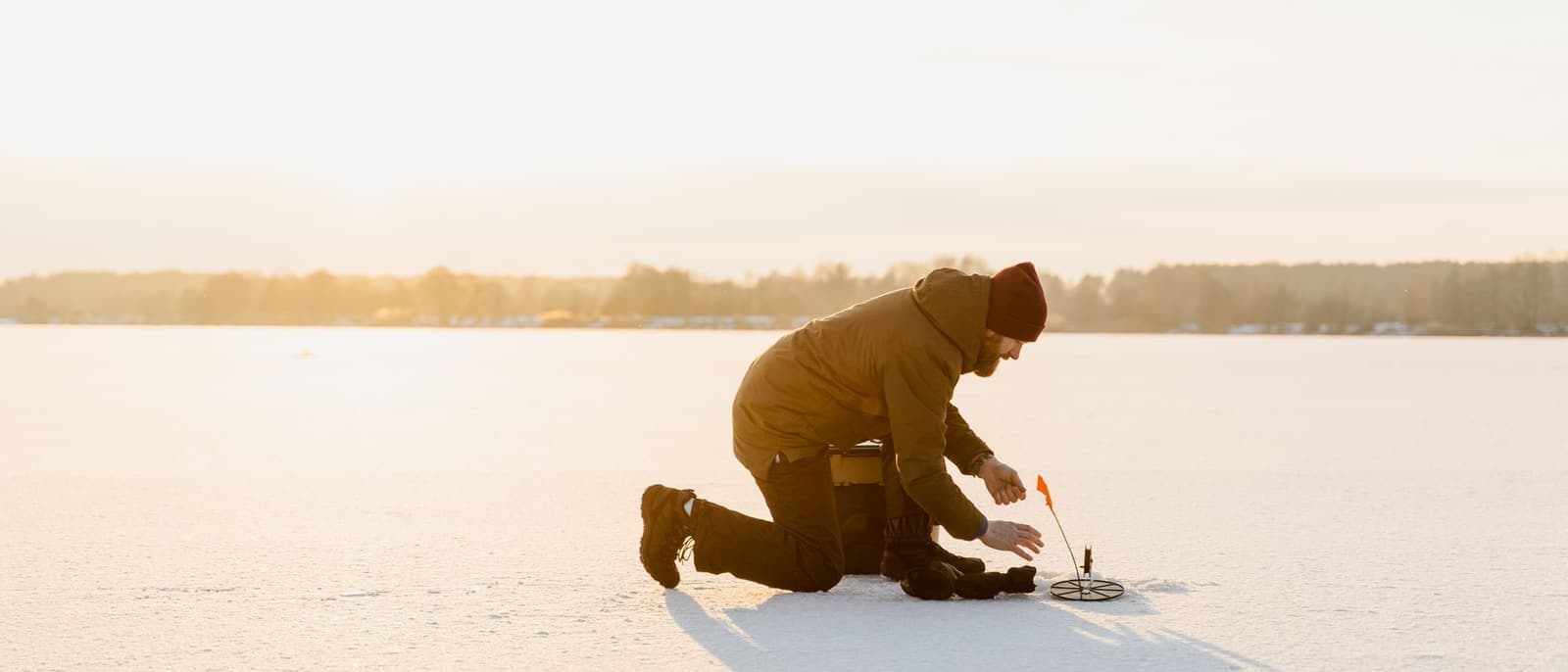
Heated gloves for ice fishing, where your hands get wet on purpose
The one use case where your hands get wet on purpose. Which heated gloves state a waterproof claim, which publish their watt-hours, and the hinge that solves re-tying.

Watts, volts and the number on the label that is not quite true
Volts, amps, watt-hours and the labeling convention that overstates every tool-battery jacket by 11%.
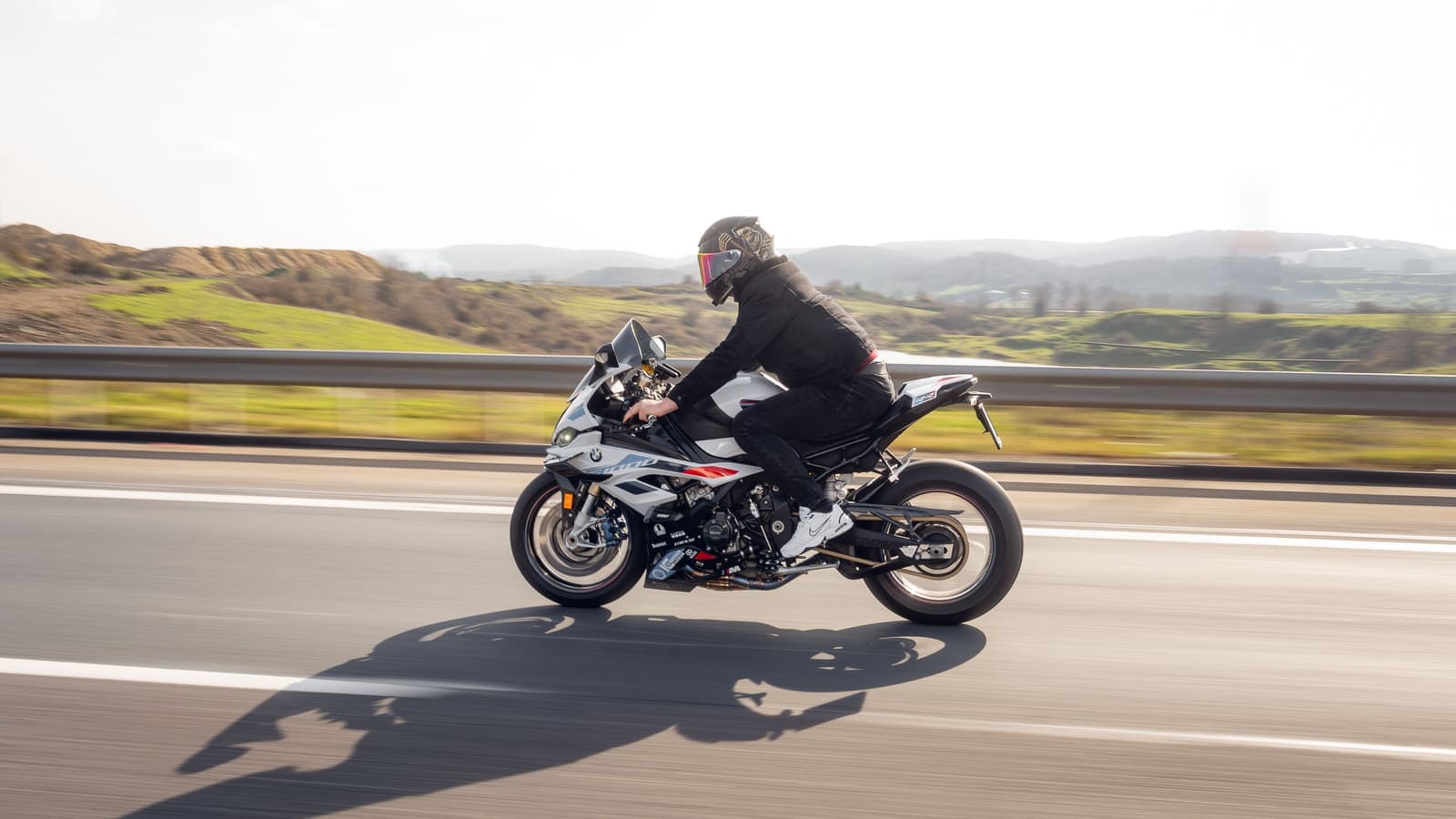
Heated jackets for motorcycling, and the one corner of this category that tells you its wattage
Only four garments on this site publish a wattage and the top two are 12V motorcycle liners - because a wired system cannot hide its draw. Plus why 77 watts is unbuyable on batteries.