Heated gloves or heated mittens?
We found the cleanest comparison available in this category: one maker's gloves and its mittens, on the same voltage and the same pack class, so the only variable left is the shape.
By Scooter M. · Published September 13, 2026
How this is funded: buy links here are tagged and earn us a commission at no extra cost to you. It does not affect what we recommend, and we take no free product and no sponsorship. Read the disclosure.
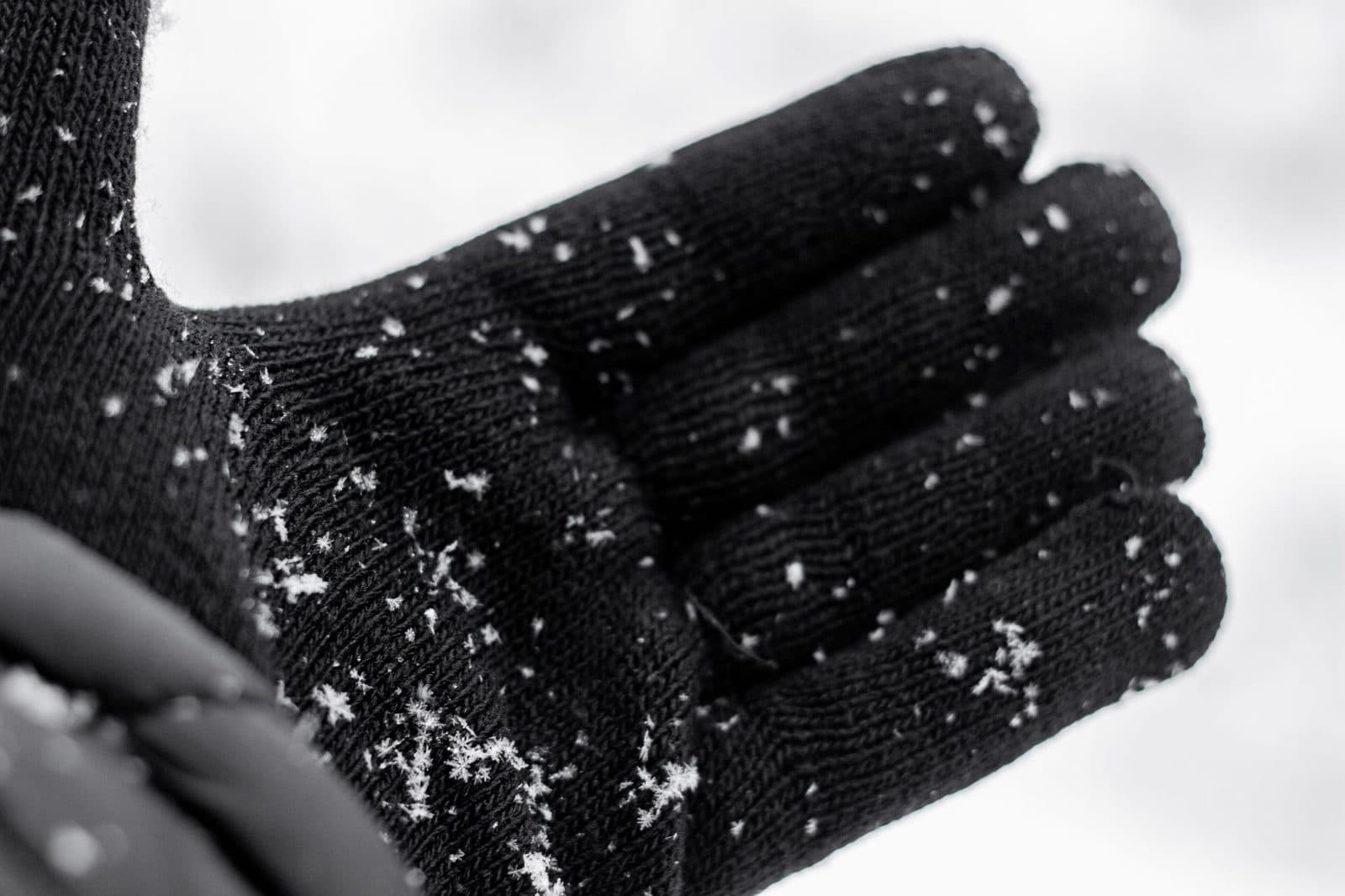
Mittens are warmer; gloves are usable. Four fingers sharing one chamber lose less heat than four fingers in separate ones, and the heated element has less surface area to fight. But a mitten cannot do fine work, so the right answer is mittens if you are stationary in hard cold and gloves — or a liner under your own glove — if your hands have a job.
Why the mitten wins on physics
This part is not really about heating at all. It is the same reason mittens have always beaten gloves in the cold, and adding a battery does not change it.
- Less surface area to lose heat through. A glove wraps each finger separately, so it presents far more outside surface to the cold air than a mitten containing the same four fingers. Heat leaves through surface; more surface, more loss.
- Fingers warm each other. In a mitten your fingers are in contact, sharing heat. In a glove each one is on its own with a layer of fabric between it and its neighbor.
- The element has an easier job. Same watts, smaller area to defend, so the temperature it reaches is higher and the temperature it holds is steadier.
- No seams between the fingers. Finger seams are thin spots, and thin spots are where cold arrives first.
None of that is controversial and none of it is specific to heated gear. What is specific is the consequence for the battery: a mitten that loses heat more slowly needs the element on less of the time, which is a real runtime advantage from an identical pack.
Why the glove wins anyway, for most people
Here is the part the physics does not capture. A heated mitten is roughly as dexterous as an oven glove. You cannot operate a phone, tie a lace, work a carabiner, load a magazine, undo a zip or pick anything small off the ground.
In practice that means the mitten comes off. And a mitten that is off your hand for two minutes every twenty is losing you more warmth than the glove's extra seams ever would — because your hand is now bare, in the cold, and the mitten's interior is cooling at the same time. The warmest glove is the one that stays on.
Quick picks
Tap any row to jump to the full write-up below. The energy column is the pack’s capacity times its voltage — the number this category does not print.
| # | Product | Best for | Energy | Price |
|---|---|---|---|---|
| 1 |  SAVIOR HEAT Heated Ski MittensPhysics before electronics: fingers sharing one chamber lose less heat than fingers in separate ones, so a mitten gets… | The coldest hands on the list | 16.3 Wh | $109.99View on Amazon |
| 2 |  SAVIOR HEAT 7.4V Heated GlovesA competent middle option: warmer than a liner, less bulky than the Gerbing, and with the same missing wattage figure … | General cold-weather use | 16.3 Wh | $79.99View on Amazon |
| 3 |  SAVIOR HEAT Heated Glove LinersThe most underrated format in heated apparel: a thin heated liner under your existing work glove beats a bulky heated … | Keeping the gloves you already own | 16.3 Wh | $107.99View on Amazon |
| 4 |  TIDEWE Heated Hunting Gloves (two packs included)TIDEWE publishes the one number the rest of this category withholds — 22.2 Wh per hand — and then publishes a temperat… | The only heated glove here that publishes watt-hours | 22.2 Wh | $79.99View on Amazon |
#ad — buy links are tagged and earn us a commission at no extra cost to you. Prices come from a live feed; where none is available the button reads “Check price” rather than showing a number we cannot stand behind. How we are funded.
SAVIOR HEAT Heated Ski Mittens
Physics before electronics: fingers sharing one chamber lose less heat than fingers in separate ones, so a mitten gets more warmth out of the same watt-hours than a glove does.
The numbers
- Energy
- 16.3 Wh
- Pack
- 7.4 V, 2,200 mAh per hand — about 16.3 Wh
- Capacity conflict
- SAVIOR's own Tech Specs says 3,000 mAh instead
- Coverage
- Full hand including palm, per SAVIOR
- Shell
- Waterproof and windproof; 100D twill with laminated coating
- Format
- Mitten
- Heat zones
- "Full-Hand Heating Coverage" from "Carbon fiber heating elements", with "Added palm heating" as well as the back of the hand, per SAVIOR
- Settings
- Three, published as Low 104-113°F, Medium 122-131°F and High 131-149°F
- Care
- "Hand washing is recommended, and the battery should be removed before cleaning", per SAVIOR
On wattage: Not published, and barely derivable — this is the worst-documented product this site recommends first anywhere. SAVIOR's own page gives THREE different runtime sets and TWO different capacities. Taking the hours above against 16.3 Wh gives about 6.5 W high, 2.7 W medium and 2.0 W low; swap in the Tech Specs hours (2-3 / 5-6 / 10-12) or the 3,000 mAh figure and the implied low-setting draw moves between about 1.4 W and 3.7 W. A 2.7x spread, entirely from one manufacturer page.
On the pack: 7.4 V, 2,200 mAh per hand — about 16.3 Wh — which is the figure in SAVIOR's own body copy and matches the replacement-pack listing. SAVIOR's Tech Specs block on the SAME page says "7.4V 3000mAh battery" instead, which would be 22.2 Wh. We use the smaller figure because it is the one two independent sources agree on, and we flag the disagreement rather than averaging it.
What we like
- Mitten geometry keeps fingers warmer at any given power level
- Better for circulation-limited hands than a fingered glove
- Same pack family as the rest of the SAVIOR line
What we do not
- You cannot do anything precise in them
- SAVIOR's own page contradicts itself on capacity (2,200 vs 3,000 mAh) and gives three different runtime sets
- No wattage published, and the runtime conflict makes it hard to derive one
- Getting them on and off around a pole strap is a fiddle
Who this suits
Skiers and anyone whose hands go numb regardless of what they wear.
Who should skip it
You need to hold a tool, a camera or a phone.
Spec sources: Savior Heat — Heated Ski Mittens, the brand's own product page ("Three Adjustable Heating Settings"; "3 heat levels (Low: 104-113°F, Medium:122-131 °F, High: 131- 149°F)"; "Carbon fiber heating elements" with "Full-Hand Heating Coverage" and "Added palm heating helps warm every finger, fingertip, palm, and back of hand"; "Waterproof and windproof materials"; velvet lining and "100D twill fabric with laminated coating" outer; "hand washing is recommended, and the battery should be removed before cleaning"; "Free 1-Year Extended Warranty"; product named "S66E Classic Heated Winter Mittens". THE PAGE CONTRADICTS ITSELF: the body copy says "7.4V 2200mAh rechargeable battery power" while the Tech Specs section says "7.4V 3000mAh battery", and it gives THREE different runtime sets — Heating Performance "High: 149°F / 65°C | Up to 2.5H Runtime", "Medium: 131°F / 55°C | Up to 6H Runtime", "Low: 113°F / 45°C | Up to 8H Runtime"; Tech Specs "High: 2-3 hours", "Medium: 5-6 hours", "Low: 10-12 hours"; and the FAQ "about 2–3 hours on high, 4–5 hours on medium, and 6–10 hours on low") · Amazon — SNOW DEER 7.4V 2200mAh replacement pack
SAVIOR HEAT 7.4V Heated Gloves
A competent middle option: warmer than a liner, less bulky than the Gerbing, and with the same missing wattage figure as everything else in the category.
#ad Price as of October 17, 2026. How we are funded.
The numbers
- Energy
- 16.3 Wh
- Pack
- 7.4 V per hand
- Element
- Doubled in the thumb and index finger
- Shell
- Water-repellent insulated polyester
- Heat zones
- Back of hand, with the element doubled in the thumb and index finger
- Settings
- Three
- Care
- Spot clean
On wattage: No published wattage.
On the pack: 7.4 V packs. Capacity is stated on the replacement-pack listings for this class rather than on the glove page.
What we like
- Doubled element in the thumb and index finger, which is where cold bites first
- The insulated shell does real work before the battery is switched on
- Widely stocked, so replacement packs are easy to find
What we do not
- No wattage published
- Middling capacity
- Bulkier than a liner without being as warm as a mitten
Who this suits
Someone who wants one pair of heated gloves for general winter use.
Who should skip it
You are stationary for hours in hard cold. Mittens hold heat better than fingers do.
Spec sources: Amazon — SNOW DEER 7.4V 2200mAh replacement pack
SAVIOR HEAT Heated Glove Liners
The most underrated format in heated apparel: a thin heated liner under your existing work glove beats a bulky heated glove for anyone who has to actually use their hands.
The numbers
- Energy
- 16.3 Wh
- Pack
- 7.4 V, 2,200 mAh per hand
- Thickness
- Liner — fits inside a work or ski glove
- Touchscreen
- Yes, per the listing
- Heat zones
- Back of hand and fingers
- Settings
- Three
- Care
- Hand wash with the battery out
On wattage: No published wattage. Small packs and a small element area, so the runtime spread between settings is wide.
On the pack: Liner packs in this class are 7.4 V, 2,200 mAh. The capacity is stated on the replacement-pack listing rather than on the glove listing.
What we like
- Fits under gloves you already trust, so you keep your grip and your dexterity
- Cheapest route into heated hands by a wide margin
- Packs are small enough to live in a coat pocket
What we do not
- Smallest packs here — about 16 Wh a hand, and the arithmetic on that is unforgiving
- No wind or water protection of their own
- The fit under a tight glove can be a squeeze
Who this suits
Trades workers, photographers, anyone who has to do something with their fingers in the cold.
Who should skip it
You want long runtime. This is the smallest energy budget on the site and it shows.
Spec sources: Amazon — SNOW DEER 7.4V 2200mAh replacement pack
TIDEWE Heated Hunting Gloves (two packs included)
TIDEWE publishes the one number the rest of this category withholds — 22.2 Wh per hand — and then publishes a temperature and a runtime for all three settings, which lets you check the claim instead of taking it.
#ad Price as of October 17, 2026. How we are funded.
The numbers
- Energy
- 22.2 Wh
- Maker's stated energy
- 22.2 Wh per hand
- Pack
- 7.4 V, two supplied
- Shell
- Seven-layer, 3M insulation, 140 GSM water-resistant coating
- Claims
- All three settings, with temperatures
- Heat zones
- Not specified by TIDEWE beyond the heated glove body
- Settings
- Three
- Care
- Not stated by TIDEWE
On wattage: No wattage published, but with three claims and a real watt-hour figure the draw can be inverted three ways instead of guessed once. The high-setting claim implies about 6.3 W per hand at the optimistic end of the range and 8.9 W at the pessimistic end.
On the pack: 22.2 Wh at 7.4 V is 3,000 mAh, one pack per hand. Publishing the figure in watt-hours rather than milliamp-hours is the honest way round, because watt-hours is the number that actually compares across voltages.
What we like
- Publishes energy in watt-hours, which nothing else in this category does
- A temperature AND a runtime for every setting, so the claim can be inverted
- Seven-layer shell with 3M insulation does real work before the element is on
- Two packs in the box rather than one
What we do not
- No wattage published, so the draw is still inferred rather than read
- TIDEWE does not state where the elements sit inside the glove
- No published care instructions
- Bulkier than a liner, which matters if you need to work a trigger or a zip
Who this suits
A hunter or an angler who is stationary in the cold and wants a claim that can be checked.
Who should skip it
You need dexterity more than heat. A liner under your own glove keeps the feel that a shell this thick removes.
Spec sources: TIDEWE — heated hunting gloves (7.4 V, 22.2 Wh, with a temperature and runtime published for all three settings)
The energy, side by side
Watt-hours, and what they buy
Energy is capacity times nominal voltage. The ceiling draw is the pack’s own published output current times its voltage. The implied draw runs the maker’s advertised hours backwards. Nothing here is measured — check our working.
| Product | Capacity | Volts | Energy | Ceiling draw | Shortest runtime | Implied draw at the claim |
|---|---|---|---|---|---|---|
| SAVIOR HEAT Heated Ski Mittens | 2,200 mAh | 7.4 V | 16.3 Wh | Not published | Not derivable | 6.5 Wat 2.5 h high, 149°f / 65°c |
| SAVIOR HEAT 7.4V Heated Gloves | 2,200 mAh | 7.4 V | 16.3 Wh | Not published | Not derivable | No claim published |
| SAVIOR HEAT Heated Glove Liners | 2,200 mAh | 7.4 V | 16.3 Wh | Not published | Not derivable | No claim published |
| TIDEWE Heated Hunting Gloves (two packs included) | 3,000 mAh | 7.4 V | 22.2 Wh | Not published | Not derivable | 6.3 Wat 3.5 h high, 140-149°f |
“Not derivable” means the manufacturer does not publish the figure the sum needs. We leave it blank rather than estimating it, borrowing a number from a similar model, or rounding one into existence. These are ceilings, not promises: cold, wind, movement and pack age all push real runtime below them. Run your own numbers.
Note what that table does and does not show. The SAVIOR gloves and the SAVIOR mittens run the same 7.4 V, 2,200 mAh class of pack — about 16.3 watt-hours per hand. The shape changes how long that energy feels like it lasts; it does not change how much of it there is. The one row that stands apart is TIDEWE's, and only because TIDEWE publishes its figure in watt-hours directly — 22.2 Wh per hand — which is both more energy and a more honest way of stating it.
The third answer: a liner under the glove you own
For a large number of people asking this question, the correct answer is on neither side of it.
A heated liner is a thin glove that goes inside your existing work glove, ski glove or mitten. It keeps the outer glove you already chose for grip, cuff length and abrasion resistance, and adds heat underneath. It is the cheapest option here by a distance, it is the most dexterous, and it is the only one that lets you change the outer layer for the job without changing the heating.
It is also the option with the least raw output, because there is nowhere to put a big element or a big pack. If you are stationary in genuinely hard cold, a liner will not match a heated mitten. Heated glove liners covers the format properly.
Which one, for which person
| If this is you | Buy | Why |
|---|---|---|
| Stationary for hours — hide, stand, spectating | Mittens | Nothing needs doing with your fingers, so the warmest shape wins outright |
| Working with tools or fasteners | Liner under your own glove | Keeps the grip and cuff you chose and the dexterity you need |
| General winter use, one pair for everything | Gloves | The compromise shape, and the one that stays on your hands |
| Skiing or riding — poles, bars, no fine work | Mittens | A grip does not need fingers, and the cold is moving past you fast |
| Raynaud's or a circulation diagnosis | Mittens, or a liner inside one | Fingers warming each other matters most when the supply is the problem — see gloves for Raynaud's |
| Phone in and out of your pocket all day | Gloves with touchscreen fingertips | A mitten means a bare hand every time, which undoes the point |
What to check before you buy either
- Is the capacity published? Most listings in this category give a runtime and no capacity, which leaves nothing to check. TIDEWE publishing watt-hours directly is the exception, not the standard.
- How many packs are in the box? Hands need two. A listing that ships one pack is selling you half a pair's worth of runtime.
- Where does the element sit? Back of the hand only is standard. Elements that reach the fingertips or the palm cost more and matter more, because the fingertips are what actually go numb.
- Can you get spare packs? A charged second pair is the cheapest way to double a cold day, and it only works if the packs are stocked.
- Does the cuff go over or under your sleeve? A gauntlet cuff over the jacket sleeve keeps snow out; a short cuff under it does not. This is a bigger warmth factor than most people expect.
What we would skip, and why
- Buying mittens for a job that needs fingers
- A mitten is warmer and that is not in dispute. It is also a shape that cannot pick up a screw, work a trigger, or manage a zip without coming off — and a mitten that spends the day off your hand is colder than a glove that stays on. Warmth you cannot keep wearing is not warmth.
- Expecting a heated mitten to fix a runtime problem
- Mittens and gloves from the same maker run the same size of pack, because the pack has to hang off a cuff either way. A mitten holds its heat longer once made, but it does not carry more energy. If the complaint is that the battery dies, the answer is a second pack, not a different shape.
- Heated anything, if the real problem is your coat
- Cold hands are frequently a core-temperature symptom. When your torso gets cold your body narrows the blood vessels in your extremities to protect it, and no amount of heat on the outside of a glove reverses that decision efficiently. Fix the core first — heated vests — and see whether the hands follow.
Our criteria, and what we did not do
- Same maker, same platform. The headline comparison is SAVIOR HEAT's gloves against SAVIOR HEAT's mittens, both 7.4 V, both three settings, so the shape is the only thing that changed.
- Published capacity converted at nominal voltage, as everywhere on this site.
- Dexterity treated as a specification, not a footnote, because it is the variable that decides whether the garment gets worn.
- A liner included as the third option, since the honest answer for a lot of readers is neither of the two in the title.
- We have not worn any of these. How we work.
We have not worn, tested or owned any of these products, and we say so on every page rather than in a footer. What we do instead is compile the published specifications and do the arithmetic. The full method.
If the reason you are choosing is Raynaud's, the shape question has a clinical answer as well as a physical one. Gloves for Raynaud's sets out what rheumatology and clinical guidance says about mittens, liners and warmers before it gets to any heated product.
Frequently asked
- Are heated mittens warmer than heated gloves?
- Yes, and for reasons that have nothing to do with the battery. Four fingers in one chamber present less surface area to lose heat through and warm each other directly, so the same element holds a higher temperature more steadily. The trade is that you cannot do anything with your hands.
- Do heated mittens last longer on a charge?
- Usually, but not because they hold more energy. A mitten from the same maker runs the same size of pack — the SAVIOR class is about 16.3 watt-hours per hand either way. The mitten loses heat more slowly, so the element runs less of the time and a setting lower often feels sufficient.
- Can you use a phone with heated mittens?
- No. Some have a flip-back top that exposes your fingers, which means your fingers are now bare in the cold every time you use the phone. If you handle a phone regularly, heated gloves with touchscreen fingertips are the honest choice.
- What about heated glove liners instead?
- For anyone whose hands have a job, liners are frequently the best answer of the three. A thin heated liner inside the glove you already own keeps your grip, your cuff and your dexterity and adds heat underneath. It has the least raw output, so it is the wrong choice if you are stationary in hard cold.
- Do heated gloves get hot enough to actually help?
- The published maximums in this class run to about 140-149°F at the element, which is plenty. The limiting factor is almost never peak temperature — it is how long the pack sustains it, and a 16 to 22 watt-hour budget per hand is small. Expect hours, not a day.
- Which is better for hunting, heated gloves or mittens?
- Mittens, if you are sitting still, with one caveat: you need a shape you can get out of quickly. A flip-mitt or a mitten worn over a thin heated liner gives you the warmth while sitting and a usable hand when it matters. See heated gloves for hunting.
Sources
Related

Heated Gloves
The smallest packs in heated apparel, fighting the worst heat loss on the body. Liners are the underrated answer.

Heated glove liners: less battery, more useful
The smallest packs on the site in the format most likely to still be on your hands at the end of the day.

Heated gloves for hunting, where stillness is the whole problem
Hours of stillness, then one moment that needs fingers. Why a liner under a shed-able mitten beats any single glove, and which brand publishes enough to check.
Heated ski gloves, where geometry beats battery
Why mitten geometry beats a bigger battery on the hill, and how cold quietly shrinks your pack.

Heated gloves for arthritis and Raynaud's: what the product does
Fit, element placement and control granularity, described plainly. No medical claims — that conversation belongs with your doctor.
SAVIOR HEAT or SNOW DEER?
The two brands behind most heated socks and liners, compared on what they publish. Same voltage, same pack class — the real difference is range, not warmth.
Gloves for Raynaud's, sorted by what the guidance says
What rheumatology and clinical guidance actually says about gloves for Raynaud's — mittens, liners, warmers, compression — then the heated picks for when layers are not enough.

Heated gloves for men, and why the size run matters more than the label
Almost every heated glove sold is unisex and sized by palm circumference. Which ones actually reach XXL - and why the thin liner formats run out of sizes first.
SAVIOR HEAT heated mittens: the physics is right, the spec sheet is the worst we have read
The mitten we put first for cold-limited hands, reviewed hard. The geometry argument holds up. SAVIOR's own page gives three runtimes and two capacities, so the energy claim does not.