Heated gloves for typing and desk work
Nearly every heated glove on the market is designed for a ski lift or a job site. At a desk the requirements invert — thin over warm, all-day over three hours, and fingertips you can actually feel keys with.
By Scooter M. · Published September 21, 2026
How this is funded: buy links here are tagged and earn us a commission at no extra cost to you. It does not affect what we recommend, and we take no free product and no sponsorship. Read the disclosure.

A thin heated liner, run on its lowest setting, with a second set of packs. Desk use inverts the usual priorities: you need fingers and a short cuff more than you need peak heat, and you need eight hours rather than three. Nothing in this category is designed for a desk, so the right pick is the least outdoor-shaped product in it.
Why the desk case is its own problem
Search for heated gloves and everything you find is built for the outdoors: waterproof shells, gauntlet cuffs, 3M insulation, camo. Those are all answers to wind, snow and abrasion. At a desk you have none of those problems and two that the outdoor gloves make worse.
- You need to use your hands continuously. Not once at the end of a sit, the way a hunter does — constantly, on keys and a mouse and a phone. That rules out every shape except the thinnest.
- You need all-day runtime. Outdoor gloves are specified around a session. A working day is eight hours, which no glove pack on the market delivers at a setting you would notice outdoors.
- The room is mildly cold, not hostile. You are trying to keep hands from going numb at 65°F, not to survive -5°C. The lowest setting is usually enough, and that is fortunate, because the lowest setting is the only one that gets near a full day.
- Nobody is watching the wind chill. Insulation, waterproofing and windproofing — the things most of the price goes on — do nothing for you at a desk.
Put those together and the product you want is a liner: the thin glove normally sold to wear *inside* another glove. Indoors it is the whole garment.
Quick picks
Tap any row to jump to the full write-up below. The energy column is the pack’s capacity times its voltage — the number this category does not print.
| # | Product | Best for | Energy | Price |
|---|---|---|---|---|
| 1 |  SAVIOR HEAT Heated Glove LinersThe most underrated format in heated apparel: a thin heated liner under your existing work glove beats a bulky heated … | Keeping the gloves you already own | 16.3 Wh | $107.99View on Amazon |
| 2 |  TIDEWE Heated Hunting Gloves (two packs included)TIDEWE publishes the one number the rest of this category withholds — 22.2 Wh per hand — and then publishes a temperat… | The only heated glove here that publishes watt-hours | 22.2 Wh | $79.99View on Amazon |
| 3 |  KEMIMOTO Heated Hunting Gloves, CamoA thin, flexible camo glove for people who lose more to bulk than to cold — and a clean example of the category's habi… | Thin camo cover when bulk is the problem | — | $78.28View on Amazon |
| 4 |  SAVIOR HEAT 7.4V Heated GlovesA competent middle option: warmer than a liner, less bulky than the Gerbing, and with the same missing wattage figure … | General cold-weather use | 16.3 Wh | $79.99View on Amazon |
| 5 | 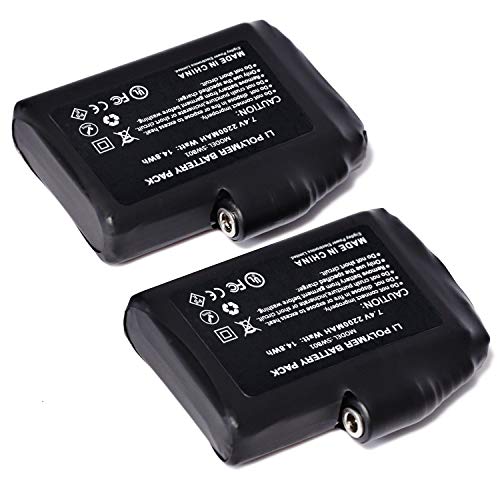 SAVIOR HEAT SWB01 7.4V 2,200mAh Glove BatteriesThe pack that most heated gloves, mittens and socks in this price class actually run on, sold as a pair — which matter… | Spares for gloves, mittens and socks | 16.3 Wh | $43.99View on Amazon |
#ad — buy links are tagged and earn us a commission at no extra cost to you. Prices come from a live feed; where none is available the button reads “Check price” rather than showing a number we cannot stand behind. How we are funded.
SAVIOR HEAT Heated Glove Liners
The most underrated format in heated apparel: a thin heated liner under your existing work glove beats a bulky heated glove for anyone who has to actually use their hands.
The numbers
- Energy
- 16.3 Wh
- Pack
- 7.4 V, 2,200 mAh per hand
- Thickness
- Liner — fits inside a work or ski glove
- Touchscreen
- Yes, per the listing
- Heat zones
- Back of hand and fingers
- Settings
- Three
- Care
- Hand wash with the battery out
On wattage: No published wattage. Small packs and a small element area, so the runtime spread between settings is wide.
On the pack: Liner packs in this class are 7.4 V, 2,200 mAh. The capacity is stated on the replacement-pack listing rather than on the glove listing.
What we like
- Fits under gloves you already trust, so you keep your grip and your dexterity
- Cheapest route into heated hands by a wide margin
- Packs are small enough to live in a coat pocket
What we do not
- Smallest packs here — about 16 Wh a hand, and the arithmetic on that is unforgiving
- No wind or water protection of their own
- The fit under a tight glove can be a squeeze
Who this suits
Trades workers, photographers, anyone who has to do something with their fingers in the cold.
Who should skip it
You want long runtime. This is the smallest energy budget on the site and it shows.
Spec sources: Amazon — SNOW DEER 7.4V 2200mAh replacement pack
TIDEWE Heated Hunting Gloves (two packs included)
TIDEWE publishes the one number the rest of this category withholds — 22.2 Wh per hand — and then publishes a temperature and a runtime for all three settings, which lets you check the claim instead of taking it.
#ad Price as of October 17, 2026. How we are funded.
The numbers
- Energy
- 22.2 Wh
- Maker's stated energy
- 22.2 Wh per hand
- Pack
- 7.4 V, two supplied
- Shell
- Seven-layer, 3M insulation, 140 GSM water-resistant coating
- Claims
- All three settings, with temperatures
- Heat zones
- Not specified by TIDEWE beyond the heated glove body
- Settings
- Three
- Care
- Not stated by TIDEWE
On wattage: No wattage published, but with three claims and a real watt-hour figure the draw can be inverted three ways instead of guessed once. The high-setting claim implies about 6.3 W per hand at the optimistic end of the range and 8.9 W at the pessimistic end.
On the pack: 22.2 Wh at 7.4 V is 3,000 mAh, one pack per hand. Publishing the figure in watt-hours rather than milliamp-hours is the honest way round, because watt-hours is the number that actually compares across voltages.
What we like
- Publishes energy in watt-hours, which nothing else in this category does
- A temperature AND a runtime for every setting, so the claim can be inverted
- Seven-layer shell with 3M insulation does real work before the element is on
- Two packs in the box rather than one
What we do not
- No wattage published, so the draw is still inferred rather than read
- TIDEWE does not state where the elements sit inside the glove
- No published care instructions
- Bulkier than a liner, which matters if you need to work a trigger or a zip
Who this suits
A hunter or an angler who is stationary in the cold and wants a claim that can be checked.
Who should skip it
You need dexterity more than heat. A liner under your own glove keeps the feel that a shell this thick removes.
Spec sources: TIDEWE — heated hunting gloves (7.4 V, 22.2 Wh, with a temperature and runtime published for all three settings)
KEMIMOTO Heated Hunting Gloves, Camo
A thin, flexible camo glove for people who lose more to bulk than to cold — and a clean example of the category's habit of publishing a temperature while withholding the capacity behind it.
The numbers
- Maximum temperature
- 149°F, published
- Capacity
- Not published
- Cut
- Thin and flexible, camo
- Screen use
- PU touchscreen fingertips
- Heat zones
- Palm and backhand, per the listing
- Settings
- Three
- Care
- Not stated
On wattage: No wattage, and no capacity either, so this is one of the rows where the energy column has to stay empty. The maximum temperature is published; everything needed to convert it is not.
On the pack: KEMIMOTO publishes a 7.4 V pack for this glove line but does not state the capacity on this listing. Without a capacity there is no watt-hour figure, and without a watt-hour figure the runtime claim cannot be checked against anything. We will not borrow a number from a sibling listing to fill the gap.
What we like
- Thin enough to keep the dexterity thick heated gloves cost you
- Heat on the palm as well as the back of the hand, which is unusual
- Camo pattern rather than a black glove in a hide
- Touchscreen fingertips that work without stripping a glove off
What we do not
- No published capacity, so the energy is not derivable at all
- No published wattage either
- Thin means less insulation working for you when the battery is off
- No stated care instructions
Who this suits
Someone whose hunting problem is bulk rather than raw cold, and who wants the pattern as well as the heat.
Who should skip it
You want to know what you are buying in energy terms. On this listing that is simply not knowable.
Spec sources: Amazon — KEMIMOTO heated hunting gloves, camo (three settings, 149°F maximum)
SAVIOR HEAT 7.4V Heated Gloves
A competent middle option: warmer than a liner, less bulky than the Gerbing, and with the same missing wattage figure as everything else in the category.
#ad Price as of October 17, 2026. How we are funded.
The numbers
- Energy
- 16.3 Wh
- Pack
- 7.4 V per hand
- Element
- Doubled in the thumb and index finger
- Shell
- Water-repellent insulated polyester
- Heat zones
- Back of hand, with the element doubled in the thumb and index finger
- Settings
- Three
- Care
- Spot clean
On wattage: No published wattage.
On the pack: 7.4 V packs. Capacity is stated on the replacement-pack listings for this class rather than on the glove page.
What we like
- Doubled element in the thumb and index finger, which is where cold bites first
- The insulated shell does real work before the battery is switched on
- Widely stocked, so replacement packs are easy to find
What we do not
- No wattage published
- Middling capacity
- Bulkier than a liner without being as warm as a mitten
Who this suits
Someone who wants one pair of heated gloves for general winter use.
Who should skip it
You are stationary for hours in hard cold. Mittens hold heat better than fingers do.
Spec sources: Amazon — SNOW DEER 7.4V 2200mAh replacement pack
SAVIOR HEAT SWB01 7.4V 2,200mAh Glove Batteries
The pack that most heated gloves, mittens and socks in this price class actually run on, sold as a pair — which matters, because extremities take two packs and a dead one ends the day.
#ad Price as of October 17, 2026. How we are funded.
The numbers
- Energy
- 16.3 Wh
- Capacity
- 2,200 mAh at 7.4 V
- Converted
- About 16.3 Wh per hand
- Supplied
- As a pair
- Fits
- SAVIOR HEAT gloves, mittens and socks
- Heat zones
- Not applicable — this is a pack, not a garment
- Settings
- Not applicable
- Care
- Not washable — remove before cleaning the glove
On wattage: No published wattage. What the capacity does tell you is the ceiling — 16.3 Wh cannot deliver eight hours of serious heat no matter whose glove it is plugged into.
On the pack: 2,200 mAh at 7.4 V is about 16.3 Wh per hand or foot. That is a small budget by design: there is only so much weight you can hang off a cuff, which is why glove runtime is measured in hours rather than shifts.
What we like
- Sold as a pair, which is how extremities actually consume packs
- The same pack family runs the gloves, the mittens and the socks
- A charged spare pair is the cheapest way to double a day's heat
What we do not
- Small by any standard — 16.3 Wh is under half what a standard 5,200 mAh jacket pack holds
- Fit is brand-specific; check the connector before assuming it works
- No published output current
Who this suits
Anyone already running SAVIOR HEAT extremity gear who wants a second day out of it.
Who should skip it
Your gloves are a different brand. Connector shapes in this category are not standardized and a near-fit is not a fit.
Spec sources: Amazon — SAVIOR HEAT SWB01 7.4 V 2,200 mAh glove and mitten packs · Amazon — SNOW DEER 7.4V 2200mAh replacement pack
The energy, against an eight-hour day
Watt-hours, and what they buy
Energy is capacity times nominal voltage. The ceiling draw is the pack’s own published output current times its voltage. The implied draw runs the maker’s advertised hours backwards. Nothing here is measured — check our working.
| Product | Capacity | Volts | Energy | Ceiling draw | Shortest runtime | Implied draw at the claim |
|---|---|---|---|---|---|---|
| SAVIOR HEAT Heated Glove Liners | 2,200 mAh | 7.4 V | 16.3 Wh | Not published | Not derivable | No claim published |
| TIDEWE Heated Hunting Gloves (two packs included) | 3,000 mAh | 7.4 V | 22.2 Wh | Not published | Not derivable | 6.3 Wat 3.5 h high, 140-149°f |
| SAVIOR HEAT 7.4V Heated Gloves | 2,200 mAh | 7.4 V | 16.3 Wh | Not published | Not derivable | No claim published |
| SAVIOR HEAT SWB01 7.4V 2,200mAh Glove Batteries | 2,200 mAh | 7.4 V | 16.3 Wh | Not published | Not derivable | No claim published |
“Not derivable” means the manufacturer does not publish the figure the sum needs. We leave it blank rather than estimating it, borrowing a number from a similar model, or rounding one into existence. These are ceilings, not promises: cold, wind, movement and pack age all push real runtime below them. Run your own numbers.
Here is the uncomfortable arithmetic. The common extremity pack in this category is 7.4 V and 2,200 mAh, which is about 16.3 watt-hours per hand. TIDEWE's is larger at 22.2 Wh and it publishes the figure. Neither runs a working day on anything but the lowest setting, and the makers' own low-setting claims — in the range of six to eight and a half hours — are the numbers to plan against.
Which points at the cheapest fix on this page: a second set of packs. Swapping at lunch turns a six-hour glove into a twelve-hour one for a fraction of the price of a warmer glove, and the packs are the part of the system that fails first anyway. Spare and replacement batteries covers what to buy.
What to look for, in order
| Requirement | Why it matters at a desk | What to look for |
|---|---|---|
| Thin enough to type in | The whole point. A glove you take off to answer email is not helping | Liner-weight, no insulation layer, no membrane |
| Short cuff | A gauntlet catches the table edge and shoves your sleeve up | Knit or elasticated wrist, nothing that reaches the forearm |
| A usable lowest setting | Low is the only setting that approaches a working day | Three settings minimum; app or dial control is better than a single cycling button |
| Touchscreen fingertips | Phones exist. Peeling a glove off twenty times a day defeats it | Conductive thumb and index at minimum |
| Spare packs available | Swapping at lunch is how you get eight hours | A pack sold separately, as a pair, in the same family |
| Element over the fingers | Fingertips go numb first; back-of-hand-only heat misses them | A stated element path that reaches the finger, not just the knuckles |
If this is Raynaud's rather than a cold office
A large share of the people searching for indoor heated gloves are not simply in a chilly room. They have Raynaud's, and the attacks happen at a desk because that is where they spend the day — a cool office, hands still, no muscle activity generating heat.
If that is you, two things change. First, fit: nothing should press on the fingers, because compression works against the blood flow you are trying to protect. Second, the clinical guidance favors keeping the whole hand in one warm space where possible, which at a desk is impractical — so the realistic compromise is a thin liner worn constantly rather than a warmer glove worn intermittently. Gloves for Raynaud's sets out what rheumatology sources actually recommend, and heated gloves for arthritis and Raynaud's covers the product features that follow from it.
Worth knowing before you spend: if the purchase is driven by a diagnosis, it may be reimbursable. Are heated gloves HSA or FSA eligible goes through the IRS rule and the documentation that changes the answer.
The cheap things to try first
We would rather you did not need this page at all, so in order of cost:
- Fingerless wool gloves plus a warm mug. Free if you own them, and for a mildly cold room they are frequently enough.
- A warm layer on your torso. The circulation mechanism is real and a fleece costs less than any glove here.
- A footwell heater or warm socks. Cold feet under a desk pull down your whole thermal picture; cold feet sorts out which cause you have.
- Moving every hour. Two minutes of hand and arm movement restores circulation better than a battery does, and it is the intervention every clinical source lists first.
If you have worked through those and your hands still stop working by mid-morning, a heated liner is a reasonable purchase and the picks above are where we would start.
What we would skip, and why
- Any glove with a gauntlet cuff
- A long cuff is designed to go over a jacket sleeve and seal out snow. At a desk it bunches at the wrist, catches on the edge of the table and pushes your sleeve up your forearm every time you reach for the mouse. Short-cuff liners are the shape that works indoors, and it is the single easiest thing to filter on.
- Mittens, obviously, and flip-mitts too
- Mittens are the warmest shape and the least usable at a keyboard — see gloves versus mittens for the trade in general. Flip-mitts are not the workaround they look like: the flap has to go somewhere, and where it goes is the back of your hand, right where a desk glove needs to stay slim.
- Buying for maximum temperature
- Indoors you are not fighting wind chill, you are fighting a room at 65°F and hands that have stopped getting blood. A glove that hits 149°F is not what you want against skin for eight hours; the useful setting indoors is the lowest one, which is also the one that makes a small pack last a working day. Buy for controllability, not for peak heat.
- A heated glove at all, if your hands are cold because your body is
- In a cold room your core cools too, and your circulation pulls blood back from your extremities on purpose. Warming your hands from outside fights that decision at the furthest point from its cause. A warm layer on your torso frequently fixes desk-cold hands more cheaply — heated clothing by layer works through the triage.
Our criteria, and what we did not do
- Thinness ranked first. At a keyboard, bulk is the binding constraint and warmth is secondary. Anything you cannot type in is disqualified regardless of specification.
- Runtime judged against a working day, not an afternoon. Eight hours at a desk is a different target from three hours on a hill, and it pushes you toward the lowest setting and a second pack.
- Cuff length treated as a hard filter, because a gauntlet cuff and a desk are incompatible.
- Published capacity converted at nominal voltage into watt-hours, as everywhere on this site.
- We have not worn any of these, at a desk or anywhere else. How we work.
We have not worn, tested or owned any of these products, and we say so on every page rather than in a footer. What we do instead is compile the published specifications and do the arithmetic. The full method.
Frequently asked
- Can you type with heated gloves on?
- With a thin heated liner, yes — that is the only shape in this category slim enough. Full heated gloves with insulation and a membrane are too bulky for a keyboard, and mittens are hopeless. Look for liner-weight construction, a short cuff and touchscreen fingertips.
- How long do heated gloves last for a full work day?
- Not a full day on one set of packs. The common extremity pack holds about 16.3 watt-hours per hand and makers claim roughly six to eight and a half hours on the lowest setting. A second set of packs swapped at lunch is the standard way to cover eight hours, and it costs far less than a warmer glove.
- What setting should I use indoors?
- The lowest one, almost always. Indoors you are keeping hands from going cold in a mildly cool room rather than fighting wind chill, and low is also the only setting that approaches a working day. Switching on before your hands get cold matters more than the setting you pick.
- Are heated gloves good for Raynaud's at a desk?
- They can help with comfort, with two caveats: nothing should compress the fingers, and a thin liner worn continuously beats a warm glove worn on and off. Heated clothing is consumer apparel rather than a treatment. See gloves for Raynaud's for what clinical sources actually recommend.
- Are there heated gloves made specifically for typing?
- Not that we could find. Every heated glove on the market is designed for outdoor use, so the desk answer is to buy the least outdoor-shaped product in the category — a liner — rather than to look for a desk-specific product that does not exist.
- Would a heated mouse pad or desk warmer be better?
- For some people, yes, and it is worth saying since we cannot sell you one. A warmed surface under your hands needs no batteries, no charging and no swapping, and it does not restrict movement at all. The case for gloves is that they move with you between desk, meeting room and the walk to the car.
Sources
Related

Heated Gloves
The smallest packs in heated apparel, fighting the worst heat loss on the body. Liners are the underrated answer.

Heated glove liners: less battery, more useful
The smallest packs on the site in the format most likely to still be on your hands at the end of the day.
Gloves for Raynaud's, sorted by what the guidance says
What rheumatology and clinical guidance actually says about gloves for Raynaud's — mittens, liners, warmers, compression — then the heated picks for when layers are not enough.

Heated gloves for arthritis and Raynaud's: what the product does
Fit, element placement and control granularity, described plainly. No medical claims — that conversation belongs with your doctor.

Are heated gloves and socks HSA or FSA eligible?
Heated gloves are clothing in the IRS's eyes, which is the default no. The exception, the letter that unlocks it, and what to ask before you buy.
Spare and replacement batteries, converted before you buy
A second pack is the cheapest real upgrade here. Every capacity claim converted to watt-hours, with the airline band attached — including the class that quietly stops being carry-on legal.